Loading...
Chen Qun vs Ferdinand I of Leon
Ferdinand I of Leon leads by 3.3 pts · 2 figures compared
…
Chen Qun
Politician · Ancient
55.9Total
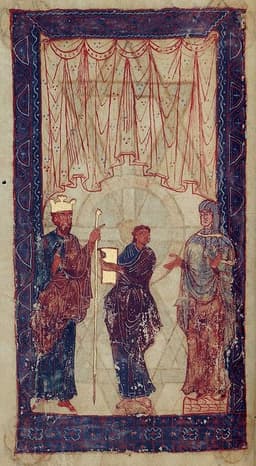
Ferdinand I of Leon
Emperor · Medieval
59.2Total
Basic Information
Born
160
1015
Died
237
1065
Era
Ancient
Medieval
Nationality
China
Leon
Occupation
Politician
Emperor
Civilization
Eastern
Western
Score Comparison
Military (10%)
10.0
70.0
Political (20%)
72.0
68.0
Influence (20%)
40.0
56.4
Legacy (20%)
75.0
49.2
Leadership (15%)
72.0
66.0
Strategy (15%)
45.5
57.5
TOTAL
55.9
59.2
Chen Qun — Complete Timeline
220 AD
Proposed the Nine-rank SystemReform◆ Major
Chen Qun proposed the Nine-rank system for civil service appointments to Cao Pi, the first emperor of Wei. This system ranked candidates based on family background and personal merit, replacing the earlier recommendation system and becoming the standard for official selection in China for centuries.
Civil Service ReformWei DynastyBureaucracy
Impact: nationalconstructive
Advised Cao Pi on Legal CodeReform
Chen Qun assisted Cao Pi in drafting the new legal code for the Wei dynasty. He advocated for clearer laws and more consistent punishments, contributing to the legal framework that helped stabilize Wei's early rule.
Legal ReformWei DynastyLaw
Impact: nationalconstructive
226 AD
Served as Minister over the MassesPolitical Action
Chen Qun was appointed Minister over the Masses (Sikong) under Emperor Cao Rui of Wei. In this high-ranking position, he oversaw civil administration and continued to refine the implementation of the Nine-rank system, solidifying its role in Wei governance.
AppointmentWei DynastyGovernment
Impact: nationalconstructive
Ferdinand I of Leon — Complete Timeline
1029 AD
Inheritance of the County of CastilePolitical Action◆ Major
Ferdinand I inherited the County of Castile from his father Sancho III of Navarre. He later expanded his territory through conquest and marriage, laying the foundation for the Kingdom of Castile.
Impact: regionalconstructive
1037 AD
Conquest of LeónWar◆ Major
Ferdinand I defeated and killed King Bermudo III of Le
Impact: regional
1056 AD
First Emperor of SpainPolitical Action◆ Major
Ferdinand I was crowned 'Imperator totius Hispaniae' (Emperor of all Spain) in 1056, claiming suzerainty over all Christian and Muslim rulers in Iberia. This title reflected his military dominance and political ambition.
Impact: regional
1065 AD
Division of the kingdomPolitical Action◆ Major
Upon his death, Ferdinand I divided his kingdom among his sons: Sancho II received Castile, Alfonso VI received Le
Impact: regionaldestructive
Expert Analysis
Chen Qun vs Ferdinand I of Leon
# The Emperor and the Administrator
On a dusty Iberian battlefield in 1037, Ferdinand of León swung his sword and killed a king. Half a world away and a century earlier, Chen Qun sat in a quiet study drafting a system of bureaucratic ranks that would outlast any dynasty. One man conquered with steel, the other with ink. Both shaped the destiny of civilizations, yet their paths could not have been more different. Why did one become an emperor and the other a minister? The answer lies not just in their talents, but in the worlds that forged them.
Origins
Ferdinand I was born in 1015 into the violent chaos of medieval Spain, where Christian kingdoms and Moorish taifas fought for survival and supremacy. His father, Sancho III of Navarre, had carved out a powerful realm through war and marriage. Ferdinand inherited the County of Castile in 1029, a land of hard men and harder borders. The Reconquista was not a distant cause but a daily reality. In this world, a king proved his worth by taking land and tribute, not by drafting policy.
Chen Qun came of age in 160 during the twilight of the Han Dynasty, a time when China’s ancient imperial order was collapsing into warlord chaos. But unlike Ferdinand, Chen was born into a scholarly family—his father had served as a magistrate. The Confucian tradition of government by merit still flickered in memory. For Chen, the crisis was not a call to arms but a call to order. The question haunting his era was not “who can fight best?” but “how can we govern justly?”
Rise to Power
Ferdinand’s ascent was swift and bloody. In 1037, he faced King Bermudo III of León at the Battle of Tamarón. Ferdinand killed Bermudo in single combat and claimed León by right of conquest—and by marriage, for he had wed Bermudo’s sister. This was power seized through personal violence, a pattern common to medieval kingship. By 1056, Ferdinand had conquered enough Moorish territory to be crowned “Imperator totius Hispaniae”—Emperor of all Spain. His power rested on his sword and his will.
Chen Qun’s rise was quieter but no less remarkable. He served under Cao Cao, the warlord who unified northern China, and later under Cao Cao’s son, Cao Pi. When Cao Pi founded the Wei Dynasty in 220, Chen Qun proposed his masterwork: the Nine-rank System. This was not a military coup but a bureaucratic revolution. Chen had observed how the old Han system of recommendation had decayed into nepotism. His solution was a centralized, graded system where officials were evaluated on talent and virtue. Cao Pi, a shrewd ruler, saw the wisdom in this and adopted it.
Leadership & Governance
Ferdinand ruled as a medieval emperor should—through war, tribute, and fear. His campaigns against the Moors were relentless, forcing Muslim taifas to pay him large sums in gold. He was a capable administrator, but his governance was personal and feudal. His greatest failure came not in battle but in succession. In 1065, on his deathbed, Ferdinand divided his kingdom among his three sons—Sancho, Alfonso, and García. This was a catastrophic decision, born of the belief that blood loyalty would hold. It did not. Civil war erupted within a generation.
Chen Qun governed through systems, not swords. As Minister over the Masses under Emperor Cao Rui from 226, he helped draft a legal code that emphasized clarity and consistency. He believed that good laws, not good men, made a stable state. The Nine-rank System became the backbone of Chinese civil service for centuries, surviving the fall of Wei and influencing later dynasties. But Chen was not a revolutionary; he worked within the framework of imperial power. His reforms were incremental, careful, and enduring.
Triumph & Tragedy
Ferdinand’s triumph was his coronation as Emperor of Spain in 1056—a title that symbolized Christian unity against the Moors. But his tragedy was the division of his kingdom. He had conquered León, Castile, and Galicia, but he could not conceive of a Spain ruled by one man after his death. The medieval mind saw kingdoms as personal property, not nations. Ferdinand’s sons tore each other apart, and the dream of a united Spain died with him.
Chen Qun’s triumph was the Nine-rank System, proposed in 220 and implemented by Cao Pi. It was a quiet revolution that transformed Chinese governance. His tragedy? The system he created eventually ossified into a hereditary aristocracy, betraying his meritocratic ideals. By the time of the Sui and Tang dynasties, the Nine Ranks had become a tool for the powerful to hoard office. Good intentions, like bad seeds, can bear bitter fruit.
Character & Destiny
Ferdinand was a warrior-king, decisive and ruthless. He saw the world as a battlefield and his kingdom as an extension of his will. His personality drove him to conquer but also to divide—he could not imagine his sons ruling together because he himself had never shared power. His destiny was shaped by the feudal logic of his time: power was personal, and death was its greatest enemy.
Chen Qun was a scholar-official, patient and analytical. He saw the world as a system to be perfected. His personality drove him to create order out of chaos, to build institutions that could outlast any ruler. His destiny was shaped by the Confucian tradition: the ideal of a just government run by virtuous men. But he learned, as all reformers do, that systems are only as good as the people who run them.
Legacy
Ferdinand I is remembered as the first Emperor of Spain, a title that would echo through the Reconquista and inspire later kings. But his legacy is ambiguous—a conqueror who could not hold what he built. His division of the kingdom remains a cautionary tale about the limits of personal rule.
Chen Qun is remembered as the father of the Nine-rank System, a reform that influenced Chinese bureaucracy for over 400 years. His legacy is institutional, not personal. He did not conquer kingdoms; he created systems. And those systems, for all their flaws, allowed China to govern itself long after its emperors had died.
Conclusion
Ferdinand I and Chen Qun represent two fundamental approaches to power: the sword and the seal. One fought for land, the other for order. One died leaving a kingdom in pieces, the other left a system that survived dynasties. Their stories remind us that history is not a single path but many—and that the tools we choose to wield determine not just what we build, but what we leave behind. In the end, perhaps the greatest question is not who was more successful, but what kind of legacy each of us would choose: a kingdom that crumbles, or a system that endures.
Rankings
🥇
Ferdinand I of LeonLeader
Mil: 70.0Pol: 68.0Inf: 56.4
59.2
🥈
Chen Qun
Mil: 10.0Pol: 72.0Inf: 40.0
55.9
+3.3 behind
How This Comparison Works
Algorithm
Each figure is scored on 6 dimensions (0—100 scale) based on structured historical data: Military (10%), Political (20%), Influence (20%), Legacy (20%), Leadership (15%), Strategy (15%). The weighted total produces the final ranking.
Data Sources
Scores are computed from structured sub-indicators in the database. Scale factors adjust for era (Ancient ×0.85, Modern ×1.0) and civilization size (Eastern ×1.05, Other ×0.80) to account for differences in population and military scale.
Maximum 3 Figures
Comparisons are limited to 2—3 figures to ensure readability and statistical meaningfulness.
Error Margins
±5 points per dimension — Sub-scores are derived from historical records with inherent uncertainty. Two figures within 5 points on a dimension should be considered roughly equivalent in that area.
Total Score Accuracy
±3 points overall — The weighted combination of 6 dimensions produces a total score with approximately ±3 points of uncertainty. Differences of less than 3 points are not statistically significant— the figures are effectively tied.
Known Limitations
- Historical records are incomplete and uneven across civilizations
- Figures from oral-tradition societies may be underrepresented
- Occupation labels can misclassify multi-role figures
- Scores measure capability and impact, not moral character
- Quantitative scoring is a comparison tool, not absolute truth
Capability Radar
Military (10%) — Battles & Warfare
Battles
19
55
Win Rate
22
60
Expansion
25
60
Political (20%) — Governance & Reform
Reform
85
50
Diplomacy
50
55
Economy
60
45
Influence (20%) — Cultural & Global Reach
Cultural
70
40
Global
65
30
Legacy (20%) — Historical Impact
Historical
80
45
Longevity
85
40
Leadership (15%) — Power & Stability
Tenure
40
65
Stability
65
50
Strategy (15%) — Tactics & Innovation
Strategy
31
55
Tactics
32
50
Reform
36
40
Similar Comparisons
Comments & Discussion
FlippedHistory6/16/2026
You glorify Ferdinand as a conqueror, but his "unification" was shaky—he divided his realm among sons, causing a civil war. Chen Qun built a system that *limited* hereditary power, checking warlordism. Ferdinand’s legacy is a broken kingdom; Chen’s is a bureaucratic framework that restrained chaos for centuries. History remembers the killer, but the real work was done by the desk man.
Steelmind Strategist6/16/2026
Ferdinand’s battlefield kill wasn’t just a lucky swing; it ended the Kingdom of León’s independence and kicked off his imperial unification of Christian Iberia. Chen Qup’s bureaucratic nine-rank system was clever, but it couldn’t stop the Han collapse. Ferdinand’s sword forged a kingdom that lasted; ink alone never saved a dynasty from warlords.
钢刀铁血6/16/2026
费迪南德那一剑砍死了莱昂国王,直接终结一个王国,开启了基督教伊比利亚的统一。陈群的九品中正制再精妙,也拦不住汉朝崩溃。武力能建国的,纸笔可做不到,别把战场狠角儿跟文官比。
DataDoubter6/16/2026
Ferdinand’s death toll? No one counted. Chen Qun’s system survived dynasties, quantifiable in its impact—over 700 years of usage across Chinese history. You can’t measure a bureaucrat’s kill-count, but you can measure legacy. Ferdinand’s kingdom split after his death; Chen’s framework kept emperors stable long after his bones turned to dust.
数据老狐狸6/16/2026
费迪南德杀了多少敌人?没数。陈群的九品中正制却实打实用了七百年,量化历史影响,这文官赢了。费迪南德一死,帝国就分裂;陈群的关键制度让皇帝们稳坐龙椅数代。数字不会说谎。
VeritasClassicus6/16/2026
Ferdinand I modeled himself on Roman emperors like Trajan, even claiming imperial title after taking León. Chen Qun drew on Confucian classics like the *Rites of Zhou* to create a ranking for officials, not warlords. One embraced the *imperium* of Machiavellian conquest; the other, the *mos maiorum* of civil service. Their divergence reflects not talent but cultural DNA: the West romanticizes the sword, China the scholar-bureaucrat.
罗马风骨6/16/2026
费迪南德拿自己当图拉真式皇帝,自封帝国称号,把打仗当信仰。陈群跟着《周礼》设计官级,本质就是个文官系统。一个在刀尖上铸帝国,一个在笔墨里定秩序。差别不在能力,在文明基因:西方爱剑客,中国爱士大夫。