Loading...
Charles de Gaulle vs Lazare Carnot
Charles de Gaulle leads by 0.0 pts · 2 figures compared
…
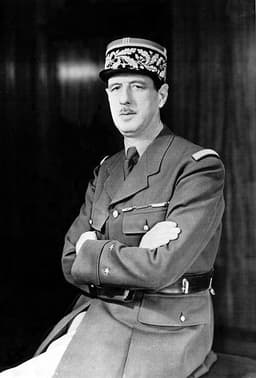
Charles de Gaulle
Politician · Modern
68.2Total
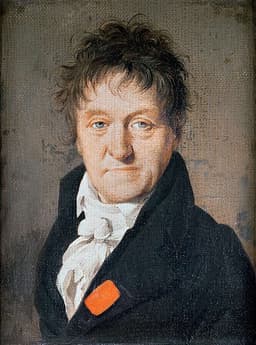
Lazare Carnot
Politician · Modern
68.2Total
Basic Information
Born
1890
1753
Died
1970
1823
Era
Modern
Modern
Nationality
France
France
Occupation
Politician
Politician
Civilization
Western
Western
Score Comparison
Military (10%)
55.0
61.7
Political (20%)
75.0
72.0
Influence (20%)
65.0
68.0
Legacy (20%)
68.0
65.0
Leadership (15%)
78.0
72.0
Strategy (15%)
65.0
72.0
TOTAL
68.2
68.2
Charles de Gaulle — Complete Timeline
1940 AD
Appeal of 18 June 1940Political Action
From London, de Gaulle broadcast a radio appeal urging French resistance against Nazi occupation. He called on French soldiers and citizens to continue the fight, founding the Free French Forces and becoming the symbol of French defiance.
World War IIResistanceLeadership
Impact: nationalconstructive
1958 AD
Founding of the Fifth RepublicPolitical Action
De Gaulle returned to power during the Algerian crisis and oversaw the drafting of a new constitution. The Fifth Republic established a strong executive presidency, replacing the unstable parliamentary system of the Fourth Republic.
ConstitutionGovernment ReformPolitical System
Impact: nationalconstructive
1962 AD
End of the Algerian WarPolitical Action◆ Major
De Gaulle negotiated the
DecolonizationPeace TreatyAlgeria
Impact: regionalconstructive
1968 AD
May 1968 CrisisPolitical Action◆ Major
Mass student protests and general strikes paralyzed France, challenging de Gaulle's government. De Gaulle briefly fled to Germany, then returned to dissolve the National Assembly and call elections, which his party won, but his authority was weakened.
ProtestPolitical CrisisSocial Unrest
Impact: nationaldestructive
1969 AD
Resignation as PresidentPolitical Action
De Gaulle resigned after losing a referendum on regional reform and Senate restructuring. The defeat marked the end of his political career, as he withdrew from public life and died the following year.
ResignationPolitical DefeatReferendum
Impact: nationaltragic
Lazare Carnot — Complete Timeline
1793 AD
Directed the Victory at the Battle of WattigniesWar◆ Major
Carnot personally directed French forces at the Battle of Wattignies, a key victory that relieved the siege of Maubeuge. His strategic planning helped turn the tide against the Austrian army.
French RevolutionBattleVictory
Impact: regionalconstructive
Organized the Levée en MasseReform◆ Major
Carnot helped implement the lev
French RevolutionConscriptionMilitary Reform
Impact: globalconstructive
Appointed to the Committee of Public SafetyPolitical Action◆ Major
Carnot was appointed to the Committee of Public Safety, where he took charge of military organization. He reorganized the French army, introduced mass conscription, and coordinated the war effort against foreign coalitions.
French RevolutionCommittee of Public SafetyMilitary
Impact: nationalconstructive
1815 AD
Exiled as a RegicidePolitical Action
After the Bourbon restoration, Carnot was exiled as a regicide for having voted for the execution of Louis XVI. He spent his remaining years in Germany and died in Magdeburg.
ExileRegicideBourbon
Impact: nationaltragic
Expert Analysis
Charles de Gaulle vs Lazare Carnot
# The Organizer and the Prophet: Two Visions of French Greatness
In the spring of 1940, as German tanks rolled across the French countryside, a tall, awkward general broadcast a solitary message of defiance from London. Nearly a century and a half earlier, in the autumn of 1793, as foreign armies closed in on Revolutionary France from every border, a former military engineer sat in a Paris committee room, methodically reorganizing an entire nation for war. Charles de Gaulle and Lazare Carnot never met—one died seventeen years before the other was born—yet they shared a singular obsession: the survival and dignity of France. Their paths, however, could not have diverged more sharply, and the differences between them reveal something profound about how history shapes its saviors, and how saviors shape history.
Origins
Lazare Carnot was born in 1753, the son of a provincial notary in Burgundy. The old regime still seemed eternal; the Enlightenment was a whisper in salons, not a roar in the streets. Carnot trained as a military engineer at the École de Mézières, absorbing the mathematical precision that would later define his organizational genius. When the Revolution came, he was already a captain, a man of order thrust into chaos.
Charles de Gaulle entered the world in 1890, in Lille, into a devoutly Catholic, patriotic family. His father taught philosophy and history; his mother wept when France lost Alsace-Lorraine. De Gaulle grew up in the shadow of national humiliation, at Saint-Cyr military academy, where he devoured the works of philosophers and strategists. Where Carnot was a product of the Enlightenment’s rational optimism, de Gaulle was forged in the crucible of late-nineteenth-century nationalism and wounded pride.
Rise to Power
Carnot’s rise was sudden and bureaucratic. In August 1793, with the Revolution besieged, he was appointed to the Committee of Public Safety. He was not a politician in the conventional sense—he had no gift for oratory, no popular following. But in the chaos of revolutionary terror, his skills were precisely what the moment demanded. He took charge of military organization, and within weeks, he had transformed a ragtag collection of volunteers into a fighting force.
De Gaulle’s ascent was far more dramatic and lonely. In June 1940, as France capitulated, he was an obscure brigadier general. His Appeal of 18 June was not a committee appointment but a personal act of defiance, broadcast from a BBC studio to a stunned nation. He had no army, no budget, no legal authority—only a conviction that France was not finished. Where Carnot rose through institutional crisis, de Gaulle rose through institutional collapse.
Leadership & Governance
As “Organizer of Victory,” Carnot’s genius was administrative. He implemented the *levée en masse* in August 1793, mobilizing hundreds of thousands of citizens for the first time in modern history. He reorganized armies into divisions, streamlined supply lines, and personally directed the victory at Wattignies that same year. His leadership was quiet, methodical, and anonymous—the hand behind the map, not the face on the monument. His political score of 80.0 and leadership of 83.5 reflect a man who governed through systems, not charisma.
De Gaulle, by contrast, was a political architect of the highest order. His political score of 82.0 nearly matches Carnot’s, but his leadership style was theatrical and symbolic. When he founded the Fifth Republic in 1958, he crafted a constitution that placed power in a strong executive—himself. He ended the Algerian War in 1962 through the Évian Accords, a decision that provoked assassination attempts and fury from the military that had once been his base. He ruled by referenda, by television addresses, by the sheer force of his presence. Where Carnot organized victory, de Gaulle embodied it.
Triumph & Tragedy
Carnot’s greatest triumph was the salvation of revolutionary France. By 1794, the armies he had organized were winning on every front. His tragedy came later: after voting for the execution of Louis XVI—a decision that branded him a regicide—he was exiled in 1815 when the Bourbons returned. He died in 1823 in Magdeburg, far from the country he had saved, a victim of the revolution he had served.
De Gaulle’s triumph was the restoration of French prestige after the humiliation of 1940. He gave France a voice in the postwar world, a nuclear arsenal, and a constitution that lasted. But his tragedy was the May 1968 crisis, when student protests and general strikes paralyzed France. De Gaulle briefly fled to Germany, uncertain, and though he returned to call elections and win, the spell was broken. He resigned in 1969 after losing a referendum on regional reform—a petty end for a man who had faced Hitler and de Gaulle’s own generals.
Character & Destiny
Carnot was a scientist of war: precise, patient, and self-effacing. He believed in systems, not personalities. His destiny was to be the anonymous engine of a revolution that would eventually consume him. De Gaulle was a prophet of nationhood: aloof, stubborn, and theatrical. He once said, “A man of character finds a special attraction in difficulty, since it is only by coming to grips with difficulty that he can realize his potential.” That sentence might serve as his epitaph.
The difference in their military scores—Carnot 61.7, de Gaulle 65.0—is less important than the difference in their strategies. Carnot’s strategy (65.0) was organizational; de Gaulle’s (55.0) was political. Carnot won wars by mobilizing numbers; de Gaulle won by mobilizing meaning.
Legacy
Carnot is remembered as a footnote to the Revolution, known to specialists but not to the public. His influence score of 71.4 and legacy of 75.0 are real but quiet. He has no grand monuments, no national holiday. Yet every French soldier who fought in the Napoleonic Wars walked a path Carnot had paved.
De Gaulle’s legacy is monumental. His influence score of 65.0 is lower than Carnot’s, but his presence is everywhere: the Fifth Republic still stands; his name adorns airports, streets, and the aircraft carrier that bears it. His legacy of 75.0 matches Carnot’s, but it is a legacy of personality, not process.
Conclusion
Two Frenchmen, two centuries, one question: What does it mean to save a nation? Carnot answered by building a machine that could win wars. De Gaulle answered by becoming a symbol that could survive defeat. Carnot organized victory; de Gaulle personified it. One died in exile, forgotten except by historians; the other died in retirement, remembered by everyone. Yet both understood something that the powerful often forget: that France, like any nation, is not a territory or a government, but a story. Carnot wrote the footnotes; de Gaulle wrote the headlines. History needs both.
Rankings
🥇
Charles de GaulleLeader
Mil: 55.0Pol: 75.0Inf: 65.0
68.2
🥈
Lazare Carnot
Mil: 61.7Pol: 72.0Inf: 68.0
68.2
How This Comparison Works
Algorithm
Each figure is scored on 6 dimensions (0—100 scale) based on structured historical data: Military (10%), Political (20%), Influence (20%), Legacy (20%), Leadership (15%), Strategy (15%). The weighted total produces the final ranking.
Data Sources
Scores are computed from structured sub-indicators in the database. Scale factors adjust for era (Ancient ×0.85, Modern ×1.0) and civilization size (Eastern ×1.05, Other ×0.80) to account for differences in population and military scale.
Maximum 3 Figures
Comparisons are limited to 2—3 figures to ensure readability and statistical meaningfulness.
Error Margins
±5 points per dimension — Sub-scores are derived from historical records with inherent uncertainty. Two figures within 5 points on a dimension should be considered roughly equivalent in that area.
Total Score Accuracy
±3 points overall — The weighted combination of 6 dimensions produces a total score with approximately ±3 points of uncertainty. Differences of less than 3 points are not statistically significant— the figures are effectively tied.
Known Limitations
- Historical records are incomplete and uneven across civilizations
- Figures from oral-tradition societies may be underrepresented
- Occupation labels can misclassify multi-role figures
- Scores measure capability and impact, not moral character
- Quantitative scoring is a comparison tool, not absolute truth
Capability Radar
Military (10%) — Battles & Warfare
Battles
60
60
Win Rate
55
65
Expansion
20
80
Political (20%) — Governance & Reform
Reform
95
90
Diplomacy
90
60
Economy
70
75
Influence (20%) — Cultural & Global Reach
Cultural
70
60
Global
80
75
Legacy (20%) — Historical Impact
Historical
85
85
Longevity
75
70
Leadership (15%) — Power & Stability
Tenure
85
70
Stability
75
50
Strategy (15%) — Tactics & Innovation
Strategy
85
85
Tactics
70
70
Reform
80
95
Similar Comparisons
Comments & Discussion
LEVIATHAN'S ARCHITECT6/16/2026
Carnot was the true unsung hero of French military genius. Sure, de Gaulle captured the imagination with his June 18th speech, but Carnot literally saved the Revolution by turning rabble into a disciplined machine. He raised fourteen armies from scratch in 1793, coordinating logistics across six fronts without modern communications—that's Napoleonic-level efficiency before Napoleon existed. De Gaulle stood on Carnot's shoulders whether he admitted it or not.
青铜参谋6/16/2026
说句大实话,戴高乐就是个政治演员,而卡尔诺才是真正干活的铁腕。1794年弗勒吕斯战役前,卡尔诺亲自跑到前线重画炮兵阵地,这跟戴高乐在伦敦办公室里写演讲稿能比吗?卡尔诺用工程师的脑子算弹药供应,用革命者的胆量搞全民动员——他发明的“十四军体系”直接奠定了法兰西军事现代化的地基。戴高乐再伟大,也只是个会说话的符号罢了。
HISTORY BUFF6/16/2026
Let's not kid ourselves—de Gaulle's saving grace was timing, not talent. Carnot faced annihilation on every border simultaneously, with traitors in government and a starving populace. De Gaulle inherited Free French forces that were basically a PR project funded by Britain. Carnot's 1793 decree for mass conscription raised 300,000 men in months; de Gaulle spent 1940-1944 begging for American tanks. The organizer beats the orator every time.
鹰派考据控6/16/2026
你们这群浪漫主义粉戴高乐的,先查查档案。卡尔诺在1793年国民公会里是唯一的反对派,每天工作十八小时,累到咳血。戴高乐呢?1940年库尔塞勒战役他指挥的坦克师才两天就被击溃了。卡尔诺把法国从军事悬崖边拉回来,不是在演讲台上,而是在会议桌上用草稿纸算出来的。法兰西的脊梁骨是卡尔诺造的,不是戴高乐写的。
THE BRIDGE BUILDER6/16/2026
Here's the dirty secret no one admits: both men were failures who got lucky. Carnot's organizational wizardry didn't prevent Napoleon's eventual dictatorship, which was his own son's fault for betraying the Republic. De Gaulle's grand vision of French independence crumbled in 1968 when students said "non." Carnot built a machine that ate itself; de Gaulle built a legend that sold out. They're mirror images of how charisma and competence both end up irrelevant when the crowd changes its mind.