Loading...
Charles de Gaulle vs Chiang Kai-shek
Charles de Gaulle leads by 7.6 pts · 2 figures compared
…
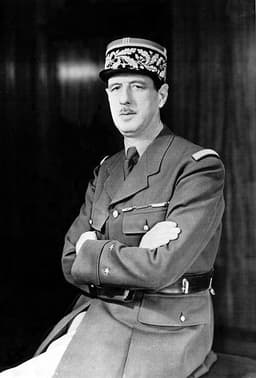
Charles de Gaulle
Politician · Modern
68.2Total
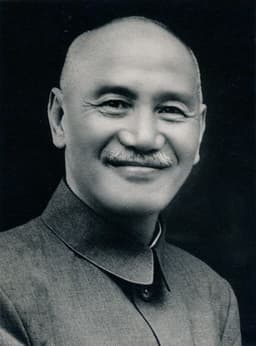
Chiang Kai-shek
Politician · Modern
60.6Total
Basic Information
Born
1890
1887
Died
1970
1975
Era
Modern
Modern
Nationality
France
China
Occupation
Politician
Politician
Civilization
Western
Eastern
Score Comparison
Military (10%)
55.0
70.0
Political (20%)
75.0
62.7
Influence (20%)
65.0
65.0
Legacy (20%)
68.0
52.0
Leadership (15%)
78.0
66.0
Strategy (15%)
65.0
50.0
TOTAL
68.2
60.6
Charles de Gaulle — Complete Timeline
1940 AD
Appeal of 18 June 1940Political Action
From London, de Gaulle broadcast a radio appeal urging French resistance against Nazi occupation. He called on French soldiers and citizens to continue the fight, founding the Free French Forces and becoming the symbol of French defiance.
World War IIResistanceLeadership
Impact: nationalconstructive
1958 AD
Founding of the Fifth RepublicPolitical Action
De Gaulle returned to power during the Algerian crisis and oversaw the drafting of a new constitution. The Fifth Republic established a strong executive presidency, replacing the unstable parliamentary system of the Fourth Republic.
ConstitutionGovernment ReformPolitical System
Impact: nationalconstructive
1962 AD
End of the Algerian WarPolitical Action◆ Major
De Gaulle negotiated the
DecolonizationPeace TreatyAlgeria
Impact: regionalconstructive
1968 AD
May 1968 CrisisPolitical Action◆ Major
Mass student protests and general strikes paralyzed France, challenging de Gaulle's government. De Gaulle briefly fled to Germany, then returned to dissolve the National Assembly and call elections, which his party won, but his authority was weakened.
ProtestPolitical CrisisSocial Unrest
Impact: nationaldestructive
1969 AD
Resignation as PresidentPolitical Action
De Gaulle resigned after losing a referendum on regional reform and Senate restructuring. The defeat marked the end of his political career, as he withdrew from public life and died the following year.
ResignationPolitical DefeatReferendum
Impact: nationaltragic
Chiang Kai-shek — Complete Timeline
1926 AD
Northern ExpeditionWar◆ Major
Chiang Kai-shek led the National Revolutionary Army in the Northern Expedition to defeat warlords and unify China. The campaign succeeded in capturing Beijing and establishing Kuomintang control over most of the country.
UnificationMilitary campaign
Impact: national
1927 AD
Shanghai Massacre of 1927Political Action◆ Major
Chiang Kai-shek ordered the purge of communists and leftists in Shanghai, resulting in thousands of deaths. This event broke the First United Front between the Kuomintang and the Communist Party, leading to civil war.
PurgeCivil war
Impact: nationaldestructive
1937 AD
Leadership during the Second Sino-Japanese WarWar
Chiang Kai-shek, as leader of the Kuomintang, commanded Chinese forces during the Second Sino-Japanese War. He directed the defense of Shanghai and the relocation of the capital to Chongqing, maintaining resistance against Japan.
World War IIChinese resistance
Impact: global
1945 AD
Signing of the Sino-Soviet Treaty of 1945Political Action◆ Major
Chiang Kai-shek signed the Sino-Soviet Treaty of Friendship and Alliance, which recognized Soviet interests in Manchuria in exchange for Soviet support against Japan. The treaty later facilitated Communist gains in the civil war.
DiplomacySoviet Union
Impact: global
1949 AD
Retreat to TaiwanPolitical Action
After losing the Chinese Civil War to the Communists, Chiang Kai-shek retreated to Taiwan with the remnants of the Kuomintang government and military. He established the Republic of China on Taiwan, claiming legitimacy over all of China.
TaiwanExileCold War
Impact: globaltragic
Expert Analysis
Charles de Gaulle vs Chiang Kai-shek
# The General and the Statesman: De Gaulle and Chiang Kai-shek
In the summer of 1940, two men stood at the precipice of history, each facing the collapse of their world. Charles de Gaulle, a recently promoted brigadier general, sat in a BBC studio in London, about to deliver a radio address that would define his life. Chiang Kai-shek, already the paramount leader of China, was retreating through the mountains of Sichuan, his armies shattered by Japanese invasion, his capital fallen. Both men commanded nothing but their own conviction. Yet one would forge a nation’s rebirth, the other would watch his empire crumble. What separated them was not fate, but the very nature of their character and the choices it compelled.
Origins
De Gaulle was born into a devoutly Catholic, patriotic family in Lille, France, in 1890. His father taught history and instilled in him a sense of France’s eternal grandeur. He entered Saint-Cyr military academy, was wounded at Verdun, and spent years as a prisoner of war, reading philosophy and history in his cell. He emerged with a vision: France must be strong, independent, and led by a man who could see beyond the present crisis. His writings on armored warfare were ignored by his superiors, but they revealed a mind that thought in decades, not days.
Chiang Kai-shek was born in 1887 in Fenghua, Zhejiang province, into a merchant family that fell into poverty after his father’s death. He drifted through warlord armies and bandit gangs before enrolling in the Baoding Military Academy and later studying in Japan. There, he absorbed the revolutionary fervor of Sun Yat-sen’s movement. Where de Gaulle was shaped by the tragedy of France’s defeat in 1940, Chiang was shaped by the humiliation of China’s century of weakness—the Opium Wars, the unequal treaties, the sense that China had lost its way.
Rise to Power
De Gaulle’s rise was improbable and solitary. In June 1940, as France capitulated to Hitler, he was a junior minister in a dying government. His Appeal of 18 June 1940 was a gamble of breathtaking audacity: a virtually unknown officer calling on a defeated nation to resist. For years, he was dismissed by Churchill and Roosevelt as a nuisance. Yet he persisted, building the Free French movement from a handful of exiles into a legitimate government-in-waiting. His moment came in 1958, when the French army in Algeria threatened a coup. The Fourth Republic collapsed, and de Gaulle was summoned as the only man who could save France. He accepted on his own terms: a new constitution, a strong presidency, and a mandate to end the war.
Chiang’s rise was more conventional but no less dramatic. In 1926, he led the Northern Expedition, a military campaign that crushed the warlords and unified China under the Kuomintang. He was a brilliant organizer and a ruthless strategist. But his path was stained by the Shanghai Massacre of 1927, when he ordered the slaughter of thousands of Communists and leftists, cementing a civil war that would never end. By 1937, when Japan invaded, Chiang was the undisputed leader of China—but he led a nation divided, exhausted, and corrupt.
Leadership & Governance
De Gaulle governed with a vision of France as a sovereign, independent power. He ended the Algerian War in 1962 through the Évian Accords, a decision that enraged the army that had brought him to power. He faced down the May 1968 student protests with a mixture of firmness and political cunning, then resigned in 1969 after losing a referendum on regional reform—a curiously principled exit from power. His political wisdom lay in understanding that authority must be earned, not demanded. He once said, “To command is to serve, nothing more and nothing less.”
Chiang governed amid war, famine, and revolution. During the Second Sino-Japanese War, he directed Chinese resistance from the remote capital of Chongqing, coordinating with Allies while fighting a guerrilla war and a civil war simultaneously. His military strategy was often defensive and cautious, husbanding forces for a future showdown. But his political governance was crippled by corruption, hyperinflation, and the alienation of the peasantry. The land reforms that Mao Zedong promised, Chiang could not deliver. His regime became a shell, propped up by American aid and increasingly disconnected from the people it claimed to lead.
Triumph & Tragedy
De Gaulle’s greatest moment was the Liberation of Paris in 1944, when he strode down the Champs-Élysées, the embodiment of a resurrected France. His tragedy was the May 1968 crisis, when students and workers rejected his paternalism, and he briefly fled to a French army base in Germany—a moment of panic that revealed the loneliness of his authority.
Chiang’s triumph was leading China through eight years of brutal war against Japan, holding the nation together when all seemed lost. His tragedy was the Chinese Civil War. By 1949, his armies had disintegrated, his government had collapsed, and he fled to Taiwan with the remnants of the Kuomintang. He would spend the rest of his life ruling a small island, dreaming of a mainland he would never see again.
Character & Destiny
De Gaulle was a man of towering pride and icy self-discipline. He believed that a leader must be “a man of character” who stands alone, even against his own people. This made him inflexible, but it also gave him the moral authority to make unpopular decisions—like granting Algeria independence—because his people trusted that he acted for France, not for himself.
Chiang was a man of immense will but fatal rigidity. He saw the world through the lens of Confucian hierarchy and military discipline, unable to adapt to the revolutionary currents that swept China. He trusted his family and his secret police more than his generals or his people. His character was forged in a world of warlords and secret societies, where loyalty was bought and betrayal was constant. That world had made him; it also doomed him.
Legacy
De Gaulle’s legacy is the Fifth Republic, a political system that has endured for over six decades. He gave France a sense of national purpose and independence that outlasted his presidency. Today, he is remembered as the savior of French honor and the architect of modern France—a flawed but towering figure.
Chiang’s legacy is more contested. In Taiwan, he is honored as a defender of free China. On the mainland, he is reviled as a tyrant who lost the nation. His retreat to Taiwan created a separate state that endures to this day, a living monument to his failure and his tenacity. He is remembered not as the unifier of China, but as the man who lost it.
Conclusion
Two generals, two nations, two destinies. De Gaulle understood that power must be anchored in a moral vision larger than oneself. Chiang understood that power must be seized and held, but he never understood that it must also be shared. One lost a war and won a nation; the other won a war and lost his empire. In the end, what separated them was not luck or circumstance, but the quality of their imagination—the ability to see not just what is, but what could be. That is the difference between a general who saves a country and one who only saves himself.
Rankings
🥇
Charles de GaulleLeader
Mil: 55.0Pol: 75.0Inf: 65.0
68.2
🥈
Chiang Kai-shek
Mil: 70.0Pol: 62.7Inf: 65.0
60.6
+7.6 behind
How This Comparison Works
Algorithm
Each figure is scored on 6 dimensions (0—100 scale) based on structured historical data: Military (10%), Political (20%), Influence (20%), Legacy (20%), Leadership (15%), Strategy (15%). The weighted total produces the final ranking.
Data Sources
Scores are computed from structured sub-indicators in the database. Scale factors adjust for era (Ancient ×0.85, Modern ×1.0) and civilization size (Eastern ×1.05, Other ×0.80) to account for differences in population and military scale.
Maximum 3 Figures
Comparisons are limited to 2—3 figures to ensure readability and statistical meaningfulness.
Error Margins
±5 points per dimension — Sub-scores are derived from historical records with inherent uncertainty. Two figures within 5 points on a dimension should be considered roughly equivalent in that area.
Total Score Accuracy
±3 points overall — The weighted combination of 6 dimensions produces a total score with approximately ±3 points of uncertainty. Differences of less than 3 points are not statistically significant— the figures are effectively tied.
Known Limitations
- Historical records are incomplete and uneven across civilizations
- Figures from oral-tradition societies may be underrepresented
- Occupation labels can misclassify multi-role figures
- Scores measure capability and impact, not moral character
- Quantitative scoring is a comparison tool, not absolute truth
Capability Radar
Military (10%) — Battles & Warfare
Battles
60
75
Win Rate
55
35
Expansion
20
65
Political (20%) — Governance & Reform
Reform
95
55
Diplomacy
90
60
Economy
70
40
Influence (20%) — Cultural & Global Reach
Cultural
70
60
Global
80
65
Legacy (20%) — Historical Impact
Historical
85
70
Longevity
75
55
Leadership (15%) — Power & Stability
Tenure
85
85
Stability
75
30
Strategy (15%) — Tactics & Innovation
Strategy
85
60
Tactics
70
55
Reform
80
50
Similar Comparisons
Comments & Discussion
No comments yet. Be the first to share your thoughts!