Loading...
Cesare Borgia vs Louis Botha
Louis Botha leads by 0.9 pts · 2 figures compared
…
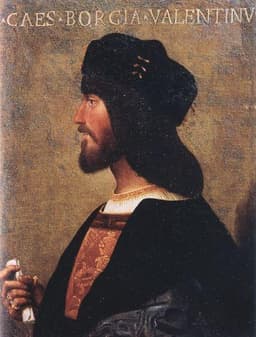
Cesare Borgia
General · Medieval
60.2Total
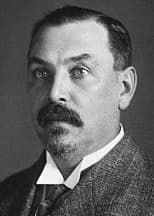
Louis Botha
General · Modern
61.1Total
Basic Information
Born
1475
1862
Died
1507
1919
Era
Medieval
Modern
Nationality
Italy
South Africa
Occupation
General
General
Civilization
Western
Other
Score Comparison
Military (10%)
67.5
61.7
Political (20%)
68.0
70.0
Influence (20%)
68.0
56.7
Legacy (20%)
40.0
50.0
Leadership (15%)
64.0
79.8
Strategy (15%)
66.3
58.0
TOTAL
60.2
61.1
Cesare Borgia — Complete Timeline
1493 AD
Appointment as CardinalPolitical Action◆ Major
Cesare Borgia was appointed cardinal by his father, Pope Alexander VI. This position gave him significant power within the Church and access to papal resources. He used his cardinalate to advance his family's political interests in Italy.
CardinalNepotismPapacy
Impact: regional
1498 AD
Resignation from the CardinalatePolitical Action◆ Major
Cesare Borgia resigned as cardinal to pursue a military and political career. He became the first person to voluntarily leave the College of Cardinals. This move allowed him to focus on conquering territories in the Romagna region of Italy.
ResignationMilitaryRomagna
Impact: regional
1499 AD
Conquest of the RomagnaWar◆ Major
Cesare Borgia, with French support, launched a campaign to conquer the cities of the Romagna. He captured Imola, Forl
ConquestRomagnaMachiavelli
Impact: regional
1503 AD
Fall from PowerPolitical Action
After the death of Pope Alexander VI, Cesare Borgia lost his political support. He was captured by his enemies and imprisoned in Spain. His territories in Italy quickly collapsed. This sudden fall demonstrated the fragility of his power base.
FallImprisonmentCollapse
Impact: regionaltragic
1507 AD
Death in BattleWar
Cesare Borgia was killed in a skirmish near Viana, Navarre, while serving as a mercenary captain. His death ended any chance of restoring his former power. He died at age 31, having failed to regain his Italian territories.
DeathMercenaryNavarre
tragic
Louis Botha — Complete Timeline
1899 AD
Battle of ColensoWar◆ Major
Botha commanded Boer forces at the Battle of Colenso during the Second Boer War. His troops repelled a British attack under General Buller, inflicting heavy casualties and boosting Boer morale.
Second Boer WarBattleVictory
Impact: regional
1900 AD
Boer War Guerrilla CommanderWar◆ Major
After the British captured Pretoria, Botha led Boer guerrilla forces in the Transvaal. He conducted hit-and-run attacks against British columns, prolonging the war and becoming a symbol of Afrikaner resistance.
Second Boer WarGuerrillaResistance
Impact: regional
1902 AD
Signed the Treaty of VereenigingPolitical Action
Botha, as a leading Boer general, signed the Treaty of Vereeniging which ended the Second Boer War. The treaty granted the Boer republics self-government under British sovereignty and promised eventual self-rule.
TreatyPeaceSecond Boer War
Impact: regional
1910 AD
First Prime Minister of the Union of South AfricaPolitical Action
Botha became the first Prime Minister of the newly formed Union of South Africa. He led a coalition government that sought to reconcile Afrikaners and English-speaking whites, while implementing segregationist policies.
Prime MinisterUnion of South AfricaFounding
Impact: nationalconstructive
1914 AD
Suppressed the 1914 RebellionWar◆ Major
Botha personally led government forces to suppress the Maritz Rebellion, an Afrikaner uprising against South Africa's entry into World War I. He defeated the rebels, asserting state authority and maintaining support for the British Empire.
RebellionWorld War ISuppression
Impact: national
1915 AD
Conquered German South West AfricaWar◆ Major
Botha commanded South African forces in the invasion and conquest of German South West Africa. The campaign succeeded, and the territory was later administered by South Africa under a League of Nations mandate.
World War IConquestGerman South West Africa
Impact: regional
Expert Analysis
Louis Botha vs Cesare Borgia
# The Prince and the Peacemaker
On a dusty road in Navarre, Spain, in March 1507, a solitary figure in battered armor lay dead, his body stripped by looters, his dreams of empire scattered like the wind. Cesare Borgia, once the most feared man in Italy, had fallen in a meaningless skirmish, killed by soldiers who likely never knew his name. Just over four centuries later, in 1919, another warrior-statesman died in his bed in Pretoria, South Africa, mourned by both the Boers he had led in war and the British he had fought against. Louis Botha had built a nation; Cesare Borgia had only built a legend. What drove these two generals to such different ends?
Origins
Cesare Borgia was born into the corrupt heart of Renaissance Italy in 1475, the son of Cardinal Rodrigo Borgia, who would become Pope Alexander VI. The Borgias were Spanish by origin, but they had made Rome their hunting ground. Cesare grew up in a world where poison, bribery, and betrayal were tools of statecraft. His father’s elevation to the papacy in 1492 gave Cesare access to power that most princes could only dream of—but it also made him a target. He was made a cardinal at eighteen, a purely political appointment that he wore uneasily, for his true talents lay not in prayer but in the sword.
Louis Botha was born in 1862 in the British colony of Natal, into a Boer farming family of Dutch and French Huguenot descent. The Boers were a people forged by the harsh African veld—independent, devout, and deeply suspicious of British rule. Botha grew up speaking Afrikaans, riding horses across vast plains, and learning to shoot before he could read English. His world was one of isolation and resilience, where a man’s worth was measured not by his lineage but by his ability to survive. While Borgia was learning the art of courtly intrigue, Botha was learning the art of endurance.
Rise to Power
Borgia’s path to power was paved by his father’s ambition. In 1498, in a stunning move, Cesare resigned his cardinalate—the first man ever to do so voluntarily—to become a military commander. His father wanted to carve a kingdom for his son out of the chaotic territories of central Italy, and Cesare was the instrument. With French backing and papal gold, he launched his campaign to conquer the Romagna in 1499. He captured Imola, Forlì, and a string of cities with a blend of ruthless efficiency and calculated mercy that would later fascinate Machiavelli. His rise was meteoric, but it rested entirely on his father’s life.
Botha’s rise was born of crisis. When the Second Boer War erupted in 1899, he was a relatively unknown farmer and politician. But at the Battle of Colenso in December 1899, he commanded Boer forces that repelled a British attack under General Sir Redvers Buller, inflicting heavy casualties. This victory made him a national hero. When the British captured Pretoria in 1900, Botha refused to surrender. Instead, he transformed the Boer forces into guerrilla bands, striking British supply lines and communication posts with a mobility that bewildered the imperial army. His rise was not a gift of birth but a product of war.
Leadership and Governance
As a ruler, Cesare Borgia was a study in controlled terror. He consolidated his conquests by appointing brutal but effective governors, like the infamous Ramiro de Lorca, whom he later executed to appease the people. Borgia understood that fear was a tool, but he also knew when to show clemency. Machiavelli, who observed Borgia’s methods firsthand, wrote that a prince must be both lion and fox—and Borgia was both. Yet his governance was purely personal: he built no institutions, no lasting systems. His state was himself, and when he fell, it crumbled.
Louis Botha governed with a different hand. As the first Prime Minister of the Union of South Africa in 1910, he faced the impossible task of uniting Boer and Briton after a brutal war. He reached across the divide, forming a coalition government that sought reconciliation. When Afrikaner hardliners rose in rebellion in 1914, Botha did not crush them with the same ruthlessness Borgia would have shown. Instead, he personally led government forces against the rebels—many of whom were his former comrades—and then offered amnesty. He understood that a nation built on vengeance would not stand.
Triumph and Tragedy
Borgia’s greatest moment came in 1502–1503, when he seemed on the verge of creating a unified Italian kingdom. He had conquered the Romagna, the Marches, and Umbria, and his army was the most feared in Italy. But his tragedy struck in 1503, when his father, Pope Alexander VI, died suddenly—possibly from poison intended for someone else. Borgia, himself gravely ill, lost his political base. His enemies closed in; he was captured, imprisoned, and forced to flee. His final years were spent as a mercenary captain in Spain, a shadow of his former self.
Botha’s triumph was the Treaty of Vereeniging in 1902, which ended the Boer War on terms that preserved Afrikaner dignity and paved the way for self-government. His tragedy came later, as he struggled to hold together a nation riven by racial and ethnic divisions. He conquered German South West Africa in 1915 for the British Empire, but his dream of a unified South Africa remained incomplete. He died in 1919, just as the seeds of apartheid were being sown.
Character and Destiny
Cesare Borgia’s character was shaped by absolute ambition and absolute insecurity. He trusted no one and was trusted by no one. His cruelty was strategic, but it left him isolated. When his father died, he had no friends, only dependents. His destiny was to be a brilliant failure—a man who could conquer but not build.
Louis Botha’s character was shaped by the veld: pragmatic, patient, and resilient. He knew when to fight and when to compromise. His greatest strength was his ability to forgive, to see beyond the battlefield. His destiny was to be a flawed but genuine nation-builder, a man who understood that leadership is not about crushing enemies but about reconciling them.
Legacy
Cesare Borgia lives on as Machiavelli’s “Prince”—the archetype of the ruthless, calculating ruler who seizes power by any means. His legacy is a cautionary tale about the limits of pure ambition. He is remembered not for what he built, but for what he inspired.
Louis Botha is remembered as a father of South Africa, a man who fought for his people’s freedom and then worked to unite them with their former oppressors. His legacy is complex—he was a white leader in a deeply divided land—but his example of reconciliation remains powerful.
Conclusion
Cesare Borgia and Louis Botha stand at opposite ends of the spectrum of power. One burned bright and fast, leaving only ashes; the other built slowly, leaving foundations. Borgia’s story asks us: What is the price of ambition without wisdom? Botha’s story asks: What is the cost of peace without justice? In the end, both men remind us that leadership is not about the height of one’s rise, but the depth of one’s impact—and that the most enduring victories are not won on battlefields, but in the hearts of nations.
Rankings
🥇
Louis BothaLeader
Mil: 61.7Pol: 70.0Inf: 56.7
61.1
🥈
Cesare Borgia
Mil: 67.5Pol: 68.0Inf: 68.0
60.2
+0.9 behind
How This Comparison Works
Algorithm
Each figure is scored on 6 dimensions (0—100 scale) based on structured historical data: Military (10%), Political (20%), Influence (20%), Legacy (20%), Leadership (15%), Strategy (15%). The weighted total produces the final ranking.
Data Sources
Scores are computed from structured sub-indicators in the database. Scale factors adjust for era (Ancient ×0.85, Modern ×1.0) and civilization size (Eastern ×1.05, Other ×0.80) to account for differences in population and military scale.
Maximum 3 Figures
Comparisons are limited to 2—3 figures to ensure readability and statistical meaningfulness.
Error Margins
±5 points per dimension — Sub-scores are derived from historical records with inherent uncertainty. Two figures within 5 points on a dimension should be considered roughly equivalent in that area.
Total Score Accuracy
±3 points overall — The weighted combination of 6 dimensions produces a total score with approximately ±3 points of uncertainty. Differences of less than 3 points are not statistically significant— the figures are effectively tied.
Known Limitations
- Historical records are incomplete and uneven across civilizations
- Figures from oral-tradition societies may be underrepresented
- Occupation labels can misclassify multi-role figures
- Scores measure capability and impact, not moral character
- Quantitative scoring is a comparison tool, not absolute truth
Capability Radar
Military (10%) — Battles & Warfare
Battles
55
65
Win Rate
60
70
Expansion
55
60
Political (20%) — Governance & Reform
Reform
40
65
Diplomacy
55
70
Economy
35
55
Influence (20%) — Cultural & Global Reach
Cultural
55
45
Global
60
50
Legacy (20%) — Historical Impact
Historical
70
55
Longevity
65
40
Leadership (15%) — Power & Stability
Tenure
45
60
Stability
30
50
Strategy (15%) — Tactics & Innovation
Strategy
60
72
Tactics
65
68
Reform
50
55
Similar Comparisons
Comments & Discussion
Veldhammer6/16/2026
Botha was a nation-builder who knew when to stop fighting; Borgia was a glory-seeker who couldn’t stop. Cesare conquered Romagna with papal gold and French mercenaries—any general could win with those resources. Botha commanded ragged Boer farmers armed with Mausers against the British Empire’s full might, forced a negotiated peace, then helped create the Union of South Africa. That’s real generalship, not murder dressed as strategy.
毒药之主6/16/2026
说波吉亚是‘马基雅维利的君主原型’,纯属书呆子意淫。他靠老爸的教皇权位才爬上来,失势后连一小队敌军都挡不住,死得像个无名痞子。博塔才是真材实料——科伦索战役里他顶着十倍火力缺口拖住英军,救了整个布尔军队。波吉亚那套下毒政治,放到南非草原上,三天就得被布尔人的老枪崩了。