Loading...
Afonso de Albuquerque vs Louis Botha
Afonso de Albuquerque leads by 18.5 pts · 2 figures compared
…
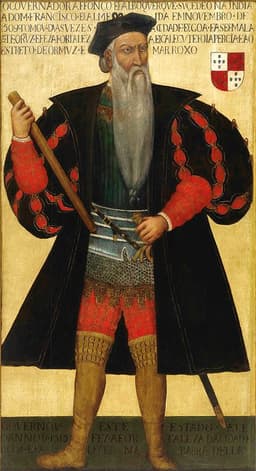
Afonso de Albuquerque
General · Medieval
79.6Total
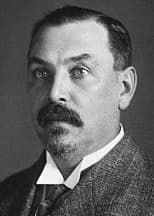
Louis Botha
General · Modern
61.1Total
Basic Information
Born
1453
1862
Died
1515
1919
Era
Medieval
Modern
Nationality
Portugal
South Africa
Occupation
General
General
Civilization
Western
Other
Score Comparison
Military (10%)
77.5
61.7
Political (20%)
88.0
70.0
Influence (20%)
80.0
56.7
Legacy (20%)
75.0
50.0
Leadership (15%)
78.0
79.8
Strategy (15%)
82.0
58.0
TOTAL
79.6
61.1
Afonso de Albuquerque — Complete Timeline
1503 AD
First voyage to IndiaWar◆ Major
Afonso de Albuquerque led a fleet to India, establishing the first Portuguese fort at Cochin. This voyage laid the foundation for Portuguese control of the Indian Ocean trade.
ExplorationColonialismIndia
Impact: global
1510 AD
Conquest of GoaWar◆ Major
Albuquerque captured Goa from the Sultan of Bijapur. He made Goa the capital of Portuguese India, a position it held for over 400 years.
ConquestColonialismIndia
Impact: regional
1511 AD
Conquest of MalaccaWar◆ Major
Albuquerque led a Portuguese fleet to capture the strategic port of Malacca. This gave Portugal control of the spice trade route between the Indian Ocean and the Pacific.
ConquestSpice TradeSoutheast Asia
Impact: global
1513 AD
Siege of AdenWar
Albuquerque attempted to capture Aden in Yemen but failed. This failure prevented Portugal from controlling the entrance to the Red Sea and limited their influence in the region.
SiegeFailureRed Sea
Impact: regional
1515 AD
Death at seaOther◆ Major
Afonso de Albuquerque died at sea off the coast of Goa, possibly from illness or poison. His death left the Portuguese Empire in the Indian Ocean without its most capable leader.
DeathLeadershipEmpire
Impact: regionaltragic
Louis Botha — Complete Timeline
1899 AD
Battle of ColensoWar◆ Major
Botha commanded Boer forces at the Battle of Colenso during the Second Boer War. His troops repelled a British attack under General Buller, inflicting heavy casualties and boosting Boer morale.
Second Boer WarBattleVictory
Impact: regional
1900 AD
Boer War Guerrilla CommanderWar◆ Major
After the British captured Pretoria, Botha led Boer guerrilla forces in the Transvaal. He conducted hit-and-run attacks against British columns, prolonging the war and becoming a symbol of Afrikaner resistance.
Second Boer WarGuerrillaResistance
Impact: regional
1902 AD
Signed the Treaty of VereenigingPolitical Action
Botha, as a leading Boer general, signed the Treaty of Vereeniging which ended the Second Boer War. The treaty granted the Boer republics self-government under British sovereignty and promised eventual self-rule.
TreatyPeaceSecond Boer War
Impact: regional
1910 AD
First Prime Minister of the Union of South AfricaPolitical Action
Botha became the first Prime Minister of the newly formed Union of South Africa. He led a coalition government that sought to reconcile Afrikaners and English-speaking whites, while implementing segregationist policies.
Prime MinisterUnion of South AfricaFounding
Impact: nationalconstructive
1914 AD
Suppressed the 1914 RebellionWar◆ Major
Botha personally led government forces to suppress the Maritz Rebellion, an Afrikaner uprising against South Africa's entry into World War I. He defeated the rebels, asserting state authority and maintaining support for the British Empire.
RebellionWorld War ISuppression
Impact: national
1915 AD
Conquered German South West AfricaWar◆ Major
Botha commanded South African forces in the invasion and conquest of German South West Africa. The campaign succeeded, and the territory was later administered by South Africa under a League of Nations mandate.
World War IConquestGerman South West Africa
Impact: regional
Expert Analysis
Afonso de Albuquerque vs Louis Botha
# The Conqueror and the Conciliator
On a sweltering December morning in 1899, Louis Botha watched from a hillside as British soldiers marched into a killing field near the Tugela River. At Colenso, his Boer marksmen cut down wave after wave of red-coated infantry, achieving one of the most lopsided victories of the age. Sixteen years earlier and half a world away, Afonso de Albuquerque had faced a different kind of trial: standing on the deck of his flagship off the coast of India, he watched his fleet of twenty ships prepare to assault the fortress of Goa, knowing that failure meant not just defeat but the end of Portugal’s dream of an eastern empire. Two generals, four centuries apart, each building something new from blood and ambition. Yet one died believing his life’s work was complete, while the other lived to see his greatest victories become the source of his deepest sorrow.
Origins
Albuquerque was born into the hard, lean nobility of fifteenth-century Portugal, a kingdom squeezed between the Atlantic and a hostile Castile. His father held lands but little gold, and the young Afonso learned early that in Portugal, a man without money could only rise through the sword. The court of King Afonso V was a school of navigation and conquest, where boys memorized the winds of the African coast and the prices of pepper in Venice. By contrast, Louis Botha grew up on the vast, sun-scorched plains of the Orange Free State, the son of Voortrekker farmers who had fled British rule. His education was the veld, his teachers the Boer commandos who knew how to read a landscape for cover and ambush. One man learned to command the sea; the other learned to master the land.
Their eras shaped them as surely as their birthplaces. Albuquerque lived in an age when a single fleet could rewrite the map of the world. Portugal was a small nation with a big ambition: to break the Venetian-Arab monopoly on the spice trade. Botha came of age in a world where maps were already drawn, where the great European powers had carved up Africa, and where his people—the Boers—were a stubborn obstacle to British imperial designs. One man’s task was to create an empire; the other’s was to preserve a nation.
Rise to Power
Albuquerque’s path to command was slow and brutal. He fought in North Africa for two decades, learning the art of siege warfare and the psychology of fear. In 1503, at age fifty, he finally received his first independent command: a fleet bound for India. He built a fort at Cochin, made alliances with local rajahs, and began the patient work of constructing a network of bases that would choke the Indian Ocean trade. When King Manuel I appointed him Governor of Portuguese India in 1509, Albuquerque had earned his position through blood, not birth.
Botha rose faster and by a different route. He was thirty-seven when the Second Boer War broke out in 1899, a farmer with no formal military training. But the Boers had no professional army; they elected their commanders on the battlefield. Botha’s calm courage at Colenso made him a legend. When the British captured Pretoria in 1900, the Boers elected him commander-in-chief of the Transvaal forces. He was not a general by appointment but by acclamation—a man chosen by his people to lead them in their darkest hour.
Leadership & Governance
Albuquerque governed through terror and calculation. When he conquered Goa in 1510, he ordered the massacre of the city’s Muslim defenders but spared the Hindus, hoping to win their loyalty. He burned ships, executed pirates, and built fortresses on islands that commanded the sea lanes. His strategy was simple: control the choke points. Capture Malacca, and you control the spice route. Block the Red Sea, and you starve Cairo of pepper. He was a builder as much as a destroyer, laying the foundations of a maritime empire that would last four centuries.
Botha governed through compromise and coalition. As the first Prime Minister of the Union of South Africa in 1910, he faced an impossible task: unite Boer and Briton, black and white, into a single nation. He spoke Afrikaans to the farmers and English to the businessmen. He granted amnesty to former Boer rebels and appointed British officials to his cabinet. Where Albuquerque used the sword, Botha used the handshake. Yet both men understood power. Botha crushed the Maritz Rebellion in 1914 with the same ruthless efficiency Albuquerque had shown at Goa, personally leading his troops against his own people.
Triumph & Tragedy
Albuquerque’s greatest triumph was the conquest of Malacca in 1511. The city was the Venice of the East, the hub of the spice trade. Its capture gave Portugal control of the world’s most valuable commodity. But his greatest failure was the siege of Aden in 1513. He needed that port to block the Red Sea and strangle the Muslim trade routes to Mecca. The walls held, his men fell, and he sailed away in defeat. That failure haunted him. He died at sea in 1515, possibly poisoned, possibly of a broken heart, believing he had left his empire unfinished.
Botha’s triumph was the conquest of German South West Africa in 1915, a campaign that required marching his army across the Kalahari Desert. But his tragedy was deeper. He had fought the British for years, only to become their loyal ally. He had led his people in war, only to suppress a rebellion among them. When he signed the Treaty of Vereeniging in 1902, ending Boer independence, he wept. Yet he believed peace was better than continued suffering. His people never fully forgave him.
Character & Destiny
Albuquerque was a man of iron certainty. He believed Portugal was chosen by God to spread Christianity and control the spice trade, and he never doubted the righteousness of his cause. This certainty gave him the will to commit atrocities and the vision to build empires. Botha was a man of tragic flexibility. He could see both sides of every question, and that vision made him a great conciliator but a poor revolutionary. He wanted to save his people from destruction, but he could not save them from themselves.
Both men were shaped by their enemies. Albuquerque defined himself against the Muslim sultans who controlled the Indian Ocean. Botha defined himself against the British Empire, and then against the Afrikaner extremists who rejected his compromises. One man’s enemy was external; the other’s was internal.
Legacy
Albuquerque left an empire that outlasted him by four centuries. The Portuguese held Goa until 1961, Malacca until the Dutch took it in 1641, and the spice trade until the British broke their monopoly. His name is still remembered in India, Malaysia, and Brazil as the architect of Portuguese power. His legacy is stone and salt water: forts that still stand, ports that still trade, a language that still echoes across three continents.
Botha left a nation that has struggled ever since with the contradictions he tried to resolve. The Union of South Africa became the apartheid state, and his policy of reconciliation between Boer and Briton excluded the black majority. He is remembered as a founder, but also as a man who chose the wrong path—or perhaps the only path possible.
Conclusion
Standing at the mouth of the Tagus River, where Albuquerque’s fleets once sailed, one feels the weight of certainty. Standing on the veld where Botha’s commandos once rode, one feels the weight of choice. Both men did what their times demanded. Albuquerque built an empire because his age believed in empires. Botha tried to build a nation because his age believed in nations. One succeeded; the other failed—but only if we measure success by monuments. If we measure by the questions they left behind, both succeeded beyond measure. For the question Albuquerque never asked—what happens to the people you conquer?—is the question Botha could never answer.
Rankings
🥇
Afonso de AlbuquerqueLeader
Mil: 77.5Pol: 88.0Inf: 80.0
79.6
🥈
Louis Botha
Mil: 61.7Pol: 70.0Inf: 56.7
61.1
+18.5 behind
How This Comparison Works
Algorithm
Each figure is scored on 6 dimensions (0—100 scale) based on structured historical data: Military (10%), Political (20%), Influence (20%), Legacy (20%), Leadership (15%), Strategy (15%). The weighted total produces the final ranking.
Data Sources
Scores are computed from structured sub-indicators in the database. Scale factors adjust for era (Ancient ×0.85, Modern ×1.0) and civilization size (Eastern ×1.05, Other ×0.80) to account for differences in population and military scale.
Maximum 3 Figures
Comparisons are limited to 2—3 figures to ensure readability and statistical meaningfulness.
Error Margins
±5 points per dimension — Sub-scores are derived from historical records with inherent uncertainty. Two figures within 5 points on a dimension should be considered roughly equivalent in that area.
Total Score Accuracy
±3 points overall — The weighted combination of 6 dimensions produces a total score with approximately ±3 points of uncertainty. Differences of less than 3 points are not statistically significant— the figures are effectively tied.
Known Limitations
- Historical records are incomplete and uneven across civilizations
- Figures from oral-tradition societies may be underrepresented
- Occupation labels can misclassify multi-role figures
- Scores measure capability and impact, not moral character
- Quantitative scoring is a comparison tool, not absolute truth
Capability Radar
Military (10%) — Battles & Warfare
Battles
85
65
Win Rate
80
70
Expansion
95
60
Political (20%) — Governance & Reform
Reform
80
65
Diplomacy
85
70
Economy
80
55
Influence (20%) — Cultural & Global Reach
Cultural
70
45
Global
85
50
Legacy (20%) — Historical Impact
Historical
85
55
Longevity
80
40
Leadership (15%) — Power & Stability
Tenure
70
60
Stability
65
50
Strategy (15%) — Tactics & Innovation
Strategy
95
72
Tactics
90
68
Reform
75
55
Similar Comparisons
Comments & Discussion
SwordSaint_15096/16/2026
Albuquerque’s tactical genius at Goa (1510) wasn’t just about capturing a city—it was about projecting sea power inland. He burned the Adil Shahi fleet first, then used Portuguese cannons to shatter enemy morale from the Mandovi River. Botha? A fine guerrilla leader, sure, but Colenso was a defensive fluke against incompetent British generals. One man built an empire of spice and sea lanes; the other lost his republic. This isn’t even close.
布尔战争评论员6/16/2026
路易斯·博塔在科伦索战役中只用1500名布尔民兵就击毙英军上千人,这是以少胜多的教科书案例。但阿尔布开克在1510年攻占果阿时,面对的是三万穆斯林联军,他仅靠二十艘船和两千人就拿下了印度西海岸最坚固的要塞。一个是游击战的巧胜,另一个是帝国战略的碾压。别把乡巴佬的突围和总督的征服混为一谈。
DataScrutinizer_en6/16/2026
The meta is flawed: Botha fought in an era of rifle fire and trenches (500+ yard kill zones) against a colonial power that could steam in reinforcements from the Cape in weeks. Albuquerque faced pikes, swords, and small arquebus volleys—where 20 ships might be a kingdom’s entire navy. Comparing “lopsided victories” across 400 years of military tech is like comparing a sword duel to a sniper duel. Botha’s Colenso was a tactical anomaly; Albuquerque’s Goa was a strategic inevitability with better
古典学观察员6/16/2026
阿尔布开克是文艺复兴式的征服者,他的《评论集》里写满了对亚洲诸王的傲慢与算计,典型的“以剑传教”。而博塔更像古典时代的希腊领袖——他后来在1914年镇压布尔起义时,竟选择宽恕敌人,这近乎亚里士多德式的政道。一个用火药焚毁旧世界,一个用演讲重建新国家。我选博塔,因为他懂得征服之后才是真正的战争。
BitterEnd_Bothist6/16/2026
Everyone forgets Botha didn’t just fight—he built. After the Boer War, he convinced bitter Boers to join the Union while promising black Africans nothing, sure, but he kept the Afrikaner identity alive through conciliation. Albuquerque died in India, poisoned by rivals, his forts crumbling. Botha died in office as prime minister of a unified South Africa. Which legacy lasted? Give me the man who knew when to stop shooting and start talking.