Loading...
Cesare Borgia vs J. B. M. Hertzog
Cesare Borgia leads by 4.1 pts · 2 figures compared
…
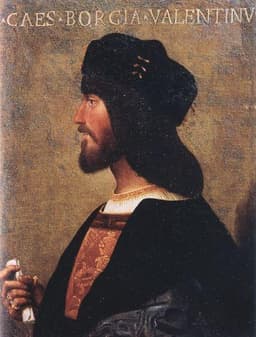
Cesare Borgia
General · Medieval
60.2Total
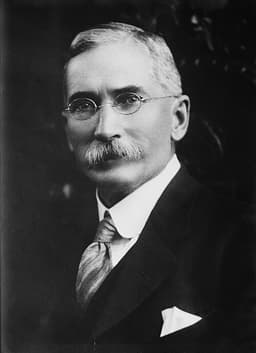
J. B. M. Hertzog
General · Modern
56.1Total
Basic Information
Born
1475
1866
Died
1507
1942
Era
Medieval
Modern
Nationality
Italy
South Africa
Occupation
General
General
Civilization
Western
Other
Score Comparison
Military (10%)
67.5
25.0
Political (20%)
68.0
60.0
Influence (20%)
68.0
56.7
Legacy (20%)
40.0
50.0
Leadership (15%)
64.0
79.8
Strategy (15%)
66.3
60.0
TOTAL
60.2
56.1
Cesare Borgia — Complete Timeline
1493 AD
Appointment as CardinalPolitical Action◆ Major
Cesare Borgia was appointed cardinal by his father, Pope Alexander VI. This position gave him significant power within the Church and access to papal resources. He used his cardinalate to advance his family's political interests in Italy.
CardinalNepotismPapacy
Impact: regional
1498 AD
Resignation from the CardinalatePolitical Action◆ Major
Cesare Borgia resigned as cardinal to pursue a military and political career. He became the first person to voluntarily leave the College of Cardinals. This move allowed him to focus on conquering territories in the Romagna region of Italy.
ResignationMilitaryRomagna
Impact: regional
1499 AD
Conquest of the RomagnaWar◆ Major
Cesare Borgia, with French support, launched a campaign to conquer the cities of the Romagna. He captured Imola, Forl
ConquestRomagnaMachiavelli
Impact: regional
1503 AD
Fall from PowerPolitical Action
After the death of Pope Alexander VI, Cesare Borgia lost his political support. He was captured by his enemies and imprisoned in Spain. His territories in Italy quickly collapsed. This sudden fall demonstrated the fragility of his power base.
FallImprisonmentCollapse
Impact: regionaltragic
1507 AD
Death in BattleWar
Cesare Borgia was killed in a skirmish near Viana, Navarre, while serving as a mercenary captain. His death ended any chance of restoring his former power. He died at age 31, having failed to regain his Italian territories.
DeathMercenaryNavarre
tragic
J. B. M. Hertzog — Complete Timeline
1899 AD
Boer War GeneralWar◆ Major
Hertzog served as a Boer general in the Second Boer War, commanding forces in the Orange Free State. He participated in several battles and became a prominent Afrikaner military leader.
Second Boer WarGeneralMilitary
Impact: regional
1914 AD
Founded the National PartyPolitical Action
Hertzog broke away from the South African Party and founded the National Party, which championed Afrikaner nationalism and opposed British imperial influence. The party would later implement apartheid.
National PartyAfrikaner NationalismFounding
Impact: nationalconstructive
1924 AD
Prime Minister of South AfricaPolitical Action◆ Major
Hertzog became Prime Minister after his National Party won the general election in coalition with the Labour Party. His government implemented policies to protect white workers and promote Afrikaner interests, including the 'civilized labour' policy.
Prime MinisterAfrikaner RightsLabour Policy
Impact: national
1934 AD
Merged with Smuts to Form United PartyPolitical Action◆ Major
Hertzog merged his National Party with Jan Smuts' South African Party to form the United Party. The coalition aimed to address the economic crisis of the Great Depression and promote national unity, but it alienated hardline Afrikaner nationalists.
United PartyCoalitionNational Unity
Impact: nationalconstructive
1936 AD
Passed the Representation of Natives ActReform◆ Major
Hertzog's government passed the Representation of Natives Act, which removed Black voters from the common voters' roll in the Cape Province and allowed them to elect white representatives instead. This further entrenched racial segregation.
SegregationDisenfranchisementLegislation
Impact: nationaldestructive
1939 AD
Resigned Over Neutrality in WWIIPolitical Action◆ Major
Hertzog advocated for South African neutrality in World War II, but his cabinet voted to enter the war on the Allied side. He resigned as Prime Minister and was succeeded by Jan Smuts, splitting the United Party.
World War IINeutralityResignation
Impact: national
Expert Analysis
J. B. M. Hertzog vs Cesare Borgia
# The Prince and the General: Two Paths to Power in Turbulent Times
On a late autumn day in 1507, Cesare Borgia fell from his horse in a minor skirmish near the Spanish town of Viana, cut down by enemies who did not even know his name. Four centuries later, in September 1939, James Barry Munnik Hertzog stood before his cabinet in Pretoria, his face ashen, after losing the vote that would send South Africa into a world war he had desperately tried to avoid. One died in obscurity, the other in political defeat. Yet both had once held the fate of nations in their hands.
These two men—the Renaissance cardinal turned conquistador, and the Boer general turned prime minister—could hardly appear more different. One was the son of a pope, the other the son of a farmer. One ruled through terror and intrigue, the other through parliamentary maneuvering. One left behind a legend that inspired Machiavelli; the other left behind a legal system that would haunt his nation for generations. Yet both faced the same fundamental question: how does a leader forge power in a world that refuses to submit?
Origins
Cesare Borgia was born in 1475 into the most notorious family of Renaissance Italy. His father, Rodrigo Borgia, became Pope Alexander VI in 1492, and Cesare was raised in the Vatican’s gilded halls, where piety was a mask and poison a tool of state. The Borgias were Spaniards in Italy, outsiders who clawed their way to supremacy through marriage, bribery, and murder. Cesare learned early that the world rewarded ruthlessness.
J. B. M. Hertzog was born in 1866 on a farm in the Cape Colony, the son of a Boer frontiersman. His childhood was shaped by the vast emptiness of the South African veld and the bitter memory of British imperialism. While Cesare studied canon law at the University of Pisa, Hertzog studied law at the University of Amsterdam, absorbing the Dutch legal traditions that would later define his political philosophy.
Their eras shaped them differently. Cesare lived in an age of city-states and condottieri, when a man could carve out a kingdom with a sword and a papal dispensation. Hertzog lived in an age of empires and parliaments, when power required votes and newspapers and party machinery. But both understood that legitimacy was a weapon.
Rise to Power
At age eighteen, Cesare Borgia was made a cardinal by his father—a position that gave him wealth, influence, and access to the Church’s enormous resources. But in 1498, in a stunning move, he became the first person in history to voluntarily resign the cardinalate. He traded his red hat for a sword, his vestments for armor. With French support and papal gold, he launched a campaign to conquer the cities of the Romagna.
Hertzog’s rise followed a different path. During the Second Boer War of 1899, he served as a Boer general, commanding forces in the Orange Free State. He was not a brilliant tactician—his military scores reflect competence rather than genius—but he earned the respect of his men through stubbornness and endurance. After the war, when the Boers were defeated and humiliated, Hertzog turned to politics. In 1914, he broke away from the South African Party to found the National Party, which championed Afrikaner nationalism and the rights of the white farming class.
The contrast is instructive. Cesare rose through family connection and military conquest; Hertzog rose through grievance and organization. Cesare’s power was vertical, flowing from the pope down; Hertzog’s was horizontal, built from the grassroots up.
Leadership and Governance
As ruler of the Romagna, Cesare Borgia governed with a combination of terror and efficiency. He appointed a harsh administrator named Ramiro de Lorqua to restore order, then, when the populace had been sufficiently pacified, he had de Lorqua executed and displayed in the town square—a calculated act that Machiavelli later praised as a prince’s necessary cruelty. Cesare’s rule was personal, absolute, and short-lived.
Hertzog, by contrast, governed through coalition and compromise. When he became Prime Minister in 1924, he formed a government with the Labour Party, balancing Afrikaner nationalism with working-class interests. In 1934, he merged his National Party with Jan Smuts’ South African Party to form the United Party, a grand coalition aimed at unifying white South Africans. His greatest legislative achievement—or catastrophe, depending on perspective—was the 1936 Representation of Natives Act, which removed Black voters from the common roll and laid the legal groundwork for apartheid.
Cesare’s military strategy was aggressive and direct: he conquered, he crushed, he moved on. His score of 72.0 in strategy reflects a man who understood terrain and timing. Hertzog’s strategy was political: he built alliances, he split his enemies, he waited. His leadership score of 79.9 suggests a man who could inspire loyalty, but his political score of 73.0 shows he was a master of the game.
Triumph and Tragedy
Cesare’s greatest triumph was the conquest of the Romagna in 1499, when he captured Imola, Forlì, and other cities with astonishing speed. At twenty-four, he seemed unstoppable. His tragedy came in 1503, when his father died suddenly. Without the pope’s protection, Cesare’s enemies closed in. He was captured, imprisoned, and eventually escaped to Navarre, where he died in 1507 at age thirty-two, fighting as a mercenary for a king who did not value him.
Hertzog’s triumph was becoming Prime Minister of South Africa, leading a nation that had once been his enemy. His tragedy came in 1939, when he argued for South African neutrality in World War II. His cabinet voted against him, and he resigned, broken by the realization that his vision of an Afrikaner-led, neutral South Africa was impossible in a world at war.
Character and Destiny
Cesare Borgia was a man of action, not reflection. He believed that power was its own justification, that cruelty was a tool, and that loyalty was a transaction. Machiavelli immortalized him in *The Prince* as the model of what a ruler should be—decisive, ruthless, and unencumbered by morality. But Cesare’s character also contained his downfall: he trusted too much in his father’s protection, too little in building lasting institutions.
Hertzog was a man of principle, stubborn and principled to a fault. He believed in Afrikaner rights with an almost religious fervor, and this belief drove him to pass laws that would devastate South Africa for decades. His character gave him political success but also moral blindness. He could not see that the rights he fought for were built on the denial of others’ rights.
Legacy
Cesare Borgia’s legacy is largely literary. He lives on in Machiavelli’s pages, a symbol of the amoral prince. His total score of 60.4 reflects a figure who was influential but ultimately failed. Yet his story continues to fascinate because it asks uncomfortable questions about power and morality.
Hertzog’s legacy is more concrete and more troubling. His total score of 68.1 reflects a leader who achieved lasting change—but much of that change was for the worse. The Representation of Natives Act he championed in 1936 directly led to the apartheid system that would stain South Africa for generations. He is remembered as a founder of Afrikaner nationalism, but also as a man who chose his people’s rights over universal justice.
Conclusion
Standing at the end of their stories, one is struck by a strange symmetry. Cesare Borgia died unknown, his ambitions buried with him. J. B. M. Hertzog died in 1942, a year after resigning, his political career in ruins. Both men sought to impose their will on history, and both were broken by forces they could not control.
Yet their differences teach us something profound about leadership. Cesare’s power was the power of the moment—brilliant, terrifying, and fragile. Hertzog’s power was the power of institutions—slow, persistent, and dangerous in its own way. One ruled through fear, the other through law. One left a myth, the other left a system.
In the end, perhaps the most telling contrast is this: Cesare Borgia inspired a book about how to gain power. J. B. M. Hertzog inspired a nation’s long struggle to overcome the power he created. Both are cautionary tales, but for very different reasons.
Rankings
🥇
Cesare BorgiaLeader
Mil: 67.5Pol: 68.0Inf: 68.0
60.2
🥈
J. B. M. Hertzog
Mil: 25.0Pol: 60.0Inf: 56.7
56.1
+4.1 behind
How This Comparison Works
Algorithm
Each figure is scored on 6 dimensions (0—100 scale) based on structured historical data: Military (10%), Political (20%), Influence (20%), Legacy (20%), Leadership (15%), Strategy (15%). The weighted total produces the final ranking.
Data Sources
Scores are computed from structured sub-indicators in the database. Scale factors adjust for era (Ancient ×0.85, Modern ×1.0) and civilization size (Eastern ×1.05, Other ×0.80) to account for differences in population and military scale.
Maximum 3 Figures
Comparisons are limited to 2—3 figures to ensure readability and statistical meaningfulness.
Error Margins
±5 points per dimension — Sub-scores are derived from historical records with inherent uncertainty. Two figures within 5 points on a dimension should be considered roughly equivalent in that area.
Total Score Accuracy
±3 points overall — The weighted combination of 6 dimensions produces a total score with approximately ±3 points of uncertainty. Differences of less than 3 points are not statistically significant— the figures are effectively tied.
Known Limitations
- Historical records are incomplete and uneven across civilizations
- Figures from oral-tradition societies may be underrepresented
- Occupation labels can misclassify multi-role figures
- Scores measure capability and impact, not moral character
- Quantitative scoring is a comparison tool, not absolute truth
Capability Radar
Military (10%) — Battles & Warfare
Battles
55
45
Win Rate
60
40
Expansion
55
20
Political (20%) — Governance & Reform
Reform
40
60
Diplomacy
55
55
Economy
35
50
Influence (20%) — Cultural & Global Reach
Cultural
55
50
Global
60
45
Legacy (20%) — Historical Impact
Historical
70
55
Longevity
65
40
Leadership (15%) — Power & Stability
Tenure
45
65
Stability
30
45
Strategy (15%) — Tactics & Innovation
Strategy
60
50
Tactics
65
45
Reform
50
30
Similar Comparisons
Comments & Discussion
Borgia'sButcher6/16/2026
Nice romanticizing of a literal murderer, but let's not pretend Borgia was some master strategist. He rode on daddy's papal coattails and French mercenaries—take away Alexander VI's gold and Swiss pikes, and you get a dead man in a ditch at 31. Meanwhile, Hertzog built a political career from scratch after the Boer War devastation. Give me the farmer's son who outmaneuvered Botha and Smuts any day over a nepo-baby who couldn't hold power without papal backing.
古战场捕风者6/16/2026
把一个靠教皇父亲和法国长矛兵混到31岁就暴死的雇佣兵头子,跟一位从布尔战争废墟里爬出来、硬生生在英帝国阴影下建立立法的将军比较?博基亚除掉政敌靠下毒和收买,赫佐格靠的是1914年《土著土地法》——后者影响的不是几个红衣主教,而是几百万非洲人几代人的生存权。说文艺复兴式的残忍?看看种族隔离的图纸是谁画的吧。
MachiavelliFanboy6/16/2026
You revisionists always miss the point: Borgia was the template for *The Prince* precisely because he understood that cruelty must be swift and decisive. Yes, he used papal power—that was the game of his era. Hertzog's tragedy was that he played parliamentary politics as a gentleman's club while dealing with existential threats. Borgia never hesitated; Hertzog waited until 1939 to take a stand against Hitler, and by then his party had already split. Renaissance pragmatism beats Boer stubbornness
数据刺客6/16/2026
有趣,但让我们看数字:博基亚在1499-1503年间控制了罗马涅全境,军队最多时约1万人,统治时间不超过4年。赫佐格1924-1939年任总理15年,管理着200万白人和600万黑人的人口结构,经济从矿业扩张到制造业。你说谁的影响更持久?博基亚的军事征服在1503年他父亲一死就崩盘了,赫佐格的《土著土地法》恶果延续到1994年。别把短命暴君的表演当政治智慧。
ClassicsCorner6/16/2026
We're comparing a Renaissance prince who studied Livy's Roman history at university to a frontier lawyer who wrote legal textbooks? Borgia's military campaigns followed Vegetius' stratagems—his 1499 siege of Forlì using cannon fire to breach walls was textbook Roman engineering adapted to gunpowder. Hertzog's military experience was guerrilla warfare on horseback and entrenchment. One understood that power requires theatrical violence; the other confused governance with legislation. There's a re
沙漏观察者6/16/2026
别忘了结局:博基亚死在战场,赫佐格