Loading...
Carlos Manuel de Cespedes vs Gulbuddin Hekmatyar
Carlos Manuel de Cespedes leads by 6.1 pts · 2 figures compared
…
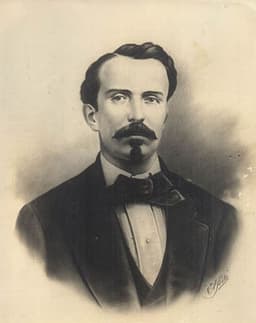
Carlos Manuel de Cespedes
Revolutionary · Modern
44.4Total
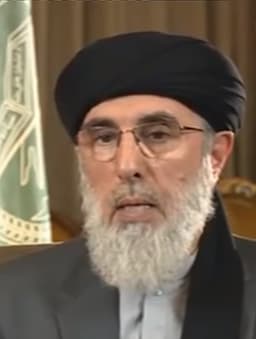
Gulbuddin Hekmatyar
Revolutionary · Modern
38.3Total
Basic Information
Born
1819
1947
Died
1874
—
Era
Modern
Modern
Nationality
Cuba
Afghanistan
Occupation
Revolutionary
Revolutionary
Civilization
Western
Middle Eastern
Score Comparison
Military (10%)
50.0
35.0
Political (20%)
27.9
26.4
Influence (20%)
58.0
47.1
Legacy (20%)
50.0
36.7
Leadership (15%)
30.0
40.4
Strategy (15%)
36.8
38.3
TOTAL
44.4
38.3
Carlos Manuel de Cespedes — Complete Timeline
1868 AD
Grito de Yara (1868)Political Action
Carlos Manuel de C
IndependenceRevolutionTen Years' War
Impact: nationalprogressive
1869 AD
President of the Republic in Arms (1869)Political Action◆ Major
Céspedes was elected President of the Republic of Cuba in Arms by the Assembly of Guáimaro. He led the rebel government during the early years of the Ten Years' War, advocating for independence and the abolition of slavery. His leadership was marked by internal divisions.
PresidencyRebel GovernmentWar
Impact: national
1873 AD
Deposed and Killed (1873-1874)Political Action◆ Major
Céspedes was deposed as president by the rebel assembly in 1873 due to disagreements over military strategy and political direction. He was killed in a skirmish with Spanish troops in 1874. His death made him a martyr for Cuban independence.
DepositionDeathMartyr
Impact: nationaltragic
Gulbuddin Hekmatyar — Complete Timeline
1975 AD
Founding of Hezb-e Islami (1975)Political Action◆ Major
Gulbuddin Hekmatyar founded the Hezb-e Islami political party, an Islamist faction that became one of the most powerful mujahideen groups during the Soviet-Afghan War. The party received significant support from Pakistan's ISI and foreign Islamist donors.
MujahideenIslamist PartyCold War
Impact: national
1993 AD
Prime Minister during Civil War (1993-1994)Political Action◆ Major
Hekmatyar served as Prime Minister of Afghanistan from 1993 to 1994 under President Burhanuddin Rabbani. His tenure was marked by intense factional fighting, including rocket attacks on Kabul that caused thousands of civilian casualties, contributing to the devastation of the city.
Civil WarKabulRocket Attacks
Impact: nationaldestructive
1996 AD
Alliance with Taliban (1996-2001)Political Action
After the Taliban captured Kabul in 1996, Hekmatyar initially fled to Iran. He later aligned with the Taliban regime, though his influence waned. He remained in Afghanistan until the US-led invasion in 2001, after which he fled to Pakistan.
TalibanExileAlliance
Impact: national
2016 AD
Peace Agreement with Afghan Government (2016)Political Action◆ Major
Hekmatyar signed a peace agreement with the Afghan government of President Ashraf Ghani in 2016. The deal allowed him to return to Afghanistan from exile, with his party recognized as a political entity and his fighters integrated into state security forces.
Peace DealReconciliationGhani
Impact: nationalconstructive
Expert Analysis
Gulbuddin Hekmatyar vs Carlos Manuel de Cespedes
# The Revolutionary’s Crossroads: Two Paths to Freedom
On a Cuban sugar plantation in October 1868, a wealthy landowner named Carlos Manuel de Céspedes freed his slaves, raised a rebel flag, and declared independence from Spain. Just over a century later, on the other side of the world, a young engineering student named Gulbuddin Hekmatyar abandoned his studies at Kabul University to join the Islamist movement that would define his life. Both men sought to overthrow foreign domination; both would become fathers of revolutions that outgrew them. Yet one is remembered as the founder of a nation, the other as a warlord who helped destroy one. What separates them is not merely circumstance, but the choices they made when power was within their grasp.
Origins
Céspedes was born in 1819 into the Cuban planter aristocracy, a class that thrived under Spanish colonial rule. Educated in Havana and later at the University of Barcelona, he absorbed the liberal ideals of the nineteenth century—abolitionism, republicanism, self-determination. He returned to Cuba a man of two worlds: a slave owner who loathed slavery, a Spaniard by citizenship who burned for Cuban independence. His wealth and status gave him a platform; his contradictions gave him a cause.
Hekmatyar, born in 1947 in the northern Afghan province of Kunduz, came from a very different world. The son of a Ghilzai Pashtun landowner, he grew up in a society where clan loyalty and Islam were the only constants. The Soviet Union loomed to the north; the Afghan monarchy was crumbling. He studied engineering at Kabul University, but the late 1960s were a time of political ferment. Hekmatyar fell under the spell of the Muslim Brotherhood and the writings of Sayyid Qutb, which offered a totalizing vision: Islam as a political ideology, the state as an instrument of divine will. Where Céspedes saw liberation in secular republicanism, Hekmatyar saw it in a theocratic revolution.
Rise to Power
Céspedes’s path to leadership was both impulsive and deliberate. On October 10, 1868, he issued the Grito de Yara—a cry from his sugar mill that launched the Ten Years’ War. He had no army, no foreign backing, only a handful of followers and a conviction that the moment had come. Within months, the rebellion had spread across eastern Cuba, and Céspedes was elected President of the Republic in Arms by the Assembly of Guáimaro in 1869. His authority was never absolute; the assembly debated strategy, and regional caudillos challenged his decisions. But he had legitimacy, born of his sacrifice and his vision.
Hekmatyar’s rise was more methodical, more ruthless. In 1975, he founded Hezb-e Islami, splitting from other Islamist factions over tactics and personality. While others sought gradual change, Hekmatyar wanted immediate revolution. The Soviet invasion of Afghanistan in 1979 turned him into a major player: his party received billions of dollars in CIA and Saudi funding, making him one of the most powerful mujahideen commanders. But he never built a unified movement. He fought the Soviets, yes, but he also fought other Afghan factions, shelling Kabul itself during the 1990s civil war. In 1993, he became Prime Minister under President Burhanuddin Rabbani—a hollow title, for his rockets were still falling on the capital. Power, for Hekmatyar, was not a responsibility but a weapon.
Leadership & Governance
Céspedes governed as a republican idealist. He presided over a government in exile, issuing decrees, organizing elections, and trying to balance military necessity with democratic principle. He freed his slaves, abolished slavery in rebel-held territories, and sought international recognition from the United States and Latin American republics. His military strategy was flawed—he favored conventional battles over guerrilla tactics—but his political vision was clear: a free, independent Cuba.
Hekmatyar governed as a warlord. As Prime Minister, he never controlled the state; he controlled militias. His tenure from 1993 to 1994 was marked by continued shelling of Kabul, which killed thousands of civilians. He made alliances only to break them, switching sides between Iran, the Taliban, and the Pakistani intelligence services. In 1996, after the Taliban captured Kabul, he fled to Iran, then later aligned with the very regime that had driven him out. His political strategy was pure opportunism: power for its own sake, without a coherent plan for governance.
Triumph & Tragedy
Céspedes’s greatest moment was the Grito de Yara—the cry that started it all. His greatest failure came in 1873, when the rebel assembly deposed him as president. The reasons were complex: disagreements over military strategy, accusations of authoritarianism, and the weariness of a long war. He was killed by Spanish forces in 1874, a broken man in a cave, but his death made him a martyr. The Ten Years’ War ultimately failed, but it planted the seed of Cuban independence, which José Martí would harvest in 1895.
Hekmatyar’s triumph was the 1979-1989 jihad against the Soviet Union. His tragedy was everything that followed. He signed a peace agreement with the Afghan government in 2016, a belated attempt at redemption, but by then he was a marginal figure. His legacy is the destruction of Kabul, the fracturing of the mujahideen, and the chaos that paved the way for the Taliban. He outlived his enemies, but not his reputation.
Character & Destiny
Céspedes was a man of principle, even when those principles cost him. He freed his slaves, he insisted on republican governance, and he accepted deposition rather than compromise his vision. His character was shaped by the Enlightenment: he believed in progress, in law, in the possibility of a better world. That belief drove him to start a war he could not win, but it also gave him a moral authority that outlasted his defeat.
Hekmatyar was a man of strategy, not principle. His military score of 46.8 and political score of 45.9 reflect a leader who was neither a great general nor a great statesman, but a survivor. He played the great game of the Cold War with skill, but he had no vision for what came after victory. His total score of 51.6, compared to Céspedes’s 56.2, captures something essential: Hekmatyar was average in everything except destruction.
Legacy
Céspedes is remembered as the Father of the Cuban Nation. His image appears on the Cuban peso; his plantation is a national monument. The Grito de Yara is celebrated as the birth of Cuban independence. He failed in his own lifetime, but his failure was the necessary prelude to success.
Hekmatyar is remembered as a warlord, a spoiler, a man who could not stop fighting even when the war was over. His legacy score of 47.8 reflects this: he is neither forgotten nor honored. He remains a cautionary tale about the limits of military power without political vision, and about the cost of revolution without a plan for peace.
Conclusion
Two revolutionaries, two worlds, two outcomes. Céspedes began with a sugar plantation and ended with a nation. Hekmatyar began with an ideology and ended with rubble. The difference is not in their courage—both were fearless—but in their conception of what revolution was for. For Céspedes, it was a means to create something new: a republic, a free people, a future. For Hekmatyar, it was an end in itself: a perpetual struggle, an endless war. In the end, the father of a nation and the destroyer of one are separated not by fate, but by the simple question: What are you fighting for?
Rankings
🥇
Carlos Manuel de CespedesLeader
Mil: 50.0Pol: 27.9Inf: 58.0
44.4
🥈
Gulbuddin Hekmatyar
Mil: 35.0Pol: 26.4Inf: 47.1
38.3
+6.1 behind
How This Comparison Works
Algorithm
Each figure is scored on 6 dimensions (0—100 scale) based on structured historical data: Military (10%), Political (20%), Influence (20%), Legacy (20%), Leadership (15%), Strategy (15%). The weighted total produces the final ranking.
Data Sources
Scores are computed from structured sub-indicators in the database. Scale factors adjust for era (Ancient ×0.85, Modern ×1.0) and civilization size (Eastern ×1.05, Other ×0.80) to account for differences in population and military scale.
Maximum 3 Figures
Comparisons are limited to 2—3 figures to ensure readability and statistical meaningfulness.
Error Margins
±5 points per dimension — Sub-scores are derived from historical records with inherent uncertainty. Two figures within 5 points on a dimension should be considered roughly equivalent in that area.
Total Score Accuracy
±3 points overall — The weighted combination of 6 dimensions produces a total score with approximately ±3 points of uncertainty. Differences of less than 3 points are not statistically significant— the figures are effectively tied.
Known Limitations
- Historical records are incomplete and uneven across civilizations
- Figures from oral-tradition societies may be underrepresented
- Occupation labels can misclassify multi-role figures
- Scores measure capability and impact, not moral character
- Quantitative scoring is a comparison tool, not absolute truth
Capability Radar
Military (10%) — Battles & Warfare
Battles
30
45
Win Rate
25
30
Expansion
10
25
Political (20%) — Governance & Reform
Reform
40
15
Diplomacy
25
20
Economy
15
10
Influence (20%) — Cultural & Global Reach
Cultural
60
25
Global
50
25
Legacy (20%) — Historical Impact
Historical
65
30
Longevity
55
20
Leadership (15%) — Power & Stability
Tenure
30
30
Stability
10
5
Strategy (15%) — Tactics & Innovation
Strategy
25
35
Tactics
20
40
Reform
15
20
Similar Comparisons
Comments & Discussion
No comments yet. Be the first to share your thoughts!