Loading...
Bohdan Khmelnytsky vs John Lambert
Bohdan Khmelnytsky leads by 4.5 pts · 2 figures compared
…
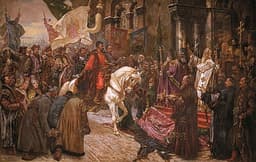
Bohdan Khmelnytsky
General · Modern
61.2Total
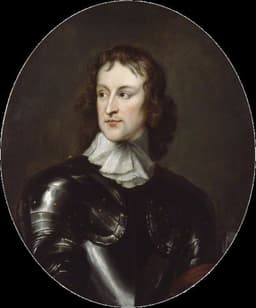
John Lambert
General · Modern
56.7Total
Basic Information
Born
1595
1619
Died
1657
1684
Era
Modern
Modern
Nationality
Ukraine
England
Occupation
General
General
Civilization
Western
Western
Score Comparison
Military (10%)
61.7
70.0
Political (20%)
62.7
45.0
Influence (20%)
58.3
59.0
Legacy (20%)
52.0
50.0
Leadership (15%)
80.0
68.0
Strategy (15%)
60.7
55.0
TOTAL
61.2
56.7
Bohdan Khmelnytsky — Complete Timeline
1648 AD
Battle of Zhovti VodyWar◆ Major
Khmelnytsky's Cossack forces, allied with Crimean Tatars, defeated a Polish army at Zhovti Vody. This victory marked the beginning of the Khmelnytsky Uprising, leading to widespread rebellion across Ukraine.
BattleUprisingPoland
Impact: regional
Election as Hetman of the Zaporozhian HostPolitical Action◆ Major
Bohdan Khmelnytsky was elected Hetman of the Zaporozhian Cossacks at a council on the Dnieper River. This election formalized his leadership of the Cossack uprising against the Polish-Lithuanian Commonwealth.
ElectionCossackHetman
Impact: regionalconstructive
1649 AD
Siege of ZbarazhWar◆ Major
Khmelnytsky besieged the Polish fortress of Zbarazh for over six weeks. The siege ended with the Treaty of Zboriv, which granted autonomy to the Cossack Hetmanate but failed to achieve full independence.
SiegePolandTreaty
Impact: regional
1651 AD
Battle of BerestechkoWar◆ Major
Khmelnytsky's forces suffered a major defeat at Berestechko against the Polish army, with heavy Cossack casualties. This battle forced him to sign the unfavorable Treaty of Bila Tserkva, reducing Cossack autonomy.
BattleDefeatPoland
Impact: regionaltragic
1654 AD
Treaty of PereiaslavPolitical Action
Khmelnytsky signed the Treaty of Pereiaslav with Tsar Alexis of Russia, placing the Cossack Hetmanate under Russian protection. This treaty shifted Ukraine's allegiance from Poland to Russia, with lasting geopolitical consequences.
TreatyRussiaUkraine
Impact: regional
John Lambert — Complete Timeline
1648 AD
Battle of PrestonWar◆ Major
John Lambert commanded parliamentary forces at the Battle of Preston, defeating a Scottish royalist army. The victory helped secure the parliamentary cause in the Second English Civil War.
BattleEnglish Civil WarParliament
Impact: national
1653 AD
Drafted the Instrument of GovernmentPolitical Action◆ Major
John Lambert was the principal author of the Instrument of Government, the written constitution that established the Protectorate under Oliver Cromwell. The document created a Lord Protector and a Council of State, but was never fully implemented.
ConstitutionProtectorateCromwell
Impact: nationalconstructive
1662 AD
Exiled to GuernseyPolitical Action◆ Major
After the Restoration, John Lambert was tried for treason and exiled to the island of Guernsey. He spent the remainder of his life in captivity, never regaining political influence.
ExileRestorationPunishment
Impact: nationaltragic
Expert Analysis
Origins
Bohdan Khmelnytsky (c. 1595–1657) was born into a Ukrainian noble family in Subotiv, central Ukraine. Educated at Jesuit schools, he studied in Lviv and later served in the Polish-Lithuanian Commonwealth's military. His father was killed in battle, and a Polish official seized his estate, fueling personal grievances. John Lambert (1619–1684) was born in Kirkby Malham, Yorkshire, to a modest gentry family. He studied law at the Inns of Court but left to join the parliamentary army at the outbreak of the English Civil War. His early career was shaped by legal training and Puritan convictions.
Rise to Power
Khmelnytsky's rise began in 1647 when he fled to the Zaporozhian Sich after a confrontation with a Polish magnate. In January 1648, he was elected Hetman of the Zaporozhian Host. He forged an alliance with the Crimean Tatars and led the Cossack uprising against the Polish-Lithuanian Commonwealth. His military campaign scored 61.7 in military score, marked by early victories at Zhovti Vody (May 1648) and Korsun (May 1648), which expelled Polish forces from Ukraine. Lambert rose through the parliamentary ranks under Oliver Cromwell. He distinguished himself at the Battle of Marston Moor (1644) and later commanded the northern army. His key turning point came in 1648 at the Battle of Preston, where he defeated a Scottish royalist army, securing the parliamentary cause. Lambert's political influence peaked when he drafted the Instrument of Government (1653), which established the Protectorate. His political score of 45.0 reflects his eventual fall from power.
Leadership & Governance
Khmelnytsky led the Cossack Hetmanate with a mix of military command and diplomatic maneuvering. He maintained authority through a council of officers and negotiated with multiple powers: Poland, Russia, the Ottoman Empire, and Sweden. His governance score of 80.0 in leadership shows his ability to hold together a fragile state. However, his reliance on the Crimean Tatars as allies was inconsistent; they often betrayed him. Lambert, as a parliamentary general, supported republican governance. He advocated for a written constitution and was instrumental in drafting the Instrument of Government, which limited Cromwell's powers. Yet his political acumen was weaker; after Cromwell's death, he failed to secure his position against rivals like General Monck.
Triumph & Tragedy
Khmelnytsky's greatest triumph was the creation of an autonomous Cossack state under the Treaty of Zboriv (1649), which granted rights to Cossacks and Orthodox Christians. His tragedy was the Treaty of Pereiaslav (1654), where he placed Ukraine under Russian protection to gain military aid. This decision ultimately led to the absorption of Ukraine into the Russian Empire. Lambert's triumph was his role in drafting the Instrument of Government, a pioneering constitutional document. His tragedy came after the Restoration of Charles II in 1660: he was tried for treason and exiled to Guernsey, where he died in captivity.
Character & Destiny
Khmelnytsky was pragmatic and ambitious, but his shift from Polish ally to Russian subject highlighted his strategic desperation. He scored 60.7 in strategy, reflecting his ability to exploit opportunities but also his miscalculations. Lambert was principled and legalistic, but his inflexibility in politics led to his downfall. He scored 55.0 in strategy, showing less adaptability. Both men's characters shaped their fates: Khmelnytsky's quest for security led to Russian domination; Lambert's commitment to republicanism made him a target after the monarchy's return.
Legacy
Khmelnytsky is remembered as a national hero in Ukraine, symbolizing the struggle for independence. His legacy score of 52.0 reflects his mixed impact: he established a Cossack state but also set the stage for Russian control. The Treaty of Pereiaslav remains controversial. Lambert's legacy is as a constitutional pioneer and a key figure in the Commonwealth period. His Instrument of Government influenced later republican thought, but his name is less known than Cromwell's. Both scored 50.0 and 52.0 in legacy, indicating moderate long-term impact.
Conclusion
Khmelnytsky had a greater overall impact due to his total score of 61.2 versus Lambert's 56.7. His creation of a Cossack state and his role in Ukraine's national identity outweigh Lambert's constitutional work, which was short-lived. While Lambert's ideas were advanced, Khmelnytsky's actions reshaped Eastern Europe. Khmelnytsky's leadership score of 80.0 and political score of 62.7 highlight his ability to mobilize a nation, whereas Lambert's political score of 45.0 reveals his failure to sustain power. Thus, Bohdan Khmelnytsky stands as the more significant historical figure.
Rankings
🥇
Bohdan KhmelnytskyLeader
Mil: 61.7Pol: 62.7Inf: 58.3
61.2
🥈
John Lambert
Mil: 70.0Pol: 45.0Inf: 59.0
56.7
+4.5 behind
How This Comparison Works
Algorithm
Each figure is scored on 6 dimensions (0—100 scale) based on structured historical data: Military (10%), Political (20%), Influence (20%), Legacy (20%), Leadership (15%), Strategy (15%). The weighted total produces the final ranking.
Data Sources
Scores are computed from structured sub-indicators in the database. Scale factors adjust for era (Ancient ×0.85, Modern ×1.0) and civilization size (Eastern ×1.05, Other ×0.80) to account for differences in population and military scale.
Maximum 3 Figures
Comparisons are limited to 2—3 figures to ensure readability and statistical meaningfulness.
Error Margins
±5 points per dimension — Sub-scores are derived from historical records with inherent uncertainty. Two figures within 5 points on a dimension should be considered roughly equivalent in that area.
Total Score Accuracy
±3 points overall — The weighted combination of 6 dimensions produces a total score with approximately ±3 points of uncertainty. Differences of less than 3 points are not statistically significant— the figures are effectively tied.
Known Limitations
- Historical records are incomplete and uneven across civilizations
- Figures from oral-tradition societies may be underrepresented
- Occupation labels can misclassify multi-role figures
- Scores measure capability and impact, not moral character
- Quantitative scoring is a comparison tool, not absolute truth
Capability Radar
Military (10%) — Battles & Warfare
Battles
65
65
Win Rate
70
60
Expansion
60
40
Political (20%) — Governance & Reform
Reform
50
55
Diplomacy
60
50
Economy
45
45
Influence (20%) — Cultural & Global Reach
Cultural
60
35
Global
50
30
Legacy (20%) — Historical Impact
Historical
65
50
Longevity
55
40
Leadership (15%) — Power & Stability
Tenure
55
60
Stability
40
40
Strategy (15%) — Tactics & Innovation
Strategy
65
65
Tactics
60
70
Reform
55
55
Similar Comparisons
Comments & Discussion
No comments yet. Be the first to share your thoughts!