Loading...
Bipin Rawat vs Huang Xing
Huang Xing leads by 2.5 pts · 2 figures compared
…
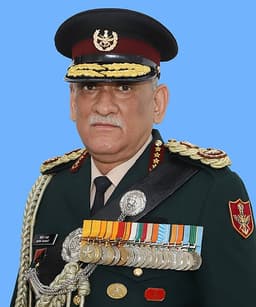
Bipin Rawat
General · Modern
55.0Total
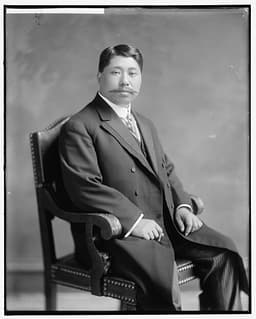
Huang Xing
General · Modern
57.5Total
Basic Information
Born
1958
1874
Died
—
1916
Era
Modern
Modern
Nationality
India
China
Occupation
General
General
Civilization
Indian
Eastern
Score Comparison
Military (10%)
40.0
46.7
Political (20%)
68.0
53.8
Influence (20%)
59.0
62.0
Legacy (20%)
45.0
56.0
Leadership (15%)
62.0
62.0
Strategy (15%)
55.0
60.0
TOTAL
55.0
57.5
Bipin Rawat — Complete Timeline
2016 AD
Led Counter-Insurgency Operations in KashmirWar
As Army Chief, Rawat oversaw intensified counter-insurgency operations in Kashmir following the 2016 unrest. He advocated for a tough approach against militants, leading to increased military presence.
KashmirCounter-insurgencyMilitary Operations
Impact: regional
Served as Chief of Army StaffPolitical Action◆ Major
Rawat was appointed Chief of Army Staff in 2016. He oversaw operations in Jammu and Kashmir, including the 2016 surgical strikes across the Line of Control, and focused on counter-insurgency.
Army ChiefSurgical StrikesCounter-insurgency
Impact: national
2019 AD
Appointed First Chief of Defence Staff of IndiaPolitical Action
General Bipin Rawat was appointed as India's first Chief of Defence Staff (CDS), a new position created to integrate the three armed services. He was tasked with improving jointness and military efficiency.
CDSMilitary ReformIntegration
Impact: nationalconstructive
2021 AD
Died in Helicopter CrashOther◆ Major
General Rawat, his wife, and 11 others died in a helicopter crash in Tamil Nadu. The crash occurred while he was traveling to a military event, and an inquiry attributed it to weather and pilot error.
DeathAccidentHelicopter Crash
Impact: nationaltragic
Huang Xing — Complete Timeline
1905 AD
Co-founded the TongmenghuiPolitical Action◆ Major
Huang Xing co-founded the Tongmenghui (Revolutionary Alliance) in Tokyo with Sun Yat-sen. He became its military leader, organizing armed uprisings against the Qing dynasty.
TongmenghuiRevolutionMilitary
Impact: nationalconstructive
1911 AD
Led the Wuchang UprisingWar
Huang Xing led the Wuchang Uprising, which sparked the Xinhai Revolution. He commanded revolutionary forces against Qing troops, securing initial victories that led to the dynasty's collapse.
Xinhai RevolutionUprisingMilitary
Impact: nationalconstructive
1912 AD
Served as Minister of War in the RepublicPolitical Action◆ Major
Huang Xing served as Minister of War in the provisional government of the Republic of China. He worked to organize a national army and defend the republic against counter-revolutionary forces.
GovernmentMilitaryRepublic
Impact: nationalconstructive
1913 AD
Led the Second Revolution Against Yuan ShikaiWar◆ Major
Huang Xing led the Second Revolution, an armed uprising against President Yuan Shikai's authoritarian rule. The rebellion failed due to lack of coordination and military inferiority, forcing Huang into exile.
Second RevolutionYuan ShikaiExile
Impact: nationaltragic
1916 AD
Died in Exile in ShanghaiPolitical Action
Huang Xing died in Shanghai after returning from exile in Japan and the United States. His death marked the loss of a key military leader of the Chinese revolution, though his legacy endured.
DeathExileRevolution
Impact: nationaltragic
Expert Analysis
Huang Xing vs Bipin Rawat
# The General and the Revolutionary
On a misty morning in December 2021, a helicopter carrying India's first Chief of Defence Staff, General Bipin Rawat, plunged into the hills of Tamil Nadu, killing him, his wife, and eleven others. The nation reeled. Just over a century earlier, in October 1916, another military leader lay dying in a modest house in Shanghai, his body worn from years of exile and failed uprisings. Huang Xing, co-founder of the Chinese republic, passed away at forty-two, his dream of a democratic China slipping away with each labored breath. Both men rose to the pinnacle of military power in their nations. Both sought to reshape the relationship between soldier and state. But their paths diverged as sharply as the eras that shaped them—one building institutions within a stable democracy, the other fighting to create one from the ruins of empire.
Origins
Bipin Rawat was born in 1958 into a military family in the Indian state of Uttarakhand. His father was a senior army officer, and young Bipin grew up in cantonments, absorbing the rhythms of regimental life. He attended the National Defence Academy and the Indian Military Academy, institutions designed to produce officers who served a civilian-led democracy. India’s independence was already a decade old when he was born; the constitutional framework was settled, and the military’s role was clear: obey the elected government.
Huang Xing entered the world in 1874, in Hunan province, at the twilight of the Qing dynasty. China was a civilization in agony—humiliated by foreign powers, wracked by rebellion, and ruled by a court that seemed paralyzed. Huang studied in Japan, where he encountered revolutionary ideas that promised to restore China’s greatness. Unlike Rawat, who inherited a functioning state, Huang faced a crumbling empire. For him, military power was not a profession but a tool for national salvation.
Rise to Power
Rawat’s rise followed the predictable ladder of a peacetime army: command of infantry units, staff college, promotion through the ranks. His breakthrough came in 2016, when he was appointed Chief of Army Staff. The appointment was not without controversy—he was selected over senior colleagues, a decision that sparked debate within the officer corps. But Rawat’s reputation as a tough, politically astute commander had been cemented during years of counter-insurgency operations in Kashmir and the northeast. He oversaw the 2016 surgical strikes across the Line of Control, a bold military response to terrorist attacks that earned him praise from the government and the public.
Huang Xing’s path was far more precarious. In 1905, he co-founded the Tongmenghui in Tokyo alongside Sun Yat-sen, becoming the revolutionary alliance’s military chief. For six years, he organized uprisings that failed again and again—each time, he escaped death by a hair, fleeing to Japan or Southeast Asia. Then came October 1911. The Wuchang Uprising, which he led, unexpectedly ignited a nationwide revolution. Within months, the Qing dynasty fell. Huang was suddenly the military strongman of a newborn republic, his prestige immense but his authority fragile.
Leadership & Governance
As Army Chief, Rawat was a modernizer. He pushed for joint operations among India’s three armed services, streamlined procurement, and emphasized the need for integrated battle groups. His political wisdom was evident in his handling of Kashmir: he balanced military pressure with outreach to local populations, though critics accused him of excessive force. When Prime Minister Narendra Modi created the post of Chief of Defence Staff in 2019, Rawat was the natural choice. He became the single military adviser to the government, tasked with breaking down the silos between army, navy, and air force. It was a bureaucratic revolution, not a violent one.
Huang Xing governed in chaos. As Minister of War in the provisional government of 1912, he tried to build a national army from scratch, but the republic had no treasury, no bureaucracy, and no loyalty beyond personal networks. His leadership style was inspirational but improvisational. When President Yuan Shikai turned autocratic, Huang led the Second Revolution in 1913—a desperate, poorly coordinated uprising that collapsed within weeks. He fled to Japan and then the United States, a general without an army.
Triumph & Tragedy
Rawat’s greatest moment was his appointment as CDS—a triumph of institutional reform that promised to reshape Indian defense for decades. His tragedy came swiftly: the helicopter crash that cut short his tenure after only two years. The accident investigation revealed pilot error and weather, but for many Indians, Rawat’s death felt like a national catastrophe, a leader taken at the peak of his potential.
Huang Xing’s triumph was the Wuchang Uprising itself, the spark that toppled an empire. His tragedy was everything that followed. He lived to see Yuan Shikai declare himself emperor, the republic he helped found descend into warlord chaos, and his own health collapse in exile. “The revolution has not yet succeeded,” he reportedly said before his death. “Comrades must still work hard.”
Character & Destiny
Rawat was disciplined, ambitious, and comfortable with authority. He believed in hierarchy and order—the military virtues that had served him well. His decisions reflected a man who trusted institutions and knew how to work within them. Huang Xing was a romantic revolutionary, brave to the point of recklessness, charismatic but poor at organization. He trusted in the power of will and sacrifice, but could not build the structures necessary to sustain victory.
Their different fates were not accidents of personality but products of their times. Rawat inherited a state that worked; his task was to make it work better. Huang Xing had to create a state from nothing, and the odds were stacked against him.
Legacy
Rawat is remembered as a visionary who modernized India’s military command structure. The office of CDS exists because of him, and future generals will build on his foundations. His legacy is institutional, embedded in the bureaucracy of defense.
Huang Xing is remembered as the “Father of the Chinese Revolution” alongside Sun Yat-sen, but his military achievements are overshadowed by later figures like Mao Zedong. In China today, he is a historical footnote—respected but not celebrated. In Taiwan, he is honored as a founding father. His legacy is contested, fragmented by the very political divisions he tried to overcome.
Conclusion
One man died in a helicopter crash, his work unfinished but his institution secure. The other died in exile, his revolution betrayed, his republic a memory. Both were soldiers who dreamed of a stronger nation. But Bipin Rawat built within a framework that held; Huang Xing fought for a framework that never fully formed. Their lives remind us that military leadership is never just about strategy or courage—it is about the state you serve, the era you inhabit, and the fragile, unpredictable nature of history itself.
Rankings
🥇
Huang XingLeader
Mil: 46.7Pol: 53.8Inf: 62.0
57.5
🥈
Bipin Rawat
Mil: 40.0Pol: 68.0Inf: 59.0
55.0
+2.5 behind
How This Comparison Works
Algorithm
Each figure is scored on 6 dimensions (0—100 scale) based on structured historical data: Military (10%), Political (20%), Influence (20%), Legacy (20%), Leadership (15%), Strategy (15%). The weighted total produces the final ranking.
Data Sources
Scores are computed from structured sub-indicators in the database. Scale factors adjust for era (Ancient ×0.85, Modern ×1.0) and civilization size (Eastern ×1.05, Other ×0.80) to account for differences in population and military scale.
Maximum 3 Figures
Comparisons are limited to 2—3 figures to ensure readability and statistical meaningfulness.
Error Margins
±5 points per dimension — Sub-scores are derived from historical records with inherent uncertainty. Two figures within 5 points on a dimension should be considered roughly equivalent in that area.
Total Score Accuracy
±3 points overall — The weighted combination of 6 dimensions produces a total score with approximately ±3 points of uncertainty. Differences of less than 3 points are not statistically significant— the figures are effectively tied.
Known Limitations
- Historical records are incomplete and uneven across civilizations
- Figures from oral-tradition societies may be underrepresented
- Occupation labels can misclassify multi-role figures
- Scores measure capability and impact, not moral character
- Quantitative scoring is a comparison tool, not absolute truth
Capability Radar
Military (10%) — Battles & Warfare
Battles
45
35
Win Rate
50
30
Expansion
30
20
Political (20%) — Governance & Reform
Reform
55
60
Diplomacy
50
55
Economy
30
30
Influence (20%) — Cultural & Global Reach
Cultural
35
40
Global
30
40
Legacy (20%) — Historical Impact
Historical
40
55
Longevity
20
45
Leadership (15%) — Power & Stability
Tenure
40
40
Stability
45
25
Strategy (15%) — Tactics & Innovation
Strategy
65
45
Tactics
60
40
Reform
75
50
Similar Comparisons
Comments & Discussion
**The Ordnance Oracle**6/16/2026
Huang Xing was never the charismatic center of the 1911 Revolution—that was Sun Yat-sen’s role. But Rawat? He was tasked with integrating India’s three service branches under one command, a structural reform that actually happened. One man died fighting for a republic that never fully materialized; the other died building a military bureaucracy that will outlast him. I’ll take institutional legacy over revolutionary romance any day.
**兵戈考据客**6/16/2026
说句实话,把黄兴和拉瓦特放在一起比,本身就是一种历史错位。拉瓦特死于2021年,是印度职业军队的顶峰产物;黄兴1916年病逝时,连一个稳定的国家军队都没建成。他指挥过的最成功战役——阳夏防御战——本质上还是地方武装对抗北洋正规军,战术上毫无新意。一个是在成熟的军事体系里做改革,一个是在权力废墟上试图造体系,起点差太多了。
**The Data Haruspex**6/16/2026
I've seen the body counts. Huang Xing's direct military engagements—the Second Guangzhou Uprising, the Wuchang defense—were tactical disasters with staggering casualty rates among revolutionary cadres. Rawat, by contrast, spent decades avoiding open conflict while his troops patrolled a contested border that had settled into low-grade confrontation. Which man actually preserved his soldiers' lives? The numbers don't lie: Rawat, by a comfortable margin. Heroic failure is still failure.
**棱镜视角师**6/16/2026
你们都忽略了一个关键变量:各自国家的国防预算结构。黄兴时代,中国连统一的军费体系都没有,靠的是各省督军临时筹款;而拉瓦特在任时,印度国防预算已稳定在GDP的2%左右,且有完善的采购与后勤保障。黄兴的失败不完全是个人指挥问题,而是他根本无力建立现代军事后勤。拉瓦特的重组改革虽然争议大,但至少建立在真实预算基础之上。这就是制度的力量。
**Trench Ghost**6/16/2026
Here's what gets lost: Rawat commanded a standing army of 1.4 million men with nuclear weapons. Huang Xing never commanded more than a few thousand poorly armed insurgents. Yet Huang Xing's tactical improvisation at the Battle of Hanyang—holding a river position for 11 days against a numerically superior Beiyang force with ammunition running out—shows a field commander's instinct that Rawat, for all his institutional power, never had to prove in combat. One was a general of convenience; the othe