Loading...
Bipin Rawat vs Hideki Tojo
Bipin Rawat leads by 1.1 pts · 2 figures compared
…
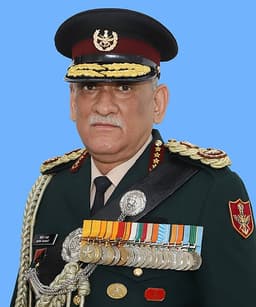
Bipin Rawat
General · Modern
55.0Total
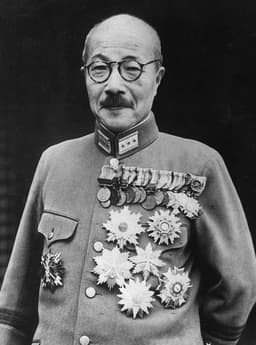
Hideki Tojo
General · Modern
53.9Total
Basic Information
Born
1958
1884
Died
—
1948
Era
Modern
Modern
Nationality
India
Japan
Occupation
General
General
Civilization
Indian
Eastern
Score Comparison
Military (10%)
40.0
70.0
Political (20%)
68.0
48.0
Influence (20%)
59.0
55.0
Legacy (20%)
45.0
50.0
Leadership (15%)
62.0
53.2
Strategy (15%)
55.0
55.0
TOTAL
55.0
53.9
Bipin Rawat — Complete Timeline
2016 AD
Led Counter-Insurgency Operations in KashmirWar
As Army Chief, Rawat oversaw intensified counter-insurgency operations in Kashmir following the 2016 unrest. He advocated for a tough approach against militants, leading to increased military presence.
KashmirCounter-insurgencyMilitary Operations
Impact: regional
Served as Chief of Army StaffPolitical Action◆ Major
Rawat was appointed Chief of Army Staff in 2016. He oversaw operations in Jammu and Kashmir, including the 2016 surgical strikes across the Line of Control, and focused on counter-insurgency.
Army ChiefSurgical StrikesCounter-insurgency
Impact: national
2019 AD
Appointed First Chief of Defence Staff of IndiaPolitical Action
General Bipin Rawat was appointed as India's first Chief of Defence Staff (CDS), a new position created to integrate the three armed services. He was tasked with improving jointness and military efficiency.
CDSMilitary ReformIntegration
Impact: nationalconstructive
2021 AD
Died in Helicopter CrashOther◆ Major
General Rawat, his wife, and 11 others died in a helicopter crash in Tamil Nadu. The crash occurred while he was traveling to a military event, and an inquiry attributed it to weather and pilot error.
DeathAccidentHelicopter Crash
Impact: nationaltragic
Hideki Tojo — Complete Timeline
1941 AD
Attack on Pearl HarborWar
As Prime Minister, Hideki Tojo authorized the attack on the US naval base at Pearl Harbor, Hawaii. The surprise attack brought the United States into World War II. Tojo's decision was based on the belief that war with the US was inevitable due to resource embargoes and diplomatic failures.
World War IIPearl HarborUS-Japan War
Impact: globaldestructive
Appointment as Prime MinisterPolitical Action◆ Major
Hideki Tojo was appointed Prime Minister of Japan, replacing Fumimaro Konoe. He retained his position as Army Minister and later took on other portfolios, consolidating power. His appointment marked the ascendancy of the military faction in the Japanese government and the shift towards total war.
Prime MinisterMilitary GovernmentWorld War II
Impact: national
1942 AD
Fall of SingaporeWar◆ Major
Under Tojo's leadership, Japanese forces captured Singapore from the British in a swift campaign. The fall of Singapore was one of the worst British military defeats in history. It demonstrated Japanese military prowess and led to the occupation of a key strategic location in Southeast Asia.
World War IISingaporeJapanese Victory
Impact: global
1948 AD
Execution by the International Military Tribunal for the Far EastPolitical Action◆ Major
Hideki Tojo was found guilty of war crimes by the International Military Tribunal for the Far East and sentenced to death. He was executed by hanging on December 23, 1948. His trial and execution symbolized the Allied effort to hold Japanese leaders accountable for wartime atrocities.
War CrimesExecutionTokyo Trials
Impact: globaltragic
Expert Analysis
Hideki Tojo vs Bipin Rawat
# The General and the Gambler
On a humid December morning in 1941, Hideki Tojo stood before the Japanese Diet and declared that Japan had entered a state of war with the United States and the British Empire. His voice was firm, his posture rigid. Half a world away and nearly eight decades later, another general, Bipin Rawat, stood in a different kind of storm—the swirling politics of modern India—as he took command of the Indian Army in 2016, vowing to crush insurgency in Kashmir. One would end his life on a gallows, the other in a fiery helicopter crash. Both were soldiers who stepped beyond the battlefield into the treacherous realm of statecraft. But their journeys, shaped by radically different eras and national destinies, could not have diverged more starkly.
Origins
Hideki Tojo was born in 1884 into a samurai family that had fallen on hard times. His father, a lieutenant general in the Imperial Japanese Army, instilled in him the rigid code of Bushido—honor, obedience, and sacrifice for the Emperor. Tojo grew up in a Japan that was industrializing at breakneck speed, hungry for empire, and haunted by the humiliation of Western gunboat diplomacy. He was a product of Meiji-era militarism, where the army was not just a profession but a religion.
Bipin Rawat, born in 1958 in Pauri, Uttarakhand, came from a family of soldiers and scholars. His father was a lieutenant general who served as Deputy Chief of Army Staff. But Rawat’s India was a different world—a post-colonial democracy struggling with poverty, diversity, and the scars of Partition. Where Tojo was shaped by the cult of the Emperor, Rawat was shaped by the Indian Army’s tradition of political neutrality and the complex reality of a nation fighting multiple internal wars.
Rise to Power
Tojo’s rise was methodical and ruthless. He served as a military attaché in Germany, studied the Nazi model of militarism, and climbed the ranks through the Kwantung Army in Manchuria, where he earned a reputation as a "razor" for his sharp, uncompromising mind. By 1941, when he was appointed Prime Minister, Japan was already deep in war with China. Tojo was not just a general; he was the embodiment of the military faction that believed Japan’s survival depended on expansion. His appointment marked the moment when the Japanese government became a puppet of the army.
Rawat’s rise was quieter but no less determined. He commanded troops in counter-insurgency operations in Kashmir and the Northeast, areas where the Indian Army fought not conventional enemies but shadowy insurgents. His 2016 appointment as Chief of Army Staff came at a time of heightened tensions with Pakistan and internal unrest in Kashmir. Unlike Tojo, who seized power in a system that already worshipped the sword, Rawat operated within a democracy where the military ultimately answered to civilians.
Leadership & Governance
Tojo’s leadership style was that of a micromanager. He held multiple portfolios—Prime Minister, Army Minister, and later Chief of the Imperial General Staff—concentrating power to an almost paranoid degree. He authorized the attack on Pearl Harbor in 1941, a gambler’s move that he believed would buy Japan time to secure resources in Southeast Asia. His military strategy was aggressive and often brilliant—the fall of Singapore in 1942 was a stunning victory, with 80,000 British troops surrendering to a smaller Japanese force. But his political wisdom was disastrous. He alienated allies, crushed dissent, and ignored intelligence that pointed to American industrial might. He governed by fear, not persuasion.
Rawat, by contrast, was a reformer. As Army Chief, he pushed for modernization and joint operations between the army, navy, and air force. His appointment as India’s first Chief of Defence Staff in 2019 was a historic step toward integrating the three services—a long-overdue reform that Tojo’s Japan never needed because its military was already unified under imperial command. Rawat’s leadership was marked by blunt talk and a willingness to take on political hot potatoes, from the abrogation of Article 370 in Kashmir to the border standoff with China. He was not a warmonger but a soldier-politician navigating a democracy’s messy compromises.
Triumph & Tragedy
Tojo’s greatest moment was also the beginning of his end. Pearl Harbor was a tactical masterpiece, crippling the U.S. Pacific Fleet. But it was a strategic suicide. He had awakened a sleeping giant. By 1944, Japan was losing on all fronts. Tojo resigned after the fall of Saipan, and in 1945, he attempted suicide but failed. In 1948, he was hanged for war crimes, having presided over atrocities from the Rape of Nanking to the Bataan Death March.
Rawat’s tragedy was more personal and sudden. On December 8, 2021, a helicopter carrying him, his wife, and 11 others crashed in the Nilgiri hills of Tamil Nadu. They were all killed. There was no trial, no judgment—just a nation in shock. Rawat’s death cut short a career that was still unfolding, leaving behind a legacy of institutional reform that had only just begun.
Character & Destiny
Tojo was a man of iron will but limited vision. He believed in hierarchy, discipline, and the divine right of the Emperor. His decisions were driven by a fatalistic conviction that war was inevitable and that honor mattered more than survival. His personality—rigid, suspicious, and authoritarian—mirrored the militarism that consumed Japan.
Rawat was more pragmatic. He was a soldier who understood that in a democracy, the military’s role was to serve the state, not dominate it. He was known for his sharp tongue and his willingness to speak his mind, but also for his respect for civilian authority. Where Tojo saw enemies everywhere, Rawat saw challenges to be managed.
Legacy
Tojo’s legacy is a cautionary tale. In Japan, he is remembered as a war criminal, a symbol of militarism that led the nation to ruin. His name is rarely spoken with pride. In the West, he is the face of Japanese aggression, a villain in the story of World War II.
Rawat’s legacy is more ambiguous. He is celebrated as a modernizer who pushed for military integration, but also criticized for his hawkish stance on Kashmir and his closeness to the ruling Bharatiya Janata Party. His death in 2021 turned him into a martyr of sorts, a soldier who gave his life in service—but also a reminder of how fragile life is, even for the powerful.
Conclusion
Two generals, two nations, two fates. Tojo chose war and was consumed by it. Rawat chose reform and was taken by accident. One ended on a scaffold, the other in a mountain forest. Their stories remind us that the path from soldier to statesman is fraught with peril. Tojo’s tragedy was that he believed too much in the power of the sword. Rawat’s was that he had so much more to give. In the end, both were men of their time—and their time judged them harshly, each in its own way.
Rankings
🥇
Bipin RawatLeader
Mil: 40.0Pol: 68.0Inf: 59.0
55.0
🥈
Hideki Tojo
Mil: 70.0Pol: 48.0Inf: 55.0
53.9
+1.1 behind
How This Comparison Works
Algorithm
Each figure is scored on 6 dimensions (0—100 scale) based on structured historical data: Military (10%), Political (20%), Influence (20%), Legacy (20%), Leadership (15%), Strategy (15%). The weighted total produces the final ranking.
Data Sources
Scores are computed from structured sub-indicators in the database. Scale factors adjust for era (Ancient ×0.85, Modern ×1.0) and civilization size (Eastern ×1.05, Other ×0.80) to account for differences in population and military scale.
Maximum 3 Figures
Comparisons are limited to 2—3 figures to ensure readability and statistical meaningfulness.
Error Margins
±5 points per dimension — Sub-scores are derived from historical records with inherent uncertainty. Two figures within 5 points on a dimension should be considered roughly equivalent in that area.
Total Score Accuracy
±3 points overall — The weighted combination of 6 dimensions produces a total score with approximately ±3 points of uncertainty. Differences of less than 3 points are not statistically significant— the figures are effectively tied.
Known Limitations
- Historical records are incomplete and uneven across civilizations
- Figures from oral-tradition societies may be underrepresented
- Occupation labels can misclassify multi-role figures
- Scores measure capability and impact, not moral character
- Quantitative scoring is a comparison tool, not absolute truth
Capability Radar
Military (10%) — Battles & Warfare
Battles
45
65
Win Rate
50
40
Expansion
30
70
Political (20%) — Governance & Reform
Reform
55
30
Diplomacy
50
35
Economy
30
25
Influence (20%) — Cultural & Global Reach
Cultural
35
30
Global
30
55
Legacy (20%) — Historical Impact
Historical
40
55
Longevity
20
40
Leadership (15%) — Power & Stability
Tenure
40
60
Stability
45
20
Strategy (15%) — Tactics & Innovation
Strategy
65
50
Tactics
60
55
Reform
75
45
Similar Comparisons
Comments & Discussion
Tojo-Sama6/16/2026
Comparing Tojo to Rawat is like comparing a samurai sword to a Swiss Army knife. Tojo was a true militarist, a product of Meiji-era Bushido who saw war as a spiritual duty. Rawat was a careerist who modernized India's counter-insurgency but never faced a real existential threat. Tojo gambled Japan's entire future on Pearl Harbor—and lost everything. Rawat played politics in Delhi and died in a chopper crash. One was a tragic villain; the other, a competent bureaucrat.
数据打脸师6/16/2026
拿两个人的伤亡数字一比,高下立判。东条英机是珍珠港的决策者,直接导致超过200万日本人死亡,日本本土被烧成废墟。拉瓦特任内印度军队死亡人数不足千人,主要是在反恐行动中。这不是什么军事天才对阵平庸之辈,这是一个赌徒拿整个国家命运下注,和一个职业军官在打有限战争。东条的"辉煌"建立在日本人的尸骨上,拉瓦特的平凡反而是一种幸运。
Merchant of Death6/16/2026
You revisionists are missing the point. Tojo was a strategic moron who thought bombing Pearl Harbor would make America cower. Rawat, whatever his flaws, understood modern warfare—hybrid threats, information ops, jointmanship. He pushed for the creation of the Chief of Defence Staff position, something Indian military reformers had begged for since 1947. Tojo's legacy is kamikaze pilots dying for a lost cause. Rawat's legacy is a more integrated Indian military. One destroyed his nation; the othe
古印度学究6/16/2026
东条是日本军国主义的终极象征,他把国家引向毁灭,自己却试图在审判中脱罪。拉瓦特至少有点现代将领的样子——他推动阿帕奇直升机采购,强化边境防御,处理克什米尔问题时虽争议颇多,但从未把自己凌驾于文官政府之上。东条可曾是首相兼陆相,集军政大权于一身。这是帝国将军与共和国将军的区别,本质上是两种制度的产物。
Man of Destiny6/16/2026
These two are proof that character determines fate. Tojo was a bully who rose through ruthlessness, crushing dissent in the army and government. He micromanaged the war from Tokyo, ignoring field commanders. Rawat was a straight-talker who earned respect in the trenches of Kashmir and Nagaland. Tojo ended on the gallows, universally hated. Rawat died in service, mourned by a nation. The universe has a sense of irony: one general died for his country's sins, the other for his country's duty.