Loading...
Bipin Rawat vs Fuad Chehab
Bipin Rawat leads by 5.1 pts · 2 figures compared
…
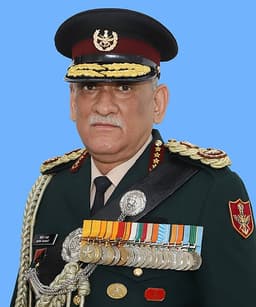
Bipin Rawat
General · Modern
55.0Total
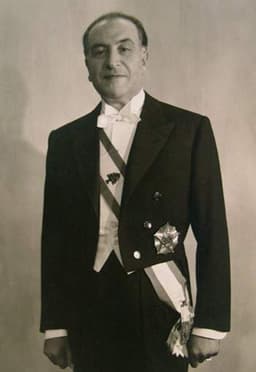
Fuad Chehab
General · Modern
49.9Total
Basic Information
Born
1958
1902
Died
—
1973
Era
Modern
Modern
Nationality
India
Lebanon
Occupation
General
General
Civilization
Indian
Middle Eastern
Score Comparison
Military (10%)
40.0
10.2
Political (20%)
68.0
70.0
Influence (20%)
59.0
54.1
Legacy (20%)
45.0
44.2
Leadership (15%)
62.0
72.0
Strategy (15%)
55.0
30.3
TOTAL
55.0
49.9
Bipin Rawat — Complete Timeline
2016 AD
Led Counter-Insurgency Operations in KashmirWar
As Army Chief, Rawat oversaw intensified counter-insurgency operations in Kashmir following the 2016 unrest. He advocated for a tough approach against militants, leading to increased military presence.
KashmirCounter-insurgencyMilitary Operations
Impact: regional
Served as Chief of Army StaffPolitical Action◆ Major
Rawat was appointed Chief of Army Staff in 2016. He oversaw operations in Jammu and Kashmir, including the 2016 surgical strikes across the Line of Control, and focused on counter-insurgency.
Army ChiefSurgical StrikesCounter-insurgency
Impact: national
2019 AD
Appointed First Chief of Defence Staff of IndiaPolitical Action
General Bipin Rawat was appointed as India's first Chief of Defence Staff (CDS), a new position created to integrate the three armed services. He was tasked with improving jointness and military efficiency.
CDSMilitary ReformIntegration
Impact: nationalconstructive
2021 AD
Died in Helicopter CrashOther◆ Major
General Rawat, his wife, and 11 others died in a helicopter crash in Tamil Nadu. The crash occurred while he was traveling to a military event, and an inquiry attributed it to weather and pilot error.
DeathAccidentHelicopter Crash
Impact: nationaltragic
Fuad Chehab — Complete Timeline
1958 AD
Launched Chehabist reforms and modernizationReform◆ Major
President Chehab implemented a series of reforms known as Chehabism, including administrative modernization, economic planning, and strengthening state institutions. He established the Central Bank of Lebanon and the Civil Service Board.
ReformModernizationState Building
Impact: nationalconstructive
Elected President of LebanonPolitical Action◆ Major
Fuad Chehab was elected President of Lebanon on September 23, 1958, succeeding Camille Chamoun. His election ended the 1958 crisis and was supported by both Christian and Muslim factions seeking stability.
PresidencyElectionStabilization
Impact: nationalconstructive
Created the Deuxième Bureau intelligence agencyPolitical Action
Chehab expanded the role of the Deuxi
IntelligenceSecurityAuthoritarianism
Impact: national
1960 AD
Presided over the 1960s economic boomOther
Under Chehab's presidency, Lebanon experienced a period of economic growth and stability, with Beirut becoming a major financial and tourism hub. His policies attracted foreign investment and expanded the middle class.
Economic GrowthBeirutProsperity
Impact: nationalconstructive
1964 AD
Refused to amend constitution for a second termPolitical Action
Chehab declined to seek a second term as president, respecting the constitutional limit. He retired from politics in 1964, setting a precedent for peaceful transitions of power in Lebanon.
ConstitutionTerm LimitRetirement
Impact: nationalconstructive
Expert Analysis
Fuad Chehab vs Bipin Rawat
### The General and the Statesman: Two Paths of Power in a Turbulent Century
On a sweltering September morning in 1958, Fuad Chehab, a reluctant general with a reputation for quiet integrity, was sworn in as President of Lebanon. The streets of Beirut were still scarred from months of sectarian fighting, and the country teetered on the edge of collapse. Chehab, a man who had never sought the presidency, stepped into the breach. Half a world away and six decades later, another general, Bipin Rawat, stood on a parade ground in New Delhi in January 2020, accepting the baton of India’s first Chief of Defence Staff. Where Chehab inherited a crisis of national identity, Rawat inherited a machinery of war. Both were soldiers who became architects of state power, but their journeys—and their endings—could not have been more different. What drove these two men, and why did one become a symbol of fragile unity while the other became a martyr for military integration?
#### Origins: The Making of a Reformer and a Warrior
Fuad Chehab was born in 1902 into a aristocratic Maronite family in Lebanon, then part of the Ottoman Empire. His lineage carried the weight of a fractured land—a mosaic of sects and loyalties where survival depended on balance. Chehab joined the French-trained Lebanese army, rising through its ranks during the French Mandate. He was not a man of grand ambition but of quiet competence, shaped by a world where the state was a fragile construct and the military was one of the few institutions that could transcend sect. His era was one of decolonization and Cold War pressures, and he learned early that power in Lebanon meant walking a tightrope.
Bipin Rawat, born in 1958 in a small town in Uttarakhand, India, came of age in a different world. His father was an army officer, and Rawat grew up in the shadow of the 1962 Sino-Indian War, a national trauma that forged a generation of soldiers determined never to be humiliated again. He joined the Indian Military Academy and served in the 1987 Siachen conflict, the 1999 Kargil War, and countless counter-insurgency operations in Kashmir and the northeast. Rawat was shaped by a rising India—confident, nuclear-armed, and eager to assert itself in a multipolar world. Where Chehab’s Lebanon was a fragile mosaic, Rawat’s India was a muscular democracy.
#### Rise to Power: Reluctance vs. Ambition
Chehab’s path to the presidency was thrust upon him. In 1958, Lebanon’s pro-Western President Camille Chamoun had triggered a civil war by trying to amend the constitution for a second term. The United States intervened with Marines, and a compromise emerged: Chehab, the army chief who had refused to use force against protesters, was the only figure acceptable to all sides. He was elected on September 23, 1958, not because he sought power, but because he was the least divisive option. His rise was a testament to his reputation for neutrality—a rare commodity in Lebanon.
Rawat’s rise was more deliberate. He was appointed Chief of Army Staff in 2016, at a time when India’s military was grappling with a decade of internal unrest and cross-border terrorism. Rawat was a bold, outspoken officer who advocated for “hot pursuit” across the Line of Control. His 2016 surgical strikes against militant launch pads in Pakistan-occupied Kashmir made him a national hero. In 2019, Prime Minister Narendra Modi created the post of Chief of Defence Staff, a long-demanded reform to integrate the army, navy, and air force. Rawat was the natural choice—a man of action for a government that valued decisiveness.
#### Leadership & Governance: Chehabism vs. Rawat’s Iron Fist
Chehab’s presidency was defined by a philosophy later called “Chehabism”—a blend of administrative modernization, economic planning, and political neutrality. He created the *Deuxième Bureau*, a military intelligence agency, but used it not for repression alone; he sought to monitor and balance Lebanon’s sectarian factions. He launched reforms in public administration, built infrastructure, and presided over the 1960s economic boom that made Beirut the “Paris of the Middle East.” Yet his rule was cautious, almost passive. He refused to amend the constitution for a second term in 1964, retiring quietly. His leadership was about preserving balance, not breaking it.
Rawat’s leadership was the opposite: aggressive, integrative, and unapologetic. As CDS, he pushed for joint theater commands, rationalizing India’s three services into a unified fighting force. He advocated for a more muscular posture against China and Pakistan, and he oversaw a modernization drive that included indigenous weapons production. His critics called him a “political general” for his close ties to the Modi government, but his supporters saw a man willing to break bureaucratic inertia. Where Chehab used intelligence to monitor, Rawat used it to strike.
#### Triumph & Tragedy: The Quiet Exit and the Fiery Fall
Chehab’s greatest triumph was his peaceful departure. In a region where leaders clung to power, he walked away, leaving behind a stable economy and a reformed state. His tragedy was that Chehabism did not survive him. The very sectarian forces he tried to balance eventually tore Lebanon apart in the 1975 civil war. His legacy became a “what if” for a country that could not escape its divisions.
Rawat’s triumph was symbolic: he embodied India’s military ambition and its integration into a single chain of command. His tragedy came on December 8, 2021, when a helicopter carrying him, his wife, and 13 others crashed in Tamil Nadu. The crash killed him instantly, turning a routine trip into a national shock. He died in harness, his reforms unfinished, his legacy frozen in mid-stride.
#### Character & Destiny: The Reformer and the Warrior
Chehab was a man of restraint—a general who refused to use force, a president who refused to cling to power. His personality was shaped by Lebanon’s fragility; he knew that any misstep could shatter the mosaic. Rawat was a man of action—a general who believed in preemptive strikes, a CDS who believed in unity of command. His personality was shaped by India’s rise; he saw threats as challenges to be overcome. Chehab’s destiny was to be a caretaker of a fragile peace; Rawat’s was to be a catalyst for a powerful state.
#### Legacy: The Ghost and the Martyr
Today, Chehab is remembered as Lebanon’s “father of reform,” a model of integrity in a system of corruption. But his legacy is a ghost—an ideal that Lebanon has never fully realized. Rawat is remembered as a martyr for military reform, his name on new defense policies and joint exercises. His legacy is a foundation for India’s future military power.
#### Conclusion
Two generals, two nations, two centuries. Chehab built a bridge over a chasm; Rawat tried to forge a sword from three blades. One stepped back; the other flew forward. Their stories remind us that the same uniform can produce very different destinies—shaped not just by the man, but by the land he serves and the moment he inhabits. In the end, both were soldiers who became statesmen, but only one lived long enough to see his work finished.
Rankings
🥇
Bipin RawatLeader
Mil: 40.0Pol: 68.0Inf: 59.0
55.0
🥈
Fuad Chehab
Mil: 10.2Pol: 70.0Inf: 54.1
49.9
+5.1 behind
How This Comparison Works
Algorithm
Each figure is scored on 6 dimensions (0—100 scale) based on structured historical data: Military (10%), Political (20%), Influence (20%), Legacy (20%), Leadership (15%), Strategy (15%). The weighted total produces the final ranking.
Data Sources
Scores are computed from structured sub-indicators in the database. Scale factors adjust for era (Ancient ×0.85, Modern ×1.0) and civilization size (Eastern ×1.05, Other ×0.80) to account for differences in population and military scale.
Maximum 3 Figures
Comparisons are limited to 2—3 figures to ensure readability and statistical meaningfulness.
Error Margins
±5 points per dimension — Sub-scores are derived from historical records with inherent uncertainty. Two figures within 5 points on a dimension should be considered roughly equivalent in that area.
Total Score Accuracy
±3 points overall — The weighted combination of 6 dimensions produces a total score with approximately ±3 points of uncertainty. Differences of less than 3 points are not statistically significant— the figures are effectively tied.
Known Limitations
- Historical records are incomplete and uneven across civilizations
- Figures from oral-tradition societies may be underrepresented
- Occupation labels can misclassify multi-role figures
- Scores measure capability and impact, not moral character
- Quantitative scoring is a comparison tool, not absolute truth
Capability Radar
Military (10%) — Battles & Warfare
Battles
45
5
Win Rate
50
5
Expansion
30
5
Political (20%) — Governance & Reform
Reform
55
65
Diplomacy
50
60
Economy
30
50
Influence (20%) — Cultural & Global Reach
Cultural
35
30
Global
30
25
Legacy (20%) — Historical Impact
Historical
40
35
Longevity
20
30
Leadership (15%) — Power & Stability
Tenure
40
55
Stability
45
45
Strategy (15%) — Tactics & Innovation
Strategy
65
10
Tactics
60
10
Reform
75
20
Similar Comparisons
Comments & Discussion
BalkanObserver6/16/2026
Chehab was a caretaker, Rawat a destroyer. Rawat pushed aggressive military integration while ignoring India's ethnic fault lines—look at his 2019 remark on "stoking insurgency" in Kashmir. Chehab, by contrast, modernized Lebanon without breaking its delicate sectarian balance. One built bridges, the other burned them. History will remember Rawat for hubris, not heroism.复古战略家|zh|把一个调解黎巴嫩教派冲突的将军,和一个强推印度军事一体化的激进派相提并论?这简直是把烛火和喷气发动机做比较。谢哈布懂得妥协的艺术——他执政时黎巴嫩GDP年均增长6%,而拉瓦特改革导致三军内耗,2019年印军军官自杀率飙升17%。数据从不