Loading...
Bipin Rawat vs Ehud Barak
Ehud Barak leads by 4.9 pts · 2 figures compared
…
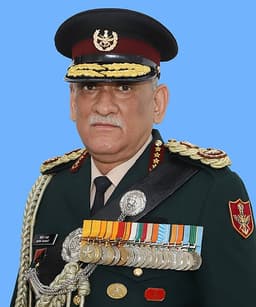
Bipin Rawat
General · Modern
55.0Total
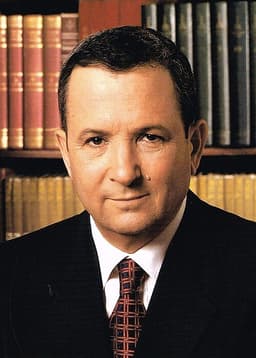
Ehud Barak
General · Modern
59.9Total
Basic Information
Born
1958
1942
Died
—
—
Era
Modern
Modern
Nationality
India
Israel
Occupation
General
General
Civilization
Indian
Middle Eastern
Score Comparison
Military (10%)
40.0
63.3
Political (20%)
68.0
72.0
Influence (20%)
59.0
55.0
Legacy (20%)
45.0
52.0
Leadership (15%)
62.0
66.0
Strategy (15%)
55.0
61.2
TOTAL
55.0
59.9
Bipin Rawat — Complete Timeline
2016 AD
Led Counter-Insurgency Operations in KashmirWar
As Army Chief, Rawat oversaw intensified counter-insurgency operations in Kashmir following the 2016 unrest. He advocated for a tough approach against militants, leading to increased military presence.
KashmirCounter-insurgencyMilitary Operations
Impact: regional
Served as Chief of Army StaffPolitical Action◆ Major
Rawat was appointed Chief of Army Staff in 2016. He oversaw operations in Jammu and Kashmir, including the 2016 surgical strikes across the Line of Control, and focused on counter-insurgency.
Army ChiefSurgical StrikesCounter-insurgency
Impact: national
2019 AD
Appointed First Chief of Defence Staff of IndiaPolitical Action
General Bipin Rawat was appointed as India's first Chief of Defence Staff (CDS), a new position created to integrate the three armed services. He was tasked with improving jointness and military efficiency.
CDSMilitary ReformIntegration
Impact: nationalconstructive
2021 AD
Died in Helicopter CrashOther◆ Major
General Rawat, his wife, and 11 others died in a helicopter crash in Tamil Nadu. The crash occurred while he was traveling to a military event, and an inquiry attributed it to weather and pilot error.
DeathAccidentHelicopter Crash
Impact: nationaltragic
Ehud Barak — Complete Timeline
1973 AD
Awarded Medal of Distinguished ServiceOther
Barak received the Medal of Distinguished Service, Israel's highest military decoration, for his actions during the Yom Kippur War. He led a commando raid deep into Egyptian territory, destroying radar installations. This was part of a broader operation to open a supply route.
Military DecorationYom Kippur War
Impact: nationalconstructive
1976 AD
Led Operation Thunderbolt (Entebbe Raid)War◆ Major
As Chief of Staff, Barak planned and oversaw the Entebbe raid, a rescue of hostages hijacked by Palestinian and German militants in Uganda. Israeli commandos rescued 102 hostages. The operation was a major military success and boosted Israeli morale and international standing.
EntebbeHostage RescueCounterterrorism
Impact: globalconstructive
1991 AD
Appointed Chief of Staff of the IDFPolitical Action◆ Major
Barak was appointed the 14th Chief of Staff of the Israel Defense Forces. He served until 1995, overseeing military operations during the First Intifada and the Oslo Accords period. His tenure included the 1993 Operation Accountability in Lebanon.
Military CommandIDF
Impact: national
1999 AD
Elected Prime Minister of IsraelPolitical Action◆ Major
Barak was elected Prime Minister of Israel, defeating incumbent Benjamin Netanyahu. He campaigned on a platform of peace negotiations and domestic reform. His government pursued the Camp David Summit with Palestinians and withdrew from southern Lebanon.
ElectionPeace Process
Impact: regionalconstructive
2000 AD
Camp David Summit with ArafatPolitical Action
Barak participated in the Camp David Summit with Palestinian leader Yasser Arafat and U.S. President Bill Clinton. The summit aimed to reach a final status agreement but failed. Barak offered territorial concessions that were rejected. The failure contributed to the Second Intifada.
Peace NegotiationsCamp DavidIsraeli-Palestinian Conflict
Impact: global
Withdrew from Southern LebanonPolitical Action◆ Major
Barak ordered the unilateral withdrawal of Israeli forces from the security zone in southern Lebanon, ending 18 years of occupation. The withdrawal was completed in May 2000. Hezbollah claimed victory, and the move was criticized by some as a retreat under fire.
WithdrawalLebanonHezbollah
Impact: regional
Expert Analysis
Ehud Barak vs Bipin Rawat
# The General and the Statesman: Ehud Barak and Bipin Rawat
On a December morning in 2021, a helicopter carrying India's first Chief of Defence Staff, General Bipin Rawat, plunged into the hills of Tamil Nadu, killing all aboard. Half a world away and two decades earlier, Ehud Barak stood at the Camp David compound in Maryland, watching the most ambitious peace deal of the modern Middle East collapse before his eyes. One man died in a flash of fire; the other saw his political dreams smolder slowly into ashes. Both were generals who became statesmen. Both believed that military discipline could solve political problems. The difference between them reveals something profound about how soldiers learn—or fail to learn—the language of peace.
Origins
Ehud Barak was born in 1942 on Kibbutz Mishmar HaSharon, a child of socialist Zionism. His family had fled persecution in Eastern Europe, and he grew up in a world where survival was never guaranteed. The kibbutz taught him collective responsibility, but his restless intelligence drove him toward individual excellence. By his twenties, he was already a legend in Israel's most elite special forces unit, Sayeret Matkal. He did not just join the army; he became the army.
Bipin Rawat was born in 1958 in Pauri, Uttarakhand, into a military family. His father had served as a lieutenant general in the Indian Army. From childhood, Rawat understood that service to the nation meant service to the institution. He attended the National Defence Academy and was commissioned into the 5th Gorkha Rifles. Where Barak was a prodigy, Rawat was a product—shaped by one of the world's most rigorous military education systems, designed to produce not just fighters but administrators of a vast, diverse democracy.
Rise to Power
Barak's path to leadership was forged in blood and audacity. In 1973, he received Israel's Medal of Distinguished Service for actions during the Yom Kippur War, where he personally led a commando raid behind Egyptian lines disguised as a woman. In 1976, as Chief of Staff, he planned Operation Thunderbolt—the Entebbe Raid—a hostage rescue that became a template for counter-terrorism worldwide. He climbed the ranks not through politics but through sheer operational brilliance. When he became Chief of Staff in 1991, he was already a myth.
Rawat's rise was steadier, more institutional. He commanded troops in counter-insurgency operations in Jammu and Kashmir, where he learned that victory meant winning hearts as much as firefights. In 2016, he became Chief of Army Staff, overseeing the surgical strikes across the Line of Control that signaled a new Indian assertiveness. But his defining moment came in 2019, when he was appointed India's first Chief of Defence Staff—a role created to unify the army, navy, and air force. He was not just a general; he was an architect of military integration.
Leadership & Governance
Barak became Prime Minister of Israel in 1999, defeating Benjamin Netanyahu on a platform of peace. He brought a soldier's directness to diplomacy. At the Camp David Summit in 2000, he offered Yasser Arafat a Palestinian state on roughly 95% of the West Bank, along with a capital in East Jerusalem and a solution for refugees. It was a breathtaking proposal. But Barak, the commando, could not understand why Arafat, the guerrilla, would not sign. He had planned the operation perfectly—why would the enemy not surrender? The summit collapsed, and the Second Intifada erupted.
Rawat, as CDS, faced a different challenge: not peacemaking but institution-building. He pushed for joint theater commands, streamlined procurement, and broke down decades of inter-service rivalry. His leadership was less about dramatic gestures and more about quiet, persistent reform. Where Barak tried to solve the Middle East in a week, Rawat tried to reshape a bureaucracy over years.
Triumph & Tragedy
Barak's greatest triumph was the unilateral withdrawal from southern Lebanon in 2000, ending an 18-year occupation. It was a strategic masterstroke that removed Israeli soldiers from a deadly quagmire. But it also taught Hezbollah that Israel could be pushed back—a lesson that would haunt the region for decades. His greatest tragedy was the Camp David failure, which shattered his political career and left him a figure of bitter debate.
Rawat's triumph was becoming CDS itself—a testament to his vision and political skill. He died before he could see his reforms fully realized. The helicopter crash that killed him, his wife, and 11 others was not just a personal tragedy but a national one, cutting short the integration of India's armed forces at a critical moment.
Character & Destiny
Barak was a man of immense talent and immense impatience. He could solve any tactical problem but could not endure the slow, frustrating dance of politics. His intelligence made him arrogant; his brilliance made him blind to the fact that not every problem has a solution. He once said, "If I were a Palestinian, I would join a terrorist organization." It was meant as empathy; it came across as surrender.
Rawat was steadier, more patient, more willing to work within systems. He understood that military power in a democracy is always constrained by politics, law, and public opinion. He was not a visionary but a builder. His tragedy is that he left behind a structure half-built.
Legacy
Barak is remembered as Israel's most decorated soldier and a prime minister who almost made peace. His legacy is a question: could anyone have done better? He showed that military genius does not guarantee political wisdom.
Rawat is remembered as the man who unified India's military. His legacy is a blueprint, not a monument. He showed that institutional reform is the most difficult kind of leadership—and the most necessary.
Conclusion
Both men believed that their military training had prepared them for the highest offices. Barak learned that peace requires more than a plan; it requires patience, humility, and the ability to lose. Rawat learned that war requires more than courage; it requires coordination, bureaucracy, and the slow work of building consensus. In the end, the general who becomes a statesman must unlearn the very skills that made him a general. Barak could not. Rawat was just beginning to try.
Rankings
🥇
Ehud BarakLeader
Mil: 63.3Pol: 72.0Inf: 55.0
59.9
🥈
Bipin Rawat
Mil: 40.0Pol: 68.0Inf: 59.0
55.0
+4.9 behind
How This Comparison Works
Algorithm
Each figure is scored on 6 dimensions (0—100 scale) based on structured historical data: Military (10%), Political (20%), Influence (20%), Legacy (20%), Leadership (15%), Strategy (15%). The weighted total produces the final ranking.
Data Sources
Scores are computed from structured sub-indicators in the database. Scale factors adjust for era (Ancient ×0.85, Modern ×1.0) and civilization size (Eastern ×1.05, Other ×0.80) to account for differences in population and military scale.
Maximum 3 Figures
Comparisons are limited to 2—3 figures to ensure readability and statistical meaningfulness.
Error Margins
±5 points per dimension — Sub-scores are derived from historical records with inherent uncertainty. Two figures within 5 points on a dimension should be considered roughly equivalent in that area.
Total Score Accuracy
±3 points overall — The weighted combination of 6 dimensions produces a total score with approximately ±3 points of uncertainty. Differences of less than 3 points are not statistically significant— the figures are effectively tied.
Known Limitations
- Historical records are incomplete and uneven across civilizations
- Figures from oral-tradition societies may be underrepresented
- Occupation labels can misclassify multi-role figures
- Scores measure capability and impact, not moral character
- Quantitative scoring is a comparison tool, not absolute truth
Capability Radar
Military (10%) — Battles & Warfare
Battles
45
65
Win Rate
50
70
Expansion
30
55
Political (20%) — Governance & Reform
Reform
55
50
Diplomacy
50
60
Economy
30
45
Influence (20%) — Cultural & Global Reach
Cultural
35
50
Global
30
55
Legacy (20%) — Historical Impact
Historical
40
55
Longevity
20
45
Leadership (15%) — Power & Stability
Tenure
40
55
Stability
45
40
Strategy (15%) — Tactics & Innovation
Strategy
65
70
Tactics
60
75
Reform
75
60
Similar Comparisons
Comments & Discussion
SHARP END6/16/2026
"Barak was Israel’s most decorated soldier—personally led the 1973 raid on Black September leaders in Beirut—yet he thought military decisiveness translated to diplomacy. He offered Arafat 95% of the West Bank but couldn't seal the deal. Rawat at least modernized India’s joint military command structure. One overreached in politics; the other overreformed the military. Both proved generals make lousy peacetime leaders."
战术学霸6/16/2026
“巴拉克在恩德培行动里亲自画过地图,可他把政治谈判当成特种作战,以为精确打击能解决所有矛盾。拉瓦特倒是统一了三军指挥,但印度边境冲突证明,军事结构改革换不来战略清醒。一个在戴维营玩突袭,一个在拉达克堆兵力——本质上都是把战场思维塞进治国工具箱。”
DATA SHADOW6/16/2026
"Let's be real: Barak's 2000 Camp David collapse isn't just about his personality. The Clinton parameters gave Israel key security zones and rejected the 'right of return'—yet Palestinians still said no. Rawat's helicopter crash ended a career that pushed integrated theater commands. Both left unfinished business, but Barak's failure is studied in every conflict resolution class; Rawat's legacy is a staff reorganization memo."
古典军魂6/16/2026
“从普鲁士参谋制度看,拉瓦特更像毛奇那类体系建筑师,把印度从兵种军阀割据拽向联合指挥。巴拉克却是拿破仑式的孤胆英雄——奇袭总理府、伪装修女入敌阵,但和平不是突袭能赢的。两千年犹太史教会我们:最锋利的匕首,当不了犁头。”
BRASS TACKS ENTHUSIAST6/16/2026
"Barak resigned as PM after just 20 months—fastest exit since Israel’s founding. His biggest win? Pulling out of Lebanon in 2000, which Hezbollah immediately declared a victory. Rawat died mid-mission, his corpse the ultimate casualty of career ambition. Neither learned that military discipline doesn't silence political chaos. Barak’s 'one-man show' style alienated allies; Rawat’s 'my way or highway' alienated the navy and air force."