Loading...
Bernard Montgomery vs Hideki Tojo
Bernard Montgomery leads by 7.9 pts · 2 figures compared
…

Bernard Montgomery
General · Modern
61.8Total
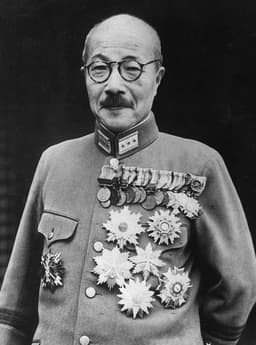
Hideki Tojo
General · Modern
53.9Total
Basic Information
Born
1887
1884
Died
1976
1948
Era
Modern
Modern
Nationality
United Kingdom
Japan
Occupation
General
General
Civilization
Western
Eastern
Score Comparison
Military (10%)
74.7
70.0
Political (20%)
68.0
48.0
Influence (20%)
65.0
55.0
Legacy (20%)
55.0
50.0
Leadership (15%)
48.8
53.2
Strategy (15%)
68.1
55.0
TOTAL
61.8
53.9
Bernard Montgomery — Complete Timeline
1942 AD
Battle of Alam el HalfaWar◆ Major
Montgomery took command of the British Eighth Army and defeated Rommel's final offensive at Alam el Halfa. The defensive victory halted the Axis advance and allowed Montgomery to prepare for a counteroffensive.
World War IINorth African CampaignDefensive Victory
Impact: regional
Second Battle of El AlameinWar
Montgomery launched a massive offensive against Rommel's Afrika Korps at El Alamein. After 12 days of fighting, the Axis forces were forced to retreat, ending the threat to Egypt and marking a turning point in the North African campaign.
World War IINorth African CampaignTurning Point
Impact: global
1943 AD
Operation HuskyWar◆ Major
Montgomery commanded the British Eighth Army in the invasion of Sicily. His forces landed on the southeastern coast and advanced north, capturing Messina and securing the island. The campaign led to the fall of Mussolini's government.
World War IIItalian CampaignAllied Invasion
Impact: regional
1944 AD
Operation OverlordWar
Montgomery commanded the 21st Army Group during the D-Day landings and the subsequent Battle of Normandy. His forces captured Caen and helped break out of the beachhead, leading to the liberation of Paris.
World War IINormandy CampaignD-Day
Impact: global
Operation Market GardenWar◆ Major
Montgomery planned and executed Operation Market Garden, an airborne assault to capture bridges in the Netherlands. The operation failed to secure the bridge at Arnhem, resulting in heavy Allied casualties and failing to outflank German defenses.
World War IIWestern FrontFailed Offensive
Impact: regionaltragic
Hideki Tojo — Complete Timeline
1941 AD
Attack on Pearl HarborWar
As Prime Minister, Hideki Tojo authorized the attack on the US naval base at Pearl Harbor, Hawaii. The surprise attack brought the United States into World War II. Tojo's decision was based on the belief that war with the US was inevitable due to resource embargoes and diplomatic failures.
World War IIPearl HarborUS-Japan War
Impact: globaldestructive
Appointment as Prime MinisterPolitical Action◆ Major
Hideki Tojo was appointed Prime Minister of Japan, replacing Fumimaro Konoe. He retained his position as Army Minister and later took on other portfolios, consolidating power. His appointment marked the ascendancy of the military faction in the Japanese government and the shift towards total war.
Prime MinisterMilitary GovernmentWorld War II
Impact: national
1942 AD
Fall of SingaporeWar◆ Major
Under Tojo's leadership, Japanese forces captured Singapore from the British in a swift campaign. The fall of Singapore was one of the worst British military defeats in history. It demonstrated Japanese military prowess and led to the occupation of a key strategic location in Southeast Asia.
World War IISingaporeJapanese Victory
Impact: global
1948 AD
Execution by the International Military Tribunal for the Far EastPolitical Action◆ Major
Hideki Tojo was found guilty of war crimes by the International Military Tribunal for the Far East and sentenced to death. He was executed by hanging on December 23, 1948. His trial and execution symbolized the Allied effort to hold Japanese leaders accountable for wartime atrocities.
War CrimesExecutionTokyo Trials
Impact: globaltragic
Expert Analysis
Origins
Bernard Law Montgomery was born on November 17, 1887, in London, England, into an Anglo-Irish family. His father was a bishop, and his mother was strict and distant. Montgomery attended St. Paul's School and then the Royal Military College, Sandhurst, graduating in 1908. He served in India and saw action in World War I, where he was seriously wounded. This experience shaped his meticulous approach to planning.
Hideki Tojo was born on December 30, 1884, in Tokyo, Japan, into a military family. His father was a lieutenant general in the Imperial Japanese Army. Tojo attended the Imperial Japanese Army Academy and later the Army War College, graduating in 1915. He rose through the ranks as a staff officer, known for his rigid discipline and ultranationalist views.
Rise to Power
Montgomery's rise came during World War II. He commanded the 3rd Division in France in 1940, but his major breakthrough was taking command of the British Eighth Army in North Africa in August 1942. At the Battle of Alam el Halfa (August 30 – September 5, 1942), he defeated Rommel's final offensive, boosting Allied morale. His decisive victory at the Second Battle of El Alamein (October 23 – November 11, 1942) forced the Axis to retreat, marking a turning point in the North African campaign. This made him a national hero.
Tojo's rise was political and military. He served as Chief of Staff of the Kwantung Army in the 1930s and was appointed Army Minister in 1940. As a hardliner, he pushed for expansionism. On October 17, 1941, he became Prime Minister, replacing Fumimaro Konoe. He retained the Army Ministry and later took over the Home Ministry and Munitions Ministry, consolidating power. He authorized the attack on Pearl Harbor on December 7, 1941, which brought the US into the war.
Leadership & Governance
Montgomery's leadership style was methodical and cautious. He insisted on thorough preparation, overwhelming superiority in men and materiel, and clear objectives. At El Alamein, he built up a 2:1 advantage in troops and 4:1 in tanks before attacking. He was also a strict disciplinarian, often clashing with American generals like Eisenhower. His governance of troops emphasized morale and welfare, but his ego made him unpopular with peers.
Tojo's leadership was authoritarian and centralized. As Prime Minister, he controlled the military and government, suppressing dissent. He implemented the 'Greater East Asia Co-Prosperity Sphere' rhetoric but oversaw brutal occupations. His governance was marked by militarism and censorship. He scored 48.0 in Political, reflecting his inability to manage Japan's strategic situation effectively.
Triumph & Tragedy
Montgomery's greatest triumph was El Alamein, which scored him 74.7 in Military. He also played a key role in Operation Overlord: his 21st Army Group captured Caen and helped break out from Normandy. However, his tragedy was Operation Market Garden (September 1944), an ambitious airborne assault that failed to secure the Rhine bridges, resulting in heavy casualties. His cautious approach sometimes missed opportunities.
Tojo's triumph was the rapid Japanese conquest of Southeast Asia, including the fall of Singapore (February 1942), one of the worst British defeats. However, his tragedy was the strategic overreach that led to Midway (June 1942) and the subsequent island-hopping campaigns. He was executed for war crimes in 1948 after the Tokyo Trials, a complete reversal of fortune.
Character & Destiny
Montgomery was arrogant, single-minded, and self-promotional. He believed in his own infallibility, which made him effective in command but difficult to work with. His character shaped his destiny: he rose to fame through careful planning but was eventually sidelined for his inability to cooperate. Historians note his 'Montgomery myth' self-aggrandizement.
Tojo was rigid, ultra-nationalist, and ruthless. He saw compromise as weakness. His character led Japan into a war it could not win, and his refusal to consider surrender until after Hiroshima sealed his fate. He attempted suicide before his execution but failed.
Legacy
Montgomery is remembered as the victor of El Alamein and a key Allied commander. His legacy includes the 'Montgomery method' of set-piece battles. He scored 55.0 in Legacy, with his reputation enduring in British military history. However, his cautious tactics are often criticized by modern analysts.
Tojo's legacy is overwhelmingly negative. He is seen as a war criminal responsible for atrocities. In Japan, his memory is controversial; some nationalists view him as a patriot, but internationally he symbolizes Japanese militarism. He scored 50.0 in Legacy.
Conclusion
Montgomery had a greater positive impact on history. His military score of 74.7 and strategy score of 68.1 exceed Tojo's 70.0 and 55.0 respectively. While Tojo's decisions altered world history by bringing the US into WWII, his actions led to catastrophic defeat and suffering. Montgomery's victory at El Alamein was a crucial turning point that helped preserve Allied morale. Despite his flaws, Montgomery's contributions to the Allied victory are clear, whereas Tojo's legacy is one of failure and destruction. The score gap of 7.9 points reflects this: Montgomery's overall total of 61.8 versus Tojo's 53.9 demonstrates his superior effectiveness as a military leader.
Rankings
🥇
Bernard MontgomeryLeader
Mil: 74.7Pol: 68.0Inf: 65.0
61.8
🥈
Hideki Tojo
Mil: 70.0Pol: 48.0Inf: 55.0
53.9
+7.9 behind
How This Comparison Works
Algorithm
Each figure is scored on 6 dimensions (0—100 scale) based on structured historical data: Military (10%), Political (20%), Influence (20%), Legacy (20%), Leadership (15%), Strategy (15%). The weighted total produces the final ranking.
Data Sources
Scores are computed from structured sub-indicators in the database. Scale factors adjust for era (Ancient ×0.85, Modern ×1.0) and civilization size (Eastern ×1.05, Other ×0.80) to account for differences in population and military scale.
Maximum 3 Figures
Comparisons are limited to 2—3 figures to ensure readability and statistical meaningfulness.
Error Margins
±5 points per dimension — Sub-scores are derived from historical records with inherent uncertainty. Two figures within 5 points on a dimension should be considered roughly equivalent in that area.
Total Score Accuracy
±3 points overall — The weighted combination of 6 dimensions produces a total score with approximately ±3 points of uncertainty. Differences of less than 3 points are not statistically significant— the figures are effectively tied.
Known Limitations
- Historical records are incomplete and uneven across civilizations
- Figures from oral-tradition societies may be underrepresented
- Occupation labels can misclassify multi-role figures
- Scores measure capability and impact, not moral character
- Quantitative scoring is a comparison tool, not absolute truth
Capability Radar
Military (10%) — Battles & Warfare
Battles
75
65
Win Rate
70
40
Expansion
65
70
Political (20%) — Governance & Reform
Reform
40
30
Diplomacy
60
35
Economy
30
25
Influence (20%) — Cultural & Global Reach
Cultural
55
30
Global
65
55
Legacy (20%) — Historical Impact
Historical
70
55
Longevity
60
40
Leadership (15%) — Power & Stability
Tenure
55
60
Stability
50
20
Strategy (15%) — Tactics & Innovation
Strategy
85
50
Tactics
80
55
Reform
60
45
Similar Comparisons
Comments & Discussion
No comments yet. Be the first to share your thoughts!