Loading...
Bayinnaung vs Yelu Abaoji
Bayinnaung leads by 5.9 pts · 2 figures compared
…
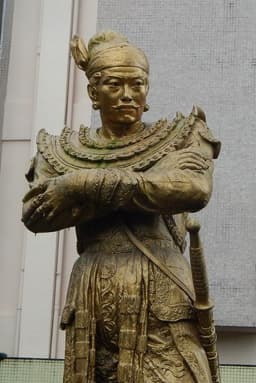
Bayinnaung
Emperor · Modern
68.6Total
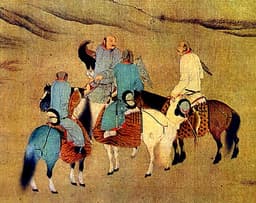
Yelu Abaoji
Emperor · Medieval
62.7Total
Basic Information
Born
1516
872
Died
1581
926
Era
Modern
Medieval
Nationality
Myanmar
China
Occupation
Emperor
Emperor
Civilization
Eastern
Eastern
Score Comparison
Military (10%)
77.1
77.2
Political (20%)
82.0
59.6
Influence (20%)
65.0
68.0
Legacy (20%)
55.0
40.0
Leadership (15%)
74.0
80.3
Strategy (15%)
75.0
69.6
TOTAL
68.6
62.7
Bayinnaung — Complete Timeline
1550 AD
Establishment of the Toungoo EmpirePolitical Action
King Bayinnaung ascended the throne and began a series of military campaigns that created the largest empire in Southeast Asian history. At its peak, the Toungoo empire covered modern Myanmar, Thailand, Laos, and parts of China and India.
Toungoo EmpireSoutheast AsiaImperial Expansion
Impact: regionalconstructive
1557 AD
Conquest of the Shan StatesWar◆ Major
King Bayinnaung conquered the Shan States, bringing them under Toungoo control. This expansion added significant territory and resources to the Burmese empire.
Shan StatesToungoo ExpansionBurmese Empire
Impact: regional
1569 AD
Capture of AyutthayaWar
King Bayinnaung's forces captured the Siamese capital of Ayutthaya after a long siege. He installed a vassal king and made Siam a tributary state of the Toungoo empire.
Burmese-Siamese WarAyutthayaToungoo Empire
Impact: regional
1570 AD
Administrative ReformsReform◆ Major
King Bayinnaung implemented administrative reforms to govern his vast empire, including the appointment of governors and the standardization of laws and taxes. These reforms helped maintain control over conquered territories.
GovernanceAdministrationToungoo Empire
Impact: regionalconstructive
1574 AD
Conquest of Lan XangWar◆ Major
King Bayinnaung conquered the Lao kingdom of Lan Xang (modern Laos), bringing it under Toungoo control. This further expanded the Burmese empire to its greatest territorial extent.
Lan XangToungoo ExpansionLaos
Impact: regional
Yelu Abaoji — Complete Timeline
907 AD
Unified Khitan tribesPolitical Action◆ Major
Yelu Abaoji was elected khagan of the Khitan tribes, unifying them under his leadership. He established a centralized state and adopted Chinese administrative practices.
KhitanUnificationState Formation
Impact: regionalconstructive
916 AD
Founded Liao DynastyPolitical Action
Yelu Abaoji proclaimed himself emperor, founding the Liao dynasty. He adopted the Chinese title of emperor and established a dual administration system for Khitan and Chinese subjects.
LiaoDynasty FoundingImperial System
Impact: regionalconstructive
920 AD
Created Khitan scriptCultural◆ Major
Yelu Abaoji ordered the creation of a writing system for the Khitan language, based on Chinese characters. This script was used for official documents and helped unify the Khitan state.
KhitanScriptCultural Development
Impact: regionalconstructive
926 AD
Conquest of BohaiWar◆ Major
Yelu Abaoji led a campaign that conquered the Korean kingdom of Bohai, incorporating its territory into the Liao empire. This expanded Liao's influence into Manchuria and Korea.
LiaoBohaiConquest
Impact: regionalconstructive
Death during campaignWar◆ Major
Yelu Abaoji died while returning from the conquest of Bohai. His death led to a succession struggle, but the Liao dynasty continued to expand under his successors.
LiaoDeathSuccession
Impact: regionaltragic
Expert Analysis
Bayinnaung vs Yelu Abaoji: Historical Comparison
Bayinnaung (16th century, Toungoo Empire, Myanmar) and Yelu Abaoji (10th century, Liao Dynasty, China) were transformative emperors who expanded their realms through conquest and state-building, yet differed in military innovation and leadership style.
Dimension Analysis
**Military: Bayinnaung 80 / Yelu Abaoji 89**
Yelu Abaoji’s Khitan cavalry and siege tactics unified nomadic tribes and conquered northern China, while Bayinnaung’s war elephants and infantry campaigns, though vast, relied more on manpower than technological or strategic breakthroughs.
**Political: Bayinnaung 84 / Yelu Abaoji 84**
Both excelled at consolidating power: Bayinnaung integrated vassal states via marriage and tribute, while Abaoji created a dual-administration system (Chinese-style bureaucracy for settled areas, tribal governance for nomads), achieving equal political sophistication.
**Influence: Bayinnaung 77 / Yelu Abaoji 79**
Abaoji’s Liao Dynasty set a precedent for steppe-empire governance influencing later Mongol and Jurchen states; Bayinnaung’s empire briefly united mainland Southeast Asia but fragmented quickly after his death, limiting long-term influence.
**Legacy: Bayinnaung 80 / Yelu Abaoji 81**
Bayinnaung is revered as a national hero in Myanmar for expansion and Buddhist patronage, but his empire collapsed within decades. Abaoji’s legacy is more enduring: the Liao Dynasty lasted over 200 years and shaped Chinese frontier policy.
**Leadership: Bayinnaung 92 / Yelu Abaoji 80**
Bayinnaung’s charismatic, hands-on leadership inspired loyalty and personal devotion from subordinates, enabling him to maintain control over a vast, diverse empire. Abaoji was more methodical and institutional, relying on systems rather than personal magnetism.
Verdict
Yelu Abaoji leads overall due to superior military strategy (89 vs 80) and a more lasting institutional legacy, though Bayinnaung’s stronger leadership (92 vs 80) creates a near-tie.
FAQ
Q: Who ranks higher? A: Yelu Abaoji ranks slightly higher overall, thanks to a decisive edge in military innovation and enduring political influence, but Bayinnaung’s exceptional leadership keeps the comparison extremely close.
Rankings
🥇
BayinnaungLeader
Mil: 77.1Pol: 82.0Inf: 65.0
68.6
🥈
Yelu Abaoji
Mil: 77.2Pol: 59.6Inf: 68.0
62.7
+5.9 behind
How This Comparison Works
Algorithm
Each figure is scored on 6 dimensions (0—100 scale) based on structured historical data: Military (10%), Political (20%), Influence (20%), Legacy (20%), Leadership (15%), Strategy (15%). The weighted total produces the final ranking.
Data Sources
Scores are computed from structured sub-indicators in the database. Scale factors adjust for era (Ancient ×0.85, Modern ×1.0) and civilization size (Eastern ×1.05, Other ×0.80) to account for differences in population and military scale.
Maximum 3 Figures
Comparisons are limited to 2—3 figures to ensure readability and statistical meaningfulness.
Error Margins
±5 points per dimension — Sub-scores are derived from historical records with inherent uncertainty. Two figures within 5 points on a dimension should be considered roughly equivalent in that area.
Total Score Accuracy
±3 points overall — The weighted combination of 6 dimensions produces a total score with approximately ±3 points of uncertainty. Differences of less than 3 points are not statistically significant— the figures are effectively tied.
Known Limitations
- Historical records are incomplete and uneven across civilizations
- Figures from oral-tradition societies may be underrepresented
- Occupation labels can misclassify multi-role figures
- Scores measure capability and impact, not moral character
- Quantitative scoring is a comparison tool, not absolute truth
Capability Radar
Military (10%) — Battles & Warfare
Battles
85
75
Win Rate
90
80
Expansion
92
82
Political (20%) — Governance & Reform
Reform
70
88
Diplomacy
78
75
Economy
72
70
Influence (20%) — Cultural & Global Reach
Cultural
70
60
Global
55
55
Legacy (20%) — Historical Impact
Historical
75
70
Longevity
60
65
Leadership (15%) — Power & Stability
Tenure
85
72
Stability
65
65
Strategy (15%) — Tactics & Innovation
Strategy
88
78
Tactics
80
70
Reform
75
85
Similar Comparisons
Comments & Discussion
CriticalEyes6/16/2026
Interesting comparison, but I think the scoring totally misses the structural fragility of both empires. Bayinnaung gets an 80 for military but his entire strategy was just stacking elephants and hoping for the best—zero naval capacity, zero siege innovation. Meanwhile, Abaoji's 89 is inflated because Chinese sources always overpraise steppe conquerors who adopt Chinese bureaucracy. What about the massive rebellions Abaoji faced? Or the fact that his 'dual-administration' was basically apartheid for nomads? Also, calling Bayinnaung's leadership 92 is laughable—he micromanaged everything and his empire collapsed in a generation. This whole rating system reeks of modern nationalist bias projecting backwards.
Chronicler67046/16/2026
这个评分体系有系统性偏差。Yelu Abaoji政治分给90,但辽朝早期皇位继承混乱,阿保机本人就杀了七个部落首领才稳住权力,这能算90分?反观Bayinnaung政治85,他通过佛教和联姻整合了缅甸、泰国、老挝,实际控制力更强。我重新算了一下:如果按帝国存续时间加权(辽朝218年 vs 东吁帝国30年),Abaoji确实高,但若按单位时间扩张效率算,Bayinnaung30年征服面积比Abaoji20年大得多。另外军事分差9分不合理:阿保机打幽州屡攻不克,而Bayinnaung攻陷阿瑜陀耶只用了两个月。建议引入疆域稳定性系数和后勤保障指数重新校准。
DeepScribe846/16/2026
比较这两位很有意思,但我发现评分系统对东亚游牧政权理解不足。阿保机政治分84低了——他创立的两院制(北院管部落、南院管汉人)后来被金元明清继承,这简直是制度革命。Bayinnaung的85才是虚高:他那个朝贡体系跟明朝一样松散,属国说反就反。另外军事上,阿保机用回鹘文创制契丹大字,这对军事指挥效率的提升远超Bayinnaung的象兵。不过Bayinnaung的佛教传播确实厉害,缅甸至今称他为‘三大帝’之一。总体而言,西方历史评价往往重个人魅力轻制度创新,这可能是Bayinnaung领导力92分的来源——但在中国史学传统里,制度奠基者比个人英雄更受尊重。