Loading...
Bayinnaung vs Yitzhak Rabin
Bayinnaung leads by 2.2 pts · 2 figures compared
…
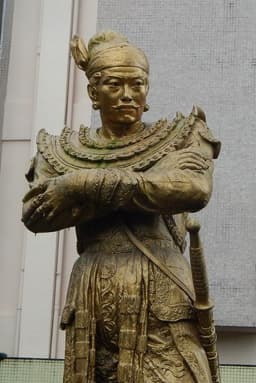
Bayinnaung
Emperor · Modern
68.6Total
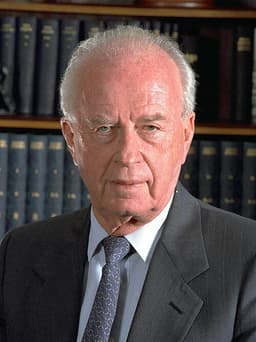
Yitzhak Rabin
General · Modern
66.4Total
Basic Information
Born
1516
1922
Died
1581
—
Era
Modern
Modern
Nationality
Myanmar
Israel
Occupation
Emperor
General
Civilization
Eastern
Middle Eastern
Score Comparison
Military (10%)
77.1
61.7
Political (20%)
82.0
82.0
Influence (20%)
65.0
68.0
Legacy (20%)
55.0
55.0
Leadership (15%)
74.0
78.0
Strategy (15%)
75.0
55.0
TOTAL
68.6
66.4
Bayinnaung — Complete Timeline
1550 AD
Establishment of the Toungoo EmpirePolitical Action
King Bayinnaung ascended the throne and began a series of military campaigns that created the largest empire in Southeast Asian history. At its peak, the Toungoo empire covered modern Myanmar, Thailand, Laos, and parts of China and India.
Toungoo EmpireSoutheast AsiaImperial Expansion
Impact: regionalconstructive
1557 AD
Conquest of the Shan StatesWar◆ Major
King Bayinnaung conquered the Shan States, bringing them under Toungoo control. This expansion added significant territory and resources to the Burmese empire.
Shan StatesToungoo ExpansionBurmese Empire
Impact: regional
1569 AD
Capture of AyutthayaWar
King Bayinnaung's forces captured the Siamese capital of Ayutthaya after a long siege. He installed a vassal king and made Siam a tributary state of the Toungoo empire.
Burmese-Siamese WarAyutthayaToungoo Empire
Impact: regional
1570 AD
Administrative ReformsReform◆ Major
King Bayinnaung implemented administrative reforms to govern his vast empire, including the appointment of governors and the standardization of laws and taxes. These reforms helped maintain control over conquered territories.
GovernanceAdministrationToungoo Empire
Impact: regionalconstructive
1574 AD
Conquest of Lan XangWar◆ Major
King Bayinnaung conquered the Lao kingdom of Lan Xang (modern Laos), bringing it under Toungoo control. This further expanded the Burmese empire to its greatest territorial extent.
Lan XangToungoo ExpansionLaos
Impact: regional
Yitzhak Rabin — Complete Timeline
1967 AD
Chief of Staff during the Six-Day WarWar
As Chief of Staff of the Israel Defense Forces, Rabin commanded the Israeli military during the Six-Day War against Egypt, Jordan, and Syria. Israel captured the Sinai Peninsula, Gaza Strip, West Bank, East Jerusalem, and Golan Heights, reshaping the region.
Six-Day WarTerritorial ExpansionMilitary Victory
Impact: global
1993 AD
Signing of the Oslo AccordsPolitical Action
As prime minister, Rabin signed the Oslo Accords with PLO Chairman Yasser Arafat on the White House lawn. The agreement established the Palestinian Authority and set a framework for Palestinian self-governance in the West Bank and Gaza Strip.
Peace ProcessPalestiniansOslo
Impact: globalconstructive
1995 AD
Assassination at Peace RallyPolitical Action
Rabin was assassinated by Israeli extremist Yigal Amir after a peace rally in Tel Aviv. The assassination shocked Israel and the world, derailing the Oslo peace process and leading to a period of political instability.
AssassinationPeace ProcessPolitical Violence
Impact: globaltragic
Expert Analysis
Yitzhak Rabin vs Bayinnaung
### The Conqueror and the Peacemaker: Bayinnaung and Rabin
On a sweltering afternoon in Tel Aviv, November 4, 1995, a crowd of 100,000 sang “The Song of Peace.” As Prime Minister Yitzhak Rabin folded a sheet of paper into his jacket pocket, a young man stepped forward and fired three shots. The peacemaker fell. Four centuries earlier, on a dusty plain in Siam, King Bayinnaung of the Toungoo dynasty watched as the gates of Ayutthaya swung open. His war elephants, their tusks painted gold, had crushed the Siamese capital after a nine-month siege. The conqueror rode in. Both men sought to reshape the world around them—one through the sword, the other through the pen. Why did one build an empire that crumbled within a generation, while the other built a peace that cost him his life?
### Origins
Bayinnaung was born in 1516, into a world of warring kingdoms. The son of a minor noble in the Toungoo region of Myanmar, he grew up in the shadow of the Shan raids and the crumbling Ava Kingdom. His era was the age of gunpowder and elephants, of shifting alliances and brutal conquest. He learned statecraft and warfare as a page to King Tabinshwehti, absorbing the lessons of the Portuguese mercenaries who sold cannons to anyone with silver. His world was a ladder of violence—and he intended to climb.
Yitzhak Rabin was born in 1922 in Jerusalem, then part of British Mandate Palestine. His parents were Labor Zionists who had fled pogroms in Eastern Europe. Unlike Bayinnaung, Rabin’s world was one of ideology and survival. He grew up in a farming community, learning discipline and pragmatism. The Holocaust and the 1948 Arab-Israeli War shaped his generation: they believed that Jews must never again depend on others for protection. Rabin would become a soldier not for conquest, but for existence.
### Rise to Power
Bayinnaung’s path to power was forged in battle. When Tabinshwehti was assassinated in 1550, the kingdom fractured. Bayinnaung, then a general, seized the throne in a swift coup. He spent the next twenty years on horseback, leading armies across the Irrawaddy River and into the Shan States. In 1557, he conquered the Shan highlands, bringing their chieftains under his rule. By 1569, his cannons battered the walls of Ayutthaya, and he installed a vassal king. Each victory was a stepping stone; each defeat, a lesson. He did not just conquer—he absorbed. He married local princesses, appointed loyal governors, and allowed defeated rulers to keep their titles if they swore fealty.
Rabin’s rise was quieter but no less decisive. He joined the Palmach, the elite strike force of the Jewish underground, and fought in the 1948 War of Independence. By 1964, he was Chief of Staff of the Israel Defense Forces. In June 1967, during the Six-Day War, he commanded the lightning strikes that captured the Sinai, the Golan Heights, and the West Bank. The world saw a military genius; Rabin saw a trap. He later wrote, “We had won a war, but we had inherited a million Arabs.” Unlike Bayinnaung, who saw territory as a prize, Rabin saw it as a burden.
### Leadership & Governance
Bayinnaung ruled by presence. He was a king who led from the front, his war elephants trampling enemy lines while his archers rained arrows. His political wisdom was pragmatic: he centralized the administration of his empire, appointing governors to collect taxes and maintain order. In 1570, he implemented reforms that standardized weights, measures, and legal codes across his realm. He built pagodas and roads, linking his conquests into a network of trade and tribute. Yet his empire was a patchwork of vassals held together by fear. When he died in 1581, the cracks appeared within a decade.
Rabin governed by consensus. As prime minister, he was famously blunt—a sabra who hated small talk. He believed in security first, then peace. During the First Intifada, he ordered soldiers to break Palestinian bones, a policy he later regretted. But he also had the courage to change. In 1993, on the White House lawn, he shook hands with Yasser Arafat, the man he had called a terrorist. The Oslo Accords were born: Israel would withdraw from parts of the West Bank and Gaza, and the Palestinians would renounce violence. It was a gamble. Rabin knew the risks. “You don’t make peace with friends,” he said. “You make peace with enemies.”
### Triumph & Tragedy
Bayinnaung’s greatest moment was the capture of Ayutthaya in 1569. He had achieved what no Burmese king had: the complete subjugation of Siam. His empire stretched from the borders of India to the Mekong River, the largest in Southeast Asian history. His tragedy was that he built a house of cards. After his death, the vassal kings rebelled, and the empire fragmented. By 1600, the Toungoo dynasty was in retreat.
Rabin’s greatest moment was the signing of the Oslo Accords on September 13, 1993. He stood beside Arafat and President Bill Clinton, a man who had once ordered the assassination of PLO operatives now shaking hands with their leader. His tragedy came two years later. On that November night in Tel Aviv, the bullets of Yigal Amir, a Jewish extremist who opposed the peace, ended his life. Rabin’s last words were to his wife: “It’s nothing, Leah.” He died in the ambulance.
### Character & Destiny
Bayinnaung was a man of his time—ambitious, ruthless, and strategic. He saw the world as a chessboard of kingdoms to be captured. His personality drove him to conquer, but it also blinded him to the fragility of his empire. He never understood that loyalty cannot be enforced by elephants.
Rabin was a man out of his time—a hawk who became a dove. His personality was shaped by contradiction: a general who hated war, a pragmatist who risked everything for peace. His destiny was to be killed by his own people, a martyr to a cause he had only recently embraced. He once said, “The peace process is not a one-way street. It is a long, winding road.”
### Legacy
Bayinnaung is remembered in Myanmar as a national hero, a unifier who brought the Shan, Mon, and Burmese under one crown. Yet his legacy is ambiguous: he created an empire that collapsed, and his methods—mass deportations, forced labor—are now seen as brutal. His statue stands in Naypyidaw, a reminder of a lost golden age.
Rabin is remembered as a symbol of what might have been. His assassination shattered Israeli confidence in the peace process. The Oslo Accords eventually collapsed into the Second Intifada. Yet his legacy endures in the simple fact that he tried. His name is on schools, streets, and a Tel Aviv square. Every year, on the anniversary of his death, Israelis light candles and sing “The Song of Peace.”
### Conclusion
Two men, four centuries apart, each tried to redraw the map of their world. Bayinnaung sought to build an empire through conquest; Rabin sought to build a peace through compromise. One succeeded in his time and failed in eternity; the other failed in his time and succeeded in eternity. Their stories remind us that the sword and the pen are both tools of power, but only one leaves a mark that survives the grave. In the end, Rabin’s blood on the pavement of Tel Aviv may have done more to shape history than all of Bayinnaung’s gold-tusked elephants.
Rankings
🥇
BayinnaungLeader
Mil: 77.1Pol: 82.0Inf: 65.0
68.6
🥈
Yitzhak Rabin
Mil: 61.7Pol: 82.0Inf: 68.0
66.4
+2.2 behind
How This Comparison Works
Algorithm
Each figure is scored on 6 dimensions (0—100 scale) based on structured historical data: Military (10%), Political (20%), Influence (20%), Legacy (20%), Leadership (15%), Strategy (15%). The weighted total produces the final ranking.
Data Sources
Scores are computed from structured sub-indicators in the database. Scale factors adjust for era (Ancient ×0.85, Modern ×1.0) and civilization size (Eastern ×1.05, Other ×0.80) to account for differences in population and military scale.
Maximum 3 Figures
Comparisons are limited to 2—3 figures to ensure readability and statistical meaningfulness.
Error Margins
±5 points per dimension — Sub-scores are derived from historical records with inherent uncertainty. Two figures within 5 points on a dimension should be considered roughly equivalent in that area.
Total Score Accuracy
±3 points overall — The weighted combination of 6 dimensions produces a total score with approximately ±3 points of uncertainty. Differences of less than 3 points are not statistically significant— the figures are effectively tied.
Known Limitations
- Historical records are incomplete and uneven across civilizations
- Figures from oral-tradition societies may be underrepresented
- Occupation labels can misclassify multi-role figures
- Scores measure capability and impact, not moral character
- Quantitative scoring is a comparison tool, not absolute truth
Capability Radar
Military (10%) — Battles & Warfare
Battles
85
65
Win Rate
90
70
Expansion
92
50
Political (20%) — Governance & Reform
Reform
70
65
Diplomacy
78
85
Economy
72
60
Influence (20%) — Cultural & Global Reach
Cultural
70
55
Global
55
70
Legacy (20%) — Historical Impact
Historical
75
75
Longevity
60
60
Leadership (15%) — Power & Stability
Tenure
85
70
Stability
65
40
Strategy (15%) — Tactics & Innovation
Strategy
88
75
Tactics
80
60
Reform
75
55
Similar Comparisons
Comments & Discussion
CLASSICS CHARIOTEER6/16/2026
Gloss over the fact that Bayinnaung conquered a dozen kingdoms but couldn't write his own chronicle—his "history" was penned by Portuguese monks and Siamese captives. Meanwhile, Rabin, a Jerusalem-born son of Ashkenazi pioneers, penned his fate on a soggy peace song lyric. One led from the back of an elephant; the other from a bullet-riddled podium. Which is more human? I say the man who bled for a handshake beats the one who bathed in gilded tusks.
帝国补锅匠6/16/2026
Bayinnaung的“帝国”就是个纸老虎:他死后十年内,缅甸分裂成五个互殴的军阀地盘,连他建的皇宫都被野草吞了。拉宾呢?他死后25年,以色列人均GDP翻了三倍,与约旦的关系正常化至今没断。别跟我吹什么“东方征服者”的牛,能留下能用钞票和护照衡量的遗产才是真本事。拿一个省都没治好的国王和定义一国商路的男人比?省省吧。
TWO STARS COLLIDE6/16/2026
The tragedy here isn’t one died old and one died young—it’s that both chased impossible dreams. Bayinnaung wanted to unify a warring subcontinent; Rabin wanted to reconcile two peoples who had bled each other dry for a century. One succeeded temporarily with steel; the other succeeded permanently in spirit. I’ll take the guy who made 100,000 sing in a plaza over the one who made 10,000 weep from a siege any day.
ELEPHANT’S REVENGE6/16/2026
Bayinnaung built an empire on war elephants and Portuguese cannons, but his "conquest" of Ayutthaya lasted exactly as long as his terrifying charisma. Within 17 years of his death, Siam broke free, and his Toungoo dynasty collapsed. Rabin? He signed Oslo knowing it might kill him—and it did. Compare the conqueror's ephemeral glory to the peacemaker's legacy still debated in every Knesset session. I'd take the bullet for peace over blood-soaked elephant tusks any day.
数据屠夫6/16/2026
吹什么“和平缔造者”的神话?拉宾的奥斯陆协议本质上是一场被高估的政治赌博。1995年,以色列民调有58%的人认为和平进程会失败,他死前支持率跌到39%。Bayinnaung再残暴,至少花了3000吨火药和1.5万头大象换来了15年的区域稳定。拉宾用一纸协议换来的是希布伦大屠杀和哈马斯火箭弹。别跟我提浪漫主义,看数字说话。