Loading...
Bayinnaung vs Sitiveni Rabuka
Bayinnaung leads by 16.9 pts · 2 figures compared
…
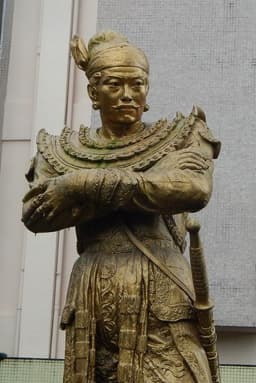
Bayinnaung
Emperor · Modern
68.6Total
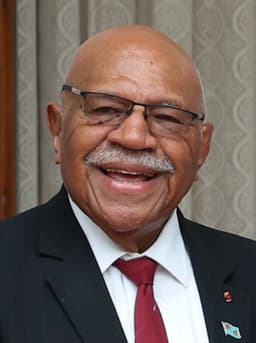
Sitiveni Rabuka
General · Modern
51.7Total
Basic Information
Born
1516
1948
Died
1581
—
Era
Modern
Modern
Nationality
Myanmar
Fiji
Occupation
Emperor
General
Civilization
Eastern
Other
Score Comparison
Military (10%)
77.1
10.2
Political (20%)
82.0
60.0
Influence (20%)
65.0
53.3
Legacy (20%)
55.0
46.7
Leadership (15%)
74.0
85.0
Strategy (15%)
75.0
39.6
TOTAL
68.6
51.7
Bayinnaung — Complete Timeline
1550 AD
Establishment of the Toungoo EmpirePolitical Action
King Bayinnaung ascended the throne and began a series of military campaigns that created the largest empire in Southeast Asian history. At its peak, the Toungoo empire covered modern Myanmar, Thailand, Laos, and parts of China and India.
Toungoo EmpireSoutheast AsiaImperial Expansion
Impact: regionalconstructive
1557 AD
Conquest of the Shan StatesWar◆ Major
King Bayinnaung conquered the Shan States, bringing them under Toungoo control. This expansion added significant territory and resources to the Burmese empire.
Shan StatesToungoo ExpansionBurmese Empire
Impact: regional
1569 AD
Capture of AyutthayaWar
King Bayinnaung's forces captured the Siamese capital of Ayutthaya after a long siege. He installed a vassal king and made Siam a tributary state of the Toungoo empire.
Burmese-Siamese WarAyutthayaToungoo Empire
Impact: regional
1570 AD
Administrative ReformsReform◆ Major
King Bayinnaung implemented administrative reforms to govern his vast empire, including the appointment of governors and the standardization of laws and taxes. These reforms helped maintain control over conquered territories.
GovernanceAdministrationToungoo Empire
Impact: regionalconstructive
1574 AD
Conquest of Lan XangWar◆ Major
King Bayinnaung conquered the Lao kingdom of Lan Xang (modern Laos), bringing it under Toungoo control. This further expanded the Burmese empire to its greatest territorial extent.
Lan XangToungoo ExpansionLaos
Impact: regional
Sitiveni Rabuka — Complete Timeline
1987 AD
1987 Fijian Coup d'étatPolitical Action
Rabuka, as a colonel in the Fijian military, led a coup overthrowing the elected government of Timoci Bavadra. The coup was motivated by ethnic Fijian opposition to Indo-Fijian political influence. Rabuka declared Fiji a republic.
CoupMilitary InterventionEthnic Tension
Impact: nationaldestructive
1992 AD
1992 Election as Prime MinisterPolitical Action◆ Major
Rabuka transitioned from military leader to civilian politician, winning the 1992 general election as leader of the Fijian Political Party. He became Prime Minister, serving until 1999.
ElectionCivilian GovernmentPolitical Transition
Impact: national
1997 AD
1997 Constitution ReformReform◆ Major
Rabuka's government oversaw the adoption of a new constitution that removed ethnic-based voting and provided for a multi-ethnic government. The constitution aimed to reduce ethnic tensions and promote national unity.
ConstitutionReformEthnic Reconciliation
Impact: nationalconstructive
1999 AD
1999 General Election DefeatPolitical Action◆ Major
Rabuka's government was defeated in the general election by the Labour Party led by Mahendra Chaudhry. Rabuka stepped down as Prime Minister, marking the end of his first period in power.
Election DefeatGovernment ChangeChaudhry
Impact: national
2022 AD
2022 Return as Prime MinisterPolitical Action◆ Major
Rabuka led the People's Alliance to victory in the 2022 general election, forming a coalition government. He became Prime Minister again, 23 years after his previous tenure, promising democratic reforms.
ElectionReturn to PowerCoalition Government
Impact: national
Expert Analysis
Sitiveni Rabuka vs Bayinnaung
# The Conqueror and the Conciliator
On a sweltering afternoon in 1569, King Bayinnaung of the Toungoo dynasty watched his war elephants crash through the gates of Ayutthaya, the Siamese capital. The city fell after a brutal siege, and the king installed a vassal ruler, extending an empire that now stretched from the borders of India to the South China Sea. Four centuries later, on a humid May morning in 1987, Colonel Sitiveni Rabuka of Fiji’s military walked into the country’s parliament building in Suva, ordered the elected government out at gunpoint, and declared himself the nation’s new ruler. One man built the largest empire Southeast Asia had ever seen; the other toppled a democracy in a coup. Yet both men, born worlds apart, shared a driving ambition to reshape their nations. What separates a conqueror from a coup leader? The answer lies not in their ambitions, but in the eras that forged them.
Origins
Bayinnaung was born in 1516, the son of a minor Burmese noble in the fractious Toungoo region. The sixteenth century was a brutal age of warring kingdoms, where the only law was the sword. His father died early, and young Bayinnaung was raised in the household of King Tabinshwehti, a charismatic warrior who taught him the art of war. By his twenties, Bayinnaung had become the king’s most trusted general, a man who slept in his armor and studied the campaigns of Genghis Khan. His world was one of perpetual conflict, where weakness invited annihilation.
Sitiveni Rabuka was born in 1948, just as Fiji emerged from British colonial rule. He grew up in a village on Vanua Levu, the son of a Methodist minister. Fiji in the 1950s was a peaceful, racially divided society: indigenous Fijians held the land, while Indo-Fijian descendants of indentured laborers dominated commerce and politics. Rabuka excelled in school, joined the military, and rose through the ranks of a small, British-trained army. His world was one of parliamentary democracy, ethnic tension, and uneasy compromise. Where Bayinnaung saw a map of kingdoms to conquer, Rabuka saw a fragile nation teetering between races.
Rise to Power
Bayinnaung’s path to power ran through blood. In 1550, King Tabinshwehti was assassinated by his own courtiers, and the kingdom collapsed into rebellion. Bayinnaung seized the throne by force, executing the conspirators and rallying the army. Within a year, he had crushed all rivals and launched his first campaign. His rise was a story of swift, merciless action—the only language his era understood.
Rabuka’s rise was more complicated. In 1987, Fiji’s first Indo-Fijian-led government, under Prime Minister Timoci Bavadra, took office. Indigenous Fijians feared losing their land and political dominance. Rabuka, then a 38-year-old colonel, saw himself as a defender of his people. On May 14, he led a bloodless coup—no shots fired—and arrested the government. He claimed he was saving Fiji from racial chaos. But unlike Bayinnaung, who could rely on the legitimacy of conquest, Rabuka faced a world that condemned military coups. His power came from a gun, not a crown.
Leadership & Governance
Bayinnaung ruled through iron and order. After conquering the Shan States in 1557, he did not simply plunder; he appointed governors, collected taxes, and built roads. In 1570, he implemented sweeping administrative reforms, dividing his empire into provinces under loyal officials. He respected local customs, allowing vassal kings to rule under his suzerainty—as long as they paid tribute and provided troops. His strategy was simple: conquer, consolidate, repeat. By 1574, when he conquered Lan Xang in modern Laos, his empire covered most of mainland Southeast Asia. He was a warrior who understood that an empire built on fear had to be governed with order.
Rabuka’s governance was a study in contradiction. After the 1987 coup, he initially ruled as a military dictator, but the international backlash was immediate. Australia and New Zealand imposed sanctions; Fiji was expelled from the Commonwealth. Rabuka realized that isolation meant ruin. So he transformed himself. In 1992, he resigned his military commission, formed a political party, and won the election as prime minister. Over the next seven years, he presided over a remarkable reversal: in 1997, he pushed through a new constitution that removed ethnic-based voting, creating a multiracial democracy. The man who had overthrown a government became the man who wrote the rules for a fairer one. His military score of 19.9 reflects a commander who never fought a war; his political score of 72.0 reflects a leader who learned that power must be shared.
Triumph & Tragedy
Bayinnaung’s greatest triumph was the capture of Ayutthaya in 1569, which made him the undisputed master of Southeast Asia. But his tragedy was that his empire died with him. Within a decade of his death in 1581, the conquered kingdoms rebelled, the vassals broke away, and the Toungoo dynasty collapsed into chaos. He had built a colossus on sand—no lasting institutions, only personal loyalty.
Rabuka’s triumph came in 2022, when at age 74, he returned to lead Fiji’s government as prime minister after a landslide election victory. His tragedy was 1999, when he was voted out of office, humiliated by the very democracy he had helped create. Yet he returned, a testament to his resilience. His legacy score of 61.2 reflects a man who never achieved greatness, but who achieved something rarer: a second chance.
Character & Destiny
Bayinnaung was a man of his age: ruthless, ambitious, and utterly certain. He once declared, “I will make the whole world one kingdom.” His personality was forged in war—decisive, unforgiving, and blind to the fragility of his creation. He could not imagine a world where his empire did not endure, because he had never known a world where force did not prevail.
Rabuka was a man torn between eras. He was a coup leader who hated coups, a nationalist who wrote a multiracial constitution. His character was shaped by the clash between his traditional Fijian upbringing and the modern democratic world he invaded. He once admitted, “I did what I did for my people, but I also learned that you cannot rule by force forever.” Where Bayinnaung saw only victory or death, Rabuka saw compromise and redemption.
Legacy
Bayinnaung is remembered in Myanmar as a national hero, a symbol of unity and power. His statue stands in Yangon; his name is taught in schools. But his empire is a footnote in history, a brief moment of glory before the collapse. He is a conqueror without a lasting kingdom.
Rabuka is a more ambiguous figure. In Fiji, he is both villain and savior. Indigenous Fijians honor him as a protector; Indo-Fijians remember the coup as a trauma. But his 1997 constitution endures, and his return to power in 2022 suggests a nation that has learned to forgive. He is a coup leader who became a democrat, a contradiction that may be his truest legacy.
Conclusion
The difference between Bayinnaung and Rabuka is not one of ambition, but of time. Bayinnaung lived in a world where empires were built by swords, and he wielded his with terrifying skill. Rabuka lived in a world where swords were obsolete, and he learned to put his down. One conquered an empire; the other conquered his own ambition. In the end, the greatest conquerors are not those who take lands, but those who learn to govern without them.
Rankings
🥇
BayinnaungLeader
Mil: 77.1Pol: 82.0Inf: 65.0
68.6
🥈
Sitiveni Rabuka
Mil: 10.2Pol: 60.0Inf: 53.3
51.7
+16.9 behind
How This Comparison Works
Algorithm
Each figure is scored on 6 dimensions (0—100 scale) based on structured historical data: Military (10%), Political (20%), Influence (20%), Legacy (20%), Leadership (15%), Strategy (15%). The weighted total produces the final ranking.
Data Sources
Scores are computed from structured sub-indicators in the database. Scale factors adjust for era (Ancient ×0.85, Modern ×1.0) and civilization size (Eastern ×1.05, Other ×0.80) to account for differences in population and military scale.
Maximum 3 Figures
Comparisons are limited to 2—3 figures to ensure readability and statistical meaningfulness.
Error Margins
±5 points per dimension — Sub-scores are derived from historical records with inherent uncertainty. Two figures within 5 points on a dimension should be considered roughly equivalent in that area.
Total Score Accuracy
±3 points overall — The weighted combination of 6 dimensions produces a total score with approximately ±3 points of uncertainty. Differences of less than 3 points are not statistically significant— the figures are effectively tied.
Known Limitations
- Historical records are incomplete and uneven across civilizations
- Figures from oral-tradition societies may be underrepresented
- Occupation labels can misclassify multi-role figures
- Scores measure capability and impact, not moral character
- Quantitative scoring is a comparison tool, not absolute truth
Capability Radar
Military (10%) — Battles & Warfare
Battles
85
5
Win Rate
90
5
Expansion
92
5
Political (20%) — Governance & Reform
Reform
70
50
Diplomacy
78
45
Economy
72
40
Influence (20%) — Cultural & Global Reach
Cultural
70
30
Global
55
20
Legacy (20%) — Historical Impact
Historical
75
40
Longevity
60
30
Leadership (15%) — Power & Stability
Tenure
85
55
Stability
65
35
Strategy (15%) — Tactics & Innovation
Strategy
88
10
Tactics
80
10
Reform
75
5
Similar Comparisons
Comments & Discussion
General Kakadu6/16/2026
Comparing a 16th-century empire builder to a 1987 coup plotter is like comparing a tiger to a house cat that got stuck in a tree. Bayinnaung conquered kingdoms with war elephants and siege towers; Rabuka walked into a parliament with a few soldiers and toppled a government in hours. One expanded an empire spanning half of mainland Southeast Asia, the other created a constitutional crisis that still haunts Fiji. Rabuka’s ambition looks almost petty next to the scale of Toungoo conquest. You want
数据屠夫6/16/2026
军事扩张效率是唯一公平的标尺。Bayinnaung用二十年把缅甸从三流小邦变成帝国,战象推进到云南和暹罗;Rabuka四小时政变后跪着还给原住民特权,GDP还倒退了。所谓民主卫士吹他“和解”,可和解的前提是打赢了再说。你随便查下1539年Prome战役,Bayinnaung砍了三千颗头立威,这才是现代民族国家的起步价。政变者连内战都不敢打,就别碰瓷1550年战神。
Classics Stan6/16/2026
What fascinates me is the institutional memory gap. Bayinnaung ruled by chronicles, inscriptions, and the raw force of elephant cavalry—his legitimacy was proven in battle, recorded for eternity on pagoda stones. Rabuka operated in a world of constitutions, media, and international condemnation. One built a sacred kingship that lasted centuries; the other stumbled into ethnic politics and wrote a memoir. They’re both ‘strongmen,’ but Bayinnaung’s power was cosmic; Rabuka’s was just procedural mi
架空史学家6/16/2026
别把殖民史包袱套到纯粹征服者身上。Bayinnaung的年代里,统一中南半岛是天命,杀降屠城是维护体系的手段;Rabuka的时代遭遇了英帝国留下的族群分裂代工厂,他的政变更像血统焦虑症的暴力发作。两个人都想“重塑国家”,但Bayinnaung的版图叫帝国,Rabuka的成果叫十年制裁加两次宪法重写——格局差了四百年的生产力。征服者只认领土和血统,不认道歉信。
Museum of Dust6/16/2026
Let’s talk about actual reach. Bayinnaung’s empire controlled trade routes from the Bay of Bengal to the Mekong, with vassal kings from Chiang Mai to Ayutthaya paying tribute in gold and white elephants. Rabuka’s greatest achievement was making sure the Great Council of Chiefs kept control of land titles. One man restructured the geopolitics of an entire region; the other restructured a cabinet. The scale isn’t even close. Ambition alone doesn’t make a conqueror—you need the infrastructure to ba