Loading...
Bayinnaung vs Francisco Morazan
Bayinnaung leads by 10.6 pts · 2 figures compared
…
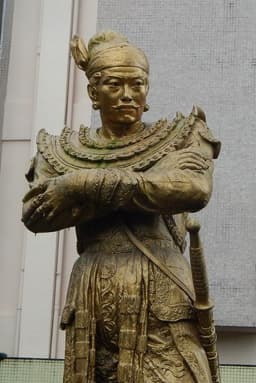
Bayinnaung
Emperor · Modern
68.6Total
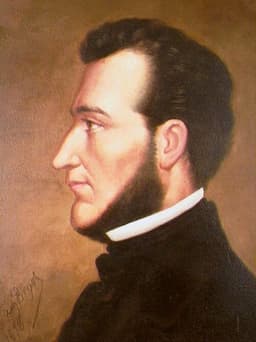
Francisco Morazan
General · Modern
58.0Total
Basic Information
Born
1516
1792
Died
1581
1842
Era
Modern
Modern
Nationality
Myanmar
Honduras
Occupation
Emperor
General
Civilization
Eastern
Western
Score Comparison
Military (10%)
77.1
52.5
Political (20%)
82.0
60.0
Influence (20%)
65.0
62.0
Legacy (20%)
55.0
50.0
Leadership (15%)
74.0
68.0
Strategy (15%)
75.0
55.0
TOTAL
68.6
58.0
Bayinnaung — Complete Timeline
1550 AD
Establishment of the Toungoo EmpirePolitical Action
King Bayinnaung ascended the throne and began a series of military campaigns that created the largest empire in Southeast Asian history. At its peak, the Toungoo empire covered modern Myanmar, Thailand, Laos, and parts of China and India.
Toungoo EmpireSoutheast AsiaImperial Expansion
Impact: regionalconstructive
1557 AD
Conquest of the Shan StatesWar◆ Major
King Bayinnaung conquered the Shan States, bringing them under Toungoo control. This expansion added significant territory and resources to the Burmese empire.
Shan StatesToungoo ExpansionBurmese Empire
Impact: regional
1569 AD
Capture of AyutthayaWar
King Bayinnaung's forces captured the Siamese capital of Ayutthaya after a long siege. He installed a vassal king and made Siam a tributary state of the Toungoo empire.
Burmese-Siamese WarAyutthayaToungoo Empire
Impact: regional
1570 AD
Administrative ReformsReform◆ Major
King Bayinnaung implemented administrative reforms to govern his vast empire, including the appointment of governors and the standardization of laws and taxes. These reforms helped maintain control over conquered territories.
GovernanceAdministrationToungoo Empire
Impact: regionalconstructive
1574 AD
Conquest of Lan XangWar◆ Major
King Bayinnaung conquered the Lao kingdom of Lan Xang (modern Laos), bringing it under Toungoo control. This further expanded the Burmese empire to its greatest territorial extent.
Lan XangToungoo ExpansionLaos
Impact: regional
Francisco Morazan — Complete Timeline
1824 AD
Abolition of slavery in Central AmericaReform◆ Major
As a key leader in the liberal movement, Moraz
AbolitionSlaveryLiberal Reform
Impact: regionalprogressive
1827 AD
Battle of La TrinidadWar◆ Major
Morazán led a liberal army to victory against conservative forces at La Trinidad, Honduras. This battle was a key turning point in the Central American civil war, allowing Morazán to consolidate power and eventually become president of the federation.
BattleLiberal VictoryCivil War
Impact: regional
1830 AD
Presidency of the Federal Republic of Central AmericaPolitical Action
Morazán was elected president of the Federal Republic of Central America, a union of Guatemala, El Salvador, Honduras, Nicaragua, and Costa Rica. He pursued liberal reforms including separation of church and state, free trade, and land reform, facing opposition from conservatives.
Federal RepublicLiberal ReformsCentral America
Impact: regionalconstructive
1842 AD
Execution by firing squadPolitical Action
After a failed attempt to restore the Federal Republic, Moraz
ExecutionEnd of FederationLiberal Defeat
Impact: regionaltragic
Expert Analysis
Francisco Morazan vs Bayinnaung
### The Emperor and the Reformer: Bayinnaung and Francisco Morazán
In the steamy heat of a Thai summer in 1569, King Bayinnaung of Burma watched his elephants batter down the gates of Ayutthaya, the Siamese capital. He was forging an empire that would stretch from the borders of India to the shores of Vietnam. Two and a half centuries later, on a cool September morning in 1842, General Francisco Morazán stood before a firing squad in San José, Costa Rica. His dream of a united Central America had crumbled into dust. One man built the largest empire Southeast Asia had ever seen; the other tried to build a republic and died for it. Why did one succeed in creating a lasting political order, while the other saw his life’s work shattered in a single volley of gunfire? The answer lies not just in their times, but in the very nature of their ambitions.
### Origins
Bayinnaung was born in 1516, the son of a village chief in the Toungoo region of what is now Myanmar. His early life was shaped by chaos: the once-mighty Pagan Empire had collapsed, and warring kingdoms and petty states tore at each other across the landscape. He grew up in a world where power was measured by the sword and loyalty by the blood oath. His closest companion was his brother-in-law, King Tabinshwehti, and together they learned the brutal arithmetic of conquest. The era demanded a strongman, and Bayinnaung became one.
Francisco Morazán, born in 1792 in Tegucigalpa, Honduras, inhabited a different world. The Spanish Empire was crumbling, and the air of the Americas was thick with Enlightenment ideas. His father was a Creole merchant, and young Morazán devoured the works of Rousseau and Voltaire. He learned law and military tactics, but his real education came from the revolutionary fervor that swept across the Atlantic. Where Bayinnaung inherited a tradition of kingship, Morazán inherited a tradition of rebellion. The former sought to restore an old order; the latter sought to create a new one.
### Rise to Power
Bayinnaung’s path to the throne was paved with blood and loyalty. In 1550, when Tabinshwehti was assassinated, the kingdom was on the verge of collapse. Bayinnaung did not merely claim the crown—he fought for it, crushing rivals and reasserting control. His rise was a military campaign in itself. By contrast, Morazán’s ascent was political and ideological. In 1827, at the Battle of La Trinidad, he led a liberal army to victory over conservatives, and by 1830 he was elected president of the Federal Republic of Central America. Bayinnaung won his throne through conquest; Morazán won his through votes and bullets.
### Leadership & Governance
Bayinnaung’s leadership was that of a conqueror-king. He did not simply defeat his enemies; he absorbed them. After capturing Ayutthaya in 1569, he installed a vassal king and demanded tribute, but he also allowed local customs to continue. His administrative reforms of 1570, which appointed governors and standardized taxation, were designed to hold together a sprawling, multi-ethnic empire. He was ruthless in war but pragmatic in peace. His strategy was simple: overwhelm with force, then bind with bureaucracy.
Morazán’s governance was that of a reformer. He abolished slavery in 1824, championed free trade, and sought to limit the power of the Catholic Church. His Federal Republic was a liberal experiment, a union of five states that aimed to replace colonial feudalism with modern citizenship. But where Bayinnaung could impose unity through conquest, Morazán had to negotiate it through politics. He was a brilliant general but a reluctant dictator. His military score of 65.4 and political score of 72.0 reflect a man who was good at both, but master of neither. Bayinnaung, with his military score of 79.8 and political score of 85.1, was a master of both war and statecraft.
### Triumph & Tragedy
Bayinnaung’s greatest triumph was the conquest of the Shan States in 1557, which opened the door to the entire region. By 1574, when he conquered Lan Xang, his empire was the largest in Southeast Asian history. But his tragedy was that it was a personal creation. He had no institutional framework to survive him. Within decades of his death in 1581, the empire began to fracture. His legacy score of 73.0 reflects a great empire that could not endure.
Morazán’s triumph was his presidency. For a decade, he held the Federal Republic together against conservative revolts and regional rivalries. His tragedy came in 1842, when a failed attempt to restore the union led to his capture and execution. He died not as a king, but as a traitor to the very nation he had tried to create. His legacy score of 68.9 is lower than Bayinnaung’s, but it carries a different weight. Bayinnaung left an empire; Morazán left a dream.
### Character & Destiny
Bayinnaung was a pragmatist. He believed in power, not principles. He could be merciful to a defeated enemy and brutal to a rebellious subject. His character was shaped by the certainty that the world was a place of war, and that he was destined to rule it. Morazán was an idealist. He believed in liberty, equality, and progress. His character was shaped by the conviction that the world could be remade. Bayinnaung’s destiny was to build; Morazán’s was to inspire. One succeeded because he accepted the world as it was; the other failed because he tried to change it.
### Legacy
Today, Bayinnaung is remembered as a national hero in Myanmar, a symbol of unity and strength. His name is carved into temples and chronicles. Morazán is remembered across Central America as the “Simón Bolívar of the isthmus,” a martyr for unity. His face appears on Honduran currency, and his name adorns streets and schools. Both men left a mark, but in different ways. Bayinnaung’s legacy is territorial; Morazán’s is ideological. One built an empire that collapsed; the other planted an idea that has never died.
### Conclusion
Standing at the end of their stories, we see two men who tried to unite a fractured world. Bayinnaung used elephants and armies; Morazán used speeches and laws. The emperor died in his bed, the reformer before a firing squad. Yet both understood something profound: that power, whether based on conquest or consent, is fragile. Bayinnaung’s empire vanished, but his name lives on. Morazán’s republic failed, but his vision persists. Perhaps the deepest lesson is not about success or failure, but about the shape of ambition itself. Some men build walls; others build bridges. The walls fall, but the bridges remain in the minds of those who dare to cross them.
Rankings
🥇
BayinnaungLeader
Mil: 77.1Pol: 82.0Inf: 65.0
68.6
🥈
Francisco Morazan
Mil: 52.5Pol: 60.0Inf: 62.0
58.0
+10.6 behind
How This Comparison Works
Algorithm
Each figure is scored on 6 dimensions (0—100 scale) based on structured historical data: Military (10%), Political (20%), Influence (20%), Legacy (20%), Leadership (15%), Strategy (15%). The weighted total produces the final ranking.
Data Sources
Scores are computed from structured sub-indicators in the database. Scale factors adjust for era (Ancient ×0.85, Modern ×1.0) and civilization size (Eastern ×1.05, Other ×0.80) to account for differences in population and military scale.
Maximum 3 Figures
Comparisons are limited to 2—3 figures to ensure readability and statistical meaningfulness.
Error Margins
±5 points per dimension — Sub-scores are derived from historical records with inherent uncertainty. Two figures within 5 points on a dimension should be considered roughly equivalent in that area.
Total Score Accuracy
±3 points overall — The weighted combination of 6 dimensions produces a total score with approximately ±3 points of uncertainty. Differences of less than 3 points are not statistically significant— the figures are effectively tied.
Known Limitations
- Historical records are incomplete and uneven across civilizations
- Figures from oral-tradition societies may be underrepresented
- Occupation labels can misclassify multi-role figures
- Scores measure capability and impact, not moral character
- Quantitative scoring is a comparison tool, not absolute truth
Capability Radar
Military (10%) — Battles & Warfare
Battles
85
55
Win Rate
90
60
Expansion
92
40
Political (20%) — Governance & Reform
Reform
70
70
Diplomacy
78
45
Economy
72
50
Influence (20%) — Cultural & Global Reach
Cultural
70
45
Global
55
35
Legacy (20%) — Historical Impact
Historical
75
50
Longevity
60
40
Leadership (15%) — Power & Stability
Tenure
85
55
Stability
65
30
Strategy (15%) — Tactics & Innovation
Strategy
88
55
Tactics
80
50
Reform
75
45
Similar Comparisons
Comments & Discussion
ScythedChariotOfUnion6/16/2026
As a military historian, I see a clash of logistics over tactics. Bayinnaung’s empire was built on the back of monsoon-season campaigns and a sophisticated elephant corps. Morazán’s greatest victory, at La Trinidad, was a cavalry charge that relied on local militias with no centralized supply chain. Bayinnaung conquered *through* the state he inherited; Morazán tried to conquer *for* one he only dreamed of building. That’s the difference between a general who mastered his environment and one who
数据烧烤架6/16/2026
数据上讲,两人根本不在一个量级。Bayinnaung控制的领土估计在100万到150万平方公里之间,人口数百万;Morazán呢?中美洲联邦巅峰时也就20多万平方公里,人口不到200万。一个帝王,一个总统。一个用大象和火炮统一了缅甸,一个用政令和上访书想统一危地马拉。说难听点,这不是帝国与共和国的对抗,这是指数级对比和线性对比的对抗。
毒舌经典学6/16/2026
别拿罗马共和国的剧本往热带丛林里套!Bayinnaung是典型的“王中之王”,他每攻下一城就扶植一个本地傀儡王,靠的是象征性的臣服和佛教天命;Morazán呢?他居然想在中美洲搞宪法、搞中央集权,还解散教会财产。这就像在喝醉的塔可摊位前硬要办柏拉图学园——理想很肥,现实很柴。一个是丛林法则下的神权成功学,一个是教科书式的自由主义自杀术。