Loading...
Bayinnaung vs J. B. M. Hertzog
Bayinnaung leads by 12.5 pts · 2 figures compared
…
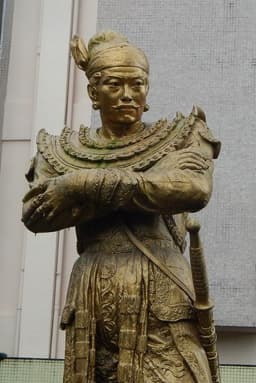
Bayinnaung
Emperor · Modern
68.6Total
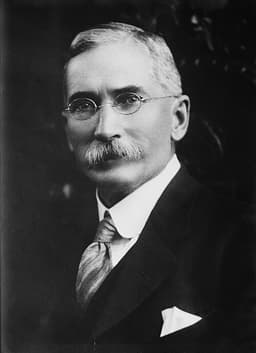
J. B. M. Hertzog
General · Modern
56.1Total
Basic Information
Born
1516
1866
Died
1581
1942
Era
Modern
Modern
Nationality
Myanmar
South Africa
Occupation
Emperor
General
Civilization
Eastern
Other
Score Comparison
Military (10%)
77.1
25.0
Political (20%)
82.0
60.0
Influence (20%)
65.0
56.7
Legacy (20%)
55.0
50.0
Leadership (15%)
74.0
79.8
Strategy (15%)
75.0
60.0
TOTAL
68.6
56.1
Bayinnaung — Complete Timeline
1550 AD
Establishment of the Toungoo EmpirePolitical Action
King Bayinnaung ascended the throne and began a series of military campaigns that created the largest empire in Southeast Asian history. At its peak, the Toungoo empire covered modern Myanmar, Thailand, Laos, and parts of China and India.
Toungoo EmpireSoutheast AsiaImperial Expansion
Impact: regionalconstructive
1557 AD
Conquest of the Shan StatesWar◆ Major
King Bayinnaung conquered the Shan States, bringing them under Toungoo control. This expansion added significant territory and resources to the Burmese empire.
Shan StatesToungoo ExpansionBurmese Empire
Impact: regional
1569 AD
Capture of AyutthayaWar
King Bayinnaung's forces captured the Siamese capital of Ayutthaya after a long siege. He installed a vassal king and made Siam a tributary state of the Toungoo empire.
Burmese-Siamese WarAyutthayaToungoo Empire
Impact: regional
1570 AD
Administrative ReformsReform◆ Major
King Bayinnaung implemented administrative reforms to govern his vast empire, including the appointment of governors and the standardization of laws and taxes. These reforms helped maintain control over conquered territories.
GovernanceAdministrationToungoo Empire
Impact: regionalconstructive
1574 AD
Conquest of Lan XangWar◆ Major
King Bayinnaung conquered the Lao kingdom of Lan Xang (modern Laos), bringing it under Toungoo control. This further expanded the Burmese empire to its greatest territorial extent.
Lan XangToungoo ExpansionLaos
Impact: regional
J. B. M. Hertzog — Complete Timeline
1899 AD
Boer War GeneralWar◆ Major
Hertzog served as a Boer general in the Second Boer War, commanding forces in the Orange Free State. He participated in several battles and became a prominent Afrikaner military leader.
Second Boer WarGeneralMilitary
Impact: regional
1914 AD
Founded the National PartyPolitical Action
Hertzog broke away from the South African Party and founded the National Party, which championed Afrikaner nationalism and opposed British imperial influence. The party would later implement apartheid.
National PartyAfrikaner NationalismFounding
Impact: nationalconstructive
1924 AD
Prime Minister of South AfricaPolitical Action◆ Major
Hertzog became Prime Minister after his National Party won the general election in coalition with the Labour Party. His government implemented policies to protect white workers and promote Afrikaner interests, including the 'civilized labour' policy.
Prime MinisterAfrikaner RightsLabour Policy
Impact: national
1934 AD
Merged with Smuts to Form United PartyPolitical Action◆ Major
Hertzog merged his National Party with Jan Smuts' South African Party to form the United Party. The coalition aimed to address the economic crisis of the Great Depression and promote national unity, but it alienated hardline Afrikaner nationalists.
United PartyCoalitionNational Unity
Impact: nationalconstructive
1936 AD
Passed the Representation of Natives ActReform◆ Major
Hertzog's government passed the Representation of Natives Act, which removed Black voters from the common voters' roll in the Cape Province and allowed them to elect white representatives instead. This further entrenched racial segregation.
SegregationDisenfranchisementLegislation
Impact: nationaldestructive
1939 AD
Resigned Over Neutrality in WWIIPolitical Action◆ Major
Hertzog advocated for South African neutrality in World War II, but his cabinet voted to enter the war on the Allied side. He resigned as Prime Minister and was succeeded by Jan Smuts, splitting the United Party.
World War IINeutralityResignation
Impact: national
Expert Analysis
J. B. M. Hertzog vs Bayinnaung
# The Emperor and the General: Two Visions of Power in an Age of Empire
On a sweltering day in 1569, King Bayinnaung of the Toungoo dynasty stood before the shattered gates of Ayutthaya, the Siamese capital that had resisted him for months. His war elephants, draped in gold and iron, filled the horizon. Three centuries later, in 1899, a young Boer lawyer named J. B. M. Hertzog mounted his horse on the dusty plains of the Orange Free State, rifle in hand, to fight the British Empire that sought to swallow his people. One man built the largest empire Southeast Asia had ever seen; the other spent his life fighting empires—and then building a nation on the bones of racial exclusion. What drove these two men, both products of the modern era, to such different destinies?
Origins
Bayinnaung was born in 1516, the son of a minor Toungoo prince, in a region fractured by petty kingdoms and incessant warfare. The Burmese heartland had known little unity since the fall of the Pagan Empire centuries earlier. His childhood was shaped by the clang of swords and the smoke of burning villages—a world where power was won by the spear, not the ballot. He learned war as a boy, and he learned that mercy was a luxury only the strong could afford.
Hertzog, by contrast, was born in 1866 in the Cape Colony, the son of a farmer who had trekked north to escape British rule. His world was one of ox-wagons, Dutch Reformed sermons, and the bitter memory of the Great Trek. The Boers—descendants of Dutch settlers—saw themselves as a chosen people in a hostile land, surrounded by British imperialists and African kingdoms alike. Hertzog studied law in Amsterdam, absorbing European nationalism and legalism. Where Bayinnaung learned to command armies, Hertzog learned to command arguments.
Rise to Power
Bayinnaung’s path was forged in blood. He was a general under his brother-in-law, King Tabinshwehti, and when the king was assassinated in 1550, the empire dissolved into chaos. Bayinnaung did not hesitate. He seized the throne, crushed his rivals, and in a single decade launched campaigns that would make his name a legend. By 1557, he had conquered the Shan States, absorbing their war bands into his own. His secret was speed: his armies moved like monsoon floods, overwhelming fortresses before defenders could muster.
Hertzog’s rise was slower, and it began in defeat. As a Boer general in the Second Boer War (1899–1902), he fought a guerrilla campaign against the British, but the war ended with the Boer republics crushed. Hertzog refused to accept British supremacy. In 1914, he broke from the South African Party and founded the National Party, rallying Afrikaners with the promise of a nation where their language and culture would dominate. He did not conquer—he organized. He did not storm cities—he won elections.
Leadership & Governance
Bayinnaung ruled through terror and patronage. When he captured Ayutthaya in 1569, he did not burn it to the ground; he installed a vassal king, demanded tribute, and left. He understood that an empire of many peoples could not be held by the sword alone. His administrative reforms of 1570 appointed loyal governors to distant provinces, and he allowed local customs to survive—as long as taxes flowed to Toungoo. His was a practical despotism.
Hertzog governed through law and exclusion. As Prime Minister from 1924, he passed tariffs to protect Afrikaner farmers, promoted Afrikaans over English, and in 1936 pushed through the Representation of Natives Act, stripping Black South Africans of the vote. He saw himself as a defender of his people’s rights—but those rights were defined against others. His coalition with Jan Smuts in 1934, forming the United Party, was a cynical bargain: unity among whites, subjugation for everyone else.
Triumph & Tragedy
Bayinnaung’s greatest triumph was the conquest of Lan Xang in 1574, bringing modern Laos under his sway. For a few years, his empire stretched from the Bay of Bengal to the Mekong River—the largest in Southeast Asian history. But his tragedy was that he built a colossus on sand. After his death in 1581, the empire crumbled within decades. He had no successor of equal skill, and the conquered states rebelled.
Hertzog’s triumph was the 1924 election victory, which ended British-dominated rule and gave Afrikaners political power. His tragedy was that he could not see beyond his own tribe. When World War II broke out in 1939, he argued for neutrality, hoping to keep South Africa out of Britain’s war. His cabinet voted him down. He resigned in disgrace, a man who had outlived his moment.
Character & Destiny
Bayinnaung was a creature of his environment: the jungle world of Southeast Asia, where empires rose and fell with the seasons. He was ruthless, yes, but also pragmatic. He did not hate the Siamese or the Lao—he simply needed their rice and their labor. His personality was that of a builder, but a builder who used living stones.
Hertzog was a man of principles, rigid and unbending. He believed in Afrikaner destiny with the fervor of a Calvinist preacher. Where Bayinnaung could adapt, Hertzog could not. His refusal to compromise on racial segregation set South Africa on a path that would lead to apartheid—a system he helped create but would not live to see fully implemented. His tragedy was that his love for his own people blinded him to the humanity of others.
Legacy
Bayinnaung is remembered in Myanmar as a national hero, the unifier of the Shan and Burmese. But his empire vanished, leaving only ruins and chronicles. His name lives in legend, not in institutions.
Hertzog’s legacy is darker and more complicated. He is celebrated by Afrikaner nationalists as a founding father, but his racial policies are a stain on South African history. The National Party he founded would later implement apartheid, a system that would take decades and immense suffering to dismantle.
Conclusion
Bayinnaung and Hertzog never met, never could have met. One ruled with elephants and arrows, the other with speeches and statutes. But both faced the same eternal question: How do you build a lasting order in a world of competing peoples? Bayinnaung’s answer was conquest and tribute; Hertzog’s was exclusion and law. Neither answer endured. Perhaps that is the lesson: the empires we build—whether of territory or of race—are always built on borrowed time. What remains is not the walls or the laws, but the stories we tell about why we built them.
Rankings
🥇
BayinnaungLeader
Mil: 77.1Pol: 82.0Inf: 65.0
68.6
🥈
J. B. M. Hertzog
Mil: 25.0Pol: 60.0Inf: 56.7
56.1
+12.5 behind
How This Comparison Works
Algorithm
Each figure is scored on 6 dimensions (0—100 scale) based on structured historical data: Military (10%), Political (20%), Influence (20%), Legacy (20%), Leadership (15%), Strategy (15%). The weighted total produces the final ranking.
Data Sources
Scores are computed from structured sub-indicators in the database. Scale factors adjust for era (Ancient ×0.85, Modern ×1.0) and civilization size (Eastern ×1.05, Other ×0.80) to account for differences in population and military scale.
Maximum 3 Figures
Comparisons are limited to 2—3 figures to ensure readability and statistical meaningfulness.
Error Margins
±5 points per dimension — Sub-scores are derived from historical records with inherent uncertainty. Two figures within 5 points on a dimension should be considered roughly equivalent in that area.
Total Score Accuracy
±3 points overall — The weighted combination of 6 dimensions produces a total score with approximately ±3 points of uncertainty. Differences of less than 3 points are not statistically significant— the figures are effectively tied.
Known Limitations
- Historical records are incomplete and uneven across civilizations
- Figures from oral-tradition societies may be underrepresented
- Occupation labels can misclassify multi-role figures
- Scores measure capability and impact, not moral character
- Quantitative scoring is a comparison tool, not absolute truth
Capability Radar
Military (10%) — Battles & Warfare
Battles
85
45
Win Rate
90
40
Expansion
92
20
Political (20%) — Governance & Reform
Reform
70
60
Diplomacy
78
55
Economy
72
50
Influence (20%) — Cultural & Global Reach
Cultural
70
50
Global
55
45
Legacy (20%) — Historical Impact
Historical
75
55
Longevity
60
40
Leadership (15%) — Power & Stability
Tenure
85
65
Stability
65
45
Strategy (15%) — Tactics & Innovation
Strategy
88
50
Tactics
80
45
Reform
75
30
Similar Comparisons
Comments & Discussion
GildedWarElephant6/16/2026
Bayinnaung wasn't just a conqueror; he was a master of siege engineering. That 1569 victory at Ayutthaya? He didn't just smash gates—he diverted the entire Chao Phraya river to starve them out. Hertzog's constitutional wrangling looks petty next to that scale of ambition. One built an empire with blood and water; the other built apartheid with ink and paper. Give me the emperor who reshaped geography over the lawyer who reshaped hate.
数据猎人6/16/2026
Hertzog打赢了英布战争,但输掉了人口普查。1899年他参战时,奥兰治自由邦只有7万白人男性,而对手大英帝国动员了45万士兵。Bayinnaung在1560年代却能集结8万大军远征暹罗——缅甸人口才多少?这种数据对比告诉你:所谓“民族英雄”不过是人口结构下的幸运儿。别跟我谈理想,谈战损比。
SanskritScribe6/16/2026
Both men understood power as divine mandate. Bayinnaung crowned himself as a cakkavatti—a universal ruler in Buddhist cosmology—while Hertzog invoked the Calvinist covenant theology of a chosen people. The difference? The Burmese king forced conquered kings to drink the water of allegiance at Shwezigon Pagoda. Hertzog forced black South Africans to carry passes. One demanded fealty to heaven; the other demanded submission to paperwork. Progress?
青铜编钟6/16/2026
南明永历帝1646年逃到缅甸时,Bayinnaung的孙子已经守不住伊洛瓦底江了。而Hertzog 1936年通过的《代表法》给南非黑人设下选举门槛,启发了后来的种族隔离政策。历史讽刺在于:缅甸帝国百年崩塌,南非体系四十年瓦解。权力筑巢时都觉得自己永恒,结果都是沙上城堡——区别只是大象踩碎还是人民推翻。
RevisionistKrieger6/16/2026
Let's stop romanticizing Bayinnaung's "unification." The Toungoo Empire was a collection of vassal states held together by terror and elephant-back raids. When he died in 1581, the whole thing collapsed within 15 years. Hertzog's Afrikaner nationalism at least gave legal structure—even if that structure was racist. The Burmese king left monuments and bones; the Boer general left a constitution. Which legacy has more blood on it? Trick question: both.