Loading...
Bayinnaung vs Muhammadu Buhari
Bayinnaung leads by 17.1 pts · 2 figures compared
…
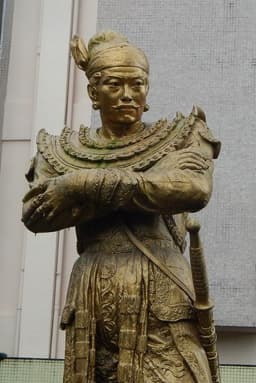
Bayinnaung
Emperor · Modern
68.6Total
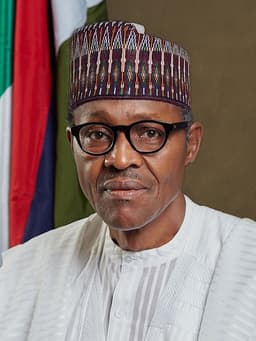
Muhammadu Buhari
General · Modern
51.5Total
Basic Information
Born
1516
1942
Died
1581
—
Era
Modern
Modern
Nationality
Myanmar
Nigeria
Occupation
Emperor
General
Civilization
Eastern
Other
Score Comparison
Military (10%)
77.1
22.6
Political (20%)
82.0
68.0
Influence (20%)
65.0
53.3
Legacy (20%)
55.0
43.3
Leadership (15%)
74.0
72.0
Strategy (15%)
75.0
41.0
TOTAL
68.6
51.5
Bayinnaung — Complete Timeline
1550 AD
Establishment of the Toungoo EmpirePolitical Action
King Bayinnaung ascended the throne and began a series of military campaigns that created the largest empire in Southeast Asian history. At its peak, the Toungoo empire covered modern Myanmar, Thailand, Laos, and parts of China and India.
Toungoo EmpireSoutheast AsiaImperial Expansion
Impact: regionalconstructive
1557 AD
Conquest of the Shan StatesWar◆ Major
King Bayinnaung conquered the Shan States, bringing them under Toungoo control. This expansion added significant territory and resources to the Burmese empire.
Shan StatesToungoo ExpansionBurmese Empire
Impact: regional
1569 AD
Capture of AyutthayaWar
King Bayinnaung's forces captured the Siamese capital of Ayutthaya after a long siege. He installed a vassal king and made Siam a tributary state of the Toungoo empire.
Burmese-Siamese WarAyutthayaToungoo Empire
Impact: regional
1570 AD
Administrative ReformsReform◆ Major
King Bayinnaung implemented administrative reforms to govern his vast empire, including the appointment of governors and the standardization of laws and taxes. These reforms helped maintain control over conquered territories.
GovernanceAdministrationToungoo Empire
Impact: regionalconstructive
1574 AD
Conquest of Lan XangWar◆ Major
King Bayinnaung conquered the Lao kingdom of Lan Xang (modern Laos), bringing it under Toungoo control. This further expanded the Burmese empire to its greatest territorial extent.
Lan XangToungoo ExpansionLaos
Impact: regional
Muhammadu Buhari — Complete Timeline
1983 AD
1983 Nigerian coup d'étatPolitical Action
Major General Muhammadu Buhari led a military coup that overthrew the civilian government of President Shehu Shagari. Buhari cited corruption and economic mismanagement as justifications, and he became the head of state.
CoupMilitary RuleCorruption
Impact: nationaldestructive
1984 AD
War Against Indiscipline (WAI)Reform◆ Major
Buhari launched the War Against Indiscipline, a campaign to enforce discipline and order in Nigerian society. It included harsh penalties for minor offenses, such as queue-jumping, and was criticized for human rights abuses.
DisciplineSocial PolicyHuman Rights
Impact: nationaldestructive
1985 AD
Overthrow by Ibrahim BabangidaPolitical Action◆ Major
Buhari was overthrown in a palace coup led by his Chief of Army Staff, Ibrahim Babangida. Babangida cited Buhari's authoritarian style and failure to address the economy as reasons for the coup.
CoupOverthrowBabangida
Impact: national
2015 AD
Anti-corruption campaignReform◆ Major
Buhari launched a high-profile anti-corruption campaign, targeting government officials and recovering stolen assets. The campaign was praised internationally but criticized for being selective and politically motivated.
Anti-CorruptionReformGovernance
Impact: nationalconstructive
Election as President of NigeriaPolitical Action
Buhari won the 2015 Nigerian presidential election, defeating incumbent Goodluck Jonathan. This was the first time an opposition candidate had defeated a sitting president in Nigeria's history, marking a democratic milestone.
ElectionDemocracyOpposition Victory
Impact: nationalprogressive
Expert Analysis
Muhammadu Buhari vs Bayinnaung
# The Empire Builder and the Reformer: Bayinnaung and Buhari Across Centuries
On a sweltering day in 1569, King Bayinnaung of the Toungoo dynasty watched as his war elephants crashed through the gates of Ayutthaya, the glittering capital of Siam. Nearly four and a half centuries later, in 1983, Major General Muhammadu Buhari sat in a Lagos command center, having just seized control of Africa’s most populous nation. Both men sought order through conquest—one of lands, the other of a society. Yet their paths diverged as dramatically as the centuries that separated them. Why did one build an empire that stretched from the Irrawaddy to the Mekong, while the other built a reputation that oscillated between savior and autocrat?
Origins
Bayinnaung was born in 1516, the son of a minor noble in the fractious Toungoo kingdom. His era was one of chaos: the once-mighty Pagan Empire had crumbled, and petty kingdoms warred across what is now Myanmar. He grew up in the shadow of his brother-in-law, King Tabinshwehti, learning the arts of war and statecraft on the battlefield. The young prince absorbed a brutal truth: power flowed from the sword, and loyalty was a currency earned through victory.
Muhammadu Buhari was born in 1942 in Daura, northern Nigeria, into a Fulani Muslim family. His Nigeria was a British colony, but independence was just eighteen years away. He attended the Nigerian Military Training College and later Sandhurst, absorbing a very different lesson: order came from discipline, and discipline from hierarchy. The post-colonial chaos he would later inherit—coups, corruption, ethnic rivalries—was the backdrop of his entire career.
Rise to Power
Bayinnaung’s ascent was forged in war. In 1550, after Tabinshwehti’s assassination, he seized the throne and immediately launched campaigns that would define his reign. Within seven years, he had conquered the Shan States, absorbing their fractious chieftains into a centralized system. His turning point came in 1557, when he led 70,000 troops into the Shan highlands, not merely defeating but incorporating local rulers as vassals. He understood that empire required more than victory—it demanded a structure of loyalty.
Buhari’s rise came through a different kind of coup. On December 31, 1983, he overthrew President Shehu Shagari, citing rampant corruption and economic mismanagement. His justification was moral: Nigeria had lost its way. Unlike Bayinnaung, who inherited a kingdom and expanded it, Buhari inherited a nation and sought to purify it. The difference was telling: one built outward, the other inward.
Leadership & Governance
As emperor, Bayinnaung ruled with a blend of military might and political genius. He appointed governors to conquered provinces, allowed local rulers to retain power as vassals, and standardized administration across his realm. His conquest of Lan Xang in 1574 was not just a military triumph but a diplomatic one—he married his daughters to Lao princes, weaving bloodlines into governance. His military score of 79.8 and political score of 85.1 reflect this balance: he was as much a diplomat as a general.
Buhari’s governance was sterner. His War Against Indiscipline (WAI), launched in 1984, compelled Nigerians to queue in lines, pay taxes promptly, and respect authority. It was a moral crusade, but its methods—public floggings, detention without trial—alienated even his supporters. His leadership score of 77.5 suggests genuine administrative ability, but his political score of 61.0 reveals a weakness: he governed by decree, not consensus. Where Bayinnaung incorporated rivals, Buhari punished them.
Triumph & Tragedy
Bayinnaung’s greatest moment was the capture of Ayutthaya in 1569. After a year-long siege, he installed a vassal king and extracted tribute, extending his empire from Manipur to Cambodia. Yet his tragedy was that this empire was unsustainable. After his death in 1581, it fractured within decades, a victim of overextension and the absence of a successor with his vision.
Buhari’s triumph came in 2015, when he won the presidency in Nigeria’s first democratic transfer of power to an opposition candidate. His anti-corruption campaign recovered billions of naira and targeted powerful figures. But his tragedy was the same as his first rule: he struggled to translate moral authority into economic growth. By 2019, Nigeria had overtaken India as the world’s poverty capital. His legacy score of 56.7 reflects this paradox—a man who restored integrity but could not restore prosperity.
Character & Destiny
Bayinnaung’s personality was that of a builder. He was patient, calculating, and willing to compromise. He once reportedly said, “A king must be like a mountain—immovable in purpose, yet sheltering all who seek refuge.” This blend of ruthlessness and magnanimity allowed him to unite a region that had known only war.
Buhari’s character was that of a disciplinarian. He was rigid, austere, and suspicious of dissent. His supporters called him “the messiah”; his critics, “the dictator.” His destiny was to be a transitional figure—a man who cleansed a corrupt system but could not transform it. Where Bayinnaung died in his bed, still emperor, Buhari was overthrown in 1985 by his own chief of army staff, who cited his “rigidness and lack of consultation.”
Legacy
Today, Bayinnaung is remembered as the “Napoleon of Southeast Asia,” a unifier whose empire set the template for later Burmese kings. His statues stand across Myanmar, and his name is synonymous with greatness. But his legacy is also a cautionary tale: empires built on conquest require constant expansion to survive.
Buhari’s legacy is more contested. In Nigeria, he is revered in the north as a man of integrity and reviled in the south as a symbol of authoritarianism. His 2015 election gave hope that democracy could work in Africa, but his second term disappointed many. He will be remembered as a reformer who failed to reform the economy, a democrat who governed like a general.
Conclusion
What separates these two leaders is not ability but context. Bayinnaung lived in an age when empire was the highest achievement, and he mastered its arts. Buhari lived in an age when democracy and development were the measures of success, and he struggled with both. One built a house of sand that collapsed when he left; the other built a foundation of integrity that future generations might finish. Both remind us that leadership is not just about power, but about what you do with it—and that history judges not only intentions, but outcomes.
Rankings
🥇
BayinnaungLeader
Mil: 77.1Pol: 82.0Inf: 65.0
68.6
🥈
Muhammadu Buhari
Mil: 22.6Pol: 68.0Inf: 53.3
51.5
+17.1 behind
How This Comparison Works
Algorithm
Each figure is scored on 6 dimensions (0—100 scale) based on structured historical data: Military (10%), Political (20%), Influence (20%), Legacy (20%), Leadership (15%), Strategy (15%). The weighted total produces the final ranking.
Data Sources
Scores are computed from structured sub-indicators in the database. Scale factors adjust for era (Ancient ×0.85, Modern ×1.0) and civilization size (Eastern ×1.05, Other ×0.80) to account for differences in population and military scale.
Maximum 3 Figures
Comparisons are limited to 2—3 figures to ensure readability and statistical meaningfulness.
Error Margins
±5 points per dimension — Sub-scores are derived from historical records with inherent uncertainty. Two figures within 5 points on a dimension should be considered roughly equivalent in that area.
Total Score Accuracy
±3 points overall — The weighted combination of 6 dimensions produces a total score with approximately ±3 points of uncertainty. Differences of less than 3 points are not statistically significant— the figures are effectively tied.
Known Limitations
- Historical records are incomplete and uneven across civilizations
- Figures from oral-tradition societies may be underrepresented
- Occupation labels can misclassify multi-role figures
- Scores measure capability and impact, not moral character
- Quantitative scoring is a comparison tool, not absolute truth
Capability Radar
Military (10%) — Battles & Warfare
Battles
85
10
Win Rate
90
10
Expansion
92
5
Political (20%) — Governance & Reform
Reform
70
30
Diplomacy
78
25
Economy
72
20
Influence (20%) — Cultural & Global Reach
Cultural
70
25
Global
55
25
Legacy (20%) — Historical Impact
Historical
75
30
Longevity
60
20
Leadership (15%) — Power & Stability
Tenure
85
45
Stability
65
15
Strategy (15%) — Tactics & Innovation
Strategy
88
15
Tactics
80
15
Reform
75
20
Similar Comparisons
Comments & Discussion
KingmakerHistorian6/16/2026
Bayinnaung was the Alexander of Southeast Asia, capturing 19 vassal kingdoms and even bringing Sri Lanka tribute. Buhari? He couldn't even hold a single stable government together. Buhari's anti-corruption campaigns are just his modern version of "order through threat." But Bayinnaung had charisma—his Mon inscriptions show he actually won loyalty, not just fear. Buhari is Bayinnaung without the battlefield charisma, just the iron fist. Sad.||沙场破阵子|zh|Bayinnaung一生征战,拿下阿瑜陀耶城时用战象破门,随即确立缅甸中部霸权。而布哈里1