Loading...
Pedro I of Brazil vs Sitiveni Rabuka
Pedro I of Brazil leads by 2.9 pts · 2 figures compared
…
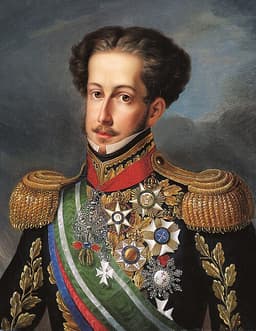
Pedro I of Brazil
Emperor · Modern
54.6Total
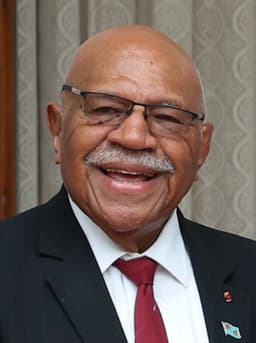
Sitiveni Rabuka
General · Modern
51.7Total
Basic Information
Born
1798
1948
Died
1834
—
Era
Modern
Modern
Nationality
Brazil
Fiji
Occupation
Emperor
General
Civilization
Western
Other
Score Comparison
Military (10%)
55.0
10.2
Political (20%)
62.7
60.0
Influence (20%)
59.0
53.3
Legacy (20%)
50.0
46.7
Leadership (15%)
53.2
85.0
Strategy (15%)
45.0
39.6
TOTAL
54.6
51.7
Pedro I of Brazil — Complete Timeline
1822 AD
Declaration of Independence of BrazilPolitical Action
Pedro I declared Brazil's independence from Portugal on September 7, 1822, at the Ipiranga River in S
Impact: globalprogressive
Coronation as Emperor of BrazilPolitical Action◆ Major
Pedro I was crowned Emperor of Brazil on December 1, 1822, in Rio de Janeiro. The coronation formalized the new imperial government, with Pedro I as constitutional monarch, though he retained significant executive powers.
Impact: nationalconstructive
1823 AD
War of Independence of BrazilWar◆ Major
Pedro I led Brazilian forces against Portuguese loyalists in the War of Independence. Key battles occurred in Bahia, Maranh
Impact: national
Dissolution of the Constituent AssemblyPolitical Action◆ Major
Pedro I dissolved the Constituent Assembly after conflicts over the constitution's limits on imperial power. He then imposed the 1824 Constitution, which granted the emperor extensive powers, including the Moderating Power, centralizing authority.
Impact: nationaldestructive
1831 AD
Abdication of the Brazilian ThronePolitical Action
Pedro I abdicated the Brazilian throne in favor of his five-year-old son Pedro II on April 7, 1831. He returned to Portugal to claim the Portuguese throne, leaving Brazil under a regency until his son came of age.
Impact: national
Sitiveni Rabuka — Complete Timeline
1987 AD
1987 Fijian Coup d'étatPolitical Action
Rabuka, as a colonel in the Fijian military, led a coup overthrowing the elected government of Timoci Bavadra. The coup was motivated by ethnic Fijian opposition to Indo-Fijian political influence. Rabuka declared Fiji a republic.
CoupMilitary InterventionEthnic Tension
Impact: nationaldestructive
1992 AD
1992 Election as Prime MinisterPolitical Action◆ Major
Rabuka transitioned from military leader to civilian politician, winning the 1992 general election as leader of the Fijian Political Party. He became Prime Minister, serving until 1999.
ElectionCivilian GovernmentPolitical Transition
Impact: national
1997 AD
1997 Constitution ReformReform◆ Major
Rabuka's government oversaw the adoption of a new constitution that removed ethnic-based voting and provided for a multi-ethnic government. The constitution aimed to reduce ethnic tensions and promote national unity.
ConstitutionReformEthnic Reconciliation
Impact: nationalconstructive
1999 AD
1999 General Election DefeatPolitical Action◆ Major
Rabuka's government was defeated in the general election by the Labour Party led by Mahendra Chaudhry. Rabuka stepped down as Prime Minister, marking the end of his first period in power.
Election DefeatGovernment ChangeChaudhry
Impact: national
2022 AD
2022 Return as Prime MinisterPolitical Action◆ Major
Rabuka led the People's Alliance to victory in the 2022 general election, forming a coalition government. He became Prime Minister again, 23 years after his previous tenure, promising democratic reforms.
ElectionReturn to PowerCoalition Government
Impact: national
Expert Analysis
Sitiveni Rabuka vs Pedro I of Brazil
# The Emperor and the Coup-Maker: Two Paths Through the Crucible of Power
On a September morning in 1822, a 23-year-old prince stood beside the Ipiranga River in São Paulo, tore the Portuguese blue-and-white cockade from his uniform, and shouted “Independence or Death!” One hundred and sixty-five years later and half a world away, a 38-year-old colonel in Fiji’s military walked into the Parliament building in Suva, arrested the Prime Minister, and announced that the government was overthrown. Both men seized history by the throat. One would be remembered as a founding father, the other as a democrat who first broke democracy. What separates a liberator from a usurper, a visionary from a strongman? The answer lies not in their ambitions—which were remarkably similar—but in the worlds that shaped them.
Origins
Pedro de Alcântara was born in 1798 into the House of Braganza, a royal dynasty that had fled Napoleon’s armies and established its court in Rio de Janeiro. He grew up not in a palace of European marble but in a tropical empire where his father, King João VI, ruled a realm that stretched from the Amazon to Angola. Pedro was educated by tutors, trained in horsemanship, and steeped in the Enlightenment ideas then circulating among Brazil’s elite. He was, by temperament, impulsive and charismatic—a man who could charm a crowd and alienate a minister in the same breath.
Sitiveni Ligamamada Rabuka, born half a century later in 1948, came from the village of Drawa on Vanua Levu, Fiji’s second-largest island. His father was a Methodist lay preacher, his mother a farmer. Rabuka attended a mission school, then a military academy, and rose through the ranks of Fiji’s small army. His world was not one of inherited crowns but of colonial legacies, ethnic tensions, and the fragile institutions of a country that had been independent only since 1970. Where Pedro inherited a throne, Rabuka inherited a postcard of empire: beautiful, divided, and searching for a story to tell itself.
Rise to Power
Pedro’s path was paved by his father’s departure. In 1821, King João VI returned to Portugal, leaving his son as regent of Brazil. The Portuguese Cortes in Lisbon, seeking to reduce Brazil to colonial status, ordered Pedro home. He refused. The decision was not purely patriotic—it was also personal. Pedro had fallen in love with Brazil, its heat, its chaos, its possibility. When he declared independence on September 7, 1822, he was not a rebel storming the barricades but a prince claiming his own kingdom. His coronation on December 1, 1822, was a coronation of self-interest dressed as national liberation.
Rabuka’s rise was more violent and more contested. In 1987, Fiji held a general election that brought to power a coalition government led by Timoci Bavadra, an ethnic Fijian whose party was seen as dominated by Indo-Fijian descendants of indentured laborers. To many indigenous Fijians, this felt like a loss of birthright. Rabuka, then a colonel, led a coup on May 14, 1987, storming Parliament in battle dress and arresting the cabinet. He claimed he was protecting indigenous Fijian interests. But where Pedro’s declaration of independence was met with jubilation in the streets, Rabuka’s coup was met with international condemnation, economic sanctions, and a deep wound in Fiji’s social fabric.
Leadership & Governance
As emperor, Pedro governed with a mix of liberal impulse and autocratic instinct. He convened a Constituent Assembly in 1823, then dissolved it when its members proposed limits on his power. He imposed a constitution of his own design—the Constitution of 1824—which created a “moderating power” that gave the emperor authority to dissolve parliament and appoint judges. His military score of 65.0 and political score of 60.2 reflect a leader who was competent but erratic. He won the War of Independence against Portuguese loyalists in Bahia and Maranhão, but he could not manage the factions of his own court. He was a better revolutionary than a ruler.
Rabuka’s governance followed a different arc. After leading the coup, he initially installed a civilian government, then took power himself as prime minister in 1992. His political score of 72.0 and leadership score of 77.4 suggest a man who learned from his mistakes. In 1997, Rabuka oversaw a constitutional reform that removed ethnic-based voting and created a multiracial parliament. It was an act of remarkable statesmanship from a man who had come to power by tearing up the old constitution. He was defeated in 1999, served his time in opposition, and then—in 2022, at the age of 74—returned as prime minister through a free election. Pedro never had such a redemption arc.
Triumph & Tragedy
Pedro’s triumph was singular and monumental: he made Brazil independent. His tragedy was that he could not govern what he had created. By 1831, after years of conflict with parliament, a failed war in the south, and the scandal of his affair with the Marchioness of Santos, he abdicated the throne in favor of his five-year-old son, Pedro II, and returned to Portugal. He left behind a country that would spend decades consolidating the independence he had won.
Rabuka’s triumph is more complex. His 1987 coup was a tragedy for Fijian democracy, but his 1997 constitution was a triumph of reconciliation. His 2022 return as an elected prime minister, leading a coalition government, completed a journey from coup-maker to democrat. His legacy score of 61.2 reflects this ambiguity: he is both the man who broke Fiji’s democratic tradition and the man who helped rebuild it.
Character & Destiny
Pedro was a Romantic hero trapped in a realist’s job. He loved glory, women, and horses; he hated paperwork, compromise, and patience. His impulsiveness made him a liberator but a poor administrator. He once said, “I am a Brazilian, and I will remain a Brazilian.” But he could not remain in Brazil. His character wrote his destiny: a blaze of independence, a slow burn of decline, and an exit stage left.
Rabuka is harder to categorize. He is a Methodist, a rugby fan, a man who quotes the Bible and talks about forgiveness. He has called his coup “a mistake” and apologized for it. His character is one of evolution: from soldier to strongman to statesman. Where Pedro’s arc was a parabola—rising fast, falling hard—Rabuka’s is a spiral, circling back to power but each time at a different level of understanding.
Legacy
Pedro is remembered as the Father of the Nation in Brazil, but his son Pedro II is the emperor Brazilians truly revere. Pedro I’s legacy is the independence he declared, the constitution he imposed, and the dynasty he founded. His heart is preserved in a church in Porto, Portugal—a symbol of a man torn between two worlds.
Rabuka’s legacy is still being written. In Fiji, he is both hero and villain, depending on who you ask. Indo-Fijians remember the coup with pain; indigenous Fijians remember the constitution with pride. But his return in 2022 suggests that Fiji is willing to forgive, and that Rabuka is willing to learn. That may be the most hopeful legacy of all.
Conclusion
Pedro I and Sitiveni Rabuka both seized power in moments of national crisis. Both claimed to act for their people. Both left behind countries that were fundamentally changed. But Pedro was a prince who became a liberator; Rabuka was a soldier who became a democrat. The difference is not in their ambition but in their capacity for self-correction. Pedro could not adapt; Rabuka could. In the end, the measure of a leader is not how they take power but how they learn to use it—and whether they leave behind something stronger than what they inherited. Rabuka’s second act suggests that even a coup-maker can become a democrat. Pedro’s abdication suggests that even a liberator can fail to govern. History, in the end, is not kind to those who cannot grow.
Rankings
🥇
Pedro I of BrazilLeader
Mil: 55.0Pol: 62.7Inf: 59.0
54.6
🥈
Sitiveni Rabuka
Mil: 10.2Pol: 60.0Inf: 53.3
51.7
+2.9 behind
How This Comparison Works
Algorithm
Each figure is scored on 6 dimensions (0—100 scale) based on structured historical data: Military (10%), Political (20%), Influence (20%), Legacy (20%), Leadership (15%), Strategy (15%). The weighted total produces the final ranking.
Data Sources
Scores are computed from structured sub-indicators in the database. Scale factors adjust for era (Ancient ×0.85, Modern ×1.0) and civilization size (Eastern ×1.05, Other ×0.80) to account for differences in population and military scale.
Maximum 3 Figures
Comparisons are limited to 2—3 figures to ensure readability and statistical meaningfulness.
Error Margins
±5 points per dimension — Sub-scores are derived from historical records with inherent uncertainty. Two figures within 5 points on a dimension should be considered roughly equivalent in that area.
Total Score Accuracy
±3 points overall — The weighted combination of 6 dimensions produces a total score with approximately ±3 points of uncertainty. Differences of less than 3 points are not statistically significant— the figures are effectively tied.
Known Limitations
- Historical records are incomplete and uneven across civilizations
- Figures from oral-tradition societies may be underrepresented
- Occupation labels can misclassify multi-role figures
- Scores measure capability and impact, not moral character
- Quantitative scoring is a comparison tool, not absolute truth
Capability Radar
Military (10%) — Battles & Warfare
Battles
35
5
Win Rate
40
5
Expansion
30
5
Political (20%) — Governance & Reform
Reform
45
50
Diplomacy
50
45
Economy
30
40
Influence (20%) — Cultural & Global Reach
Cultural
40
30
Global
45
20
Legacy (20%) — Historical Impact
Historical
55
40
Longevity
50
30
Leadership (15%) — Power & Stability
Tenure
55
55
Stability
25
35
Strategy (15%) — Tactics & Innovation
Strategy
35
10
Tactics
30
10
Reform
20
5
Similar Comparisons
Comments & Discussion
Gilded Coup6/16/2026
Comparing Pedro I—a literal prince who shouted "Independence or Death!"—to Rabuka, a colonel who overthrew an elected government, is absurd. Pedro was fighting a colonial power; Rabuka was fighting democracy itself. The Brazilian emperor's 1822 act was risky state-building; Rabuka's 1987 coup was the death of Fiji's first multiracial government. Context matters: one founded a nation, the other fractured one.
青铜帝王6/16/2026
说佩德罗一世是“解放者”?他根本就是个专制瘾发作的皇室少爷。1823年他解散制宪会议,自己关起门来写宪法,这叫独立?这叫换主子。拉布卡至少明说“斐济人是第一位的”,佩德罗那套“自由”从头到尾都是葡萄牙精英的特供品。老百姓连投票权都没有,解放谁呢?
Data Skeptic6/16/2026
The "two paths" framing is poetic but deeply misleading. Pedro I was a hereditary monarch with European naval power behind him; Rabuka was a provincial colonel in a South Pacific microstate with no army to speak of. Comparing their "ambitions" ignores the vastly different scales of historical leverage. One had an empire to lose, the other had a cabinet to topple.
岛国硬汉6/16/2026
拉布卡是真正的实干家,佩德罗不过是个会喊口号的公子哥。1987年拉布卡推翻了亲印度政党,保护了斐济原住民的土地权——这比佩德罗那场虚张声势的“独立”实在多了。佩德罗在位九年就滚回葡萄牙了,拉布卡治理国家几十年,现在还是总理。谁更懂权力,一目了然。
Revisionist Edge6/16/2026
Romanticizing Pedro I as a "founding father" whitewashes his authoritarianism. He dissolved Brazil's first constituent assembly in 1823 because they wouldn't give him enough power. Rabuka's 1987 coup was ugly, but at least he eventually embraced democracy—twice returning to power through elections. Pedro died a petty European king; Rabuka died a twice-democratic leader. Who truly evolved?