Loading...
Bayinnaung vs Ramon Castilla
Bayinnaung leads by 8.9 pts · 2 figures compared
…
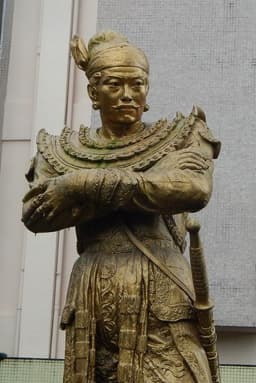
Bayinnaung
Emperor · Modern
68.6Total
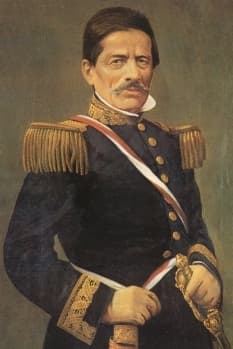
Ramon Castilla
General · Modern
59.7Total
Basic Information
Born
1516
1797
Died
1581
1867
Era
Modern
Modern
Nationality
Myanmar
Peru
Occupation
Emperor
General
Civilization
Eastern
Western
Score Comparison
Military (10%)
77.1
40.0
Political (20%)
82.0
72.0
Influence (20%)
65.0
56.7
Legacy (20%)
55.0
52.0
Leadership (15%)
74.0
78.0
Strategy (15%)
75.0
60.0
TOTAL
68.6
59.7
Bayinnaung — Complete Timeline
1550 AD
Establishment of the Toungoo EmpirePolitical Action
King Bayinnaung ascended the throne and began a series of military campaigns that created the largest empire in Southeast Asian history. At its peak, the Toungoo empire covered modern Myanmar, Thailand, Laos, and parts of China and India.
Toungoo EmpireSoutheast AsiaImperial Expansion
Impact: regionalconstructive
1557 AD
Conquest of the Shan StatesWar◆ Major
King Bayinnaung conquered the Shan States, bringing them under Toungoo control. This expansion added significant territory and resources to the Burmese empire.
Shan StatesToungoo ExpansionBurmese Empire
Impact: regional
1569 AD
Capture of AyutthayaWar
King Bayinnaung's forces captured the Siamese capital of Ayutthaya after a long siege. He installed a vassal king and made Siam a tributary state of the Toungoo empire.
Burmese-Siamese WarAyutthayaToungoo Empire
Impact: regional
1570 AD
Administrative ReformsReform◆ Major
King Bayinnaung implemented administrative reforms to govern his vast empire, including the appointment of governors and the standardization of laws and taxes. These reforms helped maintain control over conquered territories.
GovernanceAdministrationToungoo Empire
Impact: regionalconstructive
1574 AD
Conquest of Lan XangWar◆ Major
King Bayinnaung conquered the Lao kingdom of Lan Xang (modern Laos), bringing it under Toungoo control. This further expanded the Burmese empire to its greatest territorial extent.
Lan XangToungoo ExpansionLaos
Impact: regional
Ramon Castilla — Complete Timeline
1824 AD
Battle of AyacuchoWar
Castilla fought as a junior officer in the decisive Battle of Ayacucho, which ended Spanish rule in Peru. This victory secured Peruvian independence and marked the end of the Spanish Empire in South America, shaping Castilla's nationalist views.
Peruvian War of IndependenceBattleLiberation
Impact: regional
1845 AD
First Presidency of PeruPolitical Action◆ Major
Castilla was elected President of Peru in 1845, serving until 1851. His first term focused on economic development, including the guano boom, and infrastructure projects such as railroads and ports, modernizing the Peruvian state.
PresidencyEconomic DevelopmentGuano
Impact: nationalconstructive
1854 AD
Abolition of Slavery in PeruReform◆ Major
During his second presidency, Castilla issued a decree abolishing slavery in Peru on December 3, 1854. This reform freed approximately 25,000 slaves and was part of a broader liberal agenda, though it faced opposition from slave-owning elites.
AbolitionSlaveryHuman Rights
Impact: nationalprogressive
Abolition of Indigenous TributeReform◆ Major
Castilla also abolished the indigenous tribute tax in 1854, which had been a burden on native communities since colonial times. This measure aimed to integrate indigenous peoples into the Peruvian state as equal citizens, though its implementation was uneven.
Indigenous RightsTax ReformCitizenship
Impact: nationalprogressive
1855 AD
Second Presidency and Guano BoomPolitical Action◆ Major
Castilla served a second term from 1855 to 1862, during the peak of the guano export boom. He used guano revenues to fund public works, pay off foreign debt, and modernize the military, but also faced criticism for corruption and over-reliance on a single resource.
PresidencyGuanoModernization
Impact: nationalconstructive
1860 AD
Constitutional Reform of 1860Reform◆ Major
Castilla oversaw the adoption of a new constitution in 1860, which established a centralized republic with a strong executive. The constitution remained in effect until 1920 and shaped Peru's political structure, though it limited regional autonomy.
ConstitutionPolitical ReformCentralization
Impact: nationalconstructive
Expert Analysis
Ramon Castilla vs Bayinnaung
# The Empire Builder and the Reformer
On a sweltering day in 1569, King Bayinnaung of the Toungoo dynasty watched his war elephants crash against the walls of Ayutthaya, the glittering capital of Siam. Thousands of miles away and nearly three centuries later, General Ramon Castilla stood on the battlefield of Ayacucho in 1824, a junior officer witnessing the final collapse of Spanish colonial rule in Peru. One man sought to conquer the known world of Southeast Asia; the other sought to reshape the nation he helped liberate. Their paths never crossed, yet both faced the same fundamental question: what does a leader do with power?
Origins
Bayinnaung was born in 1516 into a world of fractured kingdoms and constant warfare. The Toungoo dynasty was then a minor principality in what is now Myanmar, surrounded by more powerful neighbors. His early life was shaped by the chaos of the Shan invasions and the decline of the Ava kingdom. He rose not through noble birth but through loyalty—serving as a close companion to King Tabinshwehti, the founder of the Toungoo resurgence. When Tabinshwehti was assassinated in 1550, Bayinnaung inherited not just a throne but a vision of unification.
Ramon Castilla, born in 1797 in Tarapacá, grew up in a very different world—the twilight of the Spanish Empire in the Americas. His father was a Spanish official, and his mother was of indigenous descent, placing him at the intersection of colonial society’s contradictions. The winds of revolution were sweeping the continent, inspired by the American and French revolutions. Castilla’s generation would not build an empire; they would tear one down.
Rise to Power
Bayinnaung’s ascent was violent and swift. Upon taking the throne in 1550, he immediately launched campaigns that would define his reign. He was not a cautious reformer but a conqueror in the classical mold. Within seven years, he had subdued the Shan States in 1557, bringing their fractious princedoms under Toungoo control through a combination of military might and diplomatic marriage alliances. His strategy was relentless expansion—each victory fed the next.
Castilla’s rise was more gradual and political. After the Battle of Ayacucho, he remained in the army, but his true battlefield became the chaotic politics of the new Peruvian republic. He was elected president in 1845, a time when Peru was poor and divided. Unlike Bayinnaung, who inherited a war machine, Castilla inherited a treasury that was about to be transformed by one of history’s strangest commodities: guano, the accumulated seabird droppings that became a miracle fertilizer for Europe’s farms.
Leadership & Governance
Bayinnaung’s governance was an extension of his conquest. After capturing Ayutthaya in 1569, he did not destroy the Siamese kingdom but installed a vassal king, demanding tribute while allowing local customs to continue. This was pragmatic imperialism—he understood that an empire stretched from the borders of India to the South China Sea could not be ruled by fear alone. His administrative reforms in 1570 appointed regional governors, but the system depended entirely on his personal authority. When he conquered Lan Xang in 1574, he added Laos to his domain, but the seams of his empire were already straining.
Castilla governed through reform, not conquest. During his first presidency from 1845 to 1851, he used guano revenues to pay off Peru’s foreign debt and build railroads. But his most enduring act came during his second term, when on December 3, 1854, he abolished slavery in Peru—not for economic reasons, but as a moral and political statement. He followed this by abolishing the indigenous tribute tax, a colonial relic that had burdened native communities for centuries. His 1860 constitution created a centralized republic with a strong executive, a framework that would shape Peru for decades.
Triumph & Tragedy
Bayinnaung’s greatest triumph was also the seed of his tragedy. At its height, his Toungoo Empire was the largest in Southeast Asian history, covering modern Myanmar, Thailand, Laos, and parts of China and India. But he could not be everywhere. The empire was a pyramid with him alone at the top, and when he died in 1581, it began to crumble within years. His successors lacked his military genius and political charisma, and the vassal states he had subjugated quickly rebelled.
Castilla’s triumph was more lasting. By abolishing slavery and indigenous tribute, he dismantled the legal foundations of colonial inequality. He modernized Peru’s infrastructure and finances. Yet his tragedy was that the guano boom he managed so skillfully would eventually become a curse—when the deposits ran out, Peru’s economy collapsed, and the country descended into political chaos. He could not legislate against the fragility of fortune.
Character & Destiny
Bayinnaung was a man of relentless ambition, driven by a vision of unity through conquest. His personality was that of a warrior-king who trusted his own judgment above all. He built an empire through sheer force of will, but that will could not be inherited. Castilla was a pragmatist and a reformer, a general who understood that true power lay not in territory but in institutions. He was less flashy than Bayinnaung, but his changes were more deeply rooted.
Legacy
Bayinnaung is remembered as a national hero in Myanmar, a symbol of Burmese power and unity. Yet his empire’s collapse is a cautionary tale about the limits of personal rule. Castilla is celebrated in Peru as a liberator and modernizer, but his reforms were incomplete—the abolition of slavery did not erase racial hierarchies, and the end of tribute did not end exploitation.
Conclusion
One built an empire of sand, the other a foundation of laws. Bayinnaung’s story is a reminder that even the greatest conquerors cannot conquer time. Castilla’s story shows that the most enduring victories are not won on battlefields but in the quiet chambers where constitutions are written. Both were men of their ages, but only one built something that could outlast him.
Rankings
🥇
BayinnaungLeader
Mil: 77.1Pol: 82.0Inf: 65.0
68.6
🥈
Ramon Castilla
Mil: 40.0Pol: 72.0Inf: 56.7
59.7
+8.9 behind
How This Comparison Works
Algorithm
Each figure is scored on 6 dimensions (0—100 scale) based on structured historical data: Military (10%), Political (20%), Influence (20%), Legacy (20%), Leadership (15%), Strategy (15%). The weighted total produces the final ranking.
Data Sources
Scores are computed from structured sub-indicators in the database. Scale factors adjust for era (Ancient ×0.85, Modern ×1.0) and civilization size (Eastern ×1.05, Other ×0.80) to account for differences in population and military scale.
Maximum 3 Figures
Comparisons are limited to 2—3 figures to ensure readability and statistical meaningfulness.
Error Margins
±5 points per dimension — Sub-scores are derived from historical records with inherent uncertainty. Two figures within 5 points on a dimension should be considered roughly equivalent in that area.
Total Score Accuracy
±3 points overall — The weighted combination of 6 dimensions produces a total score with approximately ±3 points of uncertainty. Differences of less than 3 points are not statistically significant— the figures are effectively tied.
Known Limitations
- Historical records are incomplete and uneven across civilizations
- Figures from oral-tradition societies may be underrepresented
- Occupation labels can misclassify multi-role figures
- Scores measure capability and impact, not moral character
- Quantitative scoring is a comparison tool, not absolute truth
Capability Radar
Military (10%) — Battles & Warfare
Battles
85
45
Win Rate
90
50
Expansion
92
30
Political (20%) — Governance & Reform
Reform
70
85
Diplomacy
78
70
Economy
72
75
Influence (20%) — Cultural & Global Reach
Cultural
70
55
Global
55
50
Legacy (20%) — Historical Impact
Historical
75
65
Longevity
60
60
Leadership (15%) — Power & Stability
Tenure
85
65
Stability
65
60
Strategy (15%) — Tactics & Innovation
Strategy
88
45
Tactics
80
40
Reform
75
55
Similar Comparisons
Comments & Discussion
Rapid Elephant6/16/2026
Bayinnaung’s war elephants didn’t just smash walls—they crushed the Siamese will to resist. Let’s be real: that 1569 sack of Ayutthaya wasn’t a battle, it was a masterclass in terror. He deported entire populations to repopulate his own lands. That’s not reform, that’s cultural genocide with a smile. Meanwhile, Castilla abolished slavery in Peru with one decree. One builds empires with blood, the other with ink. We all know who matters more.
数据破壁者6/16/2026
喂,别被“解放者”光环骗了。卡斯蒂利亚废除奴隶制?1824年他当上总统后签署的法令,但看看实际效果——秘鲁黑人奴工直到1854年还在干活,法案落地磨蹭了三十年。这叫效率?反观莽应龙,征服掸邦后几年内就推行了统一度量衡和田赋制,把混乱小王国拧成经济实体。数据说话:政令执行速度,莽应龙完胜。
Classics Scholar6/16/2026
Bayinnaung’s chronicles call him “the Conqueror of Ten Directions,” but I see a Southeast Asian Augustus—he minted coins bearing his own effigy, borrowed from Mon and Siamese iconography to craft a pan-empire identity. Castilla, though? He’s just a military bureaucrat who happened to sign the right treaty. Compare Bayinnaung’s Kalyani Inscriptions, detailing monastic reforms across 30 pagodas, with Castilla’s bland tariff laws. One builds culture, the other builds budget sheets. History loves th
历史梗玩家6/16/2026
评论区都在吹莽应龙是“缅甸拿破仑”,可他晚年打清迈也翻车了好吗?1581年围攻南邦城,被泰族游击队耗死,士兵疫病减员四成。卡斯蒂利亚呢?1842年智利-秘鲁联盟战争中,他指挥三万大军翻越安第斯山闪电突袭,比汉尼拔还快。一个会败,一个会赢,胜负手在于后勤不是人格魅力。别把史诗当史实,细节才见真章。
Strategic Realist6/16/2026
Bayinnaung’s so-called unification of Southeast Asia was a joke—he controlled vassal states through terror and hostage-taking, not loyalty. His own son Nanda Bayin lost everything within a decade of his death. Castilla built institutions: the first civil code, a national budget, land reforms that lasted. Who cares if Bayinnaung sacked Ayutthaya? It’s still standing. Castilla’s Peru abolished slavery and stabilized the economy. Empire builders collapse; reformers endure. Pick your legacy.