Loading...
Bayinnaung vs Plutarco Elias Calles
Bayinnaung leads by 10.1 pts · 2 figures compared
…
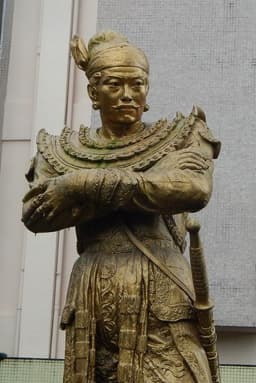
Bayinnaung
Emperor · Modern
68.6Total
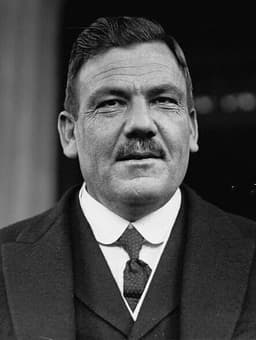
Plutarco Elias Calles
General · Modern
58.5Total
Basic Information
Born
1516
1877
Died
1581
1945
Era
Modern
Modern
Nationality
Myanmar
Mexico
Occupation
Emperor
General
Civilization
Eastern
Western
Score Comparison
Military (10%)
77.1
40.0
Political (20%)
82.0
70.3
Influence (20%)
65.0
68.0
Legacy (20%)
55.0
40.0
Leadership (15%)
74.0
78.0
Strategy (15%)
75.0
52.5
TOTAL
68.6
58.5
Bayinnaung — Complete Timeline
1550 AD
Establishment of the Toungoo EmpirePolitical Action
King Bayinnaung ascended the throne and began a series of military campaigns that created the largest empire in Southeast Asian history. At its peak, the Toungoo empire covered modern Myanmar, Thailand, Laos, and parts of China and India.
Toungoo EmpireSoutheast AsiaImperial Expansion
Impact: regionalconstructive
1557 AD
Conquest of the Shan StatesWar◆ Major
King Bayinnaung conquered the Shan States, bringing them under Toungoo control. This expansion added significant territory and resources to the Burmese empire.
Shan StatesToungoo ExpansionBurmese Empire
Impact: regional
1569 AD
Capture of AyutthayaWar
King Bayinnaung's forces captured the Siamese capital of Ayutthaya after a long siege. He installed a vassal king and made Siam a tributary state of the Toungoo empire.
Burmese-Siamese WarAyutthayaToungoo Empire
Impact: regional
1570 AD
Administrative ReformsReform◆ Major
King Bayinnaung implemented administrative reforms to govern his vast empire, including the appointment of governors and the standardization of laws and taxes. These reforms helped maintain control over conquered territories.
GovernanceAdministrationToungoo Empire
Impact: regionalconstructive
1574 AD
Conquest of Lan XangWar◆ Major
King Bayinnaung conquered the Lao kingdom of Lan Xang (modern Laos), bringing it under Toungoo control. This further expanded the Burmese empire to its greatest territorial extent.
Lan XangToungoo ExpansionLaos
Impact: regional
Plutarco Elias Calles — Complete Timeline
1915 AD
Governorship of SonoraPolitical Action
Calles served as Governor of Sonora from 1915 to 1919, implementing radical reforms including land redistribution, anti-clerical laws, and labor rights. His governorship established him as a key figure in the Sonoran dynasty and a proponent of revolutionary change.
GovernorshipSonoraReforms
Impact: regionalconstructive
1924 AD
Presidency of MexicoPolitical Action◆ Major
Calles was elected President of Mexico in 1924, serving until 1928. His administration continued revolutionary reforms, including land reform, labor rights, and secularization, but also faced opposition from the Catholic Church and conservative groups.
PresidencyMexican RevolutionReforms
Impact: nationalconstructive
1926 AD
Cristero WarWar◆ Major
Calles enforced anti-clerical laws, including the Calles Law, which restricted the Catholic Church's role in society. This sparked the Cristero War (1926-1929), a violent rebellion by Catholic peasants against the state, resulting in tens of thousands of deaths.
Cristero WarAnti-clericalismReligious Conflict
Impact: nationaldestructive
1928 AD
MaximatoPolitical Action◆ Major
After his presidency, Calles remained the de facto ruler of Mexico during the Maximato (1928-1934), controlling puppet presidents. He continued to influence policy, but his power waned as President L
MaximatoPolitical ControlCárdenas
Impact: national
1929 AD
Founding of the National Revolutionary Party (PNR)Political Action
Calles founded the National Revolutionary Party (PNR) in 1929, which later became the Institutional Revolutionary Party (PRI). This party dominated Mexican politics for over 70 years, institutionalizing the revolution's legacy and centralizing power.
Political PartyPRIInstitutionalization
Impact: nationalconstructive
Expert Analysis
Plutarco Elias Calles vs Bayinnaung
# The Emperor and the Caudillo: Bayinnaung of Burma and Plutarco Elías Calles of Mexico
In 1569, the golden spires of Ayutthaya, the fabled capital of Siam, fell to the war elephants of King Bayinnaung. Half a world away and nearly four centuries later, another strongman—Plutarco Elías Calles—stood in the National Palace in Mexico City, signing into law a decree that would strip the Catholic Church of its property and ignite the bloodiest civil war his country had seen since the Revolution. What could possibly connect a sixteenth-century Southeast Asian emperor with a twentieth-century Mexican general? The answer lies not in geography or culture, but in the terrifyingly similar arithmetic of power: how men build empires, how they hold them together, and how they destroy what they love.
Origins
Bayinnaung was born in 1516, the son of a minor noble in the fractious kingdom of Toungoo, a small state squeezed between more powerful rivals. Burma in the sixteenth century was a cauldron of warring kingdoms—the Mon, the Shan, the Siamese—each vying for dominance. Bayinnaung grew up in the shadow of his brother-in-law, King Tabinshwehti, who first unified central Burma. When Tabinshwehti was assassinated in 1550, Bayinnaung inherited not a stable kingdom but a rebellion waiting to happen. He was a warrior who had learned statecraft in the saddle.
Plutarco Elías Calles, born in 1877 in the dusty northern state of Sonora, came from a different kind of frontier. Mexico after independence was a land of caudillos—regional strongmen who commanded personal armies. Calles’s father died when he was young; he worked as a teacher, a bartender, a flour merchant. He found his calling in the chaos of the Mexican Revolution, which erupted in 1910. Unlike Bayinnaung, who inherited a throne, Calles clawed his way up from obscurity, learning that in revolutionary Mexico, loyalty was a commodity and violence was the only currency that never devalued.
Rise to Power
Bayinnaung’s path to power was swift and bloody. Upon Tabinshwehti’s death, he crushed rival claimants, then turned outward. In 1557, he conquered the Shan States, adding vast territories to his domain. His military campaigns were relentless—by 1569, he had captured Ayutthaya, the richest city in Southeast Asia, and by 1574, he had subdued Lan Xang, the Lao kingdom. Each conquest was sealed with oaths of fealty, hostages, and the installation of loyal vassals. Bayinnaung did not merely win battles; he constructed a system of tribute that stretched from the borders of China to the Malay Peninsula.
Calles’s rise was more circuitous. He served as Governor of Sonora from 1915, implementing radical reforms—land redistribution, anti-clerical laws, the destruction of the old hacienda system. In 1924, he was elected President of Mexico. But his real power came after his presidency ended in 1928. Rather than retire, Calles orchestrated the Maximato—a shadow rule in which he controlled a series of puppet presidents from behind the scenes. In 1929, he founded the National Revolutionary Party (PNR), the institutional machinery that would dominate Mexican politics for the next seventy years. Bayinnaung conquered space; Calles conquered time.
Leadership & Governance
Bayinnaung ruled his empire through a blend of military terror and administrative genius. He appointed governors to distant provinces, standardized weights and measures, and built roads and canals. He was a master of symbolic politics: when he conquered a kingdom, he would bring the defeated king’s regalia to his capital at Pegu, a living museum of submission. Yet his empire was held together by his personal authority alone. When Bayinnaung died in 1581, the empire began to unravel within a decade. He had built a colossus with no foundation but himself.
Calles, by contrast, understood that personal rule was fragile. The PNR was his masterpiece—a political party that could outlive any single leader. He secularized the state with the Calles Law of 1926, which restricted the Catholic Church’s role in education and property. This provoked the Cristero War, a brutal three-year rebellion that killed an estimated 90,000 people. Calles crushed the rebellion, but the cost was immense. Where Bayinnaung used war elephants and oaths, Calles used party discipline and propaganda. Both were ruthless; both were builders. But Bayinnaung built a house of cards, while Calles built a machine.
Triumph & Tragedy
Bayinnaung’s greatest triumph was the capture of Ayutthaya in 1569. For months, his armies besieged the Siamese capital, cutting off supplies and bombarding the walls. When it fell, he did not destroy the city—he installed a vassal king and extracted tribute. It was a masterstroke of strategic restraint. But his tragedy was that his empire could not survive him. The Shan states rebelled; the Siamese broke free. Within twenty years of his death, the Toungoo Empire had shrunk to a fraction of its former size.
Calles’s triumph was the creation of the PNR, which evolved into the Institutional Revolutionary Party (PRI), the longest-ruling party in modern history. His tragedy was the Cristero War. In enforcing his anti-clerical laws, he turned the Mexican countryside into a battlefield, pitting peasant Catholics against federal soldiers. The war ended in 1929 with a negotiated settlement, but the scars remained. Calles’s own party eventually turned on him: in 1936, President Lázaro Cárdenas, his own protégé, exiled him to the United States. The master of the machine was crushed by it.
Character & Destiny
Bayinnaung was a man of immense personal courage—he led his armies from the front, riding his war elephant into battle. He was also deeply superstitious, consulting astrologers and building pagodas to secure divine favor. His personality was that of a conqueror who believed his destiny was written in the stars. Calles was colder, more calculating. He was called “El Turco” for his swarthy complexion and ruthless pragmatism. He believed in progress, order, and the state—not in gods or kings. Bayinnaung trusted in heaven; Calles trusted in institutions.
Their different personalities shaped their different outcomes. Bayinnaung’s empire collapsed because it was built on his personal legend. Calles’s party survived because it was built on a bureaucratic structure. One was a hero of epic poetry; the other was a bureaucrat of power. Both were necessary for their times; both were insufficient for the ages.
Legacy
Bayinnaung is remembered today as a national hero in Myanmar—the “Napoleon of Burma.” His conquests are celebrated in school textbooks, and his statue stands in Naypyidaw. But his legacy is ambiguous: the ethnic diversity he conquered later became a source of conflict. In Mexico, Calles is a more controversial figure. Some see him as the founder of modern Mexico, the man who ended the chaos of the Revolution and built a stable state. Others see him as a dictator who crushed religious freedom and created the authoritarian PRI system that lasted until 2000.
Conclusion
Bayinnaung and Calles never met, never corresponded, never even knew of each other’s existence. Yet they faced the same fundamental challenge: how to turn conquest into order. Bayinnaung answered with war elephants and oaths; Calles answered with party cards and laws. One built an empire that collapsed; the other built a party that endured. In the end, both men remind us that power is never permanent—it is only borrowed from history, and history always collects its debts.
Rankings
🥇
BayinnaungLeader
Mil: 77.1Pol: 82.0Inf: 65.0
68.6
🥈
Plutarco Elias Calles
Mil: 40.0Pol: 70.3Inf: 68.0
58.5
+10.1 behind
How This Comparison Works
Algorithm
Each figure is scored on 6 dimensions (0—100 scale) based on structured historical data: Military (10%), Political (20%), Influence (20%), Legacy (20%), Leadership (15%), Strategy (15%). The weighted total produces the final ranking.
Data Sources
Scores are computed from structured sub-indicators in the database. Scale factors adjust for era (Ancient ×0.85, Modern ×1.0) and civilization size (Eastern ×1.05, Other ×0.80) to account for differences in population and military scale.
Maximum 3 Figures
Comparisons are limited to 2—3 figures to ensure readability and statistical meaningfulness.
Error Margins
±5 points per dimension — Sub-scores are derived from historical records with inherent uncertainty. Two figures within 5 points on a dimension should be considered roughly equivalent in that area.
Total Score Accuracy
±3 points overall — The weighted combination of 6 dimensions produces a total score with approximately ±3 points of uncertainty. Differences of less than 3 points are not statistically significant— the figures are effectively tied.
Known Limitations
- Historical records are incomplete and uneven across civilizations
- Figures from oral-tradition societies may be underrepresented
- Occupation labels can misclassify multi-role figures
- Scores measure capability and impact, not moral character
- Quantitative scoring is a comparison tool, not absolute truth
Capability Radar
Military (10%) — Battles & Warfare
Battles
85
45
Win Rate
90
50
Expansion
92
30
Political (20%) — Governance & Reform
Reform
70
85
Diplomacy
78
65
Economy
72
60
Influence (20%) — Cultural & Global Reach
Cultural
70
70
Global
55
60
Legacy (20%) — Historical Impact
Historical
75
75
Longevity
60
70
Leadership (15%) — Power & Stability
Tenure
85
70
Stability
65
55
Strategy (15%) — Tactics & Innovation
Strategy
88
55
Tactics
80
40
Reform
75
60
Similar Comparisons
Comments & Discussion
EMPREORX6/16/2026
Bayinnaung built the largest empire in SE Asian history through conquest, while Calles tried to engineer a nation through decrees. One used war elephants and vassal kings; the other used desk orders and gunboats. But here’s the thing: Bayinnaung’s empire shattered within decades after his death, while Calles’ institutional legacy (PNR, later PRI) held power for 70 years. Hard power vs soft control. I know which I’d bet on in the long game.
数据猎手6/16/2026
拿数字说话:Bayinnaung巅峰期领土约百万平方公里,Calles统治下的墨西哥也是近两百万。但前者靠暴力吞并,后者靠政治交易+石油红利。关键在于,缅甸帝国维持不到两代,而墨西哥的“制度革命”撑了七十年。这不是帝王与考迪罗的区别,是冷兵器时代的快钱vs现代国家的长期投资。历史数据从不撒谎:稳定的暴力不如持续的贿赂。
PHILHELLENE6/16/2026
You're comparing a man who rode war elephants to smash Buddhist kingdoms with a man who sent federal troops to smash Catholic churches. Different temples, same idolatry of power. Bayinnaung presented himself as a righteous Buddhist king conquering for dharma; Calles as a revolutionary purifying Mexico of superstition. Both ended up persecuting the very faiths that legitimized them. The lesson? Every Caesar needs a priesthood—until the priesthood becomes a rival.
史海幽魂6/16/2026
可笑的是,评论区居然没人提宗教清洗的相似性。Bayinnaung远征暹罗时毁了无数佛寺,Calles的宪法修改直接让教堂变马厩。都是打着“统一信仰”的旗号,干着拆庙的事。区别在于:缅甸僧侣在1569年选择了沉默,而墨西哥的克里斯托军在1927年选择了枪。历史总是重复,但反抗者的弹药量在变。