Loading...
Muhammadu Buhari vs Pedro I of Brazil
Pedro I of Brazil leads by 3.1 pts · 2 figures compared
…
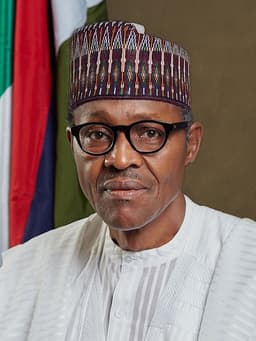
Muhammadu Buhari
General · Modern
51.5Total
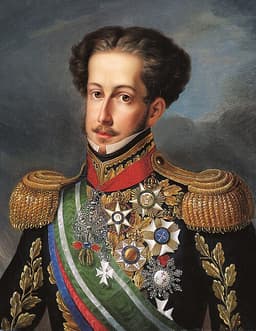
Pedro I of Brazil
Emperor · Modern
54.6Total
Basic Information
Born
1942
1798
Died
—
1834
Era
Modern
Modern
Nationality
Nigeria
Brazil
Occupation
General
Emperor
Civilization
Other
Western
Score Comparison
Military (10%)
22.6
55.0
Political (20%)
68.0
62.7
Influence (20%)
53.3
59.0
Legacy (20%)
43.3
50.0
Leadership (15%)
72.0
53.2
Strategy (15%)
41.0
45.0
TOTAL
51.5
54.6
Muhammadu Buhari — Complete Timeline
1983 AD
1983 Nigerian coup d'étatPolitical Action
Major General Muhammadu Buhari led a military coup that overthrew the civilian government of President Shehu Shagari. Buhari cited corruption and economic mismanagement as justifications, and he became the head of state.
CoupMilitary RuleCorruption
Impact: nationaldestructive
1984 AD
War Against Indiscipline (WAI)Reform◆ Major
Buhari launched the War Against Indiscipline, a campaign to enforce discipline and order in Nigerian society. It included harsh penalties for minor offenses, such as queue-jumping, and was criticized for human rights abuses.
DisciplineSocial PolicyHuman Rights
Impact: nationaldestructive
1985 AD
Overthrow by Ibrahim BabangidaPolitical Action◆ Major
Buhari was overthrown in a palace coup led by his Chief of Army Staff, Ibrahim Babangida. Babangida cited Buhari's authoritarian style and failure to address the economy as reasons for the coup.
CoupOverthrowBabangida
Impact: national
2015 AD
Anti-corruption campaignReform◆ Major
Buhari launched a high-profile anti-corruption campaign, targeting government officials and recovering stolen assets. The campaign was praised internationally but criticized for being selective and politically motivated.
Anti-CorruptionReformGovernance
Impact: nationalconstructive
Election as President of NigeriaPolitical Action
Buhari won the 2015 Nigerian presidential election, defeating incumbent Goodluck Jonathan. This was the first time an opposition candidate had defeated a sitting president in Nigeria's history, marking a democratic milestone.
ElectionDemocracyOpposition Victory
Impact: nationalprogressive
Pedro I of Brazil — Complete Timeline
1822 AD
Declaration of Independence of BrazilPolitical Action
Pedro I declared Brazil's independence from Portugal on September 7, 1822, at the Ipiranga River in S
Impact: globalprogressive
Coronation as Emperor of BrazilPolitical Action◆ Major
Pedro I was crowned Emperor of Brazil on December 1, 1822, in Rio de Janeiro. The coronation formalized the new imperial government, with Pedro I as constitutional monarch, though he retained significant executive powers.
Impact: nationalconstructive
1823 AD
War of Independence of BrazilWar◆ Major
Pedro I led Brazilian forces against Portuguese loyalists in the War of Independence. Key battles occurred in Bahia, Maranh
Impact: national
Dissolution of the Constituent AssemblyPolitical Action◆ Major
Pedro I dissolved the Constituent Assembly after conflicts over the constitution's limits on imperial power. He then imposed the 1824 Constitution, which granted the emperor extensive powers, including the Moderating Power, centralizing authority.
Impact: nationaldestructive
1831 AD
Abdication of the Brazilian ThronePolitical Action
Pedro I abdicated the Brazilian throne in favor of his five-year-old son Pedro II on April 7, 1831. He returned to Portugal to claim the Portuguese throne, leaving Brazil under a regency until his son came of age.
Impact: national
Expert Analysis
Muhammadu Buhari vs Pedro I of Brazil
# The Emperor and the General: Two Paths to Power in the Shadow of Empire
On a sweltering September afternoon in 1822, a young prince on horseback stood at the banks of the Ipiranga River in São Paulo and shouted words that would split a continent. "Independence or Death!" Pedro I of Brazil had just severed three centuries of Portuguese rule. Nearly two centuries later, on a humid January morning in 1983, another soldier seized power in a different part of the world. Major General Muhammadu Buhari announced on Nigerian radio that the civilian government had been overthrown, promising to rescue a nation from corruption and decay. Both men came to power as saviors. Both left office under clouds of controversy. Yet their trajectories could not have been more different—one founding an empire that would last sixty-seven years, the other building a legacy of discipline that would be remembered as much for its cruelty as its ambition.
Origins
Pedro I was born into royalty, the son of King John VI of Portugal, who had fled Napoleon's armies and established his court in Rio de Janeiro. The prince grew up in a palace surrounded by European refinement, but also by the simmering tensions of a colony that resented its subservience. He was educated by tutors, trained in horsemanship and military arts, and imbued with a sense of divine right. Brazil in 1798 was a land of sugar plantations, gold mines, and enslaved millions—a society built on hierarchy and violence, where a white prince could rule over a mixed-race population with absolute authority.
Muhammadu Buhari came from a different world entirely. Born in 1942 in Daura, a small town in northern Nigeria, he was the son of a farmer. His early life was shaped by the rhythms of rural Hausa society, by Islamic education, and by the British colonial system that had carved Nigeria into existence only decades before. He joined the Nigerian Army in 1962, just two years after independence, when the military was one of the few institutions that offered a path upward for ambitious young men from modest backgrounds. While Pedro inherited a throne, Buhari earned his stripes.
Rise to Power
Pedro's ascent was swift and dramatic. When his father returned to Portugal in 1821, leaving him as regent in Brazil, the prince faced a choice: obey the Portuguese Cortes, which sought to reduce Brazil to colonial status, or side with Brazilian nationalists. He chose the latter, and on September 7, 1822, he declared independence. At just twenty-three years old, he became Emperor Pedro I of Brazil. The war that followed—the War of Independence of Brazil, fought in 1823—was a series of skirmishes against Portuguese loyalists, particularly in Bahia, where Brazilian forces, backed by British mercenaries, eventually prevailed. Pedro's military score of 65.0 reflects competent but not brilliant generalship; he was more a symbol than a strategist.
Buhari's rise was equally dramatic but far bloodier. On December 31, 1983, he led a coup that overthrew President Shehu Shagari, whose civilian government had become synonymous with corruption and economic collapse. Buhari was forty-one years old, a major general with a reputation for austerity and discipline. His coup was initially welcomed by a population exhausted by mismanagement. But where Pedro had rallied a nation around a cause—independence—Buhari seized power in a climate of cynicism, promising order rather than freedom.
Leadership & Governance
As emperor, Pedro I governed with a blend of charisma and authoritarianism. He dissolved the Constituent Assembly in 1823 after clashing with deputies who wanted to limit his powers, then imposed a constitution that granted him the "moderating power"—the ability to dissolve parliament, appoint judges, and veto laws. His political score of 60.2 suggests a ruler who understood power but lacked the patience for consensus. He was a reformer in some respects—he abolished the slave trade in 1831, though slavery itself continued—but his reign was marked by instability, including a disastrous war with Argentina over the Cisplatine Province (modern Uruguay), which Brazil lost.
Buhari's governance was defined by the War Against Indiscipline, launched in 1984. This campaign targeted everything from littering to tax evasion, with punishments that included public flogging and long prison sentences. His leadership score of 77.5 reflects a strong, decisive hand, but his political score of 61.0 mirrors Pedro's—both men were better at commanding than persuading. Where Pedro fought with parliament, Buhari fought with civil society, jailing journalists and banning political activity. His regime was efficient but brutal, and it lasted barely twenty months before he was overthrown by his own chief of army staff, Ibrahim Babangida, in August 1985.
Triumph & Tragedy
Pedro's greatest moment was undoubtedly the declaration of independence—a single act that reshaped the map of the Americas. His tragedy came later: the loss of his wife, Empress Leopoldina, in 1826, amid rumors of his infidelity; the growing unpopularity of his rule; and finally, his abdication on April 7, 1831, in favor of his five-year-old son, Pedro II. He returned to Portugal, where he fought to secure his daughter's throne, but died of tuberculosis in 1834 at age thirty-five. He was a man who founded an empire but could not govern it.
Buhari's triumph was his return. After thirty years in the political wilderness, he won the 2015 presidential election, defeating incumbent Goodluck Jonathan in the first peaceful transfer of power between parties in Nigerian history. His anti-corruption campaign recovered billions of dollars in stolen assets and targeted high-ranking officials. But his tragedy was the same as his first term: economic stagnation, a failing war against Boko Haram, and accusations of human rights abuses. He left office in 2023 with a legacy that remains bitterly contested.
Character & Destiny
Pedro was impulsive, romantic, and recklessly brave—a man who, when told his ministers opposed a decision, once replied, "I will do it alone." Buhari was austere, stubborn, and morally rigid—a man who, asked about his regime's human rights record, reportedly said, "We are not here to please." Both were shaped by their times: Pedro by the age of revolutions, when a prince could become a liberator; Buhari by the age of decolonization, when a general could become a president. Their personalities drove their outcomes: Pedro's charisma inspired loyalty but also chaos; Buhari's discipline brought order but also resentment.
Legacy
Today, Pedro I is remembered as the father of Brazilian independence, his image on coins and monuments, his cry at Ipiranga a national myth. His total score of 65.7 places him as a significant but flawed founder—a man who built a nation but could not lead it. Buhari's legacy score of 56.7 is lower, reflecting a more ambiguous reputation. He is honored in northern Nigeria as a man of integrity, but criticized elsewhere as a symbol of military authoritarianism and economic failure. Both men, in different ways, embodied the contradictions of their nations: Pedro, the European prince who became a Brazilian icon; Buhari, the soldier who promised to save a country that still struggles to define itself.
Conclusion
Standing at the Ipiranga River, Pedro I shouted for independence and a nation was born. Sitting in a radio studio in Lagos, Muhammadu Buhari announced a coup and a nation held its breath. Both believed they were destined to rule. Both discovered that power, once seized, is never easy to hold. Their stories remind us that history judges leaders not by their intentions, but by their consequences—and that the distance between a prince and a general is often shorter than we imagine.
Rankings
🥇
Pedro I of BrazilLeader
Mil: 55.0Pol: 62.7Inf: 59.0
54.6
🥈
Muhammadu Buhari
Mil: 22.6Pol: 68.0Inf: 53.3
51.5
+3.1 behind
How This Comparison Works
Algorithm
Each figure is scored on 6 dimensions (0—100 scale) based on structured historical data: Military (10%), Political (20%), Influence (20%), Legacy (20%), Leadership (15%), Strategy (15%). The weighted total produces the final ranking.
Data Sources
Scores are computed from structured sub-indicators in the database. Scale factors adjust for era (Ancient ×0.85, Modern ×1.0) and civilization size (Eastern ×1.05, Other ×0.80) to account for differences in population and military scale.
Maximum 3 Figures
Comparisons are limited to 2—3 figures to ensure readability and statistical meaningfulness.
Error Margins
±5 points per dimension — Sub-scores are derived from historical records with inherent uncertainty. Two figures within 5 points on a dimension should be considered roughly equivalent in that area.
Total Score Accuracy
±3 points overall — The weighted combination of 6 dimensions produces a total score with approximately ±3 points of uncertainty. Differences of less than 3 points are not statistically significant— the figures are effectively tied.
Known Limitations
- Historical records are incomplete and uneven across civilizations
- Figures from oral-tradition societies may be underrepresented
- Occupation labels can misclassify multi-role figures
- Scores measure capability and impact, not moral character
- Quantitative scoring is a comparison tool, not absolute truth
Capability Radar
Military (10%) — Battles & Warfare
Battles
10
35
Win Rate
10
40
Expansion
5
30
Political (20%) — Governance & Reform
Reform
30
45
Diplomacy
25
50
Economy
20
30
Influence (20%) — Cultural & Global Reach
Cultural
25
40
Global
25
45
Legacy (20%) — Historical Impact
Historical
30
55
Longevity
20
50
Leadership (15%) — Power & Stability
Tenure
45
55
Stability
15
25
Strategy (15%) — Tactics & Innovation
Strategy
15
35
Tactics
15
30
Reform
20
20
Similar Comparisons
Comments & Discussion
青铜屠夫6/16/2026
把这两个人放一起比较纯属胡扯。布哈里出身卡诺的贫困家庭,靠奖学金读军官学校,是真刀真枪打了比夫拉战争的人。佩德罗一世呢?生下来就有银勺子,他妈连喂奶都不亲自干。拿一个殖民地王子跟靠本事起家的将军比,这历史分析就是照着维基百科在写论文。