Loading...
This comparison has not been analyzed yet.
One-time AI generation (~1 minute). Scores and timeline are already available below.
Bayinnaung vs Mozaffar ad-Din Shah
Bayinnaung leads by 14.5 pts · 2 figures compared
…
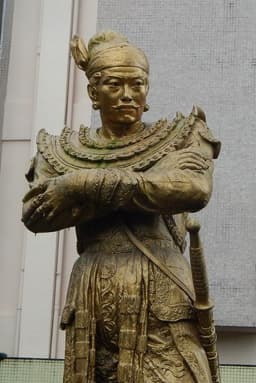
Bayinnaung
Emperor · Modern
68.6Total
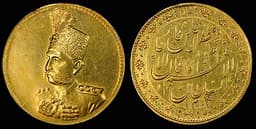
Mozaffar ad-Din Shah
Emperor · Modern
54.1Total
Basic Information
Born
1516
1853
Died
1581
1907
Era
Modern
Modern
Nationality
Myanmar
Persia
Occupation
Emperor
Emperor
Civilization
Eastern
Middle Eastern
Score Comparison
Military (10%)
77.1
43.3
Political (20%)
82.0
68.0
Influence (20%)
65.0
52.5
Legacy (20%)
55.0
45.8
Leadership (15%)
74.0
64.0
Strategy (15%)
75.0
54.3
TOTAL
68.6
54.1
Bayinnaung — Complete Timeline
1550 AD
Establishment of the Toungoo EmpirePolitical Action
King Bayinnaung ascended the throne and began a series of military campaigns that created the largest empire in Southeast Asian history. At its peak, the Toungoo empire covered modern Myanmar, Thailand, Laos, and parts of China and India.
Toungoo EmpireSoutheast AsiaImperial Expansion
Impact: regionalconstructive
1557 AD
Conquest of the Shan StatesWar◆ Major
King Bayinnaung conquered the Shan States, bringing them under Toungoo control. This expansion added significant territory and resources to the Burmese empire.
Shan StatesToungoo ExpansionBurmese Empire
Impact: regional
1569 AD
Capture of AyutthayaWar
King Bayinnaung's forces captured the Siamese capital of Ayutthaya after a long siege. He installed a vassal king and made Siam a tributary state of the Toungoo empire.
Burmese-Siamese WarAyutthayaToungoo Empire
Impact: regional
1570 AD
Administrative ReformsReform◆ Major
King Bayinnaung implemented administrative reforms to govern his vast empire, including the appointment of governors and the standardization of laws and taxes. These reforms helped maintain control over conquered territories.
GovernanceAdministrationToungoo Empire
Impact: regionalconstructive
1574 AD
Conquest of Lan XangWar◆ Major
King Bayinnaung conquered the Lao kingdom of Lan Xang (modern Laos), bringing it under Toungoo control. This further expanded the Burmese empire to its greatest territorial extent.
Lan XangToungoo ExpansionLaos
Impact: regional
Mozaffar ad-Din Shah — Complete Timeline
1901 AD
Granted the D'Arcy Oil ConcessionPolitical Action◆ Major
Mozaffar ad-Din Shah granted a 60-year oil concession to William Knox D'Arcy, giving him exclusive rights to explore and exploit oil in most of Persia. This concession led to the discovery of oil in 1908 and the founding of the Anglo-Persian Oil Company, which became a major economic and political force.
Oil ConcessionForeign InvestmentEconomic Policy
Impact: global
1906 AD
Signed the Persian Constitution of 1906Political Action
Mozaffar ad-Din Shah signed the Fundamental Law of Persia, establishing a constitutional monarchy with an elected parliament (Majlis). This was a response to the Constitutional Revolution of 1905-1906, which demanded limits on royal power and the creation of a representative government.
ConstitutionConstitutional RevolutionReform
Impact: nationalprogressive
1907 AD
Issued the Supplementary Fundamental LawsPolitical Action◆ Major
Mozaffar ad-Din Shah signed the Supplementary Fundamental Laws, which expanded the constitution to include civil rights protections, such as freedom of speech, press, and assembly, and established the principle of equality before the law. These laws were enacted shortly before his death.
Constitutional ReformCivil RightsSupplementary Laws
Impact: nationalprogressive
This comparison has not been analyzed yet.
One-time AI generation (~1 minute). Scores and timeline are already available below.
Rankings
🥇
BayinnaungLeader
Mil: 77.1Pol: 82.0Inf: 65.0
68.6
🥈
Mozaffar ad-Din Shah
Mil: 43.3Pol: 68.0Inf: 52.5
54.1
+14.5 behind
How This Comparison Works
Algorithm
Each figure is scored on 6 dimensions (0—100 scale) based on structured historical data: Military (10%), Political (20%), Influence (20%), Legacy (20%), Leadership (15%), Strategy (15%). The weighted total produces the final ranking.
Data Sources
Scores are computed from structured sub-indicators in the database. Scale factors adjust for era (Ancient ×0.85, Modern ×1.0) and civilization size (Eastern ×1.05, Other ×0.80) to account for differences in population and military scale.
Maximum 3 Figures
Comparisons are limited to 2—3 figures to ensure readability and statistical meaningfulness.
Error Margins
±5 points per dimension — Sub-scores are derived from historical records with inherent uncertainty. Two figures within 5 points on a dimension should be considered roughly equivalent in that area.
Total Score Accuracy
±3 points overall — The weighted combination of 6 dimensions produces a total score with approximately ±3 points of uncertainty. Differences of less than 3 points are not statistically significant— the figures are effectively tied.
Known Limitations
- Historical records are incomplete and uneven across civilizations
- Figures from oral-tradition societies may be underrepresented
- Occupation labels can misclassify multi-role figures
- Scores measure capability and impact, not moral character
- Quantitative scoring is a comparison tool, not absolute truth
Capability Radar
Military (10%) — Battles & Warfare
Battles
85
5
Win Rate
90
5
Expansion
92
5
Political (20%) — Governance & Reform
Reform
70
60
Diplomacy
78
30
Economy
72
20
Influence (20%) — Cultural & Global Reach
Cultural
70
20
Global
55
25
Legacy (20%) — Historical Impact
Historical
75
45
Longevity
60
30
Leadership (15%) — Power & Stability
Tenure
85
40
Stability
65
15
Strategy (15%) — Tactics & Innovation
Strategy
88
5
Tactics
80
5
Reform
75
5
Similar Comparisons
Comments & Discussion
No comments yet. Be the first to share your thoughts!