Loading...
Bayinnaung vs Louis Botha
Bayinnaung leads by 7.5 pts · 2 figures compared
…
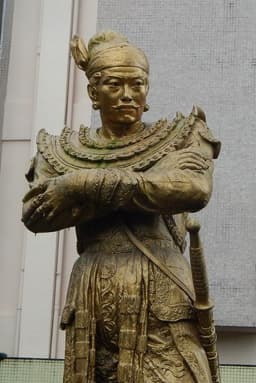
Bayinnaung
Emperor · Modern
68.6Total
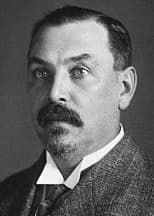
Louis Botha
General · Modern
61.1Total
Basic Information
Born
1516
1862
Died
1581
1919
Era
Modern
Modern
Nationality
Myanmar
South Africa
Occupation
Emperor
General
Civilization
Eastern
Other
Score Comparison
Military (10%)
77.1
61.7
Political (20%)
82.0
70.0
Influence (20%)
65.0
56.7
Legacy (20%)
55.0
50.0
Leadership (15%)
74.0
79.8
Strategy (15%)
75.0
58.0
TOTAL
68.6
61.1
Bayinnaung — Complete Timeline
1550 AD
Establishment of the Toungoo EmpirePolitical Action
King Bayinnaung ascended the throne and began a series of military campaigns that created the largest empire in Southeast Asian history. At its peak, the Toungoo empire covered modern Myanmar, Thailand, Laos, and parts of China and India.
Toungoo EmpireSoutheast AsiaImperial Expansion
Impact: regionalconstructive
1557 AD
Conquest of the Shan StatesWar◆ Major
King Bayinnaung conquered the Shan States, bringing them under Toungoo control. This expansion added significant territory and resources to the Burmese empire.
Shan StatesToungoo ExpansionBurmese Empire
Impact: regional
1569 AD
Capture of AyutthayaWar
King Bayinnaung's forces captured the Siamese capital of Ayutthaya after a long siege. He installed a vassal king and made Siam a tributary state of the Toungoo empire.
Burmese-Siamese WarAyutthayaToungoo Empire
Impact: regional
1570 AD
Administrative ReformsReform◆ Major
King Bayinnaung implemented administrative reforms to govern his vast empire, including the appointment of governors and the standardization of laws and taxes. These reforms helped maintain control over conquered territories.
GovernanceAdministrationToungoo Empire
Impact: regionalconstructive
1574 AD
Conquest of Lan XangWar◆ Major
King Bayinnaung conquered the Lao kingdom of Lan Xang (modern Laos), bringing it under Toungoo control. This further expanded the Burmese empire to its greatest territorial extent.
Lan XangToungoo ExpansionLaos
Impact: regional
Louis Botha — Complete Timeline
1899 AD
Battle of ColensoWar◆ Major
Botha commanded Boer forces at the Battle of Colenso during the Second Boer War. His troops repelled a British attack under General Buller, inflicting heavy casualties and boosting Boer morale.
Second Boer WarBattleVictory
Impact: regional
1900 AD
Boer War Guerrilla CommanderWar◆ Major
After the British captured Pretoria, Botha led Boer guerrilla forces in the Transvaal. He conducted hit-and-run attacks against British columns, prolonging the war and becoming a symbol of Afrikaner resistance.
Second Boer WarGuerrillaResistance
Impact: regional
1902 AD
Signed the Treaty of VereenigingPolitical Action
Botha, as a leading Boer general, signed the Treaty of Vereeniging which ended the Second Boer War. The treaty granted the Boer republics self-government under British sovereignty and promised eventual self-rule.
TreatyPeaceSecond Boer War
Impact: regional
1910 AD
First Prime Minister of the Union of South AfricaPolitical Action
Botha became the first Prime Minister of the newly formed Union of South Africa. He led a coalition government that sought to reconcile Afrikaners and English-speaking whites, while implementing segregationist policies.
Prime MinisterUnion of South AfricaFounding
Impact: nationalconstructive
1914 AD
Suppressed the 1914 RebellionWar◆ Major
Botha personally led government forces to suppress the Maritz Rebellion, an Afrikaner uprising against South Africa's entry into World War I. He defeated the rebels, asserting state authority and maintaining support for the British Empire.
RebellionWorld War ISuppression
Impact: national
1915 AD
Conquered German South West AfricaWar◆ Major
Botha commanded South African forces in the invasion and conquest of German South West Africa. The campaign succeeded, and the territory was later administered by South Africa under a League of Nations mandate.
World War IConquestGerman South West Africa
Impact: regional
Expert Analysis
Louis Botha vs Bayinnaung
# Two Architects of Empire: Bayinnaung and Louis Botha
In the steamy heat of 1569, King Bayinnaung’s war elephants crashed against the walls of Ayutthaya, the Siamese capital. The siege had lasted months; the defenders were starving. When the city finally fell, Bayinnaung did not raze it. Instead, he installed a puppet king and marched on, adding another jewel to the largest empire Southeast Asia had ever seen. Three centuries later and half a world away, a different kind of commander stood on a dusty battlefield in South Africa. At Colenso in 1899, Louis Botha watched British troops stumble into a trap he had laid. His Boer marksmen cut them down by the hundreds. Yet within two decades, Botha would trade his rifle for a prime minister’s desk, leading the very union that had once fought to crush his people. Both men built empires—one of territory, the other of reconciliation. Their paths reveal how history’s stage, and the actors upon it, can transform conquerors into statesmen.
Origins
Bayinnaung was born in 1516 into a fractured Burma, a land of warring kingdoms. He grew up in the shadow of the Toungoo dynasty’s rise, learning warfare as a page to King Tabinshwehti. His world was one of constant conflict, where a man’s worth was measured in swords and submission. There was no room for compromise. Louis Botha, born in 1862, came from a different kind of frontier. His family were Boer farmers on the South African veld, descendants of Dutch settlers who had carved out a life under British pressure. Botha learned to ride and shoot as naturally as he breathed, but he also learned to negotiate—with neighbors, with native chiefs, and with the British officials who increasingly dictated his people’s fate. Bayinnaung’s Burma was a world of kings and vassals; Botha’s South Africa was a world of empires and parliaments. The difference shaped everything that followed.
Rise to Power
When Tabinshwehti was assassinated in 1550, Bayinnaung seized the throne with the same decisiveness he would show on the battlefield. He had no claim by blood; he took power by will. From that moment, he launched a series of campaigns that would define his reign. Within seven years, he had conquered the Shan States, adding vast territories to his domain. Each victory fed the next. Botha’s rise was slower, more political. He distinguished himself as a guerrilla commander in the Second Boer War, but his true turning point came when he signed the Treaty of Vereeniging in 1902. That act—ending the war on terms that granted the Boers eventual self-government—made him a hero to some and a traitor to others. Botha understood that the battlefield had limits. Bayinnaung conquered to rule; Botha surrendered to lead.
Leadership & Governance
Bayinnaung ruled through force and administration. He appointed governors to oversee his conquered lands, demanded tribute, and crushed rebellion without mercy. His empire stretched from modern Laos to the Indian border, but it was held together by his personal authority. When he died in 1581, it began to unravel. His military genius was real—his score of 79.8 reflects campaigns that reshaped Southeast Asia—but his political wisdom, rated at 85.1, was applied to control, not to build lasting institutions. Botha’s leadership was the opposite. As first prime minister of the Union of South Africa in 1910, he faced a fractured nation: Boer and Briton, black and white. His political score of 83.0 and leadership score of 89.6 speak to his ability to forge unity. He suppressed the 1914 Maritz Rebellion—a Boer uprising against his own government—with the same steel he had once used against the British. But he also conquered German South West Africa in 1915, proving he could fight for the empire he had joined. Botha’s legacy was not territory but transition.
Triumph & Tragedy
Bayinnaung’s greatest moment was the capture of Ayutthaya in 1569. It was the culmination of a decade of conquest, the peak of an empire that would never be matched again. But his tragedy was the same: he built a colossus on sand. Without him, it collapsed. Botha’s triumph was the Treaty of Vereeniging, which ended a bitter war and set the stage for a unified South Africa. His tragedy was that this unity came at a cost: the subjugation of the black majority, whose rights were sacrificed to reconcile Boer and Briton. Botha’s influence score of 74.8 reflects a man who shaped a nation, but whose compromises haunt it still.
Character & Destiny
Bayinnaung was a conqueror in the ancient mold: ruthless, ambitious, and utterly convinced of his own destiny. He saw the world as something to be taken. Botha was a pragmatist. He saw the world as something to be managed. Bayinnaung’s character demanded expansion; Botha’s demanded consolidation. One built an empire that died with him; the other built a nation that survived—flawed, but alive. Their scores tell the story: Bayinnaung’s military rating of 79.8 is higher than Botha’s 62.0, but Botha’s leadership rating of 89.6 eclipses Bayinnaung’s 84.2. One was a warrior; the other, a unifier.
Legacy
Bayinnaung is remembered as the Napoleon of Southeast Asia, a king who created the largest empire the region had ever seen. His legacy score of 73.0 reflects a figure revered in Myanmar but little known beyond. Botha’s legacy score of 66.8 is lower, but his impact is more complex. He is the father of a nation, but also a symbol of its original sin—the exclusion of the majority. His influence, rated at 74.8, lives on in the institutions of South Africa, for better and worse.
Conclusion
Standing at the gates of Ayutthaya, Bayinnaung saw a world he could conquer. Standing at the signing of the Treaty of Vereeniging, Louis Botha saw a world he could build. Both were men of their times, shaped by the tools available to them—one a sword, the other a pen. But the difference between them is not just skill or circumstance. It is the difference between an empire that ends at the border and a nation that begins in the mind. Bayinnaung’s empire crumbled because it was his alone. Botha’s nation endured because, however imperfectly, it belonged to others. In the end, the greatest legacy is not the land you take, but the peace you leave behind.
Rankings
🥇
BayinnaungLeader
Mil: 77.1Pol: 82.0Inf: 65.0
68.6
🥈
Louis Botha
Mil: 61.7Pol: 70.0Inf: 56.7
61.1
+7.5 behind
How This Comparison Works
Algorithm
Each figure is scored on 6 dimensions (0—100 scale) based on structured historical data: Military (10%), Political (20%), Influence (20%), Legacy (20%), Leadership (15%), Strategy (15%). The weighted total produces the final ranking.
Data Sources
Scores are computed from structured sub-indicators in the database. Scale factors adjust for era (Ancient ×0.85, Modern ×1.0) and civilization size (Eastern ×1.05, Other ×0.80) to account for differences in population and military scale.
Maximum 3 Figures
Comparisons are limited to 2—3 figures to ensure readability and statistical meaningfulness.
Error Margins
±5 points per dimension — Sub-scores are derived from historical records with inherent uncertainty. Two figures within 5 points on a dimension should be considered roughly equivalent in that area.
Total Score Accuracy
±3 points overall — The weighted combination of 6 dimensions produces a total score with approximately ±3 points of uncertainty. Differences of less than 3 points are not statistically significant— the figures are effectively tied.
Known Limitations
- Historical records are incomplete and uneven across civilizations
- Figures from oral-tradition societies may be underrepresented
- Occupation labels can misclassify multi-role figures
- Scores measure capability and impact, not moral character
- Quantitative scoring is a comparison tool, not absolute truth
Capability Radar
Military (10%) — Battles & Warfare
Battles
85
65
Win Rate
90
70
Expansion
92
60
Political (20%) — Governance & Reform
Reform
70
65
Diplomacy
78
70
Economy
72
55
Influence (20%) — Cultural & Global Reach
Cultural
70
45
Global
55
50
Legacy (20%) — Historical Impact
Historical
75
55
Longevity
60
40
Leadership (15%) — Power & Stability
Tenure
85
60
Stability
65
50
Strategy (15%) — Tactics & Innovation
Strategy
88
72
Tactics
80
68
Reform
75
55
Similar Comparisons
Comments & Discussion
BoerBayWatch6/16/2026
This comparison is absurd. Bayinnaung conquered an empire of 10 million people with war elephants and mass conscription; Botha led 30,000 farmers with Mausers. One built pagodas to commemorate genocide, the other built a nation after losing a war. Trying to equate them as "statesmen" ignores that Bayinnaung's entire legacy is a body count. If you want a real statesman who bridged conqueror to nation-builder, pick someone who didn't force entire cities to drink from skulls.|zh|把东吁王朝的征服者跟布尔人相提并论?别