Loading...
J. B. M. Hertzog vs Pedro I of Brazil
J. B. M. Hertzog leads by 1.5 pts · 2 figures compared
…
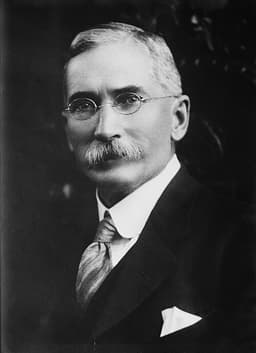
J. B. M. Hertzog
General · Modern
56.1Total
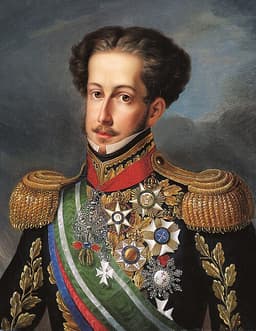
Pedro I of Brazil
Emperor · Modern
54.6Total
Basic Information
Born
1866
1798
Died
1942
1834
Era
Modern
Modern
Nationality
South Africa
Brazil
Occupation
General
Emperor
Civilization
Other
Western
Score Comparison
Military (10%)
25.0
55.0
Political (20%)
60.0
62.7
Influence (20%)
56.7
59.0
Legacy (20%)
50.0
50.0
Leadership (15%)
79.8
53.2
Strategy (15%)
60.0
45.0
TOTAL
56.1
54.6
J. B. M. Hertzog — Complete Timeline
1899 AD
Boer War GeneralWar◆ Major
Hertzog served as a Boer general in the Second Boer War, commanding forces in the Orange Free State. He participated in several battles and became a prominent Afrikaner military leader.
Second Boer WarGeneralMilitary
Impact: regional
1914 AD
Founded the National PartyPolitical Action
Hertzog broke away from the South African Party and founded the National Party, which championed Afrikaner nationalism and opposed British imperial influence. The party would later implement apartheid.
National PartyAfrikaner NationalismFounding
Impact: nationalconstructive
1924 AD
Prime Minister of South AfricaPolitical Action◆ Major
Hertzog became Prime Minister after his National Party won the general election in coalition with the Labour Party. His government implemented policies to protect white workers and promote Afrikaner interests, including the 'civilized labour' policy.
Prime MinisterAfrikaner RightsLabour Policy
Impact: national
1934 AD
Merged with Smuts to Form United PartyPolitical Action◆ Major
Hertzog merged his National Party with Jan Smuts' South African Party to form the United Party. The coalition aimed to address the economic crisis of the Great Depression and promote national unity, but it alienated hardline Afrikaner nationalists.
United PartyCoalitionNational Unity
Impact: nationalconstructive
1936 AD
Passed the Representation of Natives ActReform◆ Major
Hertzog's government passed the Representation of Natives Act, which removed Black voters from the common voters' roll in the Cape Province and allowed them to elect white representatives instead. This further entrenched racial segregation.
SegregationDisenfranchisementLegislation
Impact: nationaldestructive
1939 AD
Resigned Over Neutrality in WWIIPolitical Action◆ Major
Hertzog advocated for South African neutrality in World War II, but his cabinet voted to enter the war on the Allied side. He resigned as Prime Minister and was succeeded by Jan Smuts, splitting the United Party.
World War IINeutralityResignation
Impact: national
Pedro I of Brazil — Complete Timeline
1822 AD
Declaration of Independence of BrazilPolitical Action
Pedro I declared Brazil's independence from Portugal on September 7, 1822, at the Ipiranga River in S
Impact: globalprogressive
Coronation as Emperor of BrazilPolitical Action◆ Major
Pedro I was crowned Emperor of Brazil on December 1, 1822, in Rio de Janeiro. The coronation formalized the new imperial government, with Pedro I as constitutional monarch, though he retained significant executive powers.
Impact: nationalconstructive
1823 AD
War of Independence of BrazilWar◆ Major
Pedro I led Brazilian forces against Portuguese loyalists in the War of Independence. Key battles occurred in Bahia, Maranh
Impact: national
Dissolution of the Constituent AssemblyPolitical Action◆ Major
Pedro I dissolved the Constituent Assembly after conflicts over the constitution's limits on imperial power. He then imposed the 1824 Constitution, which granted the emperor extensive powers, including the Moderating Power, centralizing authority.
Impact: nationaldestructive
1831 AD
Abdication of the Brazilian ThronePolitical Action
Pedro I abdicated the Brazilian throne in favor of his five-year-old son Pedro II on April 7, 1831. He returned to Portugal to claim the Portuguese throne, leaving Brazil under a regency until his son came of age.
Impact: national
Expert Analysis
J. B. M. Hertzog vs Pedro I of Brazil
# The Emperor and the General: Two Paths to Nation-Building
On a sweltering September afternoon in 1822, a young Portuguese prince stood at the banks of the Ipiranga River in São Paulo, tore the blue-and-white insignia of Portugal from his uniform, and shouted "Independence or Death!" Half a world away and seventy-seven years later, a Dutch-descended lawyer from the Orange Free State mounted a horse and rode into the smoke of the Second Boer War, commanding men who would rather burn their farms than bow to the British Empire. Pedro I of Brazil and J.B.M. Hertzog of South Africa never met, never corresponded, and governed continents apart. Yet both faced the same fundamental question: how do you forge a nation when the very idea of nationhood is contested by empires, ethnicities, and the ghosts of colonialism?
Origins
Pedro I was born into the House of Braganza in 1798, a prince of the oldest ruling dynasty in Europe. His family fled Napoleon's armies in 1807, relocating the entire Portuguese court to Rio de Janeiro—an unprecedented event that transformed a colonial outpost into the seat of a global empire. Pedro grew up not as a distant monarch but as a boy who learned to ride horses in Brazilian fields and speak Portuguese with a colonial accent. His father, King João VI, was cautious and indecisive; Pedro was impulsive, passionate, and dangerously charismatic.
Hertzog, born in 1866 in the Cape Colony, came from a different world entirely. His family were Afrikaners—descendants of Dutch, German, and French Huguenot settlers who had spent two centuries carving farms out of the African veld. His father was a farmer who had fought the British before, and young James Barry Munnik Hertzog grew up with stories of British concentration camps and the Great Trek etched into his memory. He studied law in Amsterdam, returned to South Africa, and became a judge in the Orange Free State. Where Pedro was born to rule, Hertzog had to earn his authority through intellect and grievance.
Rise to Power
Pedro's path to power was almost accidental. When his father returned to Portugal in 1821, leaving Pedro as regent in Brazil, the Portuguese parliament attempted to reduce Brazil back to colonial status—revoking autonomy, demanding Pedro return to Europe, and treating the former capital as a subordinate province. The Brazilian elite, fearing the loss of their privileges, urged Pedro to stay. On January 9, 1822, he famously declared "I will remain"—the Dia do Fico that set Brazil on a collision course with Portugal. By September, he had declared independence and by December crowned himself emperor.
Hertzog's rise was slower and more contested. He distinguished himself as a Boer general during the Second Boer War of 1899-1902, leading guerrilla campaigns against British forces. After the war, he entered politics, broke from the South African Party in 1914 to found the National Party, and spent a decade building Afrikaner nationalism into a political force. His victory in the 1924 election made him prime minister. Pedro seized power in months; Hertzog built it over decades.
Leadership & Governance
Pedro governed as an emperor in the European absolutist tradition, but with a Brazilian twist. He dissolved the Constituent Assembly in 1823 when its members tried to limit his powers, then imposed his own constitution—which, paradoxically, was more liberal than the one the assembly had drafted. It established four branches of government, including a "moderating power" reserved for the emperor, and guaranteed civil rights while preserving slavery. Pedro's military score of 65.0 reflects competent but not brilliant command during the War of Independence; his leadership score of 74.5 captures the charisma that held a fractious empire together.
Hertzog governed as a parliamentarian, but his vision was narrower. His political score of 73.0 and leadership score of 79.9 reflect his skill in coalition-building and his genuine popularity among Afrikaners. Yet his legacy is shadowed by the Representation of Natives Act of 1936, which removed Black South Africans from the common voters' roll. Hertzog was not the architect of apartheid—that came later—but he laid its foundations. He saw himself as defending Afrikaner rights, but he did so by systematically denying rights to others.
Triumph & Tragedy
Pedro's triumph was the independence of Brazil—a vast, diverse territory that remained united while Spanish America fractured into a dozen republics. His tragedy came from his own character. He was an absentee ruler, spending more time on affairs and mistresses than on governance. His unpopularity grew, and in 1831, facing rebellion and unable to control the situation, he abdicated in favor of his five-year-old son, Pedro II, and sailed back to Portugal—where he spent his remaining years fighting his brother for the Portuguese throne.
Hertzog's triumph was the political unification of white South Africans. In 1934, he merged his National Party with Jan Smuts' South African Party to form the United Party, creating a coalition that seemed to promise stability. His tragedy came in 1939, when World War II broke out. Hertzog argued for neutrality, but his cabinet voted to enter the war on the Allied side. He resigned, his career ending not in glory but in a split that would define South African politics for decades.
Character & Destiny
Pedro was a romantic—impulsive, generous, and reckless. He once said, "I am a democrat, but I am also an emperor," a contradiction that captured his tragedy. He wanted to be loved, but he could not discipline himself to govern well. His influence score of 72.3 reflects the lasting impact of his actions, but his strategy score of only 50.0 reveals a man who reacted to events rather than shaping them.
Hertzog was a man of principle, but his principles were narrow. He believed in Afrikaner rights, parliamentary democracy, and racial hierarchy—a combination that made him both a champion and a villain. His influence score of 74.8 and legacy score of 66.8 reflect the complexity of his impact: he gave Afrikaners a voice, but that voice was used to silence others.
Legacy
Pedro I is remembered in Brazil as the "Liberator"—the man who cut the cord with Portugal and set Brazil on its own path. His son, Pedro II, would reign for nearly fifty years, bringing stability and progress. But the emperor's own failures—his authoritarian tendencies, his neglect of governance, his role in preserving slavery—are often softened by the romantic image of the prince who shouted "Independence or Death" on the banks of the Ipiranga.
Hertzog's legacy is more contested. In South Africa, his name adorns streets and universities, but also carries the weight of a system that oppressed millions. He is remembered as a founder of Afrikaner nationalism, but also as a man who chose racial exclusion over national unity. His total score of 68.1, slightly higher than Pedro's 65.7, suggests a more effective politician—but effectiveness is not the same as wisdom.
Conclusion
Pedro I and J.B.M. Hertzog both faced the challenge of building nations in the shadow of empire. Pedro succeeded in creating Brazil, but failed to govern it well. Hertzog succeeded in empowering Afrikaners, but failed to create a just society. Their stories remind us that nation-building is never a clean process—it involves compromises, contradictions, and choices that echo for generations. Pedro's cry of independence still rings across Brazil; Hertzog's laws still shape South Africa. In the end, both men were products of their time, doing what they thought was right, and leaving the rest of us to judge the consequences.
Rankings
🥇
J. B. M. HertzogLeader
Mil: 25.0Pol: 60.0Inf: 56.7
56.1
🥈
Pedro I of Brazil
Mil: 55.0Pol: 62.7Inf: 59.0
54.6
+1.5 behind
How This Comparison Works
Algorithm
Each figure is scored on 6 dimensions (0—100 scale) based on structured historical data: Military (10%), Political (20%), Influence (20%), Legacy (20%), Leadership (15%), Strategy (15%). The weighted total produces the final ranking.
Data Sources
Scores are computed from structured sub-indicators in the database. Scale factors adjust for era (Ancient ×0.85, Modern ×1.0) and civilization size (Eastern ×1.05, Other ×0.80) to account for differences in population and military scale.
Maximum 3 Figures
Comparisons are limited to 2—3 figures to ensure readability and statistical meaningfulness.
Error Margins
±5 points per dimension — Sub-scores are derived from historical records with inherent uncertainty. Two figures within 5 points on a dimension should be considered roughly equivalent in that area.
Total Score Accuracy
±3 points overall — The weighted combination of 6 dimensions produces a total score with approximately ±3 points of uncertainty. Differences of less than 3 points are not statistically significant— the figures are effectively tied.
Known Limitations
- Historical records are incomplete and uneven across civilizations
- Figures from oral-tradition societies may be underrepresented
- Occupation labels can misclassify multi-role figures
- Scores measure capability and impact, not moral character
- Quantitative scoring is a comparison tool, not absolute truth
Capability Radar
Military (10%) — Battles & Warfare
Battles
45
35
Win Rate
40
40
Expansion
20
30
Political (20%) — Governance & Reform
Reform
60
45
Diplomacy
55
50
Economy
50
30
Influence (20%) — Cultural & Global Reach
Cultural
50
40
Global
45
45
Legacy (20%) — Historical Impact
Historical
55
55
Longevity
40
50
Leadership (15%) — Power & Stability
Tenure
65
55
Stability
45
25
Strategy (15%) — Tactics & Innovation
Strategy
50
35
Tactics
45
30
Reform
30
20
Similar Comparisons
Comments & Discussion
BOERWHISPERER6/16/2026
Hertzog was a lawyer who turned guerrilla, but Pedro was a prince who *chose* Brazil over Portugal. That's the key difference—Hertzog fought to preserve a Boer republic against British imperialism, while Pedro ripped his nation from his own family's hands. Pedro's "Independence or Death" was theatrical but decisive; Hertzog's scorched-earth tactics proved the Boers would rather lose everything than surrender their identity. Both built nations, but only Pedro understood that breaking blood ties i
NUMBERSGUY6/16/2026
Stop romanticizing. The analysis says Hertzog was a lawyer who "mounted a horse and rode into the smoke." Cute imagery, but he was 33 years old during the Boer War—that's a middle-aged man playing soldier. Meanwhile, Pedro I ruled Brazil for nearly a decade before abdicating. The comparison falls apart when you check timelines: Hertzog's military career spanned what, three years? Pedro was an active monarch for nine. Sample size matters. A general who fought one war doesn't match an emperor who
古典学者阿提库斯6/16/2026
佩德罗一世的悲剧在于他太像个戏剧人物了——在伊皮兰加河畔撕徽章、高呼口号,活脱脱是罗马共和末期的少年英雄。但历史惩罚了这种表演欲:他后来跟议会吵架,跟情人闹绯闻,最终灰溜溜回欧洲抢葡萄牙王位去了。赫佐格倒是像塔西佗笔下的日耳曼酋长,沉默、顽固、宁可烧掉家园也不投降。问题的核心是:佩德罗在表演独立,赫佐格在活出独立。哪个更有分量?自己去猜。
REVISIONIST_HAMMER6/16/2026
Let's not whitewash either of these men. Pedro I was a slave-owning monarch who presided over Brazil's shameful dependence on human bondage—his "independence" merely swapped Portuguese colonial masters for local elites who kept the chains on. Hertzog? In 1935, his government passed the Representation of Natives Act, effectively stripping Black South Africans of voting rights. Both men built nations by excluding the majority of their populations. The analysis calls them nation-builders; I call th