Loading...
Bayinnaung vs Huang Xing
Bayinnaung leads by 11.1 pts · 2 figures compared
…
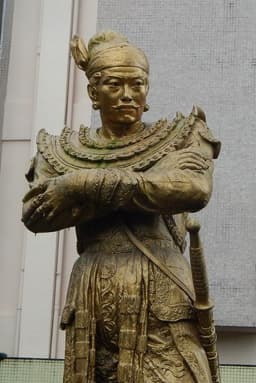
Bayinnaung
Emperor · Modern
68.6Total
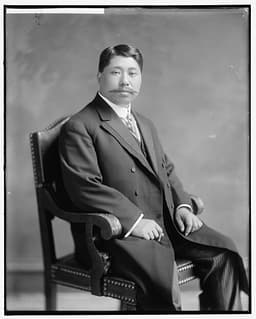
Huang Xing
General · Modern
57.5Total
Basic Information
Born
1516
1874
Died
1581
1916
Era
Modern
Modern
Nationality
Myanmar
China
Occupation
Emperor
General
Civilization
Eastern
Eastern
Score Comparison
Military (10%)
77.1
46.7
Political (20%)
82.0
53.8
Influence (20%)
65.0
62.0
Legacy (20%)
55.0
56.0
Leadership (15%)
74.0
62.0
Strategy (15%)
75.0
60.0
TOTAL
68.6
57.5
Bayinnaung — Complete Timeline
1550 AD
Establishment of the Toungoo EmpirePolitical Action
King Bayinnaung ascended the throne and began a series of military campaigns that created the largest empire in Southeast Asian history. At its peak, the Toungoo empire covered modern Myanmar, Thailand, Laos, and parts of China and India.
Toungoo EmpireSoutheast AsiaImperial Expansion
Impact: regionalconstructive
1557 AD
Conquest of the Shan StatesWar◆ Major
King Bayinnaung conquered the Shan States, bringing them under Toungoo control. This expansion added significant territory and resources to the Burmese empire.
Shan StatesToungoo ExpansionBurmese Empire
Impact: regional
1569 AD
Capture of AyutthayaWar
King Bayinnaung's forces captured the Siamese capital of Ayutthaya after a long siege. He installed a vassal king and made Siam a tributary state of the Toungoo empire.
Burmese-Siamese WarAyutthayaToungoo Empire
Impact: regional
1570 AD
Administrative ReformsReform◆ Major
King Bayinnaung implemented administrative reforms to govern his vast empire, including the appointment of governors and the standardization of laws and taxes. These reforms helped maintain control over conquered territories.
GovernanceAdministrationToungoo Empire
Impact: regionalconstructive
1574 AD
Conquest of Lan XangWar◆ Major
King Bayinnaung conquered the Lao kingdom of Lan Xang (modern Laos), bringing it under Toungoo control. This further expanded the Burmese empire to its greatest territorial extent.
Lan XangToungoo ExpansionLaos
Impact: regional
Huang Xing — Complete Timeline
1905 AD
Co-founded the TongmenghuiPolitical Action◆ Major
Huang Xing co-founded the Tongmenghui (Revolutionary Alliance) in Tokyo with Sun Yat-sen. He became its military leader, organizing armed uprisings against the Qing dynasty.
TongmenghuiRevolutionMilitary
Impact: nationalconstructive
1911 AD
Led the Wuchang UprisingWar
Huang Xing led the Wuchang Uprising, which sparked the Xinhai Revolution. He commanded revolutionary forces against Qing troops, securing initial victories that led to the dynasty's collapse.
Xinhai RevolutionUprisingMilitary
Impact: nationalconstructive
1912 AD
Served as Minister of War in the RepublicPolitical Action◆ Major
Huang Xing served as Minister of War in the provisional government of the Republic of China. He worked to organize a national army and defend the republic against counter-revolutionary forces.
GovernmentMilitaryRepublic
Impact: nationalconstructive
1913 AD
Led the Second Revolution Against Yuan ShikaiWar◆ Major
Huang Xing led the Second Revolution, an armed uprising against President Yuan Shikai's authoritarian rule. The rebellion failed due to lack of coordination and military inferiority, forcing Huang into exile.
Second RevolutionYuan ShikaiExile
Impact: nationaltragic
1916 AD
Died in Exile in ShanghaiPolitical Action
Huang Xing died in Shanghai after returning from exile in Japan and the United States. His death marked the loss of a key military leader of the Chinese revolution, though his legacy endured.
DeathExileRevolution
Impact: nationaltragic
Expert Analysis
Huang Xing vs Bayinnaung
### The Emperor and the General
In the summer of 1569, the Siamese capital of Ayutthaya fell after a brutal siege. The conquering king, Bayinnaung of Burma’s Toungoo dynasty, did not raze the city. Instead, he installed a vassal ruler, demanded tribute, and absorbed the kingdom into the largest empire Southeast Asia had ever seen. Three and a half centuries later, in the winter of 1911, a different kind of conqueror emerged. Huang Xing, a frail-looking general with a revolutionary’s fire, led a ragged force of students and railway workers in the Wuchang Uprising, setting off the chain reaction that toppled the 2,000-year-old Chinese imperial system. One man built an empire; the other tore one down. Both sought order, but their paths could not have been more different. What drove these two men, and why did one end his life on a throne and the other in exile?
### Origins
Bayinnaung was born in 1516, a son of a minor Toungoo prince, in a fragmented Burma where rival kingdoms warred ceaselessly. His world was one of martial honor, Buddhist kingship, and the raw logic of conquest. From his youth, he served as a general under his brother-in-law, King Tabinshwehti, learning that power was won with the sword and held with oaths. His upbringing was steeped in the chronicles of warrior-kings who built monuments from the bones of their enemies.
Huang Xing was born in 1874, in the twilight of the Qing dynasty, a time when China was being carved up by foreign powers. His father was a scholar-official, and young Huang was trained in the Confucian classics—but the empire’s humiliation in the Sino-Japanese War of 1894-95 shattered his faith in tradition. He studied in Japan, where he absorbed Western military science and republican ideals. His world was one of collapsing certainties, where the old order was dying and a new one had to be born in blood.
### Rise to Power
Bayinnaung’s rise was a steady ascent through battlefield glory. When Tabinshwehti was assassinated in 1550, the kingdom teetered on collapse. Bayinnaung seized the throne not by coup but by acclamation from the army, promising to restore order. Within months, he launched campaigns that would define his reign. His turning point came not from a single battle but from a relentless series: the conquest of the Shan States in 1557, which gave him control of the northern trade routes and a reservoir of manpower.
Huang Xing’s rise was different. He did not inherit an army; he built one from scratch. In 1905, he co-founded the Tongmenghui in Tokyo with Sun Yat-sen, becoming its military chief. His turning point came on October 10, 1911, when he led the Wuchang Uprising. It was a desperate gamble—his forces were outnumbered and poorly armed—but the Qing dynasty’s decay was so advanced that the rebellion spread like wildfire. Within months, provinces declared independence, and Huang found himself Minister of War in the new Republic of China.
### Leadership & Governance
Bayinnaung ruled like a master mechanic of empire. After conquering Ayutthaya in 1569, he did not impose harsh rule; he allowed local customs to continue as long as tribute flowed. His administrative reforms of 1570 were a masterpiece of pragmatism: he appointed governors from conquered elites, integrated Shan, Siamese, and Lao nobles into his court, and used Buddhist patronage to legitimize his rule. He was a military genius who understood that conquest was only half the battle—the other half was keeping the conquered loyal.
Huang Xing was a different kind of leader. As Minister of War in 1912, he tried to forge a national army from provincial warlords and revolutionary militias, a task that proved impossible. His political wisdom was real—he understood that China needed unity—but he lacked the infrastructure of a state. When President Yuan Shikai turned authoritarian, Huang led the Second Revolution in 1913, an armed uprising that failed catastrophically. He was a general who could inspire men to storm a fortress but could not build the fortress itself.
### Triumph & Tragedy
Bayinnaung’s greatest moment was the conquest of Lan Xang in 1574, which brought modern Laos under his sway. His empire stretched from the borders of India to the Mekong Delta, the largest in Southeast Asian history. But his tragedy was that it was built on personal loyalty. When he died in 1581, his successor lacked his charisma, and the empire fragmented within decades.
Huang Xing’s triumph was the Wuchang Uprising itself—a single spark that lit a revolution. His tragedy was that he could not control the fire. The Republic he helped found descended into warlord chaos. Forced into exile in Japan and the United States, he died in Shanghai in 1916, aged only 42, a broken man who had outlived his moment.
### Character & Destiny
Bayinnaung was patient, calculating, and ruthless when necessary. He once said, “A king who cannot keep his word is no king at all.” His personality was that of a builder—he wanted to create something permanent. But his destiny was shaped by the limits of pre-modern empire: without modern bureaucracy or nationalism, his realm was a patchwork held together by his will alone.
Huang Xing was impulsive, passionate, and self-sacrificing. He wrote, “Revolution is not a dinner party.” His character was that of a destroyer—he knew what he was against but struggled to define what he was for. His destiny was shaped by the tragedy of early republicanism: he was a revolutionary in an age that needed state-builders.
### Legacy
Bayinnaung is remembered in Myanmar as a national hero, the unifier who made Burma great. His statues stand in Yangon, and his campaigns are taught as golden-age history. But his legacy is also a cautionary tale: empires built on personal rule are fragile.
Huang Xing is less celebrated than Sun Yat-sen, but he is honored as the “Father of the Chinese Revolution” in Taiwan and among Chinese republicans. His legacy is that of the man who struck the first blow against monarchy. Yet his failure to build a stable republic haunts China’s modern history.
### Conclusion
Standing on opposite sides of history’s hinge, Bayinnaung and Huang Xing embody a profound truth: the skills that make a conqueror are not the same as those that make a founder. Bayinnaung built an empire that collapsed without him; Huang Xing destroyed an empire that he could not replace. One left monuments; the other left a promise. In the end, both were men of their time, doing what their era demanded—and paying the price for what their era could not give.
Rankings
🥇
BayinnaungLeader
Mil: 77.1Pol: 82.0Inf: 65.0
68.6
🥈
Huang Xing
Mil: 46.7Pol: 53.8Inf: 62.0
57.5
+11.1 behind
How This Comparison Works
Algorithm
Each figure is scored on 6 dimensions (0—100 scale) based on structured historical data: Military (10%), Political (20%), Influence (20%), Legacy (20%), Leadership (15%), Strategy (15%). The weighted total produces the final ranking.
Data Sources
Scores are computed from structured sub-indicators in the database. Scale factors adjust for era (Ancient ×0.85, Modern ×1.0) and civilization size (Eastern ×1.05, Other ×0.80) to account for differences in population and military scale.
Maximum 3 Figures
Comparisons are limited to 2—3 figures to ensure readability and statistical meaningfulness.
Error Margins
±5 points per dimension — Sub-scores are derived from historical records with inherent uncertainty. Two figures within 5 points on a dimension should be considered roughly equivalent in that area.
Total Score Accuracy
±3 points overall — The weighted combination of 6 dimensions produces a total score with approximately ±3 points of uncertainty. Differences of less than 3 points are not statistically significant— the figures are effectively tied.
Known Limitations
- Historical records are incomplete and uneven across civilizations
- Figures from oral-tradition societies may be underrepresented
- Occupation labels can misclassify multi-role figures
- Scores measure capability and impact, not moral character
- Quantitative scoring is a comparison tool, not absolute truth
Capability Radar
Military (10%) — Battles & Warfare
Battles
85
35
Win Rate
90
30
Expansion
92
20
Political (20%) — Governance & Reform
Reform
70
60
Diplomacy
78
55
Economy
72
30
Influence (20%) — Cultural & Global Reach
Cultural
70
40
Global
55
40
Legacy (20%) — Historical Impact
Historical
75
55
Longevity
60
45
Leadership (15%) — Power & Stability
Tenure
85
40
Stability
65
25
Strategy (15%) — Tactics & Innovation
Strategy
88
45
Tactics
80
40
Reform
75
50
Similar Comparisons
Comments & Discussion
BayinnaungBattler6/16/2026
Bayinnaung's capture of Ayutthaya wasn't just brute force—it was strategic genius. In 1564, after taking Chiang Mai, he relocated 10,000 families to repopulate his capital Pegu, mixing cultures to prevent rebellion. Huang Xing? He couldn't even hold Wuchang after the uprising; he fled to Shanghai while Yuan Shikai took over. Empires are built by consolidators, not saboteurs. Bayinnaung understood logistics—Huang just understood slogans.
帝国之眼6/16/2026
黄兴的失败在于他没有看清中国需要的是中央集权,而Bayinnaung用"三十六白象"的传说模糊了征服的残酷现实。黄兴领导的武昌起义表面上推翻了清朝,但很快就让位于袁世凯的独裁。Bayinnaung懂得用佛教仪式和婚姻联盟巩固帝国,黄兴却依赖临时拼凑的学生军和工人。结果一个成为万王之王,一个被迫流亡日本,差距就在对权力的本质理解上。
DataDredger6/16/2026
Let's be real: Huang Xing's Wuchang Uprising had maybe 2,000 ill-trained revolutionaries against a Qing army of 20,000—the whole thing only worked because Governor Duanfang was assassinated elsewhere. Bayinnaung personally commanded siege operations with elephant corps and cannon, crushing Ayutthaya's 50,000 defenders with a decapitation strike in just two months. One was a political opportunist in the right place; the other was a military professional. Stats don't lie—Huang's "revolution" was a
古文刺头6/16/2026
一个可笑对比:黄兴在1911年领导的是揭竿而起的乌合之众,而Bayinnaung在1568年围困Ayutthaya时拥有60,000士兵和1,200头战象。更荒唐的是,黄兴从未真正指挥过大规模战役——他更多的是幕后组织者和筹款人。Bayinnaung则亲自上阵,在战场上砍下敌军首级。《清史稿》记载黄兴"才短于军旅",这话一点不假。一个靠口号的革命者vs一个用血统和刀剑的征服者,天壤之别。
RevisionistEcho6/16/2026
You're all romanticizing Bayinnaung's "empire." It collapsed within 18 years of his death—his son Nanda was so incompetent he lost everything. Meanwhile, Huang Xing's revolution birthed the ROC which, despite its flaws, lasted 37 years and inspired anti-colonial movements across Asia. Empires built on elephant terror are brittle; movements built on ideas endure. Also, Bayinnaung's "Buddhist kingship" included massacring Mon villagers in 1551. Judge them by impact,