Loading...
Bayinnaung vs Feng Guozhang
Bayinnaung leads by 19.5 pts · 2 figures compared
…
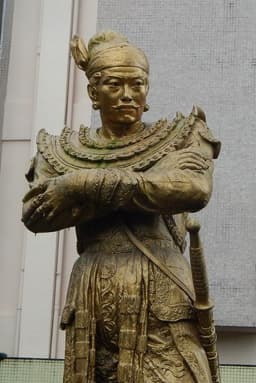
Bayinnaung
Emperor · Modern
68.6Total
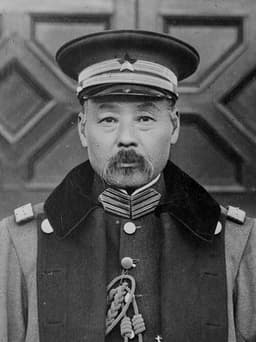
Feng Guozhang
General · Modern
49.1Total
Basic Information
Born
1516
1859
Died
1581
1919
Era
Modern
Modern
Nationality
Myanmar
China
Occupation
Emperor
General
Civilization
Eastern
Eastern
Score Comparison
Military (10%)
77.1
30.0
Political (20%)
82.0
61.3
Influence (20%)
65.0
54.9
Legacy (20%)
55.0
45.8
Leadership (15%)
74.0
40.0
Strategy (15%)
75.0
57.5
TOTAL
68.6
49.1
Bayinnaung — Complete Timeline
1550 AD
Establishment of the Toungoo EmpirePolitical Action
King Bayinnaung ascended the throne and began a series of military campaigns that created the largest empire in Southeast Asian history. At its peak, the Toungoo empire covered modern Myanmar, Thailand, Laos, and parts of China and India.
Toungoo EmpireSoutheast AsiaImperial Expansion
Impact: regionalconstructive
1557 AD
Conquest of the Shan StatesWar◆ Major
King Bayinnaung conquered the Shan States, bringing them under Toungoo control. This expansion added significant territory and resources to the Burmese empire.
Shan StatesToungoo ExpansionBurmese Empire
Impact: regional
1569 AD
Capture of AyutthayaWar
King Bayinnaung's forces captured the Siamese capital of Ayutthaya after a long siege. He installed a vassal king and made Siam a tributary state of the Toungoo empire.
Burmese-Siamese WarAyutthayaToungoo Empire
Impact: regional
1570 AD
Administrative ReformsReform◆ Major
King Bayinnaung implemented administrative reforms to govern his vast empire, including the appointment of governors and the standardization of laws and taxes. These reforms helped maintain control over conquered territories.
GovernanceAdministrationToungoo Empire
Impact: regionalconstructive
1574 AD
Conquest of Lan XangWar◆ Major
King Bayinnaung conquered the Lao kingdom of Lan Xang (modern Laos), bringing it under Toungoo control. This further expanded the Burmese empire to its greatest territorial extent.
Lan XangToungoo ExpansionLaos
Impact: regional
Feng Guozhang — Complete Timeline
1912 AD
Command of the Beiyang ArmyPolitical Action◆ Major
Feng Guozhang became a key commander of the Beiyang Army under Yuan Shikai. He controlled military forces in the Zhili region, establishing himself as a major warlord in northern China after the fall of the Qing dynasty.
Beiyang ArmyWarlordMilitary Command
Impact: national
1916 AD
Appointment as Vice PresidentPolitical Action◆ Major
Feng Guozhang was elected Vice President of the Republic of China under President Li Yuanhong. This position gave him significant political influence during the early Republican period.
Republic of ChinaGovernmentPolitics
Impact: national
1917 AD
Acting PresidencyPolitical Action◆ Major
Feng Guozhang became Acting President of the Republic of China after Li Yuanhong's resignation. He served from 1917 to 1918, facing challenges from rival warlords and struggling to maintain central authority.
Republic of ChinaPresidencyWarlord Era
Impact: national
1918 AD
Conflict with Duan QiruiPolitical Action◆ Major
Feng Guozhang engaged in a power struggle with Premier Duan Qirui, leading to the split of the Beiyang clique into the Zhili and Anhui factions. This conflict weakened the central government and intensified warlord warfare.
Beiyang CliquePower StruggleWarlord Era
Impact: nationaldestructive
Expert Analysis
Feng Guozhang vs Bayinnaung
# The Emperor and the General: Two Paths to Power in an Age of Collapse
The contrast could not be starker. In 1569, King Bayinnaung of the Toungoo dynasty stood before the smoldering walls of Ayutthaya, the Siamese capital, having just accomplished what no Burmese king had done before—the complete subjugation of Siam. Three and a half centuries later, in 1917, General Feng Guozhang entered Beijing as Acting President of the Republic of China, a man who commanded the most powerful army in the country yet could barely control his own political faction. One created the largest empire Southeast Asia had ever seen; the other presided over a republic that was crumbling before his eyes. What separates a builder of empires from a manager of collapse?
Origins
Bayinnaung was born in 1516, not into royalty but into modest circumstances in the Toungoo region of central Burma. His childhood name was Shwehti, and he grew up in a world of warring kingdoms—the Ava Kingdom crumbling, the Mon kingdoms rising, and the Shan states pressing from the north. His era was one of fragmentation, where small states constantly devoured each other. As a young man, he caught the attention of King Tabinshwehti, who recognized his military talent and made him a close companion. This relationship would prove decisive: Bayinnaung married Tabinshwehti's sister and became the king's most trusted general.
Feng Guozhang entered the world in 1859, in the twilight of the Qing dynasty. He was born into a military family in Hebei province, and his path was shaped by a different kind of collapse—not of kingdoms, but of an entire imperial system. The Opium Wars had humiliated China, the Taiping Rebellion had devastated the countryside, and foreign powers were carving out spheres of influence. Feng studied at the Beiyang Military Academy, where he absorbed Western military techniques while remaining loyal to the Confucian order that was visibly dying around him. His rise came through the patronage of Yuan Shikai, the strongman who modernized China's army while simultaneously preparing to dismantle its empire.
Rise to Power
Bayinnaung's ascent was forged in fire. When Tabinshwehti was assassinated in 1550, the kingdom he had built began to fracture. Rebels rose in Prome, in Martaban, in Ava. Bayinnaung, then 34, did not hesitate. He crushed the rebellions one by one, and his coronation that same year marked the beginning of a thirty-year campaign of conquest. He moved with terrifying speed: by 1557, he had conquered the Shan States, bringing their warring chieftains under his rule through a combination of military force and diplomatic marriage alliances.
Feng Guozhang's rise was more bureaucratic but no less calculated. In 1912, when Yuan Shikai became president of the new Republic, Feng was appointed commander of the Beiyang Army's key units in the Zhili region. He was not a battlefield commander in the traditional sense—his military score of 62.6 reflects this—but a political general who understood that in the chaos of early republican China, control of armed forces meant control of the state. When Yuan Shikai died in 1916, Feng was elected Vice President, a position that gave him legitimacy but little real power. The following year, when President Li Yuanhong fled Beijing during the Manchu restoration crisis, Feng stepped into the vacuum as Acting President.
Leadership & Governance
Bayinnaung governed as an imperial unifier. His administrative reforms of 1570 created a system of appointed governors and vassal kings that allowed him to control territory stretching from modern Myanmar to Thailand, Laos, and parts of Cambodia. He was a master of political integration: rather than destroying local power structures, he co-opted them, demanding tribute and loyalty while allowing local rulers to maintain their authority. His leadership score of 84.2 reflects a ruler who understood that empire required not just conquest but consolidation. When he captured Ayutthaya in 1569, he installed a vassal king rather than direct rule, a decision that showed strategic patience.
Feng Guozhang operated in a fundamentally different environment. The Republic of China was not an empire to be built but a fragile institution to be managed. His political score of 81.7 is high, but it was deployed in a losing cause. As Acting President from 1917 to 1918, he found himself trapped between the aggressive Premier Duan Qirui, who wanted to centralize power under the Beiyang clique, and the provincial warlords who wanted autonomy. Feng tried to mediate, to balance, to preserve the republican framework—but the framework itself was rotten. His leadership score of 87.3 suggests he was an effective manager of men, but he lacked the vision to create something new.
Triumph & Tragedy
Bayinnaung's greatest triumph was the conquest of Lan Xang in 1574, which brought the Lao kingdom under Toungoo control and completed his empire. At its height, his domain stretched from the Bay of Bengal to the Mekong River, a territory larger than any Southeast Asian state before or since. But his tragedy was that this empire was built on personal loyalty and military genius. When he died in 1581, his son Nanda Bayin inherited a realm that was impossible to hold together without his father's charisma. Within two decades, the empire had collapsed.
Feng Guozhang's triumph was more modest: he kept the Republic alive during a period when it could have easily disappeared. His tragedy was that he could not keep it alive for long. In 1918, the power struggle with Duan Qirui reached its climax. Feng was forced to resign the presidency, and the Beiyang clique split into the Zhili and Anhui factions, plunging China into a decade of civil war. He died in 1919, a broken man who had watched the republic he served dissolve into warlord chaos.
Character & Destiny
Bayinnaung was a man of relentless ambition and strategic patience. He understood that empire required time—he spent thirty years building it, campaign by campaign, marriage by marriage. His political score of 85.1 reveals a ruler who knew when to fight and when to negotiate. But his character also contained a fatal flaw: he built a system that depended entirely on him. He did not create institutions that could survive his death.
Feng Guozhang was a conservative in an age of revolution. He believed in order, in hierarchy, in the old Confucian values that were being swept away. His military score of 62.6 is the lowest among these two figures, and it tells a story: he was not a conqueror but a caretaker. He tried to preserve the Republic by balancing factions, but balancing requires strength, and he did not have enough. His character was suited to stability, but history gave him chaos.
Legacy
Bayinnaung is remembered today as one of the greatest kings in Burmese history, the unifier who created the Toungoo Empire. His legacy score of 73.0 reflects a figure who is honored but whose empire proved ephemeral. In modern Myanmar, he is celebrated as a national hero, but the ethnic minorities he conquered remember him differently.
Feng Guozhang's legacy score of 64.4 is lower, and it is fitting. He is a footnote in Chinese history, a transitional figure who could not stop the slide into warlordism. The Republic he tried to serve would not be restored until 1928, and then only briefly before collapsing again. He is remembered, if at all, as a symbol of the Beiyang era's failure—a competent man in an impossible position.
Conclusion
The difference between Bayinnaung and Feng Guozhang is not merely one of ability but of circumstance. Bayinnaung inherited a world of warring kingdoms and built an empire; Feng Guozhang inherited a republic and watched it fall apart. One created, the other preserved. One died at the height of his power, the other in defeat. Their total scores—77.2 for Bayinnaung, 74.2 for Feng—are surprisingly close, but they measure different things: the first measures the ambition to build, the second the tragedy of trying to hold together what is already broken. In the end, both men were shaped by their eras, and both were consumed by them. The emperor and the general: one built a monument that crumbled, the other held a torch that went out. History remembers the builder, but it should not forget the man who tried to keep the light burning.
Rankings
🥇
BayinnaungLeader
Mil: 77.1Pol: 82.0Inf: 65.0
68.6
🥈
Feng Guozhang
Mil: 30.0Pol: 61.3Inf: 54.9
49.1
+19.5 behind
How This Comparison Works
Algorithm
Each figure is scored on 6 dimensions (0—100 scale) based on structured historical data: Military (10%), Political (20%), Influence (20%), Legacy (20%), Leadership (15%), Strategy (15%). The weighted total produces the final ranking.
Data Sources
Scores are computed from structured sub-indicators in the database. Scale factors adjust for era (Ancient ×0.85, Modern ×1.0) and civilization size (Eastern ×1.05, Other ×0.80) to account for differences in population and military scale.
Maximum 3 Figures
Comparisons are limited to 2—3 figures to ensure readability and statistical meaningfulness.
Error Margins
±5 points per dimension — Sub-scores are derived from historical records with inherent uncertainty. Two figures within 5 points on a dimension should be considered roughly equivalent in that area.
Total Score Accuracy
±3 points overall — The weighted combination of 6 dimensions produces a total score with approximately ±3 points of uncertainty. Differences of less than 3 points are not statistically significant— the figures are effectively tied.
Known Limitations
- Historical records are incomplete and uneven across civilizations
- Figures from oral-tradition societies may be underrepresented
- Occupation labels can misclassify multi-role figures
- Scores measure capability and impact, not moral character
- Quantitative scoring is a comparison tool, not absolute truth
Capability Radar
Military (10%) — Battles & Warfare
Battles
85
45
Win Rate
90
40
Expansion
92
35
Political (20%) — Governance & Reform
Reform
70
30
Diplomacy
78
45
Economy
72
25
Influence (20%) — Cultural & Global Reach
Cultural
70
30
Global
55
20
Legacy (20%) — Historical Impact
Historical
75
40
Longevity
60
25
Leadership (15%) — Power & Stability
Tenure
85
55
Stability
65
20
Strategy (15%) — Tactics & Innovation
Strategy
88
55
Tactics
80
50
Reform
75
40
Similar Comparisons
Comments & Discussion
紫禁城将军6/16/2026
笑死,拿莽应龙和冯国璋比?一个靠五十六头战象踏平阿瑜陀耶,一个靠袁世凯给的北洋军底子混成代总统。莽应龙是真刀真枪从底层杀上来的,冯国璋呢?1906年滦州秋操就能看出他只会搞派系,跟段祺瑞斗来斗去。你让莽应龙穿越到1917年,三个月就能把北洋军整合成铁军,还用得着在直皖矛盾里做墙头草?