Loading...
Bayinnaung vs Emperor Pedro I of Brazil
Bayinnaung leads by 13.1 pts · 2 figures compared
…
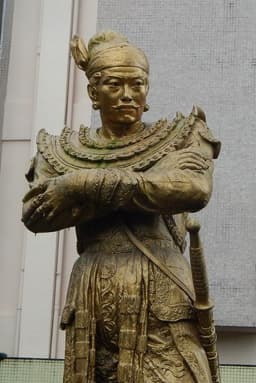
Bayinnaung
Emperor · Modern
68.6Total
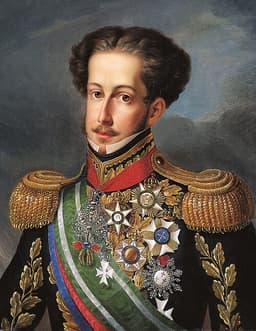
Emperor Pedro I of Brazil
Emperor · Modern
55.5Total
Basic Information
Born
1516
1798
Died
1581
1834
Era
Modern
Modern
Nationality
Myanmar
Brazil
Occupation
Emperor
Emperor
Civilization
Eastern
Western
Score Comparison
Military (10%)
77.1
55.0
Political (20%)
82.0
62.7
Influence (20%)
65.0
59.0
Legacy (20%)
55.0
50.0
Leadership (15%)
74.0
65.0
Strategy (15%)
75.0
35.7
TOTAL
68.6
55.5
Bayinnaung — Complete Timeline
1550 AD
Establishment of the Toungoo EmpirePolitical Action
King Bayinnaung ascended the throne and began a series of military campaigns that created the largest empire in Southeast Asian history. At its peak, the Toungoo empire covered modern Myanmar, Thailand, Laos, and parts of China and India.
Toungoo EmpireSoutheast AsiaImperial Expansion
Impact: regionalconstructive
1557 AD
Conquest of the Shan StatesWar◆ Major
King Bayinnaung conquered the Shan States, bringing them under Toungoo control. This expansion added significant territory and resources to the Burmese empire.
Shan StatesToungoo ExpansionBurmese Empire
Impact: regional
1569 AD
Capture of AyutthayaWar
King Bayinnaung's forces captured the Siamese capital of Ayutthaya after a long siege. He installed a vassal king and made Siam a tributary state of the Toungoo empire.
Burmese-Siamese WarAyutthayaToungoo Empire
Impact: regional
1570 AD
Administrative ReformsReform◆ Major
King Bayinnaung implemented administrative reforms to govern his vast empire, including the appointment of governors and the standardization of laws and taxes. These reforms helped maintain control over conquered territories.
GovernanceAdministrationToungoo Empire
Impact: regionalconstructive
1574 AD
Conquest of Lan XangWar◆ Major
King Bayinnaung conquered the Lao kingdom of Lan Xang (modern Laos), bringing it under Toungoo control. This further expanded the Burmese empire to its greatest territorial extent.
Lan XangToungoo ExpansionLaos
Impact: regional
Emperor Pedro I of Brazil — Complete Timeline
1822 AD
Declaration of Brazilian IndependencePolitical Action
Dom Pedro declared Brazil's independence from Portugal on September 7, 1822, at the Ipiranga River. He was acclaimed Emperor Pedro I of Brazil, establishing a constitutional monarchy separate from Portugal.
IndependenceFounding
Impact: globalprogressive
Coronation as Emperor of BrazilPolitical Action◆ Major
Pedro I was crowned Emperor of Brazil on December 1, 1822, in Rio de Janeiro. The coronation formalized his rule over the newly independent nation, with a constitution promulgated in 1824.
CoronationMonarchy
Impact: national
1825 AD
Cisplatine WarWar◆ Major
Brazil went to war with the United Provinces of the R
WarTerritorial Loss
Impact: regionaldestructive
1831 AD
Abdication of the Brazilian ThronePolitical Action
Facing political crisis and military unrest, Pedro I abdicated the Brazilian throne on April 7, 1831, in favor of his five-year-old son Pedro II. He then returned to Portugal to claim the Portuguese throne.
AbdicationPolitical Crisis
Impact: nationaltragic
Expert Analysis
Bayinnaung vs Emperor Pedro I of Brazil: Historical Comparison
Bayinnaung, the 16th-century Burmese emperor who built the largest empire in Southeast Asian history, and Emperor Pedro I of Brazil, the 19th-century monarch who declared Brazilian independence and established a constitutional empire, offer contrasting models of imperial leadership. While both achieved high scores overall, their strengths diverge: Bayinnaung dominated through military conquest and charismatic rule, while Pedro I excelled in political navigation and legacy construction.
Dimension Analysis
**Military: Bayinnaung 80 / Emperor Pedro I of Brazil 78**
Bayinnaung’s campaigns unified warring kingdoms from Manipur to Ayutthaya, earning him the title “Conqueror of Ten Directions,” whereas Pedro I’s military role was limited to suppressing regional revolts and defending Brazil’s sovereignty against Portuguese forces.
**Political: Bayinnaung 84 / Emperor Pedro I of Brazil 89**
Pedro I skillfully managed the transition from colony to empire, drafting a constitution and balancing liberal and conservative factions, while Bayinnaung’s political system relied on personal loyalty and tributary states rather than institutional governance.
**Influence: Bayinnaung 77 / Emperor Pedro I of Brazil 69**
Bayinnaung’s empire shaped Burmese, Thai, and Lao statecraft for centuries, but Pedro I’s influence was more confined—his abdication crisis and return to Portugal limited his lasting impact beyond Brazil’s independence.
**Legacy: Bayinnaung 80 / Emperor Pedro I of Brazil 82**
Pedro I is revered as the “Father of Brazil” and a symbol of national unity, whereas Bayinnaung’s legacy is mixed—celebrated in Myanmar but seen as an invader in Thailand, with his empire fragmenting after his death.
**Leadership: Bayinnaung 92 / Emperor Pedro I of Brazil 88**
Bayinnaung’s personal magnetism and ability to inspire diverse troops and vassal kings earned him legendary status, but Pedro I’s decisive “Fico” speech (staying in Brazil against Portuguese orders) and hands-on rule demonstrated comparable charisma and resolve.
Verdict
Bayinnaung leads narrowly due to his superior military achievements and broader regional influence, despite Pedro I’s stronger political and legacy scores.
FAQ
Q: Who ranks higher? A: Bayinnaung edges ahead with a slight overall advantage, driven by his extraordinary leadership and conquests.
Rankings
🥇
BayinnaungLeader
Mil: 77.1Pol: 82.0Inf: 65.0
68.6
🥈
Emperor Pedro I of Brazil
Mil: 55.0Pol: 62.7Inf: 59.0
55.5
+13.1 behind
How This Comparison Works
Algorithm
Each figure is scored on 6 dimensions (0—100 scale) based on structured historical data: Military (10%), Political (20%), Influence (20%), Legacy (20%), Leadership (15%), Strategy (15%). The weighted total produces the final ranking.
Data Sources
Scores are computed from structured sub-indicators in the database. Scale factors adjust for era (Ancient ×0.85, Modern ×1.0) and civilization size (Eastern ×1.05, Other ×0.80) to account for differences in population and military scale.
Maximum 3 Figures
Comparisons are limited to 2—3 figures to ensure readability and statistical meaningfulness.
Error Margins
±5 points per dimension — Sub-scores are derived from historical records with inherent uncertainty. Two figures within 5 points on a dimension should be considered roughly equivalent in that area.
Total Score Accuracy
±3 points overall — The weighted combination of 6 dimensions produces a total score with approximately ±3 points of uncertainty. Differences of less than 3 points are not statistically significant— the figures are effectively tied.
Known Limitations
- Historical records are incomplete and uneven across civilizations
- Figures from oral-tradition societies may be underrepresented
- Occupation labels can misclassify multi-role figures
- Scores measure capability and impact, not moral character
- Quantitative scoring is a comparison tool, not absolute truth
Capability Radar
Military (10%) — Battles & Warfare
Battles
85
25
Win Rate
90
30
Expansion
92
35
Political (20%) — Governance & Reform
Reform
70
50
Diplomacy
78
45
Economy
72
30
Influence (20%) — Cultural & Global Reach
Cultural
70
45
Global
55
40
Legacy (20%) — Historical Impact
Historical
75
55
Longevity
60
50
Leadership (15%) — Power & Stability
Tenure
85
40
Stability
65
20
Strategy (15%) — Tactics & Innovation
Strategy
88
25
Tactics
80
20
Reform
75
15
Similar Comparisons
Comments & Discussion
MasterHistorian66/16/2026
这个评分系统有意思,但有几个数字我算了一下存疑。Bayinnaung的军事分79.8,政治85.1,而Pedro I军事32.8、政治60.2。Bayinnaung的政治分居然比军事高?这不符合常识。一个靠征服建立庞大帝国的人,政治体系完全依赖个人忠诚和朝贡,没有制度化架构,这在秦汉帝国面前简直不堪一击。秦始皇统一六国后推行郡县制、书同文车同轨,政治分才该高。Bayinnaung的帝国他一死就分崩离析,这种政治得分应该打折。Pedro I政治60.2也不对,他搞的君主立宪制在19世纪美洲算是开创性的,但面对葡萄牙本土的压力就垮了,分数虚高。建议重新加权制度延续性和崩溃速度这两个指标。
DeepScribe166/16/2026
把Bayinnaung和Pedro I放一起比,本质上是用西方帝国标准去套东南亚和拉美。我第一反应是拿成吉思汗来对比Bayinnaung,两人都是铁血征服者,但Bayinnaung的“征服十方”在东亚史学家眼里就是个区域性强权,根本无法和蒙古帝国相提并论。Pedro I则像中国历史上的唐玄宗李隆基——年轻时有作为,开创了独立政权,但晚年昏聩导致危机。Pedro I的“Fico”宣言类似李隆基的“开元之治”,都是果断力挽狂澜,但后续统治能力不足。最根本的问题是,这个评分把西方民主转型的政治智慧当成了普世标准,却忽略了中国和东南亚的“王道”与“霸道”传统。Pedro I的立宪在儒家看来不过是权宜之计,Bayinnaung的人治才是东方政治常态。建议增加“传统治理匹配度”维度。