Loading...
Bayinnaung vs Deodoro da Fonseca
Bayinnaung leads by 19.8 pts · 2 figures compared
…
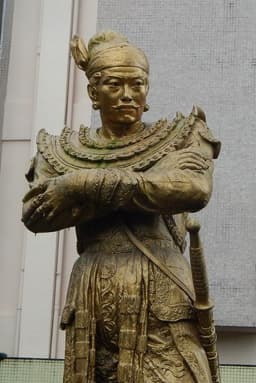
Bayinnaung
Emperor · Modern
68.6Total
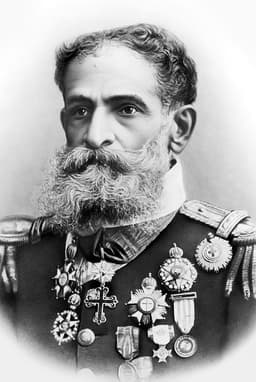
Deodoro da Fonseca
General · Modern
48.8Total
Basic Information
Born
1516
1827
Died
1581
1892
Era
Modern
Modern
Nationality
Myanmar
Brazil
Occupation
Emperor
General
Civilization
Eastern
Western
Score Comparison
Military (10%)
77.1
50.0
Political (20%)
82.0
45.1
Influence (20%)
65.0
54.1
Legacy (20%)
55.0
44.2
Leadership (15%)
74.0
57.6
Strategy (15%)
75.0
38.6
TOTAL
68.6
48.8
Bayinnaung — Complete Timeline
1550 AD
Establishment of the Toungoo EmpirePolitical Action
King Bayinnaung ascended the throne and began a series of military campaigns that created the largest empire in Southeast Asian history. At its peak, the Toungoo empire covered modern Myanmar, Thailand, Laos, and parts of China and India.
Toungoo EmpireSoutheast AsiaImperial Expansion
Impact: regionalconstructive
1557 AD
Conquest of the Shan StatesWar◆ Major
King Bayinnaung conquered the Shan States, bringing them under Toungoo control. This expansion added significant territory and resources to the Burmese empire.
Shan StatesToungoo ExpansionBurmese Empire
Impact: regional
1569 AD
Capture of AyutthayaWar
King Bayinnaung's forces captured the Siamese capital of Ayutthaya after a long siege. He installed a vassal king and made Siam a tributary state of the Toungoo empire.
Burmese-Siamese WarAyutthayaToungoo Empire
Impact: regional
1570 AD
Administrative ReformsReform◆ Major
King Bayinnaung implemented administrative reforms to govern his vast empire, including the appointment of governors and the standardization of laws and taxes. These reforms helped maintain control over conquered territories.
GovernanceAdministrationToungoo Empire
Impact: regionalconstructive
1574 AD
Conquest of Lan XangWar◆ Major
King Bayinnaung conquered the Lao kingdom of Lan Xang (modern Laos), bringing it under Toungoo control. This further expanded the Burmese empire to its greatest territorial extent.
Lan XangToungoo ExpansionLaos
Impact: regional
Deodoro da Fonseca — Complete Timeline
1889 AD
Proclamation of the Brazilian RepublicPolitical Action
Deodoro da Fonseca led a military coup that overthrew Emperor Pedro II on November 15, 1889. He proclaimed the Republic of the United States of Brazil, ending 67 years of imperial rule.
CoupRepublic
Impact: globalprogressive
1891 AD
Election as First President of BrazilPolitical Action◆ Major
Deodoro da Fonseca was elected the first President of Brazil by the Constituent Congress on February 25, 1891. He took office under the new republican constitution, but his rule was brief and authoritarian.
ElectionPresidency
Impact: national
Dissolution of the National CongressPolitical Action◆ Major
Facing political opposition, Deodoro da Fonseca dissolved the National Congress on November 3, 1891, and declared a state of siege. This authoritarian act triggered a naval revolt and his eventual resignation.
AuthoritarianismPolitical Crisis
Impact: nationaldestructive
Resignation from the PresidencyPolitical Action◆ Major
Deodoro da Fonseca resigned the presidency on November 23, 1891, after a naval rebellion threatened his government. He handed power to Vice President Floriano Peixoto, ending his 9-month rule.
ResignationPolitical Crisis
Impact: nationaltragic
Expert Analysis
Deodoro da Fonseca vs Bayinnaung
# The Emperor and the General: Two Paths to Power, Two Destinies
In the humid heat of a November morning in 1889, a white-haired Brazilian general stood at the head of a column of soldiers in Rio de Janeiro, his hand resting on the hilt of his sword, his heart pounding with uncertainty. Across the world, three centuries earlier, another man—a Burmese king in gilded armor—had watched his elephants crash through the gates of a Siamese capital, the roar of war drums drowning out the screams of defenders. Both men sought to build something lasting. One would forge an empire that stretched from the Bay of Bengal to the Mekong River. The other would stumble from a palace coup to a hasty resignation, leaving a republic that barely outlived his tenure. What separated them was not merely time or geography, but the mysterious alchemy of character, circumstance, and the cruel arithmetic of history.
Origins
Bayinnaung was born in 1516 in the dusty village of Toungoo, a minor principality in a fractured Burma. His father was a minor noble, his mother a commoner—hardly the stuff of legend. Yet the boy who would become the greatest king of the Toungoo dynasty grew up in an era of chaos. The once-mighty kingdoms of Ava and Pegu had crumbled into warring states. The Portuguese had arrived with guns and greed, and the old order was dying. Bayinnaung learned early that survival required more than birthright; it demanded cunning, loyalty, and the willingness to shed blood. He rose not as a prince but as a trusted general to his brother-in-law, King Tabinshwehti, and when Tabinshwehti was assassinated in 1550, Bayinnaung seized the throne not by inheritance but by the sword.
Deodoro da Fonseca, born in 1827 in the Brazilian state of Alagoas, came from a different world—a world of coffee plantations, slave labor, and a fading empire. His family were military men, and Deodoro entered the army as a cadet at fourteen. He fought in the Paraguayan War (1864–1870), a brutal conflict that forged a generation of officers who saw the Brazilian monarchy as weak and corrupt. By 1889, Deodoro was a respected general, but he was also a man caught between two ages: the old order of Emperor Pedro II, which he had served for decades, and the rising tide of republicanism that promised modernity. Unlike Bayinnaung, who inherited a tradition of kingship, Deodoro inherited a tradition of obedience—and found it unbearable.
Rise to Power
Bayinnaung’s ascent was a study in relentless momentum. In 1550, upon taking the throne, he immediately launched a series of campaigns that would define his reign. He conquered the Shan States in 1557, bringing their fractious chieftains under his rule not merely by force but by a system of oaths and hostages that bound them to his dynasty. He captured Ayutthaya in 1569 after a grueling siege, installing a vassal king and extracting tribute that flowed into Toungoo’s treasury for decades. He marched into Lan Xang in 1574, crushing the Lao kingdom and extending his domain to the borders of Cambodia. Each victory fed the next, and by the 1570s, Bayinnaung ruled the largest empire Southeast Asia had ever seen—from the Irrawaddy Delta to the Mekong River, from the Bay of Bengal to the Chinese frontier.
Deodoro’s rise was more hesitant, more accidental. In 1889, he was not a revolutionary by nature. He was a monarchist who had grown disillusioned. When republican conspirators approached him to lead a coup against Emperor Pedro II, he hesitated. Only after days of persuasion—and the fear that he might be arrested for disloyalty—did he finally march his troops into Rio de Janeiro on November 15, 1889. The coup was bloodless. The emperor was exiled. Deodoro was proclaimed head of the provisional government. But where Bayinnaung had acted with the certainty of a man who believed in his own destiny, Deodoro acted with the reluctance of a man who had stumbled into a role he never wanted.
Leadership & Governance
Bayinnaung governed with a blend of iron discipline and pragmatic flexibility. He appointed loyal governors to his conquered territories, but he also allowed local rulers to retain their titles if they swore allegiance. He standardized weights and measures, built roads and canals, and encouraged trade with the Portuguese and the Chinese. His military campaigns were meticulously planned, relying on a combination of war elephants, musketeers, and siege artillery that he had learned to deploy with devastating efficiency. Yet his greatest political achievement was the creation of a multi-ethnic empire that, for a time, held together through a web of personal loyalties and ritualized submission.
Deodoro, by contrast, governed with a heavy hand and a short temper. Elected the first president of Brazil in February 1891, he faced a fractious Congress that demanded limits on executive power. His response was to dissolve the National Congress on November 3, 1891, declaring a state of siege. It was a desperate act—the move of a general who had never learned the art of political compromise. Within weeks, a naval rebellion threatened his government, and on November 23, 1891, Deodoro resigned, handing power to his vice president. His presidency had lasted less than a year.
Triumph & Tragedy
Bayinnaung’s greatest triumph was the sheer scale of his empire. He had united a region that had never been united before, and his capital at Pegu became a center of wealth, learning, and Buddhist piety. But his tragedy was that this empire was built on his personal authority alone. When he died in 1581, his successors lacked his charisma and his ruthlessness. Within decades, the empire fractured, and the Toungoo dynasty collapsed into civil war.
Deodoro’s triumph was the proclamation of the republic itself—a break from monarchy that, however imperfect, set Brazil on a new path. His tragedy was that he could not lead it. He was a man of the old order who had destroyed that order, a soldier who could not govern, a liberator who could not inspire loyalty.
Character & Destiny
Bayinnaung was a man of colossal ambition and iron will. He believed that he was destined to rule, and he acted with the certainty of a man who had no doubt. This certainty allowed him to conquer, but it also blinded him to the fragility of his creation. Deodoro was a man of doubt. He was brave in battle but indecisive in politics, loyal to the monarchy yet willing to betray it, a republican who could not embrace democracy. His character was a contradiction, and his destiny was to be a footnote—the first president of a republic he could not sustain.
Legacy
Bayinnaung is remembered in Myanmar as a national hero, a symbol of unity and strength. His campaigns are studied in military academies, and his name is invoked by politicians who dream of a resurgent Burma. Yet his empire is gone, and his legacy is a cautionary tale about the limits of conquest. Deodoro da Fonseca is remembered in Brazil as a founding father, but a flawed one. His portrait hangs in the presidential palace, but his resignation is taught as a lesson in the dangers of authoritarianism. Both men built something that crumbled. Both men left a world that was different because they had lived.
Conclusion
History judges men not by their intentions but by their outcomes. Bayinnaung died in his bed, surrounded by the wealth of an empire. Deodoro died in 1892, a year after his resignation, in obscurity and disgrace. Yet the difference between them is not simply success and failure. It is the difference between a man who knew what he wanted and a man who did not. Bayinnaung wanted an empire, and he got it—for a moment. Deodoro wanted a republic, but he could not bear the chaos it required. In the end, both men remind us that power is not enough. It must be matched by purpose, and purpose must be matched by the courage to see it through.
Rankings
🥇
BayinnaungLeader
Mil: 77.1Pol: 82.0Inf: 65.0
68.6
🥈
Deodoro da Fonseca
Mil: 50.0Pol: 45.1Inf: 54.1
48.8
+19.8 behind
How This Comparison Works
Algorithm
Each figure is scored on 6 dimensions (0—100 scale) based on structured historical data: Military (10%), Political (20%), Influence (20%), Legacy (20%), Leadership (15%), Strategy (15%). The weighted total produces the final ranking.
Data Sources
Scores are computed from structured sub-indicators in the database. Scale factors adjust for era (Ancient ×0.85, Modern ×1.0) and civilization size (Eastern ×1.05, Other ×0.80) to account for differences in population and military scale.
Maximum 3 Figures
Comparisons are limited to 2—3 figures to ensure readability and statistical meaningfulness.
Error Margins
±5 points per dimension — Sub-scores are derived from historical records with inherent uncertainty. Two figures within 5 points on a dimension should be considered roughly equivalent in that area.
Total Score Accuracy
±3 points overall — The weighted combination of 6 dimensions produces a total score with approximately ±3 points of uncertainty. Differences of less than 3 points are not statistically significant— the figures are effectively tied.
Known Limitations
- Historical records are incomplete and uneven across civilizations
- Figures from oral-tradition societies may be underrepresented
- Occupation labels can misclassify multi-role figures
- Scores measure capability and impact, not moral character
- Quantitative scoring is a comparison tool, not absolute truth
Capability Radar
Military (10%) — Battles & Warfare
Battles
85
20
Win Rate
90
25
Expansion
92
10
Political (20%) — Governance & Reform
Reform
70
40
Diplomacy
78
25
Economy
72
15
Influence (20%) — Cultural & Global Reach
Cultural
70
20
Global
55
15
Legacy (20%) — Historical Impact
Historical
75
35
Longevity
60
20
Leadership (15%) — Power & Stability
Tenure
85
30
Stability
65
10
Strategy (15%) — Tactics & Innovation
Strategy
88
25
Tactics
80
20
Reform
75
15
Similar Comparisons
Comments & Discussion
General Historian6/16/2026
Bayinnaung didn’t just conquer—he actually held his empire together through marriages, vassal treaties, and religious patronage. Deodoro? He couldn’t even keep his own cabinet from resigning in protest after a few months. One built a sustainable tribute system from Manipur to Siam; the other got so frazzled by budget disputes he dissolved Congress and hoped nobody noticed. That’s not “two paths”—that’s competence versus panic.
考古毒舌6/16/2026
说Bayinnaung靠出身?Toungoo那破村子连个像样城墙都没有,他家底比乞丐好不了多少。Deodoro倒好,正牌陆军元帅出身,结果政变搞到一半腿发抖,把总统位子坐成火山口。你拿两个极权怪物洗白现实失败者?Bayinnaung至少打了三十场仗没崩盘,Deodoro连国会吵架都撑不过仨月。青铜吹成黄金,笑死人。
Data Skeptic6/16/2026
The comparison glosses over scale. Bayinnaung managed a 25-year campaign string across multiple linguistic and ecological zones—something logistics historians still study. Deodoro’s entire military resume boils down to “steady but uninspired” in the Paraguayan War, followed by one coup and 9 months of presidency. If we’re measuring impact by complexity, Bayinnaung operated at an order of magnitude harder. This isn’t apples to oranges—it’s apples to a single bruise.
古典阴谋家6/16/2026
Deodoro从未真正理解权力的本质。他以为穿上元帅袍就镇得住场子,却不知权力需要流血表演。Bayinnaung诛杀所有潜在竞争者之日,他的御座才真正焊死。Deodoro那场所谓的“政变”连枪都没响几声,共和派后来当他是过渡傀儡。权力的算术很简单:Bayinnaung用血写加法,Deodoro用犹豫写减法。历史只敬畏不怕弄脏手的人。
Revisionist Critic6/16/2026
Give Deodoro a break. Bayinnaung inherited a war machine already built by Tabinshwehti; Deodoro inherited a decaying empire with no institutional support. Plus, Deodoro actually tried to transition Brazil toward civilian rule—something no 16th-century conquering king would even conceive. Comparing their “success” without accounting for vastly different structural constraints is lazy history. One governed conquered elephants; the other governed sulking coffee planters with newspapers.