Loading...
Bal Gangadhar Tilak vs Miguel Hidalgo
Bal Gangadhar Tilak leads by 5.9 pts · 2 figures compared
…
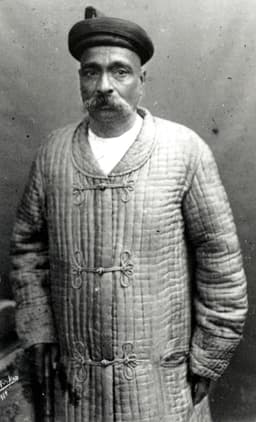
Bal Gangadhar Tilak
Revolutionary · Modern
52.9Total
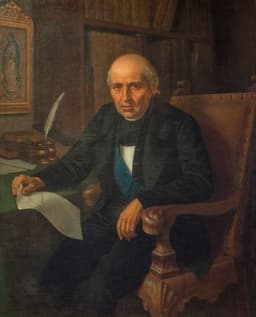
Miguel Hidalgo
Revolutionary · Modern
47.0Total
Basic Information
Born
1856
1753
Died
1920
1811
Era
Modern
Modern
Nationality
India
Mexico
Occupation
Revolutionary
Revolutionary
Civilization
Indian
Western
Score Comparison
Military (10%)
50.0
50.0
Political (20%)
48.0
36.5
Influence (20%)
58.3
55.0
Legacy (20%)
56.0
52.0
Leadership (15%)
50.7
39.0
Strategy (15%)
45.0
39.6
TOTAL
52.9
47.0
Bal Gangadhar Tilak — Complete Timeline
1881 AD
Launch of the Maratha and Kesari NewspapersCultural◆ Major
Tilak founded the Marathi-language newspaper 'Kesari' and the English-language 'Maratha' to spread nationalist ideas. These newspapers became influential platforms for criticizing British rule and mobilizing public opinion.
MediaNationalism
Impact: nationalconstructive
1897 AD
Imprisonment for SeditionPolitical Action◆ Major
Tilak was arrested and sentenced to 18 months imprisonment for sedition after publishing articles critical of British rule. His imprisonment increased his popularity and made him a martyr for the nationalist cause.
ImprisonmentSedition
Impact: national
1905 AD
Introduction of Swadeshi MovementPolitical Action◆ Major
Bal Gangadhar Tilak promoted the Swadeshi movement, advocating for the boycott of British goods and the use of Indian-made products. This movement gained widespread support and became a key part of the Indian independence struggle.
NationalismEconomic Boycott
Impact: nationalconstructive
1908 AD
Lucky Ali TrialPolitical Action◆ Major
Tilak was tried and sentenced to six years in Mandalay prison for sedition after defending the use of violence against British officials. His trial and imprisonment further galvanized the Indian independence movement.
TrialImprisonment
Impact: national
1916 AD
Formation of the Home Rule LeaguePolitical Action◆ Major
Tilak founded the Indian Home Rule League in 1916, demanding self-government for India within the British Empire. The movement gained mass support and pressured the British government to consider political reforms.
Political MovementSelf-Government
Impact: nationalconstructive
Miguel Hidalgo — Complete Timeline
1810 AD
Captured Guanajuato and massacred SpaniardsWar◆ Major
Hidalgo's army of 80,000 captured the city of Guanajuato on September 28, 1810. After taking the Alh
BattleMassacreViolence
Impact: regionaldestructive
Issued the Grito de DoloresPolitical Action
On September 16, 1810, Father Miguel Hidalgo rang the church bell in Dolores and called for rebellion against Spanish colonial rule. His speech, known as the Grito de Dolores, urged Mexicans to rise up against the Spanish and marked the beginning of the Mexican War of Independence.
IndependenceRebellionGrito de Dolores
Impact: nationalconstructive
1811 AD
Defeated at the Battle of Calderón BridgeWar◆ Major
Hidalgo's poorly trained army was decisively defeated by a smaller Spanish royalist force at the Battle of Calder
DefeatSpanish RoyalistsTurning Point
Impact: regionaltragic
Executed by Spanish authoritiesPolitical Action◆ Major
Hidalgo was captured in Acatita de Baj
ExecutionMartyrdomIndependence Movement
Impact: nationaltragic
Expert Analysis
Miguel Hidalgo vs Bal Gangadhar Tilak
# The Firebrand and the Priest: Two Revolutions, Two Tragedies
On a September morning in 1810, a white-haired priest in the dusty town of Dolores rang his church bell with a fury that would echo across centuries. Miguel Hidalgo, a man of God, called his congregation to war. Ninety-six years later, on the other side of the world, a Brahmin intellectual in Poona stood before a crowd and urged them to burn their foreign cloth. Bal Gangadhar Tilak, a man of law and letters, declared that Swaraj was his birthright. Both men ignited revolutions. Both paid with their freedom, and one with his life. Yet their paths diverged in ways that reveal much about the soil from which revolutions grow—and the forces that ultimately shape them.
Origins
Hidalgo was born in 1753 into a criollo family—Mexicans of Spanish blood but denied the privileges of those born in Spain. He was educated by Jesuits, steeped in Enlightenment philosophy, and ordained as a priest. But his parish was no cloister. He read banned books, cultivated vineyards, and taught indigenous farmers to grow olives and silkworms. His rebellion was not a product of abstract ideology but of lived injustice: he saw his flock starving while Spanish officials grew fat on colonial taxes.
Tilak, born in 1856, came from a Chitpavan Brahmin family—a priestly caste that had long served as administrators in the Maratha Empire. He studied mathematics and law, but his true education came from watching the British dismantle Indian industry. The cotton mills of Manchester had already strangled India's weavers. Tilak understood that independence was not merely political—it was economic, cultural, spiritual.
The difference in their origins is crucial. Hidalgo was a pastor who became a general; Tilak was a scholar who became a strategist. One led with his heart; the other with his mind.
Rise to Power
Hidalgo's moment came suddenly. In 1810, a conspiracy for Mexican independence was betrayed. Rather than flee, Hidalgo chose to strike. The Grito de Dolores—"Death to the gachupines!"—was not a carefully planned uprising but a desperate gamble. Within weeks, he commanded 80,000 followers: peasants, miners, and indigenous villagers armed with machetes, slings, and stolen muskets.
Tilak's rise was gradual, deliberate. In 1881, he launched two newspapers: *Kesari* (The Lion) in Marathi and *The Maratha* in English. He did not call for immediate rebellion. He taught his readers to read, to question, to organize. He transformed Hindu festivals like Ganesh Chaturthi into political gatherings. When the British arrested him for sedition in 1897, he used the courtroom as a platform. His rise was not a single dramatic act but a slow, patient construction of national consciousness.
Leadership & Governance
As a leader, Hidalgo was a comet—brilliant, uncontrollable, and brief. His army captured Guanajuato, the richest city in Mexico, but then descended into chaos. After taking the Alhóndiga de Granaditas, his forces massacred Spanish civilians. Hidalgo could not—or would not—stop them. At the Battle of Calderón Bridge in 1811, his untrained mob was routed by 6,000 disciplined royalist troops. He fled north, was betrayed, captured, defrocked, and executed.
Tilak was a different kind of revolutionary. His Swadeshi movement of 1905 was not a spontaneous riot but a disciplined campaign of economic boycott. He urged Indians to spin their own cloth, to reject British education, to build parallel institutions. When the British sentenced him to six years in Mandalay prison in 1908 for defending revolutionary violence, he used his imprisonment to write philosophical works. He emerged in 1914 not broken but refined, and in 1916 founded the Home Rule League, demanding self-government through constitutional means.
Hidalgo's military score (42.0) reflects his catastrophic battlefield failures. Tilak's political score (76.0) reflects his mastery of nonviolent resistance and institution-building. One tried to win independence with a mob; the other sought to build a nation that could demand it.
Triumph & Tragedy
Hidalgo's triumph was the Grito itself—a moment of such pure defiance that it became Mexico's founding myth. His tragedy was that he could not lead the revolution he started. He was a priest, not a soldier. His army melted away. He died before a firing squad, his last words reportedly: "I forgive my executioners."
Tilak's triumph was more subtle but more enduring. He transformed Indian nationalism from an elite, English-speaking movement into a mass phenomenon. His slogan "Swaraj is my birthright and I shall have it" became the rallying cry of a generation. His tragedy was that he died in 1920, twenty-seven years before independence. He never saw the nation he helped create.
Character & Destiny
Hidalgo was a man of profound compassion but poor judgment. He trusted allies who betrayed him, led soldiers he could not control, and chose a battlefield he could not win. His character was generous, impulsive, and ultimately fatal to his cause.
Tilak was harder, more calculating. He was called "the father of Indian unrest" by the British, but he was no firebrand in the Hidalgo mold. He was a strategist who understood that revolution required patience, organization, and sacrifice. His famous quote—"The sword of revolution is sharpened on the whetstone of ideas"—reveals his method. He knew that a nation must be built before it can be freed.
Legacy
Hidalgo is remembered as the Father of Mexican Independence. His Grito de Dolores is reenacted every September 16 by Mexican presidents. But his legacy is complicated: he unleashed forces of violence he could not contain, and his movement was crushed within a year. His legacy score (75.0) reflects his symbolic power, not his practical achievement.
Tilak's legacy (68.1) is quieter but deeper. He is remembered as the founder of modern Indian nationalism, the man who gave the independence movement its language and its soul. His ideas shaped Gandhi, who called him "the architect of the Indian nation." Unlike Hidalgo, Tilak did not die in vain. His work continued, and India became free.
Conclusion
What separates these two revolutionaries is not courage—both had it in abundance. What separates them is time and strategy. Hidalgo lived in an era when colonial power was absolute; rebellion meant certain death. Tilak lived in an era when empire was weakening; resistance could be organized, sustained, and ultimately victorious.
Hidalgo was a spark that lit a fire he could not control. Tilak was a blacksmith who forged a sword he knew others would wield. One died for his cause; the other lived long enough to see it take shape. Both were failures in their own time, but one failure became a legend, and the other became a foundation. In the end, revolutions need both kinds of men: the one who rings the bell, and the one who builds the nation to answer it.
Rankings
🥇
Bal Gangadhar TilakLeader
Mil: 50.0Pol: 48.0Inf: 58.3
52.9
🥈
Miguel Hidalgo
Mil: 50.0Pol: 36.5Inf: 55.0
47.0
+5.9 behind
How This Comparison Works
Algorithm
Each figure is scored on 6 dimensions (0—100 scale) based on structured historical data: Military (10%), Political (20%), Influence (20%), Legacy (20%), Leadership (15%), Strategy (15%). The weighted total produces the final ranking.
Data Sources
Scores are computed from structured sub-indicators in the database. Scale factors adjust for era (Ancient ×0.85, Modern ×1.0) and civilization size (Eastern ×1.05, Other ×0.80) to account for differences in population and military scale.
Maximum 3 Figures
Comparisons are limited to 2—3 figures to ensure readability and statistical meaningfulness.
Error Margins
±5 points per dimension — Sub-scores are derived from historical records with inherent uncertainty. Two figures within 5 points on a dimension should be considered roughly equivalent in that area.
Total Score Accuracy
±3 points overall — The weighted combination of 6 dimensions produces a total score with approximately ±3 points of uncertainty. Differences of less than 3 points are not statistically significant— the figures are effectively tied.
Known Limitations
- Historical records are incomplete and uneven across civilizations
- Figures from oral-tradition societies may be underrepresented
- Occupation labels can misclassify multi-role figures
- Scores measure capability and impact, not moral character
- Quantitative scoring is a comparison tool, not absolute truth
Capability Radar
Military (10%) — Battles & Warfare
Battles
23
30
Win Rate
30
25
Expansion
30
20
Political (20%) — Governance & Reform
Reform
70
60
Diplomacy
60
30
Economy
20
20
Influence (20%) — Cultural & Global Reach
Cultural
65
70
Global
55
60
Legacy (20%) — Historical Impact
Historical
70
75
Longevity
60
70
Leadership (15%) — Power & Stability
Tenure
30
15
Stability
40
10
Strategy (15%) — Tactics & Innovation
Strategy
37
25
Tactics
39
20
Reform
43
10
Similar Comparisons
Comments & Discussion
RevisionistSkeptic6/16/2026
Stop romanticizing failure. Hidalgo's rebellion triggered a decade of pointless bloodshed. He couldn't control his own army, which looted and massacred indiscriminately. Tilak's non-cooperation movement, by contrast, was a calculated pressure tactic that actually forced the British to negotiate. One man led a mob; the other built a nation. Choose wisely whose footsteps you'd follow.
RebellionRider6/16/2026
Hidalgo's blood-soaked 1810 rebellion failed because he led a starving crowd, not a disciplined army. Within a year, he was captured and executed. Tilak's political warfare spanned decades, and his call for Swadeshi built an economic resistance that outlived him. Tilak had strategy. Hidalgo had desperation. That's the difference between a priest leading a charge and a lawyer building a movement.
铁血统计员6/16/2026
别忙着抒情。Hidalgo那拨人武器差得离谱,连正规军的零头都打不过,1811年被围歼是必然。Tilak虽然蹲了六年牢,但他活到了1915年,亲手看到自己种下的种子发芽。数字不会撒谎:Hidalgo的起义不到一年就亡,Tilak的政治火种烧了三十年。谁更有效?答案明摆着。
ClassicsScholar6/16/2026
Both men were products of their caste and cloth. Hidalgo, a criollo priest, read Voltaire but preached to indigenous peasants. Tilak, a Chitpavan Brahmin, invoked the Bhagavad Gita to justify political action. Their revolutions wore religious robes, but the core was the same: colonial inequity driving the educated elite to lead the unlettered masses. The tragedy is that neither fully escaped the constraints of their own birthright.
侠骨丹心6/16/2026
Hidalgo点燃了墨西哥独立的导火索,但他自己却在1811年被叛徒出卖,惨遭处决。Tilak虽然也坐过牢,但他活到了1915年,亲眼看到自己的政治理念开花结果。前者是悲壮的殉道者,后者是精明的战略家。历史评判:Hidalgo是流星,Tilak是恒星。