Loading...
Abd el-Krim vs Bal Gangadhar Tilak
Abd el-Krim leads by 8.9 pts · 2 figures compared
…
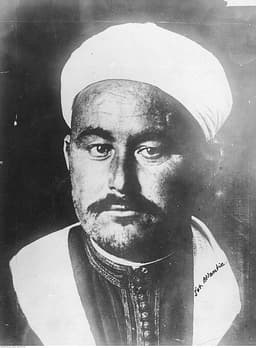
Abd el-Krim
Revolutionary · Modern
61.8Total
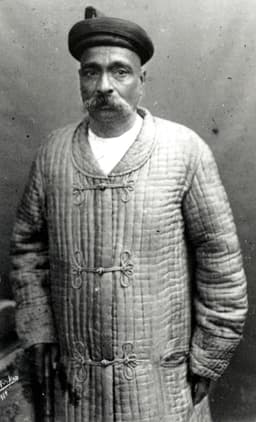
Bal Gangadhar Tilak
Revolutionary · Modern
52.9Total
Basic Information
Born
1882
1856
Died
1963
1920
Era
Modern
Modern
Nationality
Morocco
India
Occupation
Revolutionary
Revolutionary
Civilization
Middle Eastern
Indian
Score Comparison
Military (10%)
75.0
50.0
Political (20%)
72.0
48.0
Influence (20%)
59.0
58.3
Legacy (20%)
50.0
56.0
Leadership (15%)
72.0
50.7
Strategy (15%)
55.0
45.0
TOTAL
61.8
52.9
Abd el-Krim — Complete Timeline
1921 AD
Battle of AnnualWar
Abd el-Krim's Riffian forces decisively defeated a Spanish army at Annual in Spanish Morocco. The Spanish suffered thousands of casualties and lost vast amounts of equipment. This victory established Abd el-Krim as a major military leader and led to the proclamation of the Rif Republic.
Rif WarSpanish ColonialismBattle
Impact: regional
1923 AD
Proclamation of the Rif RepublicPolitical Action◆ Major
Abd el-Krim formally proclaimed the independent Rif Republic in northern Morocco. He established a government and administrative system, challenging Spanish and French colonial rule. The republic was not internationally recognized but functioned as a de facto state.
Rif RepublicIndependenceAnti-Colonialism
Impact: regionalconstructive
1925 AD
Rif War against FranceWar◆ Major
Abd el-Krim's forces attacked French positions in Morocco, expanding the conflict beyond Spanish territory. The French responded with a massive military campaign, using superior firepower and chemical weapons. This led to the eventual defeat of the Rif Republic.
Rif WarFrench ColonialismChemical Weapons
Impact: regional
1926 AD
Surrender and Exile to RéunionWar◆ Major
After a prolonged campaign, Abd el-Krim surrendered to French forces. He was exiled to the island of R
Rif WarExileDefeat
Impact: regionaltragic
1947 AD
Release and Move to EgyptPolitical Action
Abd el-Krim was released by the French and allowed to move to Egypt. He settled in Cairo, where he continued to advocate for North African independence and became a symbolic figure for anti-colonial movements.
ExileAnti-ColonialismSymbol
Impact: regionalconstructive
Bal Gangadhar Tilak — Complete Timeline
1881 AD
Launch of the Maratha and Kesari NewspapersCultural◆ Major
Tilak founded the Marathi-language newspaper 'Kesari' and the English-language 'Maratha' to spread nationalist ideas. These newspapers became influential platforms for criticizing British rule and mobilizing public opinion.
MediaNationalism
Impact: nationalconstructive
1897 AD
Imprisonment for SeditionPolitical Action◆ Major
Tilak was arrested and sentenced to 18 months imprisonment for sedition after publishing articles critical of British rule. His imprisonment increased his popularity and made him a martyr for the nationalist cause.
ImprisonmentSedition
Impact: national
1905 AD
Introduction of Swadeshi MovementPolitical Action◆ Major
Bal Gangadhar Tilak promoted the Swadeshi movement, advocating for the boycott of British goods and the use of Indian-made products. This movement gained widespread support and became a key part of the Indian independence struggle.
NationalismEconomic Boycott
Impact: nationalconstructive
1908 AD
Lucky Ali TrialPolitical Action◆ Major
Tilak was tried and sentenced to six years in Mandalay prison for sedition after defending the use of violence against British officials. His trial and imprisonment further galvanized the Indian independence movement.
TrialImprisonment
Impact: national
1916 AD
Formation of the Home Rule LeaguePolitical Action◆ Major
Tilak founded the Indian Home Rule League in 1916, demanding self-government for India within the British Empire. The movement gained mass support and pressured the British government to consider political reforms.
Political MovementSelf-Government
Impact: nationalconstructive
Expert Analysis
Abd el-Krim vs Bal Gangadhar Tilak
# The Revolutionary's Dilemma: Tilak and Abd el-Krim
In the summer of 1921, as Abd el-Krim's Riffian warriors swept through the Spanish lines at Annual, inflicting one of the most humiliating colonial defeats of the century, a frail sixty-five-year-old Bal Gangadhar Tilak sat in Bombay, watching his life's work transform before his eyes. Both men had dedicated themselves to freeing their people from European domination. Yet their paths could not have diverged more dramatically—one became the "father of Indian unrest" who never fired a shot, the other a guerrilla commander who built a republic from mountain strongholds. What made the difference?
Origins
Tilak was born in 1856 into a Chitpavan Brahmin family in Ratnagiri, a coastal town in western India. His father was a schoolteacher and government official, placing young Bal within the very system he would later seek to dismantle. Educated in English schools, he earned a law degree but found his true calling in journalism and public agitation. The India of his youth was a British empire at its zenith—the Raj seemed eternal, its power absolute.
Abd el-Krim, born twenty-six years later in 1882 in Ajdir, a village in the Rif Mountains of northern Morocco, came from a different world entirely. His father was a qadi, an Islamic judge, and the family belonged to the Ait Waryaghar tribe, the most powerful in the region. Young Muhammad (his full name) received both traditional Quranic education and Spanish schooling in Melilla, becoming a journalist and later a judge himself. The Morocco of his youth was a crumbling sultanate, prey to French and Spanish ambitions, its sovereignty a legal fiction.
The key difference lay in their relationship to empire. Tilak grew up within a functioning colonial administration that offered Indians careers, education, and limited participation. Abd el-Krim witnessed his homeland being carved up between two European powers, the Spanish in the north, the French everywhere else. One man saw reform as possible; the other saw only resistance.
Rise to Power
Tilak entered public life through the written word. In 1881, at age twenty-five, he launched two newspapers—*Kesari* in Marathi and *The Maratha* in English. This was his weapon: not rifles, but rhetoric. He transformed Indian nationalism from an elite drawing-room discussion into a mass movement by speaking the language of common Hindus, invoking the Bhagavad Gita and Shivaji's legacy. His imprisonment for sedition in 1897, when he was sentenced to eighteen months, turned him into a martyr. The British had given him exactly what he needed.
Abd el-Krim's rise was forged in war. After working as a journalist and judge in Spanish-controlled Melilla, he grew disillusioned with colonial corruption. When Spanish forces arrested him in 1917, he escaped and fled to the Rif Mountains, where his father had already begun organizing resistance. The Battle of Annual in 1921 changed everything. His forces, numbering perhaps 3,000 men, annihilated a Spanish army of over 20,000 under General Silvestre. Thousands of Spanish soldiers died; the survivors fled in panic. Abd el-Krim had not just won a battle—he had destroyed an army.
The difference in their paths is striking. Tilak's power came from the courtroom and the newspaper office; Abd el-Krim's from the battlefield. One was a lawyer who never led troops; the other a commander who never gave a speech to thousands.
Leadership & Governance
Tilak's genius was political, not military. He understood that India's diversity required a broad coalition. In 1905, he launched the Swadeshi movement, calling for the boycott of British goods and the revival of Indian industries. This was not mere protest—it was an economic strategy designed to weaken colonial control while building indigenous strength. He founded the Home Rule League in 1916, demanding self-government within the British Empire, a demand that seemed radical then but moderate in hindsight.
Abd el-Krim's leadership combined military brilliance with state-building. After Annual, he proclaimed the independent Rif Republic in 1923, establishing a government with ministries, a tax system, and even diplomatic missions. His strategy was innovative: he used captured Spanish weapons, employed German and Turkish advisors, and fought a modern war with tribal forces. When he attacked French positions in 1925, he nearly succeeded in driving both European powers from Morocco.
Yet each man's approach contained fatal flaws. Tilak's Hindu-centric nationalism alienated many Indian Muslims, a problem that would haunt the independence movement. Abd el-Krim's military victories depended on tribal loyalty that could not be sustained against industrial warfare.
Triumph & Tragedy
Tilak's greatest moment came in 1916 when he signed the Lucknow Pact with the Muslim League, uniting India's two major political forces. He had spent decades in prison, faced exile, and watched younger leaders like Gandhi rise. Yet he remained relevant, a bridge between moderates and extremists. His tragedy was that he died in 1920, just as Gandhi's non-cooperation movement was taking off. He never saw independence.
Abd el-Krim's triumph was the Rif Republic itself—a sovereign state carved from colonial territory, recognized by no one but defended by thousands. His tragedy came in 1926, when the French and Spanish combined forces, using poison gas and overwhelming numbers. He surrendered and was exiled to Réunion, a remote island in the Indian Ocean, where he would spend twenty-one years.
Character & Destiny
Tilak was a man of words and ideas, comfortable in courts and council chambers. His famous declaration—"Swaraj is my birthright, and I shall have it"—captured his method: persistent, legalistic, unyielding. He believed in education, journalism, and political organization as the tools of liberation.
Abd el-Krim was a man of action and mountains, comfortable with rifles and tribal councils. When asked why he fought, he reportedly said: "We are not fighting for glory or conquest. We are fighting for our freedom." He believed in force, strategy, and the power of a determined people.
Their destinies reflected their characters. Tilak died in Bombay, surrounded by admirers, his cause advancing. Abd el-Krim died in Cairo in 1963, still in exile, still advocating for North African independence. One saw victory from afar; the other never returned home.
Legacy
Tilak is remembered as the father of Indian nationalism, the man who made independence thinkable. His newspapers, his slogans, his sacrifices—all fed into the movement that Gandhi would lead to victory. Today, his image appears on Indian stamps and currency, a founder of the nation.
Abd el-Krim's legacy is more complicated. He is a hero to the Riffian people and an inspiration to anti-colonial movements across Africa and the Arab world. Yet his republic was destroyed, his people defeated. He remains a symbol of resistance rather than victory, a reminder that courage does not always triumph over power.
Conclusion
The difference between Tilak and Abd el-Krim is not one of courage or commitment. Both men gave everything for their peoples. The difference lies in the nature of their enemies and the resources of their societies. Tilak faced a British empire that could be negotiated with, a diverse subcontinent that required political consensus. Abd el-Krim faced a Spanish and French empire that would not negotiate, a tribal society that could not sustain industrial war.
One man changed minds; the other changed battlefields. Both changed history. Their stories remind us that revolution has many faces—the journalist in his study, the commander on his horse—and that each path exacts its own price. Tilak's path led to a free India. Abd el-Krim's led to exile. Yet who is to say which man was more successful? The question haunts us still.
Rankings
🥇
Abd el-KrimLeader
Mil: 75.0Pol: 72.0Inf: 59.0
61.8
🥈
Bal Gangadhar Tilak
Mil: 50.0Pol: 48.0Inf: 58.3
52.9
+8.9 behind
How This Comparison Works
Algorithm
Each figure is scored on 6 dimensions (0—100 scale) based on structured historical data: Military (10%), Political (20%), Influence (20%), Legacy (20%), Leadership (15%), Strategy (15%). The weighted total produces the final ranking.
Data Sources
Scores are computed from structured sub-indicators in the database. Scale factors adjust for era (Ancient ×0.85, Modern ×1.0) and civilization size (Eastern ×1.05, Other ×0.80) to account for differences in population and military scale.
Maximum 3 Figures
Comparisons are limited to 2—3 figures to ensure readability and statistical meaningfulness.
Error Margins
±5 points per dimension — Sub-scores are derived from historical records with inherent uncertainty. Two figures within 5 points on a dimension should be considered roughly equivalent in that area.
Total Score Accuracy
±3 points overall — The weighted combination of 6 dimensions produces a total score with approximately ±3 points of uncertainty. Differences of less than 3 points are not statistically significant— the figures are effectively tied.
Known Limitations
- Historical records are incomplete and uneven across civilizations
- Figures from oral-tradition societies may be underrepresented
- Occupation labels can misclassify multi-role figures
- Scores measure capability and impact, not moral character
- Quantitative scoring is a comparison tool, not absolute truth
Capability Radar
Military (10%) — Battles & Warfare
Battles
75
23
Win Rate
70
30
Expansion
60
30
Political (20%) — Governance & Reform
Reform
70
70
Diplomacy
65
60
Economy
50
20
Influence (20%) — Cultural & Global Reach
Cultural
60
65
Global
55
55
Legacy (20%) — Historical Impact
Historical
70
70
Longevity
55
60
Leadership (15%) — Power & Stability
Tenure
55
30
Stability
45
40
Strategy (15%) — Tactics & Innovation
Strategy
80
37
Tactics
85
39
Reform
65
43
Similar Comparisons
Comments & Discussion
Bombay Bomber6/16/2026
Tilak was the real revolutionary here. A brilliant lawyer-journalist who weaponized Ganesh Chaturthi festival to unite Hindus against British rule. His "Swaraj is my birthright" wasn't rhetoric—it kicked off the 1905 Partition movement. Abd el-Krim just shot Spanish conscripts who couldn't even handle mountain warfare. Give me political subversion over tribal skirmishes any day.
Rif Rifleman6/16/2026
Annual was no skirmish—I'd bet my life that 1921 defeat compares to Isandlwana in scale but nobody wants to admit it. 13,000 Spanish soldiers wiped out, General Silvestre's corpse never found. That's not "tribal skirmish" material; that's total collapse of a European colonial army. Meanwhile, Tilak's "non-violent agitation" got him deported to Mandalay for sedition. Real revolutionaries don't write editorials—they build republics from mountain fortresses. Check the timeline: Rif Republic existed
数据掘墓人6/16/2026
数据不会骗人。Abd el-Krim控制了3000平方公里山区,2万游击队对抗20万法西联军,现代史称"北非游击战之父"。而Tilak搞了三十年"群众运动",孟买总督1908年一纸命令就送他去缅甸蹲监狱。后者连个临时政府都没建立过,前者真搞过Rif Republic。比较"革命者"要看战果,不是看谁更早上报纸头条。
戈勒卡布尔老学究6/16/2026
都别激动。把Chitpavan婆罗门律师和新婚第二天就去打圣战的卡迪之子放一起,这是把泰姬陵和沙姆的土城墙对比。Tilak读的是Anglo-Indian法律,在英国法庭上争取言论自由;埃尔-克里姆在梅利利亚西语学校学过考迪罗主义。两人路线分岔早在1895年就定了:一个在印度国民议会讲公民抗命,一个在Barranco del Lobo设伏击杀西班牙士兵。环境决定战术,无高下之分。
殖民创伤解码人6/16/2026
最尴尬的是你们回避本质:两者结局。Tilak1920年善终在孟买豪宅,八万人送葬;Abd el-Krim1926年被法军围剿后流放留尼汪岛47年。谁能说清"革命成功"的标准?前者死了印度才独立,后者活着亲历失败。别拿"游击战天才"吹,西班牙和美国当初都保证过不入侵Rif山区,转眼就联合法国把他踩平。殖民主义最大的本事不是打仗,是让你们这些后代非要分出谁更"革命"。