Loading...
Bal Gangadhar Tilak vs Giuseppe Mazzini
Bal Gangadhar Tilak leads by 2.2 pts · 2 figures compared
…
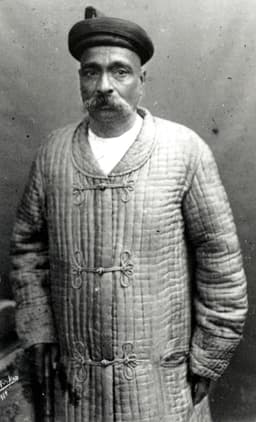
Bal Gangadhar Tilak
Revolutionary · Modern
52.9Total
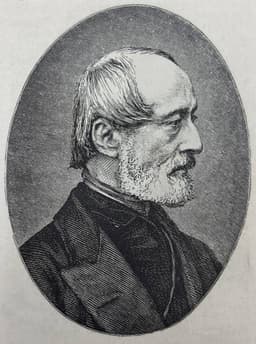
Giuseppe Mazzini
Revolutionary · Modern
50.7Total
Basic Information
Born
1856
1805
Died
1920
1872
Era
Modern
Modern
Nationality
India
Italy
Occupation
Revolutionary
Revolutionary
Civilization
Indian
Western
Score Comparison
Military (10%)
50.0
39.9
Political (20%)
48.0
40.8
Influence (20%)
58.3
60.0
Legacy (20%)
56.0
56.0
Leadership (15%)
50.7
40.9
Strategy (15%)
45.0
54.3
TOTAL
52.9
50.7
Bal Gangadhar Tilak — Complete Timeline
1881 AD
Launch of the Maratha and Kesari NewspapersCultural◆ Major
Tilak founded the Marathi-language newspaper 'Kesari' and the English-language 'Maratha' to spread nationalist ideas. These newspapers became influential platforms for criticizing British rule and mobilizing public opinion.
MediaNationalism
Impact: nationalconstructive
1897 AD
Imprisonment for SeditionPolitical Action◆ Major
Tilak was arrested and sentenced to 18 months imprisonment for sedition after publishing articles critical of British rule. His imprisonment increased his popularity and made him a martyr for the nationalist cause.
ImprisonmentSedition
Impact: national
1905 AD
Introduction of Swadeshi MovementPolitical Action◆ Major
Bal Gangadhar Tilak promoted the Swadeshi movement, advocating for the boycott of British goods and the use of Indian-made products. This movement gained widespread support and became a key part of the Indian independence struggle.
NationalismEconomic Boycott
Impact: nationalconstructive
1908 AD
Lucky Ali TrialPolitical Action◆ Major
Tilak was tried and sentenced to six years in Mandalay prison for sedition after defending the use of violence against British officials. His trial and imprisonment further galvanized the Indian independence movement.
TrialImprisonment
Impact: national
1916 AD
Formation of the Home Rule LeaguePolitical Action◆ Major
Tilak founded the Indian Home Rule League in 1916, demanding self-government for India within the British Empire. The movement gained mass support and pressured the British government to consider political reforms.
Political MovementSelf-Government
Impact: nationalconstructive
Giuseppe Mazzini — Complete Timeline
1831 AD
Founding of Young ItalyPolitical Action◆ Major
Mazzini founded the secret society Young Italy (Giovine Italia) in Marseille. The organization aimed to achieve Italian unification through popular insurrection and republican government. It recruited thousands of members and inspired uprisings in the 1830s and 1840s.
UnificationRepublicanismSecret Society
Impact: regionalconstructive
1834 AD
Mazzini's Insurrection in SavoyPolitical Action
Mazzini organized an armed invasion of Savoy from Switzerland, intending to spark a republican revolution. The attempt failed due to poor coordination and betrayal, forcing Mazzini into exile. He was sentenced to death in absentia by Piedmontese authorities.
InsurrectionFailureExile
destructive
1849 AD
Roman Republic of 1849Political Action◆ Major
Mazzini became one of the triumvirs governing the short-lived Roman Republic after the pope fled. He implemented progressive reforms including universal male suffrage and freedom of the press. The republic was crushed by French troops in July 1849, and Mazzini returned to exile.
RepublicRevolutionPapal States
Impact: regionalconstructive
1857 AD
Expedition of the SapriPolitical Action
Mazzini organized an ill-fated expedition led by Carlo Pisacane to spark a revolt in the Kingdom of the Two Sicilies. The rebels were quickly defeated and killed by local peasants and Bourbon troops. The failure discredited Mazzini's insurrectionary strategy.
InsurrectionFailureSouthern Italy
tragic
Expert Analysis
Bal Gangadhar Tilak vs Giuseppe Mazzini
# The Prophet and the Agitator: Mazzini and Tilak Compared
In the summer of 1908, a sixty-two-year-old Indian lawyer stood before a British judge in Bombay, his voice steady as he quoted the Bhagavad Gita in his own defense. Half a world away and nearly sixty years earlier, a gaunt Italian exile in a London garret had written to a young admirer: “Ideas ripen quickly when watered by the blood of martyrs.” Bal Gangadhar Tilak and Giuseppe Mazzini never met, yet their lives traced eerily parallel arcs across two continents. Both were revolutionaries who never fired a gun, men who moved nations with words alone, and both tasted the bitter fruit of prison before their visions were vindicated. But why did one become the “Father of Indian Unrest” while the other became the “Heart of Italian Unification”? The answer lies not in their similarities, but in the chasm between the empires they opposed.
Origins
Tilak was born in 1856 in Ratnagiri, a coastal town in western India, into a Chitpavan Brahmin family—a caste that had long supplied administrators to the Maratha Empire. His father was a schoolteacher and minor government official, and young Bal Gangadhar grew up fluent in Sanskrit and English, steeped in both the Vedas and the works of John Stuart Mill. By contrast, Mazzini, born in 1805 in Genoa, was the son of a university professor and a woman of Jacobin sympathies. Napoleon’s armies had swept through Italy in his childhood, toppling old monarchies and planting seeds of national unity that the Congress of Vienna would later crush. Tilak came of age under the relative stability of the British Raj; Mazzini grew up in the chaos of a “geographical expression”—Italy fragmented into a patchwork of Austrian-controlled states, papal territories, and petty kingdoms.
Rise to Power
Both men entered the historical stage through the printed word. In 1881, Tilak launched two newspapers: the Marathi-language *Kesari* (Lion) and the English-language *Maratha*. He used them not merely to report news but to forge a new political consciousness. Tilak wrote in the vernacular, reaching millions who had never read an English newspaper. Mazzini, in exile in Marseille in 1831, founded the secret society Young Italy (*Giovine Italia*) and smuggled pamphlets into the peninsula. But here a crucial divergence appears: Mazzini operated in the shadows, writing manifestos by candlelight and dodging police spies across Europe. Tilak, though often at odds with the British, could legally publish his newspaper—until he pushed too far. In 1897, he was arrested for sedition after articles implying that the British had sanctioned the plague measures that killed thousands. He served eighteen months, emerging as a martyr.
Leadership & Governance
Tilak’s leadership style was confrontational and populist. He transformed the annual Ganesh festival from a private family ritual into a public political rally, and he resurrected Shivaji, the seventeenth-century Maratha warrior-king, as a symbol of Hindu resistance. His 1905 Swadeshi movement—boycotting British cloth and salt and promoting Indian-made goods—was a stroke of political genius that mobilized the masses without requiring arms. Yet Tilak never governed; his ambition was to force the British out, not to administer a state. Mazzini, by contrast, tasted governance briefly but gloriously. In 1849, after the pope fled Rome, Mazzini became one of three triumvirs ruling the Roman Republic. For five months, he implemented progressive reforms: freedom of the press, abolition of ecclesiastical courts, and universal male suffrage. The republic fell to French troops, but Mazzini had shown what Italy could become.
Triumph & Tragedy
Tilak’s greatest moment came in 1916 when he founded the Indian Home Rule League, demanding self-government within the British Empire. He was now a statesman, not just an agitator, and his movement paved the way for Gandhi. His greatest tragedy was his 1908 trial for sedition, the so-called “Lucky Ali Trial,” where he defended the use of violence against British officials. He was sentenced to six years in Mandalay prison in Burma—a harsh exile that broke his health but never his spirit. Mazzini’s triumph was the Roman Republic itself, a brief glimpse of the unified Italy he dreamed of. His tragedy was the failure of nearly every insurrection he organized: the 1834 Savoy invasion collapsed before it began, and the 1857 Sapri expedition ended with its leader shot dead by peasants who mistook him for a brigand. Mazzini died in 1872 in Pisa, still an exile in his own land, as the monarchy he despised unified Italy without him.
Character & Destiny
Tilak was pragmatic where Mazzini was dogmatic. Mazzini refused to compromise with monarchs or the Church, insisting that a united Italy must be a republic. Tilak, though a Hindu traditionalist, allied with the Muslim League in 1916 and accepted dominion status, not full independence. Mazzini’s rigidity made him a prophet but a poor politician; Tilak’s flexibility made him a master strategist. Both men were imprisoned, but their prisons shaped them differently. Mazzini wrote his finest works in exile, his ideas purified by suffering. Tilak wrote the *Gita Rahasya* in Mandalay jail, a commentary on the Bhagavad Gita that argued for righteous action—even violent action—in the service of duty. Their personalities mirrored their civilizations: Mazzini the Catholic heretic, Tilak the Brahmin reformer.
Legacy
Today, Mazzini is remembered as a founding father of Italian unification, his face on the old lira coin, his name on countless streets. Yet his republicanism was buried under the Savoy monarchy, and his radicalism tamed by the very nation-state he helped create. Tilak’s legacy is more contested. He is honored as “Lokmanya” (Revered by the People) and credited with awakening Indian nationalism, but his use of Hindu symbolism and his defense of the caste system have made him a controversial figure in modern India. The British called him “the father of Indian unrest,” and he accepted the title with pride.
Conclusion
What separates these two revolutionaries is ultimately not their methods but their enemies. Mazzini fought a collection of weak, foreign-dominated states; he could dream of a unified republic because the pieces were already there, waiting for a spark. Tilak fought the British Empire, the most powerful political machine the world had ever seen; he could only agitate, organize, and wait. Mazzini’s Italy was born in 1861, eleven years before his death. Tilak’s India was born in 1947, twenty-seven years after his. One saw his dream realized; the other prepared the ground for a harvest he would never taste. Both understood a truth that every revolutionary must learn: the man who lights the fuse rarely lives to see the explosion.
Rankings
🥇
Bal Gangadhar TilakLeader
Mil: 50.0Pol: 48.0Inf: 58.3
52.9
🥈
Giuseppe Mazzini
Mil: 39.9Pol: 40.8Inf: 60.0
50.7
+2.2 behind
How This Comparison Works
Algorithm
Each figure is scored on 6 dimensions (0—100 scale) based on structured historical data: Military (10%), Political (20%), Influence (20%), Legacy (20%), Leadership (15%), Strategy (15%). The weighted total produces the final ranking.
Data Sources
Scores are computed from structured sub-indicators in the database. Scale factors adjust for era (Ancient ×0.85, Modern ×1.0) and civilization size (Eastern ×1.05, Other ×0.80) to account for differences in population and military scale.
Maximum 3 Figures
Comparisons are limited to 2—3 figures to ensure readability and statistical meaningfulness.
Error Margins
±5 points per dimension — Sub-scores are derived from historical records with inherent uncertainty. Two figures within 5 points on a dimension should be considered roughly equivalent in that area.
Total Score Accuracy
±3 points overall — The weighted combination of 6 dimensions produces a total score with approximately ±3 points of uncertainty. Differences of less than 3 points are not statistically significant— the figures are effectively tied.
Known Limitations
- Historical records are incomplete and uneven across civilizations
- Figures from oral-tradition societies may be underrepresented
- Occupation labels can misclassify multi-role figures
- Scores measure capability and impact, not moral character
- Quantitative scoring is a comparison tool, not absolute truth
Capability Radar
Military (10%) — Battles & Warfare
Battles
23
5
Win Rate
30
5
Expansion
30
5
Political (20%) — Governance & Reform
Reform
70
60
Diplomacy
60
55
Economy
20
10
Influence (20%) — Cultural & Global Reach
Cultural
65
65
Global
55
55
Legacy (20%) — Historical Impact
Historical
70
70
Longevity
60
60
Leadership (15%) — Power & Stability
Tenure
30
20
Stability
40
10
Strategy (15%) — Tactics & Innovation
Strategy
37
10
Tactics
39
5
Reform
43
15
Similar Comparisons
Comments & Discussion
Lion of Lokmanya6/16/2026
As a military historian, I see Mazzini as a tactical paper tiger and Tilak as a strategic heavyweight. Mazzini’s Young Italy got crushed in 1834—his uprisings were romantic but amateurish. Tilak, by contrast, militarized the Maratha legacy through the Ganpati festivals, training a generation in covert coordination while the Raj slept. One wrote manifestos; the other turned religion into a battlefield command center. That’s the difference between a poet and a general.
墨守成规的考据派6/16/2026
从数据看,Mazzini流亡英国时靠写小册子维生,月收入不到10英镑,而Tilak在《 Kesari》巅峰期日销量超过两万份。文字的力量不该只看煽情程度,得算实际影响力。Tilak用印刷机把反殖民思想塞进每个乡镇茶馆,Mazzini却只在伦敦的阁楼里跟几个大学生空谈。前者是数据上的胜者,后者只是个被夸大的符号。
Classicism’s Last Vanguard6/16/2026
Tilak understood that revolution needs ritual. When he invoked the Gita in court, he was channeling a civilization—not just a political movement. Mazzini, for all his genius, crafted a “God” from abstract duty and civic religion, a Voltairian mirage. Tilak knew the people wouldn’t die for an idea, but they’d die for Krishna’s call to dharma. One built on two millennia of living culture; the other on half-baked Enlightenment leftovers.
铁幕下的谐星6/16/2026
别把Tilak吹成圣人。他反对1909年的摩莱-明托改革,只因为穆斯林得到了单独选区,妥妥的教派主义双标。Mazzini虽然也排斥天主教,但起码想搞“意大利人的意大利”,而不是“马拉地婆罗门的印度”。Tilak口喊“自治”,实际在1906年国大党上排挤了所有穆斯林领袖。这俩人都是英雄,但Tilak是本色出演的宗派大佬,Mazzini是戴着世俗面具的老狐狸。
Postcolonial Dissector6/16/2026
The real tragedy? Mazzini’s Italy became a fascist state fifty years later, while Tilak’s swaraj dream birthed a partitioned subcontinent. Both men lit fires they couldn’t control. Tilak’s revivalist Hindu nationalism fed the same currents that drowned Gandhi’s pluralism, and Mazzini’s “nation-state” ideal spawned Mussolini. They’re not fathers of freedom—they’re godfathers of modern ethnonationalism. History’s irony is that their biggest success was inspiring the very monsters that devoured the