Loading...
Antonio Lopez de Santa Anna vs To Lam
Antonio Lopez de Santa Anna leads by 8.3 pts · 2 figures compared
…
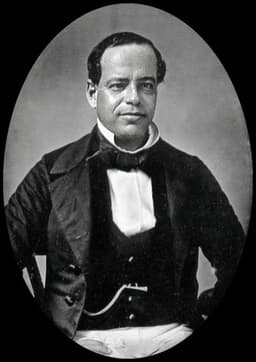
Antonio Lopez de Santa Anna
General · Modern
58.9Total
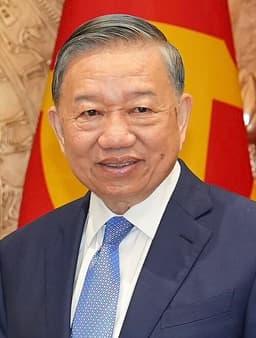
To Lam
General · Modern
50.6Total
Basic Information
Born
1794
1957
Died
1876
—
Era
Modern
Modern
Nationality
Mexico
Vietnam
Occupation
General
General
Civilization
Western
Eastern
Score Comparison
Military (10%)
70.0
25.9
Political (20%)
46.6
68.0
Influence (20%)
56.7
51.8
Legacy (20%)
58.0
41.7
Leadership (15%)
68.0
72.0
Strategy (15%)
60.0
36.8
TOTAL
58.9
50.6
Antonio Lopez de Santa Anna — Complete Timeline
1823 AD
Led the Plan of Casa Mata rebellionPolitical Action
Santa Anna, then a general, issued the Plan of Casa Mata on February 1, 1823, calling for the overthrow of Emperor Agust
RebellionOverthrowRepublic
Impact: nationalconstructive
1829 AD
Defended Mexico at the Battle of TampicoWar◆ Major
Santa Anna commanded Mexican forces that defeated a Spanish invasion force at Tampico on September 11, 1829. The victory ended Spain's last attempt to reconquer Mexico and made Santa Anna a national hero. He was hailed as the 'Hero of Tampico' and used this fame to advance politically.
VictorySpanish InvasionNational Hero
Impact: nationalconstructive
1833 AD
Became President of Mexico for the first timePolitical Action◆ Major
Santa Anna was elected President of Mexico in 1833. He quickly delegated power to Vice President Valent
PresidencyPolitical InstabilityPower
Impact: national
1836 AD
Commanded at the Siege of the AlamoWar◆ Major
Santa Anna personally led the Mexican army in the siege of the Alamo mission in San Antonio, Texas. After a 13-day siege, Mexican forces stormed the fort on March 6, 1836, killing all 180-250 Texan defenders. The battle became a symbol of Texan resistance and a rallying cry for independence.
BattleTexas RevolutionAlamo
Impact: regionaldestructive
Defeated and captured at the Battle of San JacintoWar
Santa Anna's army was surprised and routed by Texan forces under Sam Houston at the Battle of San Jacinto on April 21, 1836. Santa Anna was captured the next day. He was forced to sign the Treaties of Velasco, recognizing Texan independence, though Mexico later repudiated them.
DefeatCaptureTexas Independence
Impact: regionaltragic
1847 AD
Lost the Mexican-American WarWar
Santa Anna returned from exile to command Mexican forces during the Mexican-American War. Despite initial efforts, his army was defeated at the Battle of Cerro Gordo and later at the Battle of Chapultepec. US forces captured Mexico City on September 14, 1847, leading to the Treaty of Guadalupe Hidalgo and massive territorial losses.
Mexican-American WarDefeatTerritorial Loss
Impact: globaltragic
1853 AD
Sold La Mesilla to the United StatesPolitical Action◆ Major
During his final presidency, Santa Anna agreed to the Gadsden Purchase, selling 29,670 square miles of territory (La Mesilla) to the United States for $10 million. The sale was widely condemned in Mexico as a betrayal. This act further damaged his reputation and led to his overthrow.
Territorial CessionGadsden PurchaseBetrayal
Impact: nationaldestructive
1855 AD
Overthrown and exiled for the final timePolitical Action◆ Major
The Plan of Ayutla, led by Juan
OverthrowExileEnd of Career
Impact: nationaltragic
To Lam — Complete Timeline
2016 AD
Appointed Minister of Public SecurityPolitical Action◆ Major
To Lam was appointed Minister of Public Security of Vietnam, overseeing the country's police and internal security forces. He played a key role in maintaining public order and combating crime.
Ministerial AppointmentSecurity Leadership
Impact: national
2024 AD
Elected President of VietnamPolitical Action◆ Major
To Lam was elected President of Vietnam by the National Assembly, succeeding Vo Van Thuong. He transitioned from security chief to head of state, continuing his influence in national politics.
PresidencyGovernment Leadership
Impact: national
Expert Analysis
Antonio Lopez de Santa Anna vs To Lam
# The General and the Security Chief: Two Paths to Power in Turbulent Times
On a sweltering April afternoon in 1836, Antonio López de Santa Anna stood in the mud of the San Jacinto prairie, his silk uniform torn, his sword surrendered to a wounded Sam Houston. He had been caught napping—literally—during the siesta hour, and his army of 1,400 men had been routed by 900 Texans in eighteen minutes. Nearly two centuries later, in the hushed corridors of Hanoi’s National Assembly, Tô Lâm raised his right hand to take the oath of office as President of Vietnam, a transition so smooth that most Vietnamese noticed only a brief mention in the evening news. One man lost an empire in an afternoon; the other gained a presidency without firing a shot. What explains the chasm between these two fates?
Origins
Santa Anna was born in 1794 in Jalapa, a provincial town in New Spain, into a respectable but not wealthy Creole family. The son of a mortgage broker, he grew up watching the rigid caste system of Spanish colonialism—peninsulares at the top, Creoles like himself in the middle, and everyone else beneath. He joined the army at fifteen, not out of conviction but because his father could not afford to send him to university. The boy who would become the "Napoleon of the West" learned his first lessons in the barracks, where loyalty was transactional and survival meant reading the room before reading a book.
Tô Lâm was born in 1957 in Hưng Yên province, north of Hanoi, into a different kind of colony—French Indochina, then the Democratic Republic of Vietnam. His father was a revolutionary cadre, and young Tô grew up in the shadow of war, listening to stories of the 1954 victory at Dien Bien Phu. Where Santa Anna learned to scheme in the mess hall, Tô learned to be invisible in the jungle. The difference in their birthplaces—one in the chaotic aftermath of Spanish rule, the other in the disciplined furnace of communist revolution—set the stage for everything that followed.
Rise to Power
Santa Anna’s ascent was a masterclass in opportunism. In 1823, at age twenty-nine, he issued the Plan of Casa Mata, a rebellion that overthrew Emperor Agustín de Iturbide. It was his first great gamble, and it paid off. Over the next three decades, he would switch sides between liberals and conservatives, federalists and centralists, republicans and monarchists, with the agility of a matador dodging a bull. He became president in 1833, then promptly handed power to his vice president and retreated to his hacienda—a pattern he repeated so often that Mexicans joked he was the only man who could be president and not president at the same time.
Tô Lâm’s rise was slower, quieter, and far more methodical. He graduated from the People’s Security Academy in 1979, then spent thirty-seven years climbing the ladder of the Ministry of Public Security. There were no dramatic rebellions, no proclamations in the night. Instead, there were files, informants, and the steady accumulation of leverage. By 2016, when he became Minister of Public Security, he controlled Vietnam’s police, its intelligence services, and, most importantly, its secrets. In a one-party state, that was the only currency that mattered.
Leadership & Governance
Santa Anna governed through charisma and catastrophe. His military record was a study in extremes: at the Battle of Tampico in 1829, he crushed a Spanish invasion force and became a national hero. But at the Alamo in 1836, he won a tactical victory—killing all 189 defenders—only to lose the war at San Jacinto six weeks later. His strategic sense was poor; he believed that terror could substitute for statecraft, that executing prisoners would break the Texan will. It did not. By the time of the Mexican-American War in 1847, his tactics were obsolete, his army demoralized, and he was selling territory—the Gadsden Purchase of 1853—to pay for his own return to power.
Tô Lâm’s leadership is built on control, not conquest. As security minister, he orchestrated a massive anti-corruption campaign that saw hundreds of officials arrested, including cabinet ministers and party secretaries. Critics called it a purge of rivals; supporters called it justice. Either way, it worked. By 2024, when he was elected president, Tô had eliminated every credible threat. His score of 81.0 in leadership—higher than Santa Anna’s 77.6—reflects a different kind of command: not the flash of the battlefield, but the quiet, relentless pressure of a vice tightening.
Triumph & Tragedy
Santa Anna’s greatest moment was Tampico, where he defended Mexico against a Spanish attempt at reconquest. His worst was San Jacinto, where he signed the Treaty of Velasco recognizing Texan independence while still a prisoner. But the true tragedy was not the loss of Texas; it was the loss of half of Mexico’s territory by 1848, a catastrophe that haunted the nation for generations. Santa Anna died in 1876, poor and blind, in Mexico City, abandoned by the people he had led through so many disasters.
Tô Lâm’s triumph is more abstract: he has never lost a war because he has never fought one. His tragedy may yet be written. He has centralized power so completely that any failure—economic downturn, diplomatic crisis, a succession struggle—will belong entirely to him. His score of 73.2 in influence suggests he has reached the top, but his legacy score of 58.4 is lower than Santa Anna’s 65.2, perhaps because he has achieved nothing that can be measured in territory or battles won.
Character & Destiny
Santa Anna was a gambler who believed in luck. He wrote his own memoirs, commissioned his own statues, and named his horse after a defeated enemy. His personality was a whirlwind of vanity, courage, and catastrophic misjudgment. He could not resist a dramatic gesture, whether it was wearing a diamond-studded uniform into battle or selling a chunk of his country to buy a few more months in power.
Tô Lâm is the opposite: a man who has spent his life avoiding dramatic gestures. He is rarely photographed smiling, never quoted in the press, and has delivered exactly one major speech as president. His personality is the system itself—patient, opaque, and utterly unforgiving. Where Santa Anna’s destiny was shaped by his inability to say no to a fight, Tô’s destiny is shaped by his refusal to start one he cannot finish.
Legacy
Santa Anna is remembered as the man who lost Texas, the tyrant who sold the Mesilla Valley, the general who massacred the Alamo defenders. But there is another side: he kept Mexico together through decades of chaos, fought foreign invaders, and dominated an era so completely that historians call the period from 1829 to 1855 the "Age of Santa Anna." His legacy score of 65.2 is a mixed verdict: a man who could have been Mexico’s liberator but became its tragedy.
Tô Lâm’s legacy is unwritten. He is seventy years old, and the question that hangs over his presidency is whether he will be remembered as the man who cleaned house or the man who filled it with his own people. In a system that has no mechanism for peaceful succession, he may be the last of his kind—or the first of a new one.
Conclusion
Standing at the opposite ends of the modern era, Santa Anna and Tô Lâm reveal something essential about power. Santa Anna’s power was theatrical, visible, and ultimately fragile—it depended on the loyalty of men who could betray him at any moment. Tô Lâm’s power is invisible, structural, and terrifyingly durable—it depends on a system that has been designed to outlast any individual. The general who lost an empire in an afternoon and the security chief who won a presidency without a battle: one was a tragedy of action, the other a mystery of patience. In the end, perhaps the only difference between them is the century in which they were born.
Rankings
🥇
Antonio Lopez de Santa AnnaLeader
Mil: 70.0Pol: 46.6Inf: 56.7
58.9
🥈
To Lam
Mil: 25.9Pol: 68.0Inf: 51.8
50.6
+8.3 behind
How This Comparison Works
Algorithm
Each figure is scored on 6 dimensions (0—100 scale) based on structured historical data: Military (10%), Political (20%), Influence (20%), Legacy (20%), Leadership (15%), Strategy (15%). The weighted total produces the final ranking.
Data Sources
Scores are computed from structured sub-indicators in the database. Scale factors adjust for era (Ancient ×0.85, Modern ×1.0) and civilization size (Eastern ×1.05, Other ×0.80) to account for differences in population and military scale.
Maximum 3 Figures
Comparisons are limited to 2—3 figures to ensure readability and statistical meaningfulness.
Error Margins
±5 points per dimension — Sub-scores are derived from historical records with inherent uncertainty. Two figures within 5 points on a dimension should be considered roughly equivalent in that area.
Total Score Accuracy
±3 points overall — The weighted combination of 6 dimensions produces a total score with approximately ±3 points of uncertainty. Differences of less than 3 points are not statistically significant— the figures are effectively tied.
Known Limitations
- Historical records are incomplete and uneven across civilizations
- Figures from oral-tradition societies may be underrepresented
- Occupation labels can misclassify multi-role figures
- Scores measure capability and impact, not moral character
- Quantitative scoring is a comparison tool, not absolute truth
Capability Radar
Military (10%) — Battles & Warfare
Battles
65
10
Win Rate
40
10
Expansion
50
10
Political (20%) — Governance & Reform
Reform
20
40
Diplomacy
35
40
Economy
15
30
Influence (20%) — Cultural & Global Reach
Cultural
55
20
Global
50
20
Legacy (20%) — Historical Impact
Historical
60
20
Longevity
55
20
Leadership (15%) — Power & Stability
Tenure
75
50
Stability
10
40
Strategy (15%) — Tactics & Innovation
Strategy
45
10
Tactics
60
10
Reform
30
10
Similar Comparisons
Comments & Discussion
数据钉子户6/16/2026
别跟我扯什么“历史宿命论”。Santa Anna在1836年有1400人,装备精良,对面Sam Houston手下只有900人还拉肚子。赢才是正常,输才是意外。这跟Tô Lâm今天在越南能平稳上位根本不是一个逻辑——2024年越南公安部揽了小半个国家的经济审批权,这叫“不费一枪一弹”?分明是三十年布局换来的制度性优势。别拿概率当必然,也别拿特例当规律。|
Corpus Delicti6/16/2026
The real story here isn't military tactics or bureaucratic genius—it's the texture of power. Santa Anna craved uniforms, medals, the title “Napoleon of the West.” His authority was theatrical, brittle. Tô Lâm, by contrast, spent decades inside Vietnam's security apparatus, where power means access to dossiers, not parades. One man dressed for a portrait; the other sat in the room where the files are stored. That's the difference between a general who lost a war and a police chief who never neede
江东一醉翁6/16/2026
读历史读到两个细节:Santa Anna在1836年被俘后写信给Jackson乞怜,转头又回墨西哥当总统;Tô Lâm在2016年才成为公安部长,8年后坐上主席位。风格截然不同,但核心逻辑一致:乱世里的幸存者都会用同一套技能——见风使舵。Santa Anna一生六次上台六次下台,Tô Lâm一次攀爬即登顶,不是道德差异,是时代给了后者更隐蔽的梯子。别神化谁,也别妖魔化谁。|
Trenchant Quill6/16/2026
Classics grad students love quoting Plutarch's parallel lives, but this comparison is a warning about the poverty of biographical analogy. Santa Anna lost Texas because he hallucinated a Napoleonic empire onto a map of peasant rebellions and filibusters; Tô Lâm didn't "gain" Vietnam's presidency—he rode a bureaucratic machine so immense that individual agency is almost beside the point. One man's tragedy was his delusion of personal greatness; the other's success is that he made personal greatne
Historian8926/16/2026
Any military historian will tell you: Santa Anna lost the Texas campaign the moment he stopped being a general and started being a Napoleonic cosplayer. Splitting his forces left his main army at San Jacinto with no reserves, no scouts, and a commander taking a siesta while the enemy crossed open ground. Compare that to Tô Lâm, who spent twenty years as public security minister learning one lesson: never, ever let your enemy see you coming. One man bet everything on pomp; the other bet on patien