Loading...
Antonio Lopez de Santa Anna vs Muhammadu Buhari
Antonio Lopez de Santa Anna leads by 7.4 pts · 2 figures compared
…
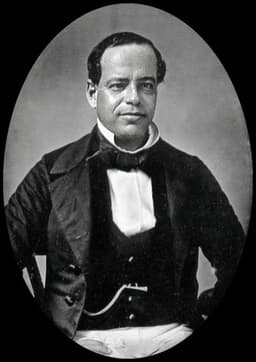
Antonio Lopez de Santa Anna
General · Modern
58.9Total
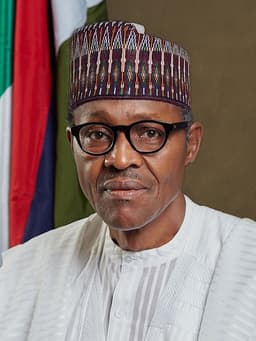
Muhammadu Buhari
General · Modern
51.5Total
Basic Information
Born
1794
1942
Died
1876
—
Era
Modern
Modern
Nationality
Mexico
Nigeria
Occupation
General
General
Civilization
Western
Other
Score Comparison
Military (10%)
70.0
22.6
Political (20%)
46.6
68.0
Influence (20%)
56.7
53.3
Legacy (20%)
58.0
43.3
Leadership (15%)
68.0
72.0
Strategy (15%)
60.0
41.0
TOTAL
58.9
51.5
Antonio Lopez de Santa Anna — Complete Timeline
1823 AD
Led the Plan of Casa Mata rebellionPolitical Action
Santa Anna, then a general, issued the Plan of Casa Mata on February 1, 1823, calling for the overthrow of Emperor Agust
RebellionOverthrowRepublic
Impact: nationalconstructive
1829 AD
Defended Mexico at the Battle of TampicoWar◆ Major
Santa Anna commanded Mexican forces that defeated a Spanish invasion force at Tampico on September 11, 1829. The victory ended Spain's last attempt to reconquer Mexico and made Santa Anna a national hero. He was hailed as the 'Hero of Tampico' and used this fame to advance politically.
VictorySpanish InvasionNational Hero
Impact: nationalconstructive
1833 AD
Became President of Mexico for the first timePolitical Action◆ Major
Santa Anna was elected President of Mexico in 1833. He quickly delegated power to Vice President Valent
PresidencyPolitical InstabilityPower
Impact: national
1836 AD
Commanded at the Siege of the AlamoWar◆ Major
Santa Anna personally led the Mexican army in the siege of the Alamo mission in San Antonio, Texas. After a 13-day siege, Mexican forces stormed the fort on March 6, 1836, killing all 180-250 Texan defenders. The battle became a symbol of Texan resistance and a rallying cry for independence.
BattleTexas RevolutionAlamo
Impact: regionaldestructive
Defeated and captured at the Battle of San JacintoWar
Santa Anna's army was surprised and routed by Texan forces under Sam Houston at the Battle of San Jacinto on April 21, 1836. Santa Anna was captured the next day. He was forced to sign the Treaties of Velasco, recognizing Texan independence, though Mexico later repudiated them.
DefeatCaptureTexas Independence
Impact: regionaltragic
1847 AD
Lost the Mexican-American WarWar
Santa Anna returned from exile to command Mexican forces during the Mexican-American War. Despite initial efforts, his army was defeated at the Battle of Cerro Gordo and later at the Battle of Chapultepec. US forces captured Mexico City on September 14, 1847, leading to the Treaty of Guadalupe Hidalgo and massive territorial losses.
Mexican-American WarDefeatTerritorial Loss
Impact: globaltragic
1853 AD
Sold La Mesilla to the United StatesPolitical Action◆ Major
During his final presidency, Santa Anna agreed to the Gadsden Purchase, selling 29,670 square miles of territory (La Mesilla) to the United States for $10 million. The sale was widely condemned in Mexico as a betrayal. This act further damaged his reputation and led to his overthrow.
Territorial CessionGadsden PurchaseBetrayal
Impact: nationaldestructive
1855 AD
Overthrown and exiled for the final timePolitical Action◆ Major
The Plan of Ayutla, led by Juan
OverthrowExileEnd of Career
Impact: nationaltragic
Muhammadu Buhari — Complete Timeline
1983 AD
1983 Nigerian coup d'étatPolitical Action
Major General Muhammadu Buhari led a military coup that overthrew the civilian government of President Shehu Shagari. Buhari cited corruption and economic mismanagement as justifications, and he became the head of state.
CoupMilitary RuleCorruption
Impact: nationaldestructive
1984 AD
War Against Indiscipline (WAI)Reform◆ Major
Buhari launched the War Against Indiscipline, a campaign to enforce discipline and order in Nigerian society. It included harsh penalties for minor offenses, such as queue-jumping, and was criticized for human rights abuses.
DisciplineSocial PolicyHuman Rights
Impact: nationaldestructive
1985 AD
Overthrow by Ibrahim BabangidaPolitical Action◆ Major
Buhari was overthrown in a palace coup led by his Chief of Army Staff, Ibrahim Babangida. Babangida cited Buhari's authoritarian style and failure to address the economy as reasons for the coup.
CoupOverthrowBabangida
Impact: national
2015 AD
Anti-corruption campaignReform◆ Major
Buhari launched a high-profile anti-corruption campaign, targeting government officials and recovering stolen assets. The campaign was praised internationally but criticized for being selective and politically motivated.
Anti-CorruptionReformGovernance
Impact: nationalconstructive
Election as President of NigeriaPolitical Action
Buhari won the 2015 Nigerian presidential election, defeating incumbent Goodluck Jonathan. This was the first time an opposition candidate had defeated a sitting president in Nigeria's history, marking a democratic milestone.
ElectionDemocracyOpposition Victory
Impact: nationalprogressive
Expert Analysis
Muhammadu Buhari vs Antonio Lopez de Santa Anna
# Two Generals, Two Republics: The Divergent Paths of Santa Anna and Buhari
On a sweltering April afternoon in 1836, Antonio López de Santa Anna surrendered to a ragged band of Texan rebels, his elaborate uniform stained with mud, his dreams of empire shattered in a cotton field beside the San Jacinto River. A century and a half later, on a mild May morning in 2015, Muhammadu Buhari stood before a crowd in Abuja, taking the oath of office as Nigeria’s democratically elected president—a man who had once seized power by force now receiving it peacefully from his predecessor. These two moments, separated by 179 years and thousands of miles, capture the essential question: why did one general become a cautionary tale of ambition unchecked, while the other managed an improbable second act?
Origins
Santa Anna was born in 1794 in Jalapa, Veracruz, into a Spanish colonial world that was already cracking apart. His family belonged to the *criollo* class—people of Spanish blood born in the New World, barred from the highest offices yet convinced of their superiority. The boy who would later call himself the “Napoleon of the West” entered military service at sixteen, just as Mexico’s war for independence was erupting. He fought first for the Spanish crown, then switched sides to join Agustín de Iturbide’s independence movement—a pattern of opportunism that would define his career.
Buhari’s origins could not have been more different. Born in 1942 in Daura, a small town in northern Nigeria, he grew up in a world of British colonial rule and Hausa-Fulani tradition. His father was a village chief, and young Muhammadu attended Quranic school before entering government secondary school. The Nigeria of his youth was a British creation, a patchwork of rival kingdoms and ethnic groups held together by imperial force. When independence came in 1960, Buhari was already a cadet at the Nigerian Military Training College, preparing for a career in an army that would soon become the arbiter of national politics.
Rise to Power
Santa Anna’s ascent was a masterclass in political agility. In 1823, as a thirty-year-old general, he issued the Plan of Casa Mata, a rebellion that toppled Emperor Agustín I and established a republic. This was not idealism—Santa Anna had served the emperor faithfully until it became expedient not to. The plan made him a hero to federalists, but he would later embrace centralism, then federalism again, always following the wind of opportunity. His true genius lay in recognizing that in post-independence Mexico, where institutions were weak and the military was strong, a general with a flair for drama could become indispensable.
Buhari’s rise was more straightforward. On December 31, 1983, as Major General and commander of the Third Armoured Division, he led a coup that overthrew President Shehu Shagari’s civilian government. The pretext was familiar: corruption, economic mismanagement, and the failure of democracy to deliver. Nigeria had seen coups before—five since independence—but Buhari’s was different in tone. He spoke not of personal ambition but of moral renewal, promising to “save the country from collapse.” Where Santa Anna craved glory, Buhari seemed to crave order.
Leadership & Governance
As president, Santa Anna governed through absence and spectacle. He held office six times between 1833 and 1855, but often delegated power to his vice president while retiring to his hacienda, only to return when crisis demanded his “sacrifice.” His military record was a study in contrasts: he crushed a Spanish invasion at Tampico in 1829, earning the title “Hero of Tampico,” but his handling of the Texas rebellion was catastrophic. At the Alamo in 1836, he ordered no quarter, executing survivors and turning the mission into a symbol of martyrdom for his enemies. Then, at San Jacinto, he was caught napping—literally—while Sam Houston’s Texans overran his camp.
Buhari’s first regime (1983–1985) was harsh but principled. He launched the “War Against Indiscipline,” a campaign that jailed corrupt officials, forced civil servants to queue for buses, and banned public spitting. The policies were popular with ordinary Nigerians tired of chaos, but brutal in execution—journalists were detained, unions crushed, and political opponents tried by military tribunals. Yet Buhari showed no interest in enriching himself; his personal austerity became legendary. When his Chief of Army Staff, Ibrahim Babangida, overthrew him in 1985, the coup was welcomed by elites who found Buhari’s moralism suffocating.
Triumph & Tragedy
Santa Anna’s greatest triumph was also his greatest tragedy: the defense of Mexico. During the Mexican-American War (1846–1848), he returned from exile to lead the army against the invading United States. At the Battle of Buena Vista in 1847, he nearly defeated Zachary Taylor’s forces, only to retreat at the crucial moment. Then came the fall of Mexico City, the loss of half the nation’s territory, and the final humiliation of the Gadsden Purchase in 1853, when Santa Anna sold 29,670 square miles of La Mesilla to the United States for $10 million. He used the money to line his pockets and buy fancy uniforms.
Buhari’s triumph came three decades after his fall. In 2015, at age 72, he won Nigeria’s presidency in a free election, defeating incumbent Goodluck Jonathan—the first opposition candidate to do so in Nigerian history. The victory was a vindication of patience and democratic process. His anti-corruption campaign recovered billions in stolen assets and jailed former officials. Yet the tragedy of Buhari’s second coming was that his health declined, his economic policies faltered, and his administration was accused of selective justice—targeting northern Muslims while shielding southern allies. The reformer had become a politician.
Character & Destiny
Santa Anna was a man of boundless vanity and little principle. He called himself the “Benemerito de la Patria” and demanded to be addressed as “His Most Serene Highness.” He lost a leg in battle and had it buried with full military honors, then lost his other leg to gangrene and had that buried too. His character was his destiny: he could never commit to a cause, only to himself. “A hundred years to come,” he once said, “my people will not be fit for liberty.” He died in 1876, blind, poor, and forgotten, a cautionary tale of what happens when charisma replaces conviction.
Buhari was a man of rigid conviction and little charisma. He spoke in monotone, rarely smiled, and seemed uncomfortable with the backslapping of politics. His character was also his destiny: his stubbornness made him incorruptible but also inflexible. “I belong to everyone and I belong to no one,” he said at his inauguration—a line that captured his isolation. He died (or will die) not in exile but in power, having witnessed his own legacy evolve from coup-plotter to democrat, from villain to elder statesman.
Legacy
Santa Anna’s legacy in Mexico is almost universally negative. He is blamed for losing Texas, for the Gadsden Purchase, and for a generation of instability that left Mexico vulnerable to foreign predation. His name is synonymous with betrayal and incompetence. Yet he also embodied the contradictions of his era: a nation struggling to define itself between monarchy and republic, centralism and federalism, tradition and modernity. He did not create those contradictions—he merely exploited them.
Buhari’s legacy is more contested. To his supporters, he is a man of integrity who fought corruption and gave Nigeria its first peaceful transfer of power between parties. To his critics, he is an authoritarian who failed to improve security or the economy, and who left office with Nigeria more divided than he found it. The truth lies somewhere between: a flawed leader who, unlike Santa Anna, learned to submit to democracy—even if he never fully embraced its spirit.
Conclusion
Standing at the graves of these two generals, one in San Cristóbal Ecatepec, Mexico, the other in Daura, Nigeria, we see two versions of the same story: the military man who enters politics because the state is weak and the army is strong. Santa Anna chose the path of personal ambition, and his country paid the price. Buhari chose the path of institutional reform, and his country, however imperfectly, moved forward. The difference was not in their military skill—both were competent but not brilliant—but in their conception of power. For Santa Anna, power was a prize to be seized. For Buhari, it was a burden to be borne. In that distinction lies the difference between a despot and a statesman, between a cautionary tale and a complicated hope.
Rankings
🥇
Antonio Lopez de Santa AnnaLeader
Mil: 70.0Pol: 46.6Inf: 56.7
58.9
🥈
Muhammadu Buhari
Mil: 22.6Pol: 68.0Inf: 53.3
51.5
+7.4 behind
How This Comparison Works
Algorithm
Each figure is scored on 6 dimensions (0—100 scale) based on structured historical data: Military (10%), Political (20%), Influence (20%), Legacy (20%), Leadership (15%), Strategy (15%). The weighted total produces the final ranking.
Data Sources
Scores are computed from structured sub-indicators in the database. Scale factors adjust for era (Ancient ×0.85, Modern ×1.0) and civilization size (Eastern ×1.05, Other ×0.80) to account for differences in population and military scale.
Maximum 3 Figures
Comparisons are limited to 2—3 figures to ensure readability and statistical meaningfulness.
Error Margins
±5 points per dimension — Sub-scores are derived from historical records with inherent uncertainty. Two figures within 5 points on a dimension should be considered roughly equivalent in that area.
Total Score Accuracy
±3 points overall — The weighted combination of 6 dimensions produces a total score with approximately ±3 points of uncertainty. Differences of less than 3 points are not statistically significant— the figures are effectively tied.
Known Limitations
- Historical records are incomplete and uneven across civilizations
- Figures from oral-tradition societies may be underrepresented
- Occupation labels can misclassify multi-role figures
- Scores measure capability and impact, not moral character
- Quantitative scoring is a comparison tool, not absolute truth
Capability Radar
Military (10%) — Battles & Warfare
Battles
65
10
Win Rate
40
10
Expansion
50
5
Political (20%) — Governance & Reform
Reform
20
30
Diplomacy
35
25
Economy
15
20
Influence (20%) — Cultural & Global Reach
Cultural
55
25
Global
50
25
Legacy (20%) — Historical Impact
Historical
60
30
Longevity
55
20
Leadership (15%) — Power & Stability
Tenure
75
45
Stability
10
15
Strategy (15%) — Tactics & Innovation
Strategy
45
15
Tactics
60
15
Reform
30
20
Similar Comparisons
Comments & Discussion
No comments yet. Be the first to share your thoughts!