Loading...
Antonio Lopez de Santa Anna vs Sitiveni Rabuka
Antonio Lopez de Santa Anna leads by 7.2 pts · 2 figures compared
…
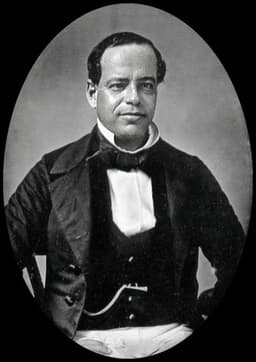
Antonio Lopez de Santa Anna
General · Modern
58.9Total
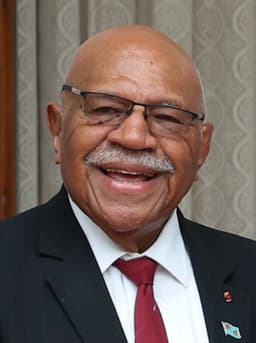
Sitiveni Rabuka
General · Modern
51.7Total
Basic Information
Born
1794
1948
Died
1876
—
Era
Modern
Modern
Nationality
Mexico
Fiji
Occupation
General
General
Civilization
Western
Other
Score Comparison
Military (10%)
70.0
10.2
Political (20%)
46.6
60.0
Influence (20%)
56.7
53.3
Legacy (20%)
58.0
46.7
Leadership (15%)
68.0
85.0
Strategy (15%)
60.0
39.6
TOTAL
58.9
51.7
Antonio Lopez de Santa Anna — Complete Timeline
1823 AD
Led the Plan of Casa Mata rebellionPolitical Action
Santa Anna, then a general, issued the Plan of Casa Mata on February 1, 1823, calling for the overthrow of Emperor Agust
RebellionOverthrowRepublic
Impact: nationalconstructive
1829 AD
Defended Mexico at the Battle of TampicoWar◆ Major
Santa Anna commanded Mexican forces that defeated a Spanish invasion force at Tampico on September 11, 1829. The victory ended Spain's last attempt to reconquer Mexico and made Santa Anna a national hero. He was hailed as the 'Hero of Tampico' and used this fame to advance politically.
VictorySpanish InvasionNational Hero
Impact: nationalconstructive
1833 AD
Became President of Mexico for the first timePolitical Action◆ Major
Santa Anna was elected President of Mexico in 1833. He quickly delegated power to Vice President Valent
PresidencyPolitical InstabilityPower
Impact: national
1836 AD
Commanded at the Siege of the AlamoWar◆ Major
Santa Anna personally led the Mexican army in the siege of the Alamo mission in San Antonio, Texas. After a 13-day siege, Mexican forces stormed the fort on March 6, 1836, killing all 180-250 Texan defenders. The battle became a symbol of Texan resistance and a rallying cry for independence.
BattleTexas RevolutionAlamo
Impact: regionaldestructive
Defeated and captured at the Battle of San JacintoWar
Santa Anna's army was surprised and routed by Texan forces under Sam Houston at the Battle of San Jacinto on April 21, 1836. Santa Anna was captured the next day. He was forced to sign the Treaties of Velasco, recognizing Texan independence, though Mexico later repudiated them.
DefeatCaptureTexas Independence
Impact: regionaltragic
1847 AD
Lost the Mexican-American WarWar
Santa Anna returned from exile to command Mexican forces during the Mexican-American War. Despite initial efforts, his army was defeated at the Battle of Cerro Gordo and later at the Battle of Chapultepec. US forces captured Mexico City on September 14, 1847, leading to the Treaty of Guadalupe Hidalgo and massive territorial losses.
Mexican-American WarDefeatTerritorial Loss
Impact: globaltragic
1853 AD
Sold La Mesilla to the United StatesPolitical Action◆ Major
During his final presidency, Santa Anna agreed to the Gadsden Purchase, selling 29,670 square miles of territory (La Mesilla) to the United States for $10 million. The sale was widely condemned in Mexico as a betrayal. This act further damaged his reputation and led to his overthrow.
Territorial CessionGadsden PurchaseBetrayal
Impact: nationaldestructive
1855 AD
Overthrown and exiled for the final timePolitical Action◆ Major
The Plan of Ayutla, led by Juan
OverthrowExileEnd of Career
Impact: nationaltragic
Sitiveni Rabuka — Complete Timeline
1987 AD
1987 Fijian Coup d'étatPolitical Action
Rabuka, as a colonel in the Fijian military, led a coup overthrowing the elected government of Timoci Bavadra. The coup was motivated by ethnic Fijian opposition to Indo-Fijian political influence. Rabuka declared Fiji a republic.
CoupMilitary InterventionEthnic Tension
Impact: nationaldestructive
1992 AD
1992 Election as Prime MinisterPolitical Action◆ Major
Rabuka transitioned from military leader to civilian politician, winning the 1992 general election as leader of the Fijian Political Party. He became Prime Minister, serving until 1999.
ElectionCivilian GovernmentPolitical Transition
Impact: national
1997 AD
1997 Constitution ReformReform◆ Major
Rabuka's government oversaw the adoption of a new constitution that removed ethnic-based voting and provided for a multi-ethnic government. The constitution aimed to reduce ethnic tensions and promote national unity.
ConstitutionReformEthnic Reconciliation
Impact: nationalconstructive
1999 AD
1999 General Election DefeatPolitical Action◆ Major
Rabuka's government was defeated in the general election by the Labour Party led by Mahendra Chaudhry. Rabuka stepped down as Prime Minister, marking the end of his first period in power.
Election DefeatGovernment ChangeChaudhry
Impact: national
2022 AD
2022 Return as Prime MinisterPolitical Action◆ Major
Rabuka led the People's Alliance to victory in the 2022 general election, forming a coalition government. He became Prime Minister again, 23 years after his previous tenure, promising democratic reforms.
ElectionReturn to PowerCoalition Government
Impact: national
Expert Analysis
Sitiveni Rabuka vs Antonio Lopez de Santa Anna
# The General Who Could Not Let Go, and the General Who Learned to Leave
On April 21, 1836, Antonio López de Santa Anna awoke from a siesta to the sound of gunfire and screaming. His Mexican army, camped at San Jacinto, was being overrun by Texan rebels. Within minutes, he was fleeing on horseback, a man who had styled himself the "Napoleon of the West" reduced to a fugitive in his own uniform. One hundred and fifty-one years later, on May 14, 1987, Colonel Sitiveni Rabuka of Fiji walked into Parliament in Suva, seized the prime minister at gunpoint, and announced a coup d’état. He, too, was a general overthrowing a government. But where Santa Anna would spend the rest of his life chasing lost power, Rabuka would do something far more remarkable: he would give it back—and earn it again.
Why did one man’s career end in exile and infamy, while the other’s ended in democratic redemption? The answer lies not in their uniforms, but in what they did after they took them off.
Origins
Santa Anna was born in 1794 in Jalapa, Mexico, into a middle-class Spanish colonial family. The world he entered was one of rigid hierarchy and simmering revolution. He joined the Spanish army at fifteen, fought on both sides of Mexico’s war for independence, and learned early that loyalty was a currency to be traded. His Mexico was a newborn nation torn between monarchy and republic, centralism and federalism—a chaos that rewarded the ambitious and punished the principled.
Rabuka was born in 1948 in the village of Dreketi, on Vanua Levu, Fiji’s second-largest island. His Fiji was a British colony, peaceful but deeply divided between indigenous Fijians and the Indo-Fijian descendants of indentured laborers. He was a Methodist lay preacher’s son, educated in mission schools, and joined the military as a way out of rural poverty. When Fiji gained independence in 1970, it inherited a constitution that guaranteed indigenous political dominance—but by 1987, an election had just put an Indo-Fijian-led coalition in power for the first time.
Santa Anna grew up in a world where power was seized. Rabuka grew up in a world where power was voted on—even if the voting was rigged by race.
Rise to Power
Santa Anna’s path was paved with revolt. In 1823, he issued the Plan of Casa Mata, a rebellion that helped topple Emperor Agustín de Iturbide. He was twenty-nine. Over the next decade, he switched sides between federalists and centralists so often that his contemporaries joked he had no principles—only ambition. His defining moment came in 1829, when he defeated a Spanish invasion at Tampico. The victory made him a national hero, and he rode that glory into the presidency in 1833.
Rabuka’s rise was shorter and sharper. In April 1987, as a forty-year-old colonel, he led three hundred soldiers into Suva and arrested Prime Minister Timoci Bavadra. His stated reason: indigenous Fijians were losing control of their own country. The coup was bloodless, but it shattered Fiji’s democratic experiment. Rabuka initially claimed he was acting to "restorder"—then, within months, he staged a second coup to ensure the new constitution enshrined ethnic Fijian supremacy.
Two men, two coups. But Santa Anna’s rebellions were career moves; Rabuka’s was a crisis of identity.
Leadership & Governance
Santa Anna governed like a man who believed he was indispensable. He served as president eleven times, often ruling by proxy while retreating to his hacienda. He was a brilliant political operator—his Political score of 81.1 reflects a master of patronage and symbolism—but a disastrous strategist. His Leadership score of 77.6 is deceptive: he could inspire men to die at the Alamo in 1836, but he could not feed them, scout them, or keep them from being surprised at San Jacinto. His military score of 66.3 hides a pattern of tactical blunders masked by personal courage.
Rabuka, by contrast, had a low military score of 19.9—he was never a great battlefield commander. But his Political score of 72.0 and Leadership score of 77.4 tell a different story. After seizing power, he did not cling to it. He handed authority to a civilian government in 1992, won an election that year, and then—most crucially—accepted defeat in 1999. He stepped down peacefully when voters rejected him.
Santa Anna never learned that lesson. In 1847, during the Mexican-American War, he returned from exile to command an army and lost. In 1853, he sold 29,670 square miles of territory to the United States in the Gadsden Purchase—a transaction that made him rich and Mexico poor. He was overthrown for the final time in 1855 and spent his last decades in penniless exile, still scheming.
Triumph & Tragedy
Santa Anna’s greatest triumph was Tampico in 1829: a genuine victory against a European invader. His greatest tragedy was the Alamo—not the siege itself, but what came after. He ordered the execution of survivors, a brutality that galvanized Texan resistance and ensured his defeat at San Jacinto. His capture there, and the Treaty of Velasco that followed, cost Mexico Texas.
Rabuka’s greatest triumph was the 1997 constitution. It removed ethnic-based voting and created a multiracial democracy—a direct reversal of the coup he had led a decade earlier. His greatest tragedy was the coup itself: it set a precedent for military intervention that would lead to another coup in 2000 and a fourth in 2006. Fiji’s democracy has never fully recovered from the wound Rabuka opened.
Character & Destiny
Santa Anna was a man of immense charm and zero self-reflection. He blamed everyone but himself for his failures: the Americans, the Texans, his own generals. He once said, "A hundred years to come, my people will not be fit for liberty." It was a prophecy of his own making. His character was that of a caudillo—a strongman who saw the nation as his estate.
Rabuka was different. After the 1999 election loss, he did not plot a return. He became a businessman, a rugby administrator, a lay preacher. He apologized for the coups. In 2022, at age seventy-four, he ran for prime minister again—and won. This time, he did not seize power. He earned it at the ballot box. His return was not a coup; it was a democratic comeback.
Legacy
Santa Anna’s legacy is a warning. In Mexico, he is remembered as the man who lost half the country. His name is synonymous with betrayal. His Legacy score of 65.2 is generous; many Mexicans would rank him lower. The Gadsden Purchase, the Alamo, the flight at San Jacinto—these are the landmarks of his memory.
Rabuka’s legacy is more complicated but more hopeful. His Legacy score of 61.2 reflects a man who did great harm and then tried to undo it. He is not a hero—the coups were wrong—but he is a lesson. He shows that even leaders who break democracy can learn to respect it. His 2022 return as a democratically elected prime minister is a rare story of redemption in a region where coups often end in exile or assassination.
Conclusion
Santa Anna and Rabuka both seized power by force. One spent his life trying to hold on; the other spent his life trying to let go. The difference is not in their uniforms or their nations. It is in their willingness, decades later, to admit that they were wrong.
Santa Anna died in 1876, poor and forgotten, still believing he had been right. Rabuka, alive in 2024, walks into Parliament not as a colonel with a gun, but as a prime minister with a mandate. The general who could not let go left a country in ruins. The general who learned to leave left a country with a chance.
Rankings
🥇
Antonio Lopez de Santa AnnaLeader
Mil: 70.0Pol: 46.6Inf: 56.7
58.9
🥈
Sitiveni Rabuka
Mil: 10.2Pol: 60.0Inf: 53.3
51.7
+7.2 behind
How This Comparison Works
Algorithm
Each figure is scored on 6 dimensions (0—100 scale) based on structured historical data: Military (10%), Political (20%), Influence (20%), Legacy (20%), Leadership (15%), Strategy (15%). The weighted total produces the final ranking.
Data Sources
Scores are computed from structured sub-indicators in the database. Scale factors adjust for era (Ancient ×0.85, Modern ×1.0) and civilization size (Eastern ×1.05, Other ×0.80) to account for differences in population and military scale.
Maximum 3 Figures
Comparisons are limited to 2—3 figures to ensure readability and statistical meaningfulness.
Error Margins
±5 points per dimension — Sub-scores are derived from historical records with inherent uncertainty. Two figures within 5 points on a dimension should be considered roughly equivalent in that area.
Total Score Accuracy
±3 points overall — The weighted combination of 6 dimensions produces a total score with approximately ±3 points of uncertainty. Differences of less than 3 points are not statistically significant— the figures are effectively tied.
Known Limitations
- Historical records are incomplete and uneven across civilizations
- Figures from oral-tradition societies may be underrepresented
- Occupation labels can misclassify multi-role figures
- Scores measure capability and impact, not moral character
- Quantitative scoring is a comparison tool, not absolute truth
Capability Radar
Military (10%) — Battles & Warfare
Battles
65
5
Win Rate
40
5
Expansion
50
5
Political (20%) — Governance & Reform
Reform
20
50
Diplomacy
35
45
Economy
15
40
Influence (20%) — Cultural & Global Reach
Cultural
55
30
Global
50
20
Legacy (20%) — Historical Impact
Historical
60
40
Longevity
55
30
Leadership (15%) — Power & Stability
Tenure
75
55
Stability
10
35
Strategy (15%) — Tactics & Innovation
Strategy
45
10
Tactics
60
10
Reform
30
5
Similar Comparisons
Comments & Discussion
No comments yet. Be the first to share your thoughts!