Loading...
Antonio Lopez de Santa Anna vs Sengge Rinchen
Antonio Lopez de Santa Anna leads by 2.0 pts · 2 figures compared
…
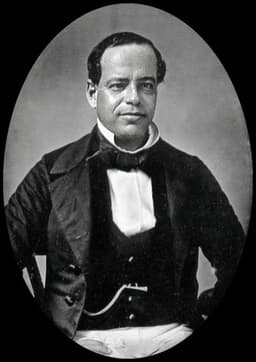
Antonio Lopez de Santa Anna
General · Modern
58.9Total
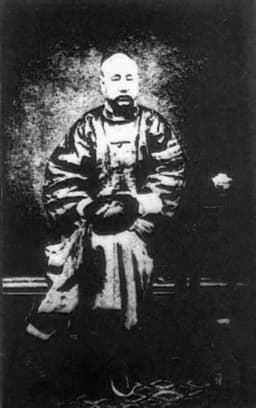
Sengge Rinchen
General · Modern
56.9Total
Basic Information
Born
1794
1811
Died
1876
1865
Era
Modern
Modern
Nationality
Mexico
China
Occupation
General
General
Civilization
Western
Eastern
Score Comparison
Military (10%)
70.0
70.0
Political (20%)
46.6
43.7
Influence (20%)
56.7
55.0
Legacy (20%)
58.0
54.0
Leadership (15%)
68.0
67.0
Strategy (15%)
60.0
60.7
TOTAL
58.9
56.9
Antonio Lopez de Santa Anna — Complete Timeline
1823 AD
Led the Plan of Casa Mata rebellionPolitical Action
Santa Anna, then a general, issued the Plan of Casa Mata on February 1, 1823, calling for the overthrow of Emperor Agust
RebellionOverthrowRepublic
Impact: nationalconstructive
1829 AD
Defended Mexico at the Battle of TampicoWar◆ Major
Santa Anna commanded Mexican forces that defeated a Spanish invasion force at Tampico on September 11, 1829. The victory ended Spain's last attempt to reconquer Mexico and made Santa Anna a national hero. He was hailed as the 'Hero of Tampico' and used this fame to advance politically.
VictorySpanish InvasionNational Hero
Impact: nationalconstructive
1833 AD
Became President of Mexico for the first timePolitical Action◆ Major
Santa Anna was elected President of Mexico in 1833. He quickly delegated power to Vice President Valent
PresidencyPolitical InstabilityPower
Impact: national
1836 AD
Commanded at the Siege of the AlamoWar◆ Major
Santa Anna personally led the Mexican army in the siege of the Alamo mission in San Antonio, Texas. After a 13-day siege, Mexican forces stormed the fort on March 6, 1836, killing all 180-250 Texan defenders. The battle became a symbol of Texan resistance and a rallying cry for independence.
BattleTexas RevolutionAlamo
Impact: regionaldestructive
Defeated and captured at the Battle of San JacintoWar
Santa Anna's army was surprised and routed by Texan forces under Sam Houston at the Battle of San Jacinto on April 21, 1836. Santa Anna was captured the next day. He was forced to sign the Treaties of Velasco, recognizing Texan independence, though Mexico later repudiated them.
DefeatCaptureTexas Independence
Impact: regionaltragic
1847 AD
Lost the Mexican-American WarWar
Santa Anna returned from exile to command Mexican forces during the Mexican-American War. Despite initial efforts, his army was defeated at the Battle of Cerro Gordo and later at the Battle of Chapultepec. US forces captured Mexico City on September 14, 1847, leading to the Treaty of Guadalupe Hidalgo and massive territorial losses.
Mexican-American WarDefeatTerritorial Loss
Impact: globaltragic
1853 AD
Sold La Mesilla to the United StatesPolitical Action◆ Major
During his final presidency, Santa Anna agreed to the Gadsden Purchase, selling 29,670 square miles of territory (La Mesilla) to the United States for $10 million. The sale was widely condemned in Mexico as a betrayal. This act further damaged his reputation and led to his overthrow.
Territorial CessionGadsden PurchaseBetrayal
Impact: nationaldestructive
1855 AD
Overthrown and exiled for the final timePolitical Action◆ Major
The Plan of Ayutla, led by Juan
OverthrowExileEnd of Career
Impact: nationaltragic
Sengge Rinchen — Complete Timeline
1859 AD
Battle of Dagu FortsWar◆ Major
Sengge Rinchen commanded Qing forces defending the Dagu Forts against a British and French naval attack. His forces repelled the assault, sinking several enemy ships and inflicting heavy casualties, a rare Qing victory in the Second Opium War.
Second Opium WarBattleVictory
Impact: regional
1860 AD
Battle of PalikaoWar◆ Major
Sengge Rinchen commanded Qing cavalry at the Battle of Palikao against Anglo-French forces. His forces were decisively defeated by superior firepower, leading to the fall of Beijing and the burning of the Old Summer Palace.
Second Opium WarBattleDefeat
Impact: regionaltragic
1863 AD
Suppression of the Nian RebellionWar◆ Major
Sengge Rinchen led Qing forces against the Nian rebels in northern China. He achieved several victories but was ultimately killed in battle against the Nian in 1865, marking a turning point in the rebellion.
Nian RebellionCampaignDeath
Impact: regionaltragic
Expert Analysis
Antonio Lopez de Santa Anna vs Sengge Rinchen
# The General Who Lost an Empire: Santa Anna and Sengge Rinchen
On a dusty April afternoon in 1836, Antonio López de Santa Anna slept through his own destruction. The self-styled "Napoleon of the West" had pursued the retreating Texan army for weeks, confident that his disciplined Mexican forces would crush the ragged rebels. But when Sam Houston's men stormed his camp at San Jacinto, the great general awoke to find his army in chaos—and himself a prisoner in his own silk nightshirt. Twenty-four years later and half a world away, a Mongol prince named Sengge Rinchen faced his own moment of reckoning. At the Battle of Palikao, he watched his elite cavalry charge straight into British rifle fire, their horses falling in waves, their lances useless against modern weaponry. Two men, two empires, two collisions with forces they could not understand—and two very different fates that would reshape their nations.
Origins
Santa Anna was born in 1794 in Jalapa, a provincial town in colonial Mexico. His family was of modest Spanish descent, and young Antonio found his path not in the classroom but on the battlefield. The Napoleonic Wars had convulsed Spain, and Mexico's struggle for independence offered a young man of ambition a chance to rise. He joined the royalist army at fifteen, fought against insurgents, and learned early that loyalty was a currency to be spent wisely. By contrast, Sengge Rinchen came from the Mongol aristocracy of Inner Mongolia, born in 1811 into a world of horsemen and imperial service. His people had conquered China centuries before, but now served the Manchu Qing dynasty as loyal warriors. While Santa Anna navigated the chaos of a newborn republic, Sengge Rinchen inherited a tradition of cavalry warfare that had not changed since Genghis Khan.
Rise to Power
Santa Anna's political genius revealed itself in 1823 when he issued the Plan of Casa Mata, a rebellion that toppled Emperor Agustín de Iturbide. The young general had switched sides with breathtaking speed, and Mexico's new republican leaders rewarded him with power. Over the next decade, he would become a master of the pronunciamiento—the military coup dressed as political reform. He was elected president in 1833 but quickly delegated authority to his vice president, preferring the prestige of office to its daily burdens. Sengge Rinchen's rise followed a more traditional path. He proved his worth fighting bandits and rebels on the Mongolian steppe, earning promotions through demonstrated loyalty and tactical competence. By the 1850s, he commanded the elite Mongol and Manchu cavalry that guarded Beijing's northern approaches—the very heart of the Qing Empire.
Leadership & Governance
Santa Anna ruled through charisma and manipulation. He understood that Mexican politics was a theater of personalities, not institutions. He could charm crowds, negotiate with enemies, and pivot between liberal and conservative positions with equal ease. His military style mirrored this flexibility: at Tampico in 1829, he defeated a Spanish invasion force through careful planning and personal courage, earning the title "Hero of Tampico." But at the Alamo in 1836, he showed a darker side—ordering no quarter, executing prisoners, and believing that terror could substitute for strategy. Sengge Rinchen governed differently. He was a feudal lord in the Mongol tradition, commanding personal loyalty from his cavalrymen through shared hardship and blood ties. His military thinking was rigid but effective against traditional foes. At the Dagu Forts in 1859, he achieved what few could: he repelled a British and French naval attack, using coastal batteries and river defenses to sink enemy ships. It was the Qing Empire's last great victory against the West.
Triumph & Tragedy
Santa Anna's greatest moment was also his most tragic. The defense of the Alamo made him notorious across the English-speaking world, but it also sealed his fate. His victory was pyrrhic—it unified Texan resistance and brought the United States into the conflict. When he was captured at San Jacinto, he signed away Texas while still a prisoner. His return to power during the Mexican-American War in 1847 only deepened the catastrophe. Outmaneuvered by Winfield Scott, Santa Anna watched American forces march into Mexico City. His final humiliation came in 1853, when he sold La Mesilla to the United States in the Gadsden Purchase—selling Mexican soil for personal profit and political survival. Overthrown in 1855, he fled into exile, a figure of ridicule rather than fear.
Sengge Rinchen's tragedy was slower and more dignified. After his victory at Dagu, he was hailed as a national hero. But the British and French returned in 1860 with overwhelming force. At Palikao, his Mongol cavalry—the finest horsemen in Asia—charged into modern rifle fire and were annihilated. The emperor fled Beijing, and the Summer Palace was burned. Sengge Rinchen survived, but his world had collapsed. He turned his attention to the Nian Rebellion, a peasant uprising in northern China, and achieved several victories through relentless campaigning. But in 1865, surrounded and outnumbered, he was killed in battle—not by foreign invaders but by Chinese rebels. He died as he had lived: on horseback, sword in hand, fighting for an empire that was already dying around him.
Character & Destiny
Santa Anna was a survivor, a man who reinvented himself eleven times as president. He was vain, cunning, and utterly without principle—qualities that served him well in the chaos of nineteenth-century Mexico. He believed that power was a personal possession, not a public trust, and he treated Mexico as his private estate. This worldview doomed him. He could win battles but not wars, seize power but not govern, and negotiate treaties but not keep them. Sengge Rinchen was his opposite: a man of honor, loyalty, and tragic clarity. He understood that the Qing Empire was failing, but he could not imagine a world beyond it. His Mongol warriors were the last inheritors of a tradition stretching back centuries, and he rode them into the teeth of modernity without hesitation. Where Santa Anna would have switched sides, Sengge Rinchen simply died.
Legacy
Santa Anna is remembered in Mexico as a traitor and a buffoon—the man who lost half the nation's territory. His name appears on street signs and in history books as a cautionary tale about ambition without principle. In Texas, he is the villain of the Alamo myth, a figure of gothic cruelty. But his legacy is more complex: he embodied the instability that plagued Latin America for generations, a system where personal loyalty trumped national institutions. Sengge Rinchen is remembered differently. In China, he is a symbol of tragic heroism—the loyal general who fought for a doomed dynasty. His defeat at Palikao marks the moment when China's ancient military traditions finally yielded to Western industrial warfare. He is honored in Mongolia as a national hero, a prince who defended his people's honor against impossible odds.
Conclusion
Two generals, two empires, two collisions with the relentless tide of history. Santa Anna bent with every wind and was broken nonetheless. Sengge Rinchen stood firm and was shattered. Their stories ask a question that haunts every age: when your world is dying, do you adapt or resist? Santa Anna chose adaptation and became a cautionary tale. Sengge Rinchen chose resistance and became a legend. Perhaps neither choice was correct, but both men reveal the terrible price of living through times of transformation. Their bones lie in foreign soil, but their shadows still fall across the nations they served—and failed.
Rankings
🥇
Antonio Lopez de Santa AnnaLeader
Mil: 70.0Pol: 46.6Inf: 56.7
58.9
🥈
Sengge Rinchen
Mil: 70.0Pol: 43.7Inf: 55.0
56.9
+2.0 behind
How This Comparison Works
Algorithm
Each figure is scored on 6 dimensions (0—100 scale) based on structured historical data: Military (10%), Political (20%), Influence (20%), Legacy (20%), Leadership (15%), Strategy (15%). The weighted total produces the final ranking.
Data Sources
Scores are computed from structured sub-indicators in the database. Scale factors adjust for era (Ancient ×0.85, Modern ×1.0) and civilization size (Eastern ×1.05, Other ×0.80) to account for differences in population and military scale.
Maximum 3 Figures
Comparisons are limited to 2—3 figures to ensure readability and statistical meaningfulness.
Error Margins
±5 points per dimension — Sub-scores are derived from historical records with inherent uncertainty. Two figures within 5 points on a dimension should be considered roughly equivalent in that area.
Total Score Accuracy
±3 points overall — The weighted combination of 6 dimensions produces a total score with approximately ±3 points of uncertainty. Differences of less than 3 points are not statistically significant— the figures are effectively tied.
Known Limitations
- Historical records are incomplete and uneven across civilizations
- Figures from oral-tradition societies may be underrepresented
- Occupation labels can misclassify multi-role figures
- Scores measure capability and impact, not moral character
- Quantitative scoring is a comparison tool, not absolute truth
Capability Radar
Military (10%) — Battles & Warfare
Battles
65
75
Win Rate
40
60
Expansion
50
20
Political (20%) — Governance & Reform
Reform
20
20
Diplomacy
35
50
Economy
15
20
Influence (20%) — Cultural & Global Reach
Cultural
55
40
Global
50
35
Legacy (20%) — Historical Impact
Historical
60
55
Longevity
55
30
Leadership (15%) — Power & Stability
Tenure
75
40
Stability
10
30
Strategy (15%) — Tactics & Innovation
Strategy
45
70
Tactics
60
80
Reform
30
30
Similar Comparisons
Comments & Discussion
炮灰统计员6/16/2026
这俩人才不是同一类失败者。圣安纳在阿拉莫赢了就飘了,居然让部队睡大觉,纯粹是自己作死。僧格林沁在八里桥是被洋枪洋炮碾压,装备代差摆在那,谁来都得输。一个蠢死的,一个挺到最后一刻。别拿他俩比,侮辱蒙古骑兵。
历史抖包袱6/16/2026
圣安纳打德州时睡过头被俘,后来还跟美国做交易卖领土,简直是职业卖国。僧格林沁虽然败了,但人家八里桥血战后还在大沽口给英法联军狠揍一顿,还击沉过敌舰。一个是舞台上的小丑,一个是真正的硬汉。拿这两人比较,我都替僧王不值。
The Pragmatist's Eye6/16/2026
Santa Anna's repeated betrayals—fighting for Spain, then for Mexico, then siding with conservatives—show a man without ideological anchor. Sengge Rinchen, for all his military limits, remained unshakably loyal to the Qing dynasty until his death. One died rich in self-interest; the other died poor in ammunition but rich in conviction. I know who I'd rather trust with an army.
Historian1496/16/2026
Here's the kicker: Santa Anna's flamboyant PR convinced half of Mexico he was a military genius, while Sengge Rinchen's legacy stands on actual grit. Santa Anna lost Texas because he underestimated the enemy's will—Sengge Rinchen lost because he overestimated the power of traditional cavalry. One was a narcissist who stumbled into power, the other was a conservative warrior who fought the clock of history.
BoldScribe976/16/2026
A classic case of overconfidence meeting reality. Santa Anna had Houston's army cornered, took a siesta, and woke up in chains—pure hubris. But Sengge Rinchen? He actually understood the imbalance at Palikao, yet he chose to charge anyway because Mongol honor demanded it. That's the difference between a showman and a warrior. One performed for himself; the other fought for his people even when it was futile.