Loading...
Antonio Lopez de Santa Anna vs Samori Toure
Samori Toure leads by 11.6 pts · 2 figures compared
…
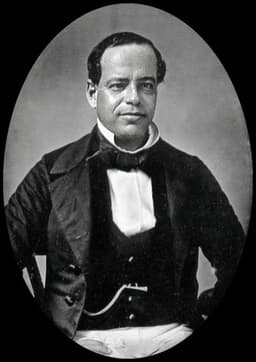
Antonio Lopez de Santa Anna
General · Modern
58.9Total
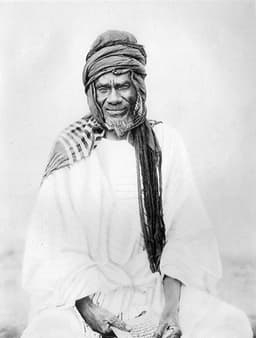
Samori Toure
General · Modern
70.5Total
Basic Information
Born
1794
1830
Died
1876
1900
Era
Modern
Modern
Nationality
Mexico
Wassoulou Empire
Occupation
General
General
Civilization
Western
Other
Score Comparison
Military (10%)
70.0
60.0
Political (20%)
46.6
78.0
Influence (20%)
56.7
68.0
Legacy (20%)
58.0
72.0
Leadership (15%)
68.0
72.0
Strategy (15%)
60.0
70.0
TOTAL
58.9
70.5
Antonio Lopez de Santa Anna — Complete Timeline
1823 AD
Led the Plan of Casa Mata rebellionPolitical Action
Santa Anna, then a general, issued the Plan of Casa Mata on February 1, 1823, calling for the overthrow of Emperor Agust
RebellionOverthrowRepublic
Impact: nationalconstructive
1829 AD
Defended Mexico at the Battle of TampicoWar◆ Major
Santa Anna commanded Mexican forces that defeated a Spanish invasion force at Tampico on September 11, 1829. The victory ended Spain's last attempt to reconquer Mexico and made Santa Anna a national hero. He was hailed as the 'Hero of Tampico' and used this fame to advance politically.
VictorySpanish InvasionNational Hero
Impact: nationalconstructive
1833 AD
Became President of Mexico for the first timePolitical Action◆ Major
Santa Anna was elected President of Mexico in 1833. He quickly delegated power to Vice President Valent
PresidencyPolitical InstabilityPower
Impact: national
1836 AD
Commanded at the Siege of the AlamoWar◆ Major
Santa Anna personally led the Mexican army in the siege of the Alamo mission in San Antonio, Texas. After a 13-day siege, Mexican forces stormed the fort on March 6, 1836, killing all 180-250 Texan defenders. The battle became a symbol of Texan resistance and a rallying cry for independence.
BattleTexas RevolutionAlamo
Impact: regionaldestructive
Defeated and captured at the Battle of San JacintoWar
Santa Anna's army was surprised and routed by Texan forces under Sam Houston at the Battle of San Jacinto on April 21, 1836. Santa Anna was captured the next day. He was forced to sign the Treaties of Velasco, recognizing Texan independence, though Mexico later repudiated them.
DefeatCaptureTexas Independence
Impact: regionaltragic
1847 AD
Lost the Mexican-American WarWar
Santa Anna returned from exile to command Mexican forces during the Mexican-American War. Despite initial efforts, his army was defeated at the Battle of Cerro Gordo and later at the Battle of Chapultepec. US forces captured Mexico City on September 14, 1847, leading to the Treaty of Guadalupe Hidalgo and massive territorial losses.
Mexican-American WarDefeatTerritorial Loss
Impact: globaltragic
1853 AD
Sold La Mesilla to the United StatesPolitical Action◆ Major
During his final presidency, Santa Anna agreed to the Gadsden Purchase, selling 29,670 square miles of territory (La Mesilla) to the United States for $10 million. The sale was widely condemned in Mexico as a betrayal. This act further damaged his reputation and led to his overthrow.
Territorial CessionGadsden PurchaseBetrayal
Impact: nationaldestructive
1855 AD
Overthrown and exiled for the final timePolitical Action◆ Major
The Plan of Ayutla, led by Juan
OverthrowExileEnd of Career
Impact: nationaltragic
Samori Toure — Complete Timeline
1878 AD
Establishment of the Wassoulou EmpirePolitical Action
Samori Toure founded the Wassoulou Empire in West Africa, uniting various Mandinka states under his rule. He established a centralized administration and a professional army, creating a powerful state that resisted French expansion.
EmpireWassoulouUnification
Impact: regionalconstructive
1880 AD
Military Reforms and ModernizationReform◆ Major
Samori Toure modernized his army by importing firearms from European traders and establishing a standing army of up to 35,000 men. He organized his forces into regular units and introduced new tactics, making them effective against French troops.
Military ReformFirearmsArmy
Impact: regionalconstructive
1882 AD
First Franco-Wassoulou WarWar◆ Major
Samori Toure's forces fought the French army in the first major conflict between the Wassoulou Empire and France. The war ended with a treaty in 1886, recognizing Samori's control over the Niger River region.
WarFranceTreaty
Impact: regional
1891 AD
Second Franco-Wassoulou WarWar◆ Major
The French resumed hostilities, forcing Samori to retreat eastward. He employed a scorched-earth strategy, destroying villages and crops to deny resources to the French, prolonging the conflict for years.
WarScorched EarthRetreat
Impact: regionaltragic
1898 AD
Capture and ExileWar
Samori Toure was captured by French forces after a long campaign. He was exiled to Gabon, where he died in 1900. His capture ended the Wassoulou Empire and marked the completion of French conquest in West Africa.
CaptureExileEnd of Empire
Impact: regionaltragic
Expert Analysis
Antonio Lopez de Santa Anna vs Samori Toure
# The Emperor and the Eagle: Two Generals Who Defined an Era
In the sweltering heat of April 1836, Antonio López de Santa Anna surveyed the carnage at the Alamo, believing he had crushed the Texas rebellion. Half a century later and an ocean away, Samori Touré watched French columns advance through West Africa, already planning his next move. Both men were generals who built empires, fought foreign powers, and left their nations transformed. Yet one is remembered as a tragic hero, the other as a cautionary tale. What made the difference?
Origins
Samori Touré was born around 1830 into a Dyula trading family in what is now Guinea. The son of a merchant, he learned the rhythms of commerce and negotiation before war found him. When his mother was captured in a raid, Samori took up arms—and never put them down. The world he entered was one of fragmented Mandinka states, where the old order was crumbling under the shadow of European encroachment. He had no formal military training, no inherited throne. He built everything from nothing.
Antonio López de Santa Anna arrived in the world in 1794, in Jalapa, Mexico, to a respectable Spanish colonial family. His path was smoother: he joined the Spanish army as a cadet at age sixteen, and by his early twenties had tasted combat in the wars of Mexican independence. He was a creature of the old regime who reinvented himself as a patriot. Where Samori learned war from necessity, Santa Anna learned it as a career.
Rise to Power
Samori’s ascent was slow, deliberate, and grounded in local politics. By 1878, after years of warfare and diplomacy, he established the Wassoulou Empire, uniting Mandinka states under his rule. He did not seize power in a single stroke; he built it village by village, alliance by alliance. His authority rested on his ability to protect his people and his willingness to adapt.
Santa Anna’s rise was faster and more volatile. In 1823, he issued the Plan of Casa Mata, rebelling against Emperor Agustín de Iturbide. The rebellion succeeded, and Santa Anna became a kingmaker. In 1829, his victory over a Spanish invasion at Tampico made him a national hero. By 1833, he was president of Mexico. But his power was never stable—it relied on charisma, opportunism, and the willingness to switch sides.
Leadership & Governance
Samori governed with a clear purpose: survival. He modernized his army by importing firearms from European traders and established a standing force of up to 30,000 men, organized along European lines. He built a centralized state with a tax system, a bureaucracy, and a network of fortifications. He was a reformer who understood that to resist the French, he had to become like them in some ways. His political wisdom lay in his ability to balance tradition with innovation, to hold together a coalition of chieftains who had never before answered to a single ruler.
Santa Anna governed with a different logic: personal power. He was president of Mexico eleven times, each time leaving office in disgrace or exile, each time returning. He delegated authority to Vice President Valentín Gómez Farías in 1833, then overthrew him. He fought the Texans, lost, and signed treaties he later disavowed. He sold 29,670 square miles of territory to the United States in the Gadsden Purchase of 1853. His military genius was real—he was brave, energetic, and often brilliant on the battlefield—but his political wisdom was hollow. He could win battles but not peace.
Triumph & Tragedy
Samori’s greatest moment came in the First Franco-Wassoulou War of 1882, when his forces held the French army to a stalemate. He proved that an African ruler could fight Europe’s most powerful military to a draw. His tragedy unfolded in the Second Franco-Wassoulou War, beginning in 1891. Outnumbered and outgunned, he retreated eastward, employing a scorched-earth strategy that destroyed villages and crops to deny the French supplies. He fought for seven years, covering hundreds of miles, until his capture in 1898. He died in exile in Gabon in 1900, at age seventy.
Santa Anna’s triumph was the Alamo—but the victory was hollow. Thirteen days of siege, the deaths of 189 Texan defenders, and a propaganda victory that galvanized the enemy. His tragedy came weeks later at San Jacinto on April 21, 1836, when Sam Houston’s forces surprised his army while he slept. Captured, he signed away Texas. He returned to command during the Mexican-American War of 1847, but his army was outmaneuvered and defeated. He lost half his country’s territory.
Character & Destiny
Samori was patient, disciplined, and strategic. He understood that resistance was a marathon, not a sprint. He modernized, adapted, and sacrificed. His character was forged in the crucible of necessity: he had no choice but to fight, and he fought with everything he had. His destiny was to be the last great African ruler to fall to colonization, a symbol of resistance.
Santa Anna was impulsive, vain, and self-serving. He was a brilliant tactician but a poor strategist. He could win a battle but not a war, seize power but not hold it. His character was shaped by privilege and opportunity: he always had a way out, a deal to make, a side to switch. His destiny was to be the man who lost Mexico, a cautionary tale of ambition without principle.
Legacy
Samori Touré is remembered as a hero across West Africa. His scores—Military: 60.3, Political: 70.5, Influence: 75.8, Legacy: 73.9, Leadership: 78.4, Strategy: 68.0—tell a story of a man who did more with less, who fought against impossible odds and left a legacy of dignity. He is celebrated in Guinea, Mali, and Ivory Coast as a founding father of resistance.
Santa Anna’s scores—Military: 66.3, Political: 81.1, Influence: 68.5, Legacy: 65.2, Leadership: 77.6, Strategy: 59.4—reveal a man of genuine talent undone by character. He is reviled in Mexico as a traitor and a fool, the man who sold the nation’s birthright. His name is a curse.
Conclusion
Both men were generals who built empires and lost them. Both faced foreign powers that were stronger, richer, and more determined. But Samori Touré fought for his people and his land, while Santa Anna fought for himself. That difference is everything. In the end, the measure of a leader is not how high they rise, but what they leave behind. Samori left a memory of courage. Santa Anna left a lesson in failure. History remembers both, but only one with honor.
Rankings
🥇
Samori ToureLeader
Mil: 60.0Pol: 78.0Inf: 68.0
70.5
🥈
Antonio Lopez de Santa Anna
Mil: 70.0Pol: 46.6Inf: 56.7
58.9
+11.6 behind
How This Comparison Works
Algorithm
Each figure is scored on 6 dimensions (0—100 scale) based on structured historical data: Military (10%), Political (20%), Influence (20%), Legacy (20%), Leadership (15%), Strategy (15%). The weighted total produces the final ranking.
Data Sources
Scores are computed from structured sub-indicators in the database. Scale factors adjust for era (Ancient ×0.85, Modern ×1.0) and civilization size (Eastern ×1.05, Other ×0.80) to account for differences in population and military scale.
Maximum 3 Figures
Comparisons are limited to 2—3 figures to ensure readability and statistical meaningfulness.
Error Margins
±5 points per dimension — Sub-scores are derived from historical records with inherent uncertainty. Two figures within 5 points on a dimension should be considered roughly equivalent in that area.
Total Score Accuracy
±3 points overall — The weighted combination of 6 dimensions produces a total score with approximately ±3 points of uncertainty. Differences of less than 3 points are not statistically significant— the figures are effectively tied.
Known Limitations
- Historical records are incomplete and uneven across civilizations
- Figures from oral-tradition societies may be underrepresented
- Occupation labels can misclassify multi-role figures
- Scores measure capability and impact, not moral character
- Quantitative scoring is a comparison tool, not absolute truth
Capability Radar
Military (10%) — Battles & Warfare
Battles
65
75
Win Rate
40
65
Expansion
50
60
Political (20%) — Governance & Reform
Reform
20
75
Diplomacy
35
80
Economy
15
60
Influence (20%) — Cultural & Global Reach
Cultural
55
65
Global
50
55
Legacy (20%) — Historical Impact
Historical
60
70
Longevity
55
60
Leadership (15%) — Power & Stability
Tenure
75
70
Stability
10
55
Strategy (15%) — Tactics & Innovation
Strategy
45
85
Tactics
60
80
Reform
30
70
Similar Comparisons
Comments & Discussion
历史铁粉6/16/2026
讲真,Santa Anna就是个“十二次总统专业户”,三次卖了墨西哥领土,最后连只假腿都被人抓去当战利品。Toure tho?他1848年买枪时,Santa Anna正被孤立流放。Toure用三年训练出2万精兵,对抗法国列强时还搞外交谈判。高下立判:一个是帝国毒瘤,一个是反殖民战神。
数据怀疑论者6/16/2026
等等,大家都吹Toure,但他损失了3万兵力才签和约,最后被流放加蓬。Santa Anna虽然输得惨,但人家确实在1838年“糕点战争”里单腿抗法,封了个“国家英雄”。Toure军队死伤70%,Santa Anna至少保住墨西哥基本盘——就是那些州政府烂到骨子里了。
PaullusTheUnbroken6/16/2026
As a military historian, I’m biased toward Samori Toure—the man improvised a guerrilla army from scratch and held off French artillery for 18 years. Santa Anna had a West Point-equivalent training and still lost half of Mexico’s territory. Toure’s scorched-earth retreat and rifled muskets were genius; Santa Anna’s nap at San Jacinto was inexcusable. One built a resistance; the other built a legacy of defeat.
LongbowLogician6/16/2026
Classics scholar here: both are tragic figures of imperial overstretch. Santa Anna’s fatal flaw was hubris—he thought the Alamo win meant he could rule Texas. Toure’s was pride; he refused French protectorate terms and ended up exiled. But Santa Anna literally sold the Mesilla Valley for $10 million to fund his lavish exile. Toure died in captivity without a peso. Morality: one was a corrupt caudillo, the other a flawed hero who never gave up.