Loading...
Antonio Lopez de Santa Anna vs Prem Tinsulanonda
Antonio Lopez de Santa Anna leads by 1.7 pts · 2 figures compared
…
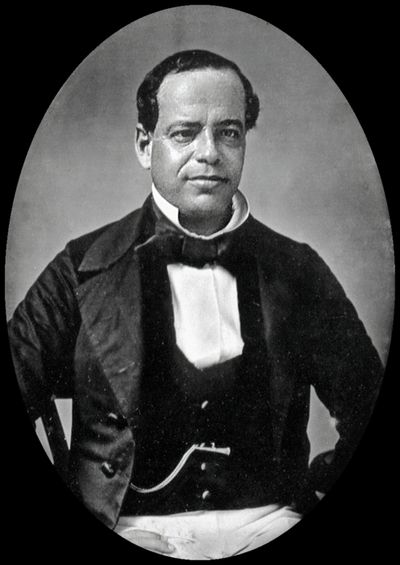
Antonio Lopez de Santa Anna
General · Modern
70.1Total
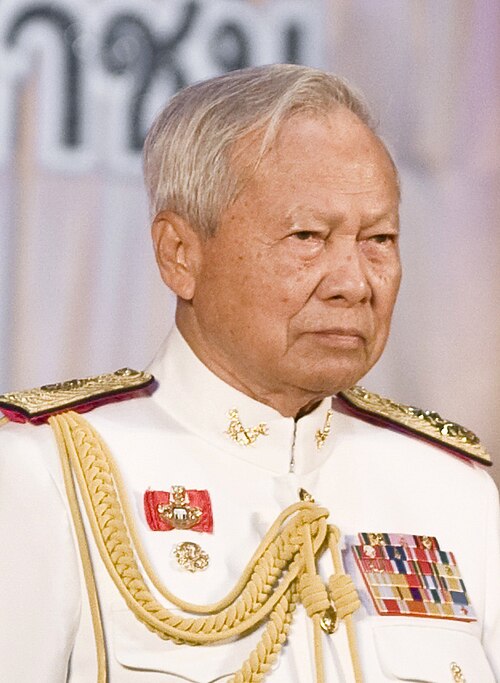
Prem Tinsulanonda
General · Modern
68.4Total
Basic Information
Born
1794
1920
Died
1876
—
Era
Modern
Modern
Nationality
Mexico
Thailand
Occupation
General
General
Civilization
Western
Eastern
Score Comparison
Military (10%)
66.3
33.7
Political (20%)
81.1
68.8
Influence (20%)
68.5
73.9
Legacy (20%)
65.2
66.8
Leadership (15%)
77.6
89.0
Strategy (15%)
59.4
65.0
TOTAL
70.1
68.4
Rankings
🥇
Antonio Lopez de Santa AnnaLeader
Mil: 66.3Pol: 81.1Inf: 68.5
70.1
🥈
Prem Tinsulanonda
Mil: 33.7Pol: 68.8Inf: 73.9
68.4
+1.7 behind
How This Comparison Works
Algorithm
Each figure is scored on 6 dimensions (0—100 scale) based on structured historical data: Military (10%), Political (20%), Influence (20%), Legacy (20%), Leadership (15%), Strategy (15%). The weighted total produces the final ranking.
Data Sources
Scores are computed from structured sub-indicators in the database. Scale factors adjust for era (Ancient ×0.85, Modern ×1.0) and civilization size (Eastern ×1.05, Other ×0.80) to account for differences in population and military scale.
Maximum 3 Figures
Comparisons are limited to 2—3 figures to ensure readability and statistical meaningfulness.
Error Margins
±5 points per dimension — Sub-scores are derived from historical records with inherent uncertainty. Two figures within 5 points on a dimension should be considered roughly equivalent in that area.
Total Score Accuracy
±3 points overall — The weighted combination of 6 dimensions produces a total score with approximately ±3 points of uncertainty. Differences of less than 3 points are not statistically significant— the figures are effectively tied.
Known Limitations
- Historical records are incomplete and uneven across civilizations
- Figures from oral-tradition societies may be underrepresented
- Occupation labels can misclassify multi-role figures
- Scores measure capability and impact, not moral character
- Quantitative scoring is a comparison tool, not absolute truth
Capability Radar
Military (10%) — Battles & Warfare
Battles
65
20
Win Rate
40
25
Expansion
50
10
Political (20%) — Governance & Reform
Reform
20
55
Diplomacy
35
60
Economy
15
50
Influence (20%) — Cultural & Global Reach
Cultural
55
30
Global
50
30
Legacy (20%) — Historical Impact
Historical
60
40
Longevity
55
35
Leadership (15%) — Power & Stability
Tenure
75
65
Stability
10
60
Strategy (15%) — Tactics & Innovation
Strategy
45
30
Tactics
60
30
Reform
30
35
Expert Analysis
Antonio Lopez de Santa Anna vs Prem Tinsulanonda
**The General Who Couldn’t Let Go, and the General Who Did**
On a humid April afternoon in 1836, Antonio López de Santa Anna, the self-styled “Napoleon of the West,” was captured hiding in a swamp, disguised as a common soldier. His grand army had just been routed in eighteen minutes at San Jacinto. A century and a half later, on a quiet morning in Bangkok in 1988, General Prem Tinsulanonda did something almost unheard of in the annals of military strongmen: he resigned. He walked away from power after eight years as prime minister, handing the government to a civilian. Both men were generals. Both dominated their nations’ politics during turbulent eras. But one ended his life in exile, reviled as a traitor who lost half his country; the other died a revered statesman, a kingmaker who helped steer his kingdom through decades of change. Why did their paths diverge so sharply? The answer lies not in their ambitions—both were ambitious—but in how they understood power, and what they were willing to sacrifice to keep it.
**Origins**
Santa Anna was born in 1794 in Jalapa, Mexico, into a middle-class Spanish colonial family. The world he entered was one of rigid hierarchies, where a career in the military offered the quickest route to status. He was a child of revolution—Mexico’s war for independence from Spain began when he was sixteen—and he learned early that loyalty was a currency to be traded. He fought first for Spain, then for the independence movement, then for whichever faction promised him the next promotion. His Mexico was a newborn nation convulsing between monarchy, republic, and dictatorship, a land without stable institutions where a man with an army could become president overnight.
Prem Tinsulanonda was born in 1920 in Songkhla, in southern Thailand, into a family of minor nobility. His Thailand had never been colonized. Its monarchy, though absolute in theory, had evolved into a constitutional system after a 1932 coup, but the military remained the ultimate arbiter of power. Prem entered the army young, served in World War II, and rose through the ranks during the Cold War. Unlike Santa Anna’s chaotic Mexico, Prem’s Thailand was a kingdom with a deeply revered king, Bhumibol Adulyadej, whose moral authority could make or break a government. Prem learned early that power in Thailand required not just force, but legitimacy—and that legitimacy flowed from the throne.
**Rise to Power**
Santa Anna’s ascent was a series of gambles. In 1823, as a young general, he issued the Plan of Casa Mata, a rebellion that overthrew Emperor Agustín de Iturbide. He was twenty-nine. He had bet on the republicans and won. Six years later, when Spain tried to reconquer Mexico, Santa Anna defeated them at the Battle of Tampico, becoming a national hero. But heroism was never enough; he wanted the presidency. He got it in 1833, but quickly found governing tedious. He handed power to his vice president, Valentín Gómez Farías, and retreated to his estate, only to return when he sensed the country slipping from his grasp. This pattern—seize power, delegate, return—would define his career. He saw the presidency not as a duty but as a prize.
Prem’s rise was slower, more deliberate. He became prime minister in 1980, appointed by the military after a coup had ousted the civilian government. He was sixty years old, a career soldier known for his integrity and his close ties to King Bhumibol. Unlike Santa Anna, Prem did not crave the spotlight. He was a quiet, austere man who lived simply and spoke rarely. His power came not from his own charisma but from his role as a bridge between the military, the monarchy, and the emerging democratic forces. He was, in the words of one observer, “the perfect compromise candidate”—a general no faction feared.
**Leadership & Governance**
Santa Anna governed by whim and force. He abolished the federal constitution, centralized power, and crushed rebellions with brutality. At the Alamo in 1836, he ordered no quarter, executing the survivors—a decision that galvanized Texan resistance and sealed his defeat at San Jacinto. During the Mexican-American War a decade later, he returned from exile to command a shattered army, but his tactics were outdated, his logistics chaotic, and his political intrigues undermined the war effort. He sold the Mesilla Valley to the United States in 1853—the Gadsden Purchase—for $10 million, a transaction many Mexicans saw as treason. He was a master of political theater, but he never built institutions. He governed through personal loyalty, and when that loyalty evaporated, so did his power.
Prem governed by consensus. He survived a coup attempt in 1981, not by crushing his enemies, but by persuading them—with the quiet backing of the king—to stand down. He allowed elections, tolerated opposition, and slowly reduced the military’s direct role in government. His economic policies were cautious but steady, steering Thailand through the boom years of the 1980s. He was not a reformer; he was a stabilizer. His greatest achievement was not a battle won or a law passed, but a transition managed: in 1988, after a general election, he resigned and handed power to a civilian prime minister, Chatichai Choonhavan. In a country where coups were routine, this was revolutionary.
**Triumph & Tragedy**
Santa Anna’s greatest moment was Tampico in 1829, when he expelled the Spanish and became the savior of the nation. His greatest tragedy was the Alamo—not the victory, but what it cost him. The thirteen-day siege made him a legend, but the massacre that followed turned him into a villain in American eyes and a cautionary tale in Mexico. Then came San Jacinto: captured, humiliated, he signed a treaty recognizing Texan independence, a treaty the Mexican government immediately repudiated. He spent the rest of his life trying to reclaim his reputation, returning to power again and again, each time more desperate, more corrupt, more hated.
Prem’s triumph was subtler. He had no dramatic battlefield victory. His greatest moment may have been the day he resigned—a quiet act of self-restraint that, in the context of Thai politics, was extraordinary. His tragedy was that his legacy became entangled with the monarchy’s. After the death of King Bhumibol in 2016, Prem, then ninety-six, was appointed regent, a role that thrust him into the center of a succession crisis. He died in 2019, leaving behind a Thailand more divided than he had known.
**Character & Destiny**
Santa Anna was a man of insatiable ego. He called himself the “Napoleon of the West,” wore ornate uniforms, and demanded to be addressed as “His Most Serene Highness.” He was charming, ruthless, and utterly unable to share power. His decisions—from the Alamo to the Gadsden Purchase—were driven by a desperate need to be seen as great. That need led him to overreach, and overreach led to ruin.
Prem was the opposite. He was called “the hermit” for his reclusive habits. He did not seek fame; he sought stability. His decisions were driven by a sense of duty to the monarchy and the nation, not to himself. He understood that in Thailand, power was not something you seized; it was something you earned, and then only held as long as the king allowed. That understanding made him not weaker, but stronger.
**Legacy**
Santa Anna is remembered in Mexico as a traitor, a buffoon, a man who lost half the nation’s territory. His name is a curse. In Texas, he is a villain in the founding myth. He died in poverty in Mexico City in 1876, blind and forgotten, his only companion a rooster. His legacy is a warning: power without principle destroys.
Prem is remembered in Thailand as a wise elder, a guardian of the monarchy, a man who kept the country stable when others would have torn it apart. Statues of him stand in public squares; his birthday is a national holiday. His legacy is a model: power restrained can be power enduring.
**Conclusion**
Santa Anna and Prem Tinsulanonda were both generals who ruled their nations. But one saw power as a prize to be hoarded, the other as a trust to be stewarded. One died alone; the other died honored. Their stories are not just about Mexico and Thailand. They are about the oldest question in politics: what do you do when you have the power to do anything? Santa Anna could not let go, and lost everything. Prem let go, and gained immortality. In the end, the general who surrendered his command was the one who never surrendered his soul.
Antonio Lopez de Santa Anna — Complete Timeline
1823 AD
Led the Plan of Casa Mata rebellionPolitical Action
Santa Anna, then a general, issued the Plan of Casa Mata on February 1, 1823, calling for the overthrow of Emperor Agust
RebellionOverthrowRepublic
Impact: nationalconstructive
1829 AD
Defended Mexico at the Battle of TampicoWar◆ Major
Santa Anna commanded Mexican forces that defeated a Spanish invasion force at Tampico on September 11, 1829. The victory ended Spain's last attempt to reconquer Mexico and made Santa Anna a national hero. He was hailed as the 'Hero of Tampico' and used this fame to advance politically.
VictorySpanish InvasionNational Hero
Impact: nationalconstructive
1833 AD
Became President of Mexico for the first timePolitical Action◆ Major
Santa Anna was elected President of Mexico in 1833. He quickly delegated power to Vice President Valent
PresidencyPolitical InstabilityPower
Impact: national
1836 AD
Commanded at the Siege of the AlamoWar◆ Major
Santa Anna personally led the Mexican army in the siege of the Alamo mission in San Antonio, Texas. After a 13-day siege, Mexican forces stormed the fort on March 6, 1836, killing all 180-250 Texan defenders. The battle became a symbol of Texan resistance and a rallying cry for independence.
BattleTexas RevolutionAlamo
Impact: regionaldestructive
Defeated and captured at the Battle of San JacintoWar
Santa Anna's army was surprised and routed by Texan forces under Sam Houston at the Battle of San Jacinto on April 21, 1836. Santa Anna was captured the next day. He was forced to sign the Treaties of Velasco, recognizing Texan independence, though Mexico later repudiated them.
DefeatCaptureTexas Independence
Impact: regionaltragic
1847 AD
Lost the Mexican-American WarWar
Santa Anna returned from exile to command Mexican forces during the Mexican-American War. Despite initial efforts, his army was defeated at the Battle of Cerro Gordo and later at the Battle of Chapultepec. US forces captured Mexico City on September 14, 1847, leading to the Treaty of Guadalupe Hidalgo and massive territorial losses.
Mexican-American WarDefeatTerritorial Loss
Impact: globaltragic
1853 AD
Sold La Mesilla to the United StatesPolitical Action◆ Major
During his final presidency, Santa Anna agreed to the Gadsden Purchase, selling 29,670 square miles of territory (La Mesilla) to the United States for $10 million. The sale was widely condemned in Mexico as a betrayal. This act further damaged his reputation and led to his overthrow.
Territorial CessionGadsden PurchaseBetrayal
Impact: nationaldestructive
1855 AD
Overthrown and exiled for the final timePolitical Action◆ Major
The Plan of Ayutla, led by Juan
OverthrowExileEnd of Career
Impact: nationaltragic
Prem Tinsulanonda — Complete Timeline
1980 AD
Appointed Prime Minister after a coupPolitical Action◆ Major
Prem Tinsulanonda was appointed Prime Minister of Thailand by the military after a coup. He served for over eight years, overseeing a period of political stability and economic growth.
Prime MinisterMilitary RuleStability
Impact: national
1981 AD
Survived a coup attemptPolitical Action◆ Major
Prem survived a coup attempt by military officers loyal to the 'Young Turks' faction. The coup failed due to lack of support and the loyalty of key military units, allowing Prem to remain in power.
Coup AttemptPolitical CrisisMilitary
Impact: national
1988 AD
Resigned as Prime MinisterPolitical Action◆ Major
Prem resigned as Prime Minister after the general election, handing over power to a civilian government led by Chatichai Choonhavan. His resignation marked a rare peaceful transition of power in Thai politics.
ResignationDemocratic TransitionPeaceful
Impact: nationalconstructive
2016 AD
Appointed Regent of ThailandPolitical Action
After the death of King Bhumibol, Prem was appointed Regent of Thailand until the ascension of King Maha Vajiralongkorn. He served as a key figure in the transition of the monarchy.
RegentMonarchyTransition
Impact: national
Similar Comparisons
Comments & Discussion
No comments yet. Be the first to share your thoughts!