Loading...
Hyder Ali vs Prem Tinsulanonda
Hyder Ali leads by 12.2 pts · 2 figures compared
…
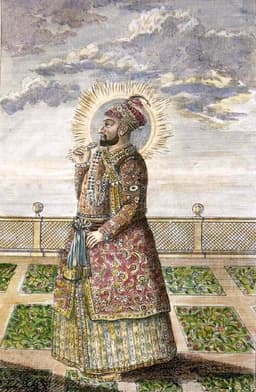
Hyder Ali
General · Modern
69.4Total
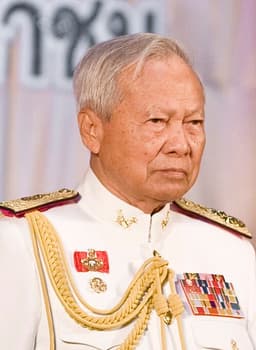
Prem Tinsulanonda
General · Modern
57.2Total
Basic Information
Born
1720
1920
Died
1782
—
Era
Modern
Modern
Nationality
India
Thailand
Occupation
General
General
Civilization
Indian
Eastern
Score Comparison
Military (10%)
80.0
50.0
Political (20%)
65.7
59.3
Influence (20%)
82.0
54.9
Legacy (20%)
56.0
47.5
Leadership (15%)
68.0
78.0
Strategy (15%)
68.0
60.0
TOTAL
69.4
57.2
Hyder Ali — Complete Timeline
1757 AD
Battle of PlasseyWar◆ Major
Hyder Ali, as a commander under the Wodeyar dynasty, participated in the Battle of Plassey indirectly by supporting the French against the British. However, his major role came later. This battle marked the beginning of British dominance in Bengal, which Hyder Ali would later challenge in the Carnatic Wars.
Carnatic WarsBritish East India CompanyMysore
Impact: regional
1761 AD
Capture of the throne of MysorePolitical Action◆ Major
Hyder Ali, a military commander, overthrew the Wodeyar ruler Krishnaraja Wodeyar II and established himself as the de facto ruler of Mysore. He imprisoned the maharaja and assumed full control, transforming Mysore into a powerful state through military reforms and expansion.
CoupMysore KingdomWodeyar Dynasty
Impact: regionaldestructive
1767 AD
First Anglo-Mysore WarWar◆ Major
Hyder Ali led Mysore against the British East India Company in the First Anglo-Mysore War. He formed alliances with the Nizam of Hyderabad and the Marathas. The war ended with the Treaty of Madras in 1769, which restored conquered territories and established a defensive alliance between Mysore and the British.
Anglo-Mysore WarsTreaty of MadrasBritish India
Impact: regional
1780 AD
Second Anglo-Mysore WarWar◆ Major
Hyder Ali launched the Second Anglo-Mysore War, attacking British territories in the Carnatic. He captured Arcot and defeated British forces at Pollilur. The war continued after his death in 1782, with his son Tipu Sultan taking command. The conflict ended with the Treaty of Mangalore in 1784.
Anglo-Mysore WarsBattle of PollilurTipu Sultan
Impact: regional
Prem Tinsulanonda — Complete Timeline
1980 AD
Appointed Prime Minister after a coupPolitical Action◆ Major
Prem Tinsulanonda was appointed Prime Minister of Thailand by the military after a coup. He served for over eight years, overseeing a period of political stability and economic growth.
Prime MinisterMilitary RuleStability
Impact: national
1981 AD
Survived a coup attemptPolitical Action◆ Major
Prem survived a coup attempt by military officers loyal to the 'Young Turks' faction. The coup failed due to lack of support and the loyalty of key military units, allowing Prem to remain in power.
Coup AttemptPolitical CrisisMilitary
Impact: national
1988 AD
Resigned as Prime MinisterPolitical Action◆ Major
Prem resigned as Prime Minister after the general election, handing over power to a civilian government led by Chatichai Choonhavan. His resignation marked a rare peaceful transition of power in Thai politics.
ResignationDemocratic TransitionPeaceful
Impact: nationalconstructive
2016 AD
Appointed Regent of ThailandPolitical Action
After the death of King Bhumibol, Prem was appointed Regent of Thailand until the ascension of King Maha Vajiralongkorn. He served as a key figure in the transition of the monarchy.
RegentMonarchyTransition
Impact: national
Expert Analysis
Prem Tinsulanonda vs Hyder Ali
# The Regent and the Sultan: Two Paths Through the Storm of Empire
On a humid morning in Bangkok in 1981, General Prem Tinsulanonda sat in his office, aware that tanks were rolling toward the capital. He had been prime minister for barely a year when the “Young Turks”—the very faction that had helped install him—turned against him. Across the Indian Ocean, nearly two centuries earlier, another general-turned-ruler faced a different kind of storm. Hyder Ali of Mysore, a man who had seized a throne with his sword, watched British columns advance through the Carnatic, knowing his kingdom’s survival depended on a single, desperate gamble. Both men stood at the crossroads of history, but the paths they chose, and the worlds they shaped, could not have been more different.
Origins
Prem Tinsulanonda was born in 1920 in Songkhla, southern Thailand, into a family of modest means but deep loyalty to the monarchy. His father was a schoolteacher, his mother a homemaker. The young Prem grew up under the shadow of absolute monarchy’s decline and the rise of military-dominated politics. He entered the Chulachomklao Royal Military Academy, where discipline and deference to hierarchy were drilled into him. By contrast, Hyder Ali was born in 1720 in the Deccan plateau of southern India, into a world of crumbling Mughal authority and rising European power. His father was a military commander in the service of the Wodeyar dynasty of Mysore. Hyder learned war not from textbooks but from the saddle, fighting alongside his father in campaigns against Marathas and rival chieftains. Where Prem’s world was one of institutional order, Hyder’s was a cauldron of shifting alliances and raw ambition.
Rise to Power
Prem’s ascent was gradual, almost bureaucratic. He served as a staff officer, then as a division commander, and eventually as army commander-in-chief. In 1980, after a bloodless coup ousted the civilian government, the military turned to Prem as a compromise figure—a general who was neither too ambitious nor too tied to any faction. He was appointed prime minister, a role he would hold for over eight years. Hyder Ali’s rise was far more violent. In 1761, he overthrew the Wodeyar ruler Krishnaraja Wodeyar II, declaring himself the de facto sultan of Mysore. He did not wait for a coup to hand him power; he took it. The contrast is stark: Prem entered office through a backroom deal; Hyder seized it through a palace coup.
Leadership & Governance
As prime minister, Prem governed with a light touch. He was known for his patience, his willingness to listen, and his skill at balancing the competing demands of the military, the monarchy, and emerging democratic forces. His political wisdom—scored at 68.8—lay in knowing when to act and when to wait. In 1981, when the Young Turks attempted a coup, he did not flee or fight. He simply waited, relying on the loyalty of the king and the army’s senior command. The coup collapsed. Hyder Ali, by contrast, ruled as a warrior-king. His military genius—scored at 87.4—was undeniable. He reorganized Mysore’s army, introduced modern European tactics, and forged alliances with the French. In the First Anglo-Mysore War of 1767, he humiliated the British East India Company, forcing them to sign a treaty on his terms. Yet his political acumen, scored at 66.2, was less refined. He ruled through fear as much as loyalty, and his kingdom was perpetually at war.
Triumph & Tragedy
Prem’s greatest triumph was not a battle but a transfer of power. In 1988, after a general election, he voluntarily resigned as prime minister, handing the government to the civilian leader Chatichai Choonhavan. This peaceful transition was rare in a country where coups were routine. His tragedy, if it can be called that, was that his legacy was overshadowed by the monarchy he served. Hyder Ali’s greatest moment came in 1780, when he launched the Second Anglo-Mysore War, capturing Arcot and inflicting heavy losses on the British. But his tragedy was that he died in 1782, just as victory seemed within reach. His son Tipu Sultan inherited a war he could not win, and Mysore would fall to the British within two decades.
Character & Destiny
Prem was a man of restraint. His leadership score of 89.0 reflects a leader who understood that power is not always exercised but conserved. He was a regent—first as prime minister, then as regent of Thailand after King Bhumibol’s death in 2016—a role that required humility and patience. Hyder Ali, with a leadership score of 71.2, was a man of fire. He saw the British not as a force to be managed but as an enemy to be destroyed. His strategy score of 66.4 suggests that while he was a brilliant tactician, he lacked the long-term vision to secure his dynasty’s survival. Prem’s destiny was to be a bridge between eras; Hyder’s was to be a flame that burned bright but briefly.
Legacy
Prem Tinsulanonda is remembered today as a stabilizing force in Thai politics, a man who served the monarchy and helped steer his country through turbulent times. His legacy score of 66.8 reflects a figure whose influence was real but subtle. Hyder Ali, with a legacy score of 68.1, is remembered as a fierce anti-colonial warrior, a precursor to the Indian independence movement. But his legacy is also one of tragedy—a reminder that resistance alone, without political sustainability, often ends in defeat.
Conclusion
Standing at the same crossroads, Prem and Hyder chose different paths. One walked the corridor of power with measured steps, ensuring his nation’s stability. The other charged into battle, determined to fight an empire to its knees. Their stories remind us that history judges not only by victories but by the peace a leader leaves behind. In the end, both men shaped their worlds—but only one shaped a world that outlasted him.
Rankings
🥇
Hyder AliLeader
Mil: 80.0Pol: 65.7Inf: 82.0
69.4
🥈
Prem Tinsulanonda
Mil: 50.0Pol: 59.3Inf: 54.9
57.2
+12.2 behind
How This Comparison Works
Algorithm
Each figure is scored on 6 dimensions (0—100 scale) based on structured historical data: Military (10%), Political (20%), Influence (20%), Legacy (20%), Leadership (15%), Strategy (15%). The weighted total produces the final ranking.
Data Sources
Scores are computed from structured sub-indicators in the database. Scale factors adjust for era (Ancient ×0.85, Modern ×1.0) and civilization size (Eastern ×1.05, Other ×0.80) to account for differences in population and military scale.
Maximum 3 Figures
Comparisons are limited to 2—3 figures to ensure readability and statistical meaningfulness.
Error Margins
±5 points per dimension — Sub-scores are derived from historical records with inherent uncertainty. Two figures within 5 points on a dimension should be considered roughly equivalent in that area.
Total Score Accuracy
±3 points overall — The weighted combination of 6 dimensions produces a total score with approximately ±3 points of uncertainty. Differences of less than 3 points are not statistically significant— the figures are effectively tied.
Known Limitations
- Historical records are incomplete and uneven across civilizations
- Figures from oral-tradition societies may be underrepresented
- Occupation labels can misclassify multi-role figures
- Scores measure capability and impact, not moral character
- Quantitative scoring is a comparison tool, not absolute truth
Capability Radar
Military (10%) — Battles & Warfare
Battles
78
20
Win Rate
72
25
Expansion
70
10
Political (20%) — Governance & Reform
Reform
70
55
Diplomacy
68
60
Economy
60
50
Influence (20%) — Cultural & Global Reach
Cultural
50
30
Global
50
30
Legacy (20%) — Historical Impact
Historical
55
40
Longevity
45
35
Leadership (15%) — Power & Stability
Tenure
65
65
Stability
55
60
Strategy (15%) — Tactics & Innovation
Strategy
80
30
Tactics
85
30
Reform
75
35
Similar Comparisons
Comments & Discussion
Tank-Slayer6/16/2026
Prem was a master of political timing, not military genius. When the Young Turks rebelled, he didn't fight—he waited them out, let them splinter, then invited the king to step in. That's not generalship; that's survivalism. Hyder Ali actually fought: at Pollilur in 1780, he crushed the British using rocket artillery and guerrilla tactics, killing 4,000 East India Company troops. One man bought time; the other snatched victory from empire. I know who I'd follow.
数据屠夫6/16/2026
对比数据?简直是个笑话。Prem 统治了1980到1988年,泰国GDP年增长约7%,背后是美军基地和冷战红利。Hyder 1799年就死了,死后Mysore瞬间被英军吞并。一个靠地缘躺着赢,一个被历史碾碎。别拿帝王将相的叙事洗脑我,看数字:Prem搭上全球化快车,Hyder连条铁路都没有。公平吗?不。但历史从来不是公平的。
Classics Connoisseur6/16/2026
The real contrast is legitimacy. Prem held power by channeling the monarchy's sacred aura—he was a regent in waiting, never a king. Hyder seized the throne by murdering the prime minister and sidelining the Wodeyar boy-king. One ruled through constitutional shadow; the other through naked force. And yet Hyder modernized his army with European mercenaries and French-supplied muskets. Prem? He kept Thailand feudal. Efficiency over tradition? I'd pick the man who reinvented war, not the one who pre
兵棋小子6/16/2026
俩人根本不是一个量级。Hyder 在1760年代就搞出火箭兵旅,射程超过一公里,比英军还早二十年。Prem 最大的军事成就是1985年用"心理战"劝降了几个叛军头子。拜托,一个发明了不对称战术的革新手,一个只会背图表的政客,还比什么?Hyder 的火箭技术后来被英国偷学,改造成了康格里夫火箭,炸遍了欧洲。Prem 呢?连兵变都压不住,得靠国王救场。
Revolutionary Critic6/16/2026
Neither man was a revolutionary. Prem was a monarchist enforcer who crushed student protests in 1973 and 1976, then later "stabilized" Thailand for elite continuity. Hyder was a feudal lord who built a centralized state to squeeze peasants harder for war. The difference? One wore a general's uniform to defend a dying social order; the other wore a sultan's robes to replace one tyranny with another. Winners in their time, but both sides of the same oppressive coin. History remembers the gloss, no