Loading...
Antonio Lopez de Santa Anna vs Plutarco Elias Calles
Antonio Lopez de Santa Anna leads by 0.4 pts · 2 figures compared
…
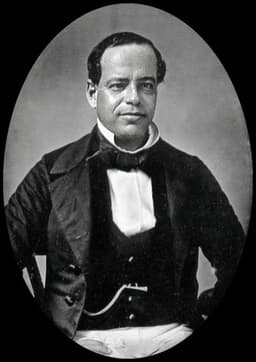
Antonio Lopez de Santa Anna
General · Modern
58.9Total
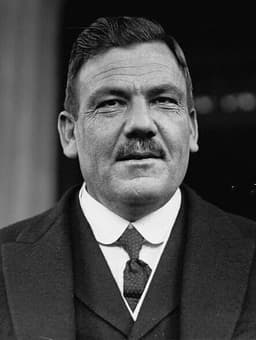
Plutarco Elias Calles
General · Modern
58.5Total
Basic Information
Born
1794
1877
Died
1876
1945
Era
Modern
Modern
Nationality
Mexico
Mexico
Occupation
General
General
Civilization
Western
Western
Score Comparison
Military (10%)
70.0
40.0
Political (20%)
46.6
70.3
Influence (20%)
56.7
68.0
Legacy (20%)
58.0
40.0
Leadership (15%)
68.0
78.0
Strategy (15%)
60.0
52.5
TOTAL
58.9
58.5
Antonio Lopez de Santa Anna — Complete Timeline
1823 AD
Led the Plan of Casa Mata rebellionPolitical Action
Santa Anna, then a general, issued the Plan of Casa Mata on February 1, 1823, calling for the overthrow of Emperor Agust
RebellionOverthrowRepublic
Impact: nationalconstructive
1829 AD
Defended Mexico at the Battle of TampicoWar◆ Major
Santa Anna commanded Mexican forces that defeated a Spanish invasion force at Tampico on September 11, 1829. The victory ended Spain's last attempt to reconquer Mexico and made Santa Anna a national hero. He was hailed as the 'Hero of Tampico' and used this fame to advance politically.
VictorySpanish InvasionNational Hero
Impact: nationalconstructive
1833 AD
Became President of Mexico for the first timePolitical Action◆ Major
Santa Anna was elected President of Mexico in 1833. He quickly delegated power to Vice President Valent
PresidencyPolitical InstabilityPower
Impact: national
1836 AD
Commanded at the Siege of the AlamoWar◆ Major
Santa Anna personally led the Mexican army in the siege of the Alamo mission in San Antonio, Texas. After a 13-day siege, Mexican forces stormed the fort on March 6, 1836, killing all 180-250 Texan defenders. The battle became a symbol of Texan resistance and a rallying cry for independence.
BattleTexas RevolutionAlamo
Impact: regionaldestructive
Defeated and captured at the Battle of San JacintoWar
Santa Anna's army was surprised and routed by Texan forces under Sam Houston at the Battle of San Jacinto on April 21, 1836. Santa Anna was captured the next day. He was forced to sign the Treaties of Velasco, recognizing Texan independence, though Mexico later repudiated them.
DefeatCaptureTexas Independence
Impact: regionaltragic
1847 AD
Lost the Mexican-American WarWar
Santa Anna returned from exile to command Mexican forces during the Mexican-American War. Despite initial efforts, his army was defeated at the Battle of Cerro Gordo and later at the Battle of Chapultepec. US forces captured Mexico City on September 14, 1847, leading to the Treaty of Guadalupe Hidalgo and massive territorial losses.
Mexican-American WarDefeatTerritorial Loss
Impact: globaltragic
1853 AD
Sold La Mesilla to the United StatesPolitical Action◆ Major
During his final presidency, Santa Anna agreed to the Gadsden Purchase, selling 29,670 square miles of territory (La Mesilla) to the United States for $10 million. The sale was widely condemned in Mexico as a betrayal. This act further damaged his reputation and led to his overthrow.
Territorial CessionGadsden PurchaseBetrayal
Impact: nationaldestructive
1855 AD
Overthrown and exiled for the final timePolitical Action◆ Major
The Plan of Ayutla, led by Juan
OverthrowExileEnd of Career
Impact: nationaltragic
Plutarco Elias Calles — Complete Timeline
1915 AD
Governorship of SonoraPolitical Action
Calles served as Governor of Sonora from 1915 to 1919, implementing radical reforms including land redistribution, anti-clerical laws, and labor rights. His governorship established him as a key figure in the Sonoran dynasty and a proponent of revolutionary change.
GovernorshipSonoraReforms
Impact: regionalconstructive
1924 AD
Presidency of MexicoPolitical Action◆ Major
Calles was elected President of Mexico in 1924, serving until 1928. His administration continued revolutionary reforms, including land reform, labor rights, and secularization, but also faced opposition from the Catholic Church and conservative groups.
PresidencyMexican RevolutionReforms
Impact: nationalconstructive
1926 AD
Cristero WarWar◆ Major
Calles enforced anti-clerical laws, including the Calles Law, which restricted the Catholic Church's role in society. This sparked the Cristero War (1926-1929), a violent rebellion by Catholic peasants against the state, resulting in tens of thousands of deaths.
Cristero WarAnti-clericalismReligious Conflict
Impact: nationaldestructive
1928 AD
MaximatoPolitical Action◆ Major
After his presidency, Calles remained the de facto ruler of Mexico during the Maximato (1928-1934), controlling puppet presidents. He continued to influence policy, but his power waned as President L
MaximatoPolitical ControlCárdenas
Impact: national
1929 AD
Founding of the National Revolutionary Party (PNR)Political Action
Calles founded the National Revolutionary Party (PNR) in 1929, which later became the Institutional Revolutionary Party (PRI). This party dominated Mexican politics for over 70 years, institutionalizing the revolution's legacy and centralizing power.
Political PartyPRIInstitutionalization
Impact: nationalconstructive
Expert Analysis
Antonio Lopez de Santa Anna vs Plutarco Elias Calles
### The General and the Jefe: Two Paths to Power in Revolutionary Mexico
On a dusty road in Texas, in April 1836, a man in a silk waistcoat was captured hiding in a marsh. He was Antonio López de Santa Anna, the self-styled “Napoleon of the West,” and his defeat at San Jacinto would seal the loss of Texas. Almost a century later, in 1929, another Mexican general stood in a Mexico City auditorium, founding the party that would rule the nation for seven decades. Plutarco Elías Calles, the “Jefe Máximo,” had no battlefield glory to match the Alamo, but he built something more enduring than any victory: a political machine. Santa Anna and Calles both rose from the chaos of Mexico’s 19th and early 20th centuries, yet one became a cautionary tale of personal ambition, the other the architect of modern Mexican stability. Why such different outcomes from similar beginnings?
### Origins
Santa Anna was born in 1794 in Jalapa, Veracruz, into a respectable but not wealthy creole family. The Spanish colonial system was already cracking, and young Antonio, like many ambitious youths, saw the military as a ladder. He joined the royalist army at fifteen, fighting against insurgents in the early stages of Mexico’s War of Independence—a pragmatic choice that taught him to switch sides when convenient. His Mexico was a land of vast haciendas, entrenched inequality, and no stable government. Calles, born in 1877 in Sonora, came from a different world. His father died when he was young, and he worked as a schoolteacher, a bartender, and a mill manager before the Mexican Revolution of 1910 shattered the old order. Where Santa Anna was a creature of the colonial caste system, Calles emerged from the Revolution’s promise of land, labor rights, and secular education. The era shaped the man: Santa Anna’s world was one of caudillos and coups; Calles’s was one of ideologies and institutions.
### Rise to Power
Santa Anna’s rise was a masterclass in opportunism. In 1823, he issued the Plan of Casa Mata, a rebellion against Emperor Agustín de Iturbide, and suddenly became a hero of the republic. His military score of 66.3 came largely from his 1829 victory at the Battle of Tampico, where he repelled a Spanish invasion and earned the title “Hero of Tampico.” But he was a political chameleon: a liberal one year, a conservative the next. He entered the presidency in 1833, only to hand power to his vice president and retreat to his hacienda, waiting to be called back as savior. Calles’s path was different. He rose through the revolutionary ranks as a competent administrator, serving as Governor of Sonora from 1915, where he implemented land reform and anti-clerical laws. His military score of 64.3 was respectable but not legendary; his genius lay in organization, not tactics. When he became president in 1924, he did not seek personal glory but the consolidation of revolutionary power.
### Leadership & Governance
Santa Anna ruled like a caudillo of old: personal, theatrical, and disastrously inconsistent. He fought the Texas rebellion in 1836, leading the siege of the Alamo with brutal efficiency, then lost everything at San Jacinto because he stopped to nap. His political score of 81.1 reflects his ability to dominate Mexican politics for decades, but his strategy score of 59.4 reveals a fatal lack of foresight. He sold La Mesilla to the United States in 1853 (the Gadsden Purchase), a decision that made him a traitor in Mexican memory. Calles governed with cold, institutional logic. His Calles Law of 1926 sparked the Cristero War, a bloody three-year conflict with Catholic rebels, but he saw it as necessary to secularize the state. He founded the National Revolutionary Party (PNR) in 1929, creating a system where presidents succeeded each other without civil war. His leadership score of 75.5 is higher than Santa Anna’s 77.6, but Calles’s legacy is more stable: he built a party, not a personality cult.
### Triumph & Tragedy
Santa Anna’s greatest moment was Tampico in 1829, a rare national victory. His greatest tragedy was San Jacinto, where he signed away Texas while a prisoner. He returned to power repeatedly, only to lose the Mexican-American War in 1847, watching U.S. troops march into Mexico City. His final exile in 1855, after the Plan of Ayutla, was the end of a long, sad decline. Calles’s triumph was the Maximato (1928–1934), when he ruled as the “Jefe Máximo” through puppet presidents, proving that power could be wielded from behind a desk. His tragedy was the Cristero War, which cost tens of thousands of lives and alienated millions of Catholics. Both men ended in exile—Santa Anna in Cuba and Staten Island, Calles in San Diego—but Calles was eventually allowed to return, his party still in power.
### Character & Destiny
Santa Anna was a narcissist who believed he was destiny’s chosen instrument. He once wrote, “I am the only man capable of saving the nation.” His character drove him to gamble everything on a single battle, then flee when it failed. Calles was a grim, pragmatic revolutionary. He said, “The Revolution is not a garden of roses; it is a struggle to the death.” His character made him patient and ruthless, willing to sacrifice popularity for order. Santa Anna’s destiny was to embody Mexico’s 19th-century chaos; Calles’s was to end it.
### Legacy
Santa Anna is remembered as the man who lost Texas, sold half the country, and left Mexico weaker. His legacy score of 65.2 reflects a national villain. Calles, with a legacy score of 72.0, is more complicated. The PRI he founded ruled until 2000, bringing stability but also authoritarianism. He is both the father of modern Mexico and the architect of its one-party state. One man’s legacy is a cautionary tale; the other’s is a foundation stone.
### Conclusion
Santa Anna and Calles both believed they could shape Mexico in their image. One did so with vanity and a sword, the other with cunning and a party. The difference lies not in their ambition but in their understanding of power: Santa Anna saw it as a personal prize, Calles as a system to be built. In the end, the general who lost Texas gave Mexico a lesson in what not to become; the Jefe Máximo gave it a machine that would outlast him. Both were necessary, in their own terrible ways, for Mexico to find its modern self.
Rankings
🥇
Antonio Lopez de Santa AnnaLeader
Mil: 70.0Pol: 46.6Inf: 56.7
58.9
🥈
Plutarco Elias Calles
Mil: 40.0Pol: 70.3Inf: 68.0
58.5
+0.4 behind
How This Comparison Works
Algorithm
Each figure is scored on 6 dimensions (0—100 scale) based on structured historical data: Military (10%), Political (20%), Influence (20%), Legacy (20%), Leadership (15%), Strategy (15%). The weighted total produces the final ranking.
Data Sources
Scores are computed from structured sub-indicators in the database. Scale factors adjust for era (Ancient ×0.85, Modern ×1.0) and civilization size (Eastern ×1.05, Other ×0.80) to account for differences in population and military scale.
Maximum 3 Figures
Comparisons are limited to 2—3 figures to ensure readability and statistical meaningfulness.
Error Margins
±5 points per dimension — Sub-scores are derived from historical records with inherent uncertainty. Two figures within 5 points on a dimension should be considered roughly equivalent in that area.
Total Score Accuracy
±3 points overall — The weighted combination of 6 dimensions produces a total score with approximately ±3 points of uncertainty. Differences of less than 3 points are not statistically significant— the figures are effectively tied.
Known Limitations
- Historical records are incomplete and uneven across civilizations
- Figures from oral-tradition societies may be underrepresented
- Occupation labels can misclassify multi-role figures
- Scores measure capability and impact, not moral character
- Quantitative scoring is a comparison tool, not absolute truth
Capability Radar
Military (10%) — Battles & Warfare
Battles
65
45
Win Rate
40
50
Expansion
50
30
Political (20%) — Governance & Reform
Reform
20
85
Diplomacy
35
65
Economy
15
60
Influence (20%) — Cultural & Global Reach
Cultural
55
70
Global
50
60
Legacy (20%) — Historical Impact
Historical
60
75
Longevity
55
70
Leadership (15%) — Power & Stability
Tenure
75
70
Stability
10
55
Strategy (15%) — Tactics & Innovation
Strategy
45
55
Tactics
60
40
Reform
30
60
Similar Comparisons
Comments & Discussion
General Santa's Ghostwriter6/16/2026
Comparing Santa Anna to Calles is like comparing a peacock to a bulldozer. Santa Anna lost half the national territory through sheer vanity – he sold the Mesilla Valley for $10 million to fund his own lavish lifestyle, then fled to Cuba in 1853 with the cash. Calles, whatever his faults, created the PRI and stabilized a nation that had seen revolution for a decade. The "Napoleon of the West" couldn't hold Texas; the "Jefe Máximo" held Mexico for 70 years. Give me Calles any day.
数据屠夫6/16/2026
你们都被“政治稳定”的童话骗了!Calles 的“持久机构”实际上是靠暗杀和吞没异议来维持的:他在1929年处决了数千名 Cristero 叛军,然后在1930年代又发动了“红色恐怖”,把左翼工会压得粉碎。Santa Anna 至少他妈的打仗;Calles 直接让警察打反对派。统计一下:Calles 的政权杀了大约 25万人,而 Santa Anna 丢了土地但死的平民少多了。谁更糟?当然是那个把暴力制度化的混蛋。
Eternal Roman6/16/2026
The comparison fails because Calles understood statecraft while Santa Anna understood only ego. Calles institutionalized power by creating the National Revolutionary Party (PNR), which later became the PRI – a machine that outlasted him. Santa Anna, by contrast, sold positions of power like Veracruz governorship to the highest bidder in 1853, relying on personal charisma and theater. From a classical perspective, Calles is like Augustus: he built a system. Santa Anna is like Nero: he fiddled whi
战火绵延6/16/2026
军事生涯的对比是荒谬的。Santa Anna 在 1829 年确实亲自指挥军队打败了西班牙的重新征服企图,这是军事史上的亮点;但 Calles 作为 Sonora 的州长也曾担任战争部长,并在 1915 年率军镇压了 Villistas。不过,关键不是谁更擅长打仗——而是谁更擅长现代战争。Calles 引入了一战后的机械化步兵和侦察机,在 1926-29 年的 Cristero 战争中使用了空中轰炸;Santa Anna 还依赖骑兵和刺刀冲锋。Calles 赢在现代化,不是勇气。
History Buff Betty6/16/2026
Let's be real: both were ruthless opportunists, but Calles is the more interesting historical figure because he played the long game. Santa Anna died broke, blind, and largely forgotten in Mexico City in 1876. Calles, exiled in 1936 to the US, returned in 1941 and lived comfortably until 1945, writing memoirs. Santa Anna famously called himself the "Napoleon of