Loading...
Antonio Lopez de Santa Anna vs Nicolas Soult
Nicolas Soult leads by 3.8 pts · 2 figures compared
…
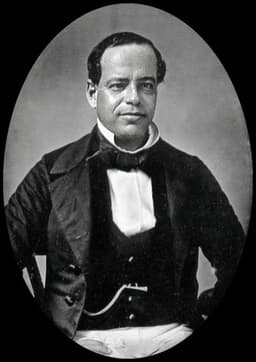
Antonio Lopez de Santa Anna
General · Modern
58.9Total
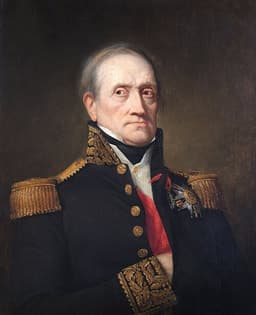
Nicolas Soult
General · Modern
62.7Total
Basic Information
Born
1794
1769
Died
1876
1851
Era
Modern
Modern
Nationality
Mexico
France
Occupation
General
General
Civilization
Western
Western
Score Comparison
Military (10%)
70.0
74.7
Political (20%)
46.6
55.0
Influence (20%)
56.7
61.0
Legacy (20%)
58.0
54.0
Leadership (15%)
68.0
78.0
Strategy (15%)
60.0
65.4
TOTAL
58.9
62.7
Antonio Lopez de Santa Anna — Complete Timeline
1823 AD
Led the Plan of Casa Mata rebellionPolitical Action
Santa Anna, then a general, issued the Plan of Casa Mata on February 1, 1823, calling for the overthrow of Emperor Agust
RebellionOverthrowRepublic
Impact: nationalconstructive
1829 AD
Defended Mexico at the Battle of TampicoWar◆ Major
Santa Anna commanded Mexican forces that defeated a Spanish invasion force at Tampico on September 11, 1829. The victory ended Spain's last attempt to reconquer Mexico and made Santa Anna a national hero. He was hailed as the 'Hero of Tampico' and used this fame to advance politically.
VictorySpanish InvasionNational Hero
Impact: nationalconstructive
1833 AD
Became President of Mexico for the first timePolitical Action◆ Major
Santa Anna was elected President of Mexico in 1833. He quickly delegated power to Vice President Valent
PresidencyPolitical InstabilityPower
Impact: national
1836 AD
Commanded at the Siege of the AlamoWar◆ Major
Santa Anna personally led the Mexican army in the siege of the Alamo mission in San Antonio, Texas. After a 13-day siege, Mexican forces stormed the fort on March 6, 1836, killing all 180-250 Texan defenders. The battle became a symbol of Texan resistance and a rallying cry for independence.
BattleTexas RevolutionAlamo
Impact: regionaldestructive
Defeated and captured at the Battle of San JacintoWar
Santa Anna's army was surprised and routed by Texan forces under Sam Houston at the Battle of San Jacinto on April 21, 1836. Santa Anna was captured the next day. He was forced to sign the Treaties of Velasco, recognizing Texan independence, though Mexico later repudiated them.
DefeatCaptureTexas Independence
Impact: regionaltragic
1847 AD
Lost the Mexican-American WarWar
Santa Anna returned from exile to command Mexican forces during the Mexican-American War. Despite initial efforts, his army was defeated at the Battle of Cerro Gordo and later at the Battle of Chapultepec. US forces captured Mexico City on September 14, 1847, leading to the Treaty of Guadalupe Hidalgo and massive territorial losses.
Mexican-American WarDefeatTerritorial Loss
Impact: globaltragic
1853 AD
Sold La Mesilla to the United StatesPolitical Action◆ Major
During his final presidency, Santa Anna agreed to the Gadsden Purchase, selling 29,670 square miles of territory (La Mesilla) to the United States for $10 million. The sale was widely condemned in Mexico as a betrayal. This act further damaged his reputation and led to his overthrow.
Territorial CessionGadsden PurchaseBetrayal
Impact: nationaldestructive
1855 AD
Overthrown and exiled for the final timePolitical Action◆ Major
The Plan of Ayutla, led by Juan
OverthrowExileEnd of Career
Impact: nationaltragic
Nicolas Soult — Complete Timeline
1805 AD
Battle of AusterlitzWar◆ Major
Soult commanded the IV Corps at Austerlitz. He led the assault on the Pratzen Heights, breaking the Allied center and securing the decisive French victory.
Napoleonic WarsBattleCorps Command
Impact: global
1806 AD
Battle of Jena-AuerstedtWar◆ Major
Soult commanded the IV Corps at Jena. His forces pursued the retreating Prussian army, capturing thousands of prisoners and contributing to the collapse of the Prussian state.
Napoleonic WarsBattlePursuit
Impact: regional
1811 AD
Battle of AlbueraWar◆ Major
Soult commanded the French army at Albuera in Spain. His forces fought a bloody battle against the Anglo-Spanish army, resulting in a tactical stalemate but strategic French withdrawal.
Peninsular WarBattleStalemate
Impact: regional
1814 AD
Battle of ToulouseWar◆ Major
Soult commanded the French army at Toulouse against Wellington. The battle occurred after Napoleon's abdication, and Soult surrendered the city, ending the Peninsular War.
Peninsular WarBattleDefeat
Impact: regional
1830 AD
Minister of WarPolitical Action◆ Major
Soult served as Minister of War under King Louis-Philippe. He reorganized the French army, introduced conscription reforms, and prepared for colonial campaigns in Algeria.
MinistryReformsJuly Monarchy
Impact: nationalconstructive
1832 AD
Prime Minister of FrancePolitical Action◆ Major
Soult served as Prime Minister of France under Louis-Philippe. His government focused on maintaining order, suppressing republican uprisings, and consolidating the July Monarchy.
Prime MinisterJuly MonarchyGovernment
Impact: national
Expert Analysis
Antonio Lopez de Santa Anna vs Nicolas Soult
# The General Who Could Not Stop: Santa Anna and Soult
On a spring morning in 1836, two men faced radically different fates. In Texas, Antonio López de Santa Anna awoke from a nap to the sound of bugles and gunfire, his army scattered by a desperate charge at San Jacinto. He would spend the next day hiding in a marsh, captured and humiliated. In Paris, Nicolas Soult sat in the Chamber of Deputies, a marshal of France who had once broken the Allied center at Austerlitz, now turning his talents to the art of governance. Both men were soldiers who became rulers, yet one ended his days in squalid exile, the other as a respected elder statesman. What drove them down such different paths?
Origins
Santa Anna was born in 1794 in Jalapa, a provincial town in New Spain, into a respectable but not wealthy family. The world he entered was one of rigid hierarchy and simmering discontent—a colony on the verge of revolution. Young Antonio, restless and ambitious, joined the Spanish army at sixteen, learning his trade in the brutal counterinsurgency campaigns against Mexican rebels. He was a creature of his time: the chaotic birth of a nation demanded boldness, not patience.
Nicolas Soult, born in 1769 in Saint-Amans-la-Bastide, came from a family of lawyers and notaries. The French Revolution shattered the old order when he was a young man, and he enlisted in the revolutionary armies in 1791. Unlike Santa Anna, who grew up in a world of colonial deference, Soult breathed the air of revolutionary meritocracy. His France was a forge that turned talent into rank, and he rose on the strength of his courage and tactical mind.
Rise to Power
Santa Anna’s path to power was a series of calculated betrayals. In 1823, he issued the Plan of Casa Mata, a rebellion that toppled Emperor Agustín de Iturbide—the very man he had once served. This was his signature move: switch sides at the right moment, claim credit for victory, and emerge stronger. He understood that in Mexico’s volatile politics, loyalty was a weakness.
Soult’s rise was steeper and more earned. At the Battle of Austerlitz in 1805, he commanded the IV Corps in the decisive assault on the Pratzen Heights, a maneuver that Napoleon himself called his masterpiece. Soult was not a political chameleon; he was a military instrument of genius, shaped by the Revolution’s demand for competence. When Napoleon fell, Soult served the Bourbons, then Napoleon again during the Hundred Days, then the Bourbons once more—but his shifts were those of a soldier following orders, not a politician scheming for power.
Leadership & Governance
Santa Anna governed as he fought: with theatrical flair and no long-term strategy. He became president in 1833 but quickly delegated power to his vice president, preferring the title of “Hero of Tampico” to the mundane work of administration. His leadership was personal, not institutional—he ruled through charisma and patronage, leaving Mexico’s treasury bankrupt and its army demoralized. The Gadsden Purchase of 1853, in which he sold 29,670 square miles of territory to the United States, was the final act of a man who saw the nation as his estate.
Soult, by contrast, was a builder. As Minister of War in 1830 under King Louis-Philippe, he reorganized the French army and introduced conscription reforms that modernized its structure. As Prime Minister in 1832, he focused on suppressing republican uprisings and maintaining order—not for personal glory, but for the stability of the state. His military genius at Albuera in 1811, where he fought the British to a bloody stalemate, and at Toulouse in 1814, where he held his ground even after Napoleon’s abdication, showed a commander who could adapt to defeat as well as victory.
Triumph & Tragedy
Santa Anna’s greatest triumph was the defense of Tampico in 1829, where he crushed a Spanish invasion force and became the nation’s hero. But his tragedy was the Alamo. The 13-day siege in 1836 was a tactical victory—he killed every defender—but a strategic disaster. The massacre galvanized Texan resistance, and weeks later he was captured at San Jacinto, forced to sign away Texas. The Mexican-American War of 1847 was worse: he returned from exile to command, but his army was shattered, and he lost half his country’s territory.
Soult’s triumphs were purer. At Austerlitz, he broke the Allied center and sealed Napoleon’s greatest victory. At Jena-Auerstedt in 1806, he pursued the shattered Prussian army, capturing thousands. His tragedy was Albuera: a battle so bloody that both sides claimed victory, but where Soult’s failure to destroy the Anglo-Spanish army cost France the initiative in Spain. Still, he never lost a country.
Character & Destiny
Santa Anna was a man of immense personal charm and zero self-discipline. He loved gambling, cockfighting, and the adoration of crowds. His decisions were impulsive, his alliances temporary. He believed in his own myth—the “Napoleon of the West”—and when reality contradicted it, he blamed others. His overthrow in 1855 under the Plan of Ayutla was the final verdict of a nation tired of his chaos.
Soult was cold, calculating, and patient. He was nicknamed “King Nicolas” for his love of pomp, but he never confused himself with his master. He understood that power required institutions, not just applause. When he died in 1851, he was one of the last surviving marshals of the Empire, a man who had served every regime and been trusted by none—yet respected by all.
Legacy
Santa Anna is remembered in Mexico as a traitor and a fool, the man who lost Texas and sold the Mesilla Valley. His name is a curse. In Texas, he is the villain of the Alamo, a cautionary tale of hubris.
Soult is remembered as a competent marshal and a capable administrator. His reforms outlasted him, and his name graces a street in Paris. He is not a hero, but he is not a villain either—he is a professional who did his duty.
Conclusion
The difference between these two generals is the difference between a man who believed he was the state and a man who served the state. Santa Anna’s Mexico was too fragile for his ambition; Soult’s France was too strong for his pride. One died in poverty, the other in honor. In the end, history rewards those who build, not those who burn.
Rankings
🥇
Nicolas SoultLeader
Mil: 74.7Pol: 55.0Inf: 61.0
62.7
🥈
Antonio Lopez de Santa Anna
Mil: 70.0Pol: 46.6Inf: 56.7
58.9
+3.8 behind
How This Comparison Works
Algorithm
Each figure is scored on 6 dimensions (0—100 scale) based on structured historical data: Military (10%), Political (20%), Influence (20%), Legacy (20%), Leadership (15%), Strategy (15%). The weighted total produces the final ranking.
Data Sources
Scores are computed from structured sub-indicators in the database. Scale factors adjust for era (Ancient ×0.85, Modern ×1.0) and civilization size (Eastern ×1.05, Other ×0.80) to account for differences in population and military scale.
Maximum 3 Figures
Comparisons are limited to 2—3 figures to ensure readability and statistical meaningfulness.
Error Margins
±5 points per dimension — Sub-scores are derived from historical records with inherent uncertainty. Two figures within 5 points on a dimension should be considered roughly equivalent in that area.
Total Score Accuracy
±3 points overall — The weighted combination of 6 dimensions produces a total score with approximately ±3 points of uncertainty. Differences of less than 3 points are not statistically significant— the figures are effectively tied.
Known Limitations
- Historical records are incomplete and uneven across civilizations
- Figures from oral-tradition societies may be underrepresented
- Occupation labels can misclassify multi-role figures
- Scores measure capability and impact, not moral character
- Quantitative scoring is a comparison tool, not absolute truth
Capability Radar
Military (10%) — Battles & Warfare
Battles
65
75
Win Rate
40
70
Expansion
50
65
Political (20%) — Governance & Reform
Reform
20
55
Diplomacy
35
65
Economy
15
50
Influence (20%) — Cultural & Global Reach
Cultural
55
45
Global
50
50
Legacy (20%) — Historical Impact
Historical
60
55
Longevity
55
50
Leadership (15%) — Power & Stability
Tenure
75
70
Stability
10
55
Strategy (15%) — Tactics & Innovation
Strategy
45
72
Tactics
60
78
Reform
30
60
Similar Comparisons
Comments & Discussion
REVOLUTIONARY BREAKER6/16/2026
"The real difference? Soult fought *with* France's revolution, not against it like Santa Anna fought Mexico's. Soult rose through merit under Napoleon—crossing the St. Bernard Pass, smashing Austrian lines at Austerlitz. Santa Anna? He was a royalist who switched coats whenever it paid. At San Jacinto, his army had no loyalty because *he* had no principles. That's why Soult governed France honorably while Santa Anna sold half of Mexico."
数据打假师6/16/2026
"光比战绩就是耍流氓。苏尔特带的是法兰西帝国军——欧洲顶级装备加参谋体系。圣安纳带的什么?墨西哥民兵加土著,连弹药都凑不齐。1836年圣哈辛托,他部队里四成是刚抓的壮丁,连枪都没摸过。苏尔特要是换到这种底盘,照样输给休斯顿。别拿拿破仑体系对比殖民地拼凑军,起点根本不在一个量级。"
CLASSICUS VULTUR6/16/2026
"Ignore the battlefield—look at their *survival*. Santa Anna fled San Jacinto disguised as a peasant, his identity given away by his silk undergarments. Soult, when captured by Wellington, simply negotiated parole and returned to high command. One ended as a pariah selling chicle gum in New York; the other as Prime Minister. The difference isn't talent—it's that Soult understood war as a profession, not a personal vendetta. Santa Anna's ego was always his worst general."
草根叙事者6/16/2026
"老百姓看这俩人,苏尔特像贵族打牌——输了换个桌继续玩;圣安纳像赌徒押命,输了就砍手。苏尔特战败后能当首相,因为法国有稳定政治机器。圣安纳的墨西哥呢?1821到1848换了三十多个总统,每一任都在拆台。他卖领土不是人坏,是体系早就烂透了——国弱时英雄也变狗熊。"
COUNTERFACTUAL SHOCKER6/16/2026
"Swap their commands in 1808: Soult in Mexico, Santa Anna in Spain. Soult would've crushed the Texan rebellion with disciplined logistics and defections—he knew how to bribe local elites (look at his 1823 campaign in Spain). Santa Anna facing Wellington? He'd get annihilated at Vitoria, then sell his uniform for brandy. The real tragedy is that Santa Anna had to fight his wars in a country without institutions. Soult had a state behind him. That's the whole story."