Loading...
Antonio Lopez de Santa Anna vs Marouf al-Bakhit
Antonio Lopez de Santa Anna leads by 17.3 pts · 2 figures compared
…
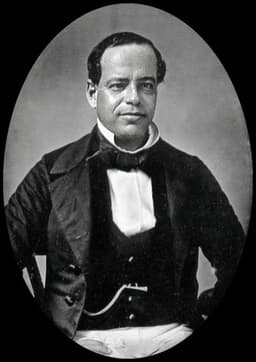
Antonio Lopez de Santa Anna
General · Modern
58.9Total
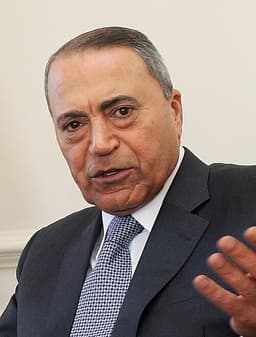
Marouf al-Bakhit
General · Modern
41.6Total
Basic Information
Born
1794
1947
Died
1876
—
Era
Modern
Modern
Nationality
Mexico
Jordan
Occupation
General
General
Civilization
Western
Middle Eastern
Score Comparison
Military (10%)
70.0
10.2
Political (20%)
46.6
61.3
Influence (20%)
56.7
48.6
Legacy (20%)
58.0
38.3
Leadership (15%)
68.0
40.0
Strategy (15%)
60.0
36.8
TOTAL
58.9
41.6
Antonio Lopez de Santa Anna — Complete Timeline
1823 AD
Led the Plan of Casa Mata rebellionPolitical Action
Santa Anna, then a general, issued the Plan of Casa Mata on February 1, 1823, calling for the overthrow of Emperor Agust
RebellionOverthrowRepublic
Impact: nationalconstructive
1829 AD
Defended Mexico at the Battle of TampicoWar◆ Major
Santa Anna commanded Mexican forces that defeated a Spanish invasion force at Tampico on September 11, 1829. The victory ended Spain's last attempt to reconquer Mexico and made Santa Anna a national hero. He was hailed as the 'Hero of Tampico' and used this fame to advance politically.
VictorySpanish InvasionNational Hero
Impact: nationalconstructive
1833 AD
Became President of Mexico for the first timePolitical Action◆ Major
Santa Anna was elected President of Mexico in 1833. He quickly delegated power to Vice President Valent
PresidencyPolitical InstabilityPower
Impact: national
1836 AD
Commanded at the Siege of the AlamoWar◆ Major
Santa Anna personally led the Mexican army in the siege of the Alamo mission in San Antonio, Texas. After a 13-day siege, Mexican forces stormed the fort on March 6, 1836, killing all 180-250 Texan defenders. The battle became a symbol of Texan resistance and a rallying cry for independence.
BattleTexas RevolutionAlamo
Impact: regionaldestructive
Defeated and captured at the Battle of San JacintoWar
Santa Anna's army was surprised and routed by Texan forces under Sam Houston at the Battle of San Jacinto on April 21, 1836. Santa Anna was captured the next day. He was forced to sign the Treaties of Velasco, recognizing Texan independence, though Mexico later repudiated them.
DefeatCaptureTexas Independence
Impact: regionaltragic
1847 AD
Lost the Mexican-American WarWar
Santa Anna returned from exile to command Mexican forces during the Mexican-American War. Despite initial efforts, his army was defeated at the Battle of Cerro Gordo and later at the Battle of Chapultepec. US forces captured Mexico City on September 14, 1847, leading to the Treaty of Guadalupe Hidalgo and massive territorial losses.
Mexican-American WarDefeatTerritorial Loss
Impact: globaltragic
1853 AD
Sold La Mesilla to the United StatesPolitical Action◆ Major
During his final presidency, Santa Anna agreed to the Gadsden Purchase, selling 29,670 square miles of territory (La Mesilla) to the United States for $10 million. The sale was widely condemned in Mexico as a betrayal. This act further damaged his reputation and led to his overthrow.
Territorial CessionGadsden PurchaseBetrayal
Impact: nationaldestructive
1855 AD
Overthrown and exiled for the final timePolitical Action◆ Major
The Plan of Ayutla, led by Juan
OverthrowExileEnd of Career
Impact: nationaltragic
Marouf al-Bakhit — Complete Timeline
2005 AD
Appointed Prime Minister of JordanPolitical Action◆ Major
King Abdullah II appointed Marouf al-Bakhit as Prime Minister of Jordan in November 2005, following the 2005 Amman bombings. Al-Bakhit, a former intelligence chief, was tasked with restoring security and stability.
JordanPrime MinisterAppointment
Impact: national
2007 AD
Resigned as Prime MinisterPolitical Action
Marouf al-Bakhit resigned as Prime Minister of Jordan in November 2007 after parliamentary elections. His resignation followed criticism of economic policies and political reforms.
JordanPrime MinisterResignation
Impact: national
2011 AD
Appointed Prime Minister for Second TermPolitical Action◆ Major
King Abdullah II appointed Marouf al-Bakhit as Prime Minister again in February 2011, during the Arab Spring protests. Al-Bakhit was tasked with implementing political reforms to address public demands.
JordanArab SpringPrime Minister
Impact: national
Resigned as Prime Minister for Second TermPolitical Action
Marouf al-Bakhit resigned as Prime Minister in October 2011, after failing to satisfy protesters' demands for faster political reforms. His resignation marked the end of his second term.
JordanArab SpringResignation
Impact: national
Expert Analysis
Antonio Lopez de Santa Anna vs Marouf al-Bakhit
# The General and the Bureaucrat
In the spring of 1836, Antonio López de Santa Anna stood before the smoldering ruins of the Alamo, his uniform splattered with the blood of its defenders, convinced he had crushed a rebellion forever. One hundred and seventy-five years later, in the winter of 2011, Marouf al-Bakhit sat in a palace in Amman, receiving a royal decree to form a government as protesters filled the streets—a man whose entire career had been built on avoiding the kind of catastrophic victory that defined Santa Anna’s life. These two generals, one Mexican, one Jordanian, both rose through military ranks to become political leaders. But where Santa Anna sought glory through conquest and lost a nation, al-Bakhit sought stability through service and preserved one. The difference tells us everything about what separates a destructive leader from a merely forgettable one.
Origins
Santa Anna was born in 1794 in Jalapa, a provincial town in New Spain, into a family of modest Spanish colonial officials. The world he entered was one of rigid hierarchy and simmering revolutionary fervor. By the time he was a teenager, Miguel Hidalgo had launched Mexico’s war for independence, and young Antonio found his calling not in the classroom but on the battlefield. He joined the royalist army at fifteen, learning war as a craft in a land where loyalty shifted like desert sands. His era was one of chaos—the collapse of Spanish rule, the rise and fall of emperors, the constant threat of foreign invasion. For a man of ambition, Mexico in the 1820s was a stage with no script, and Santa Anna intended to write his own.
Marouf al-Bakhit was born in 1947 in Salt, Jordan, a small town west of Amman, into a family of Palestinian origin. The world he entered was one of fragile stability. Jordan had emerged from the British mandate just a year earlier, and its survival depended on the Hashemite monarchy’s ability to balance tribal loyalties, Palestinian refugees, and Cold War pressures. Al-Bakhit studied political science at the University of Jordan, then earned a PhD from the University of Southern California—an academic path that led him not to the battlefield but to the intelligence services. He joined the General Intelligence Department in the 1970s, rising through its ranks during a period when Jordan faced assassination plots, coups, and the 1970 Black September conflict. His era taught him that the greatest threat to a leader was not an enemy army but a fractured society.
Rise to Power
Santa Anna’s rise was meteoric and opportunistic. In 1823, at age twenty-nine, he issued the Plan of Casa Mata, a rebellion that overthrew Emperor Agustín de Iturbide. He had served Iturbide loyally until it became profitable not to. This pattern—betraying his benefactors at the moment of maximum advantage—became his signature. Six years later, in 1829, he achieved genuine military glory at the Battle of Tampico, where he defeated a Spanish invasion force. The victory made him a national hero, and he leveraged that fame into the presidency in 1833. But Santa Anna had no interest in governing. He handed power to his liberal vice president, Valentín Gómez Farías, and retreated to his hacienda, only to return and overthrow his own deputy when it suited him. He entered politics not as a statesman but as a gambler, always keeping multiple chips on the table.
Al-Bakhit’s rise was quiet and institutional. By the early 2000s, he had served as director of Jordan’s General Intelligence Department, a position of immense power but no public profile. In November 2005, al-Qaeda bombed three hotels in Amman, killing sixty people. King Abdullah II needed a prime minister who could restore confidence and crack down on extremists without alienating Jordan’s Islamist opposition. He chose al-Bakhit, the intelligence chief who knew where all the bodies were buried. Al-Bakhit’s appointment was not a victory of ambition but of necessity. He was the monarchy’s man, a technician of power, not its owner.
Leadership & Governance
Santa Anna governed as a caudillo—a personalist strongman who ruled through charisma, patronage, and fear. He held the presidency eleven times, often governing by proxy or from his ranch. His military strategy was aggressive but brittle: he believed in decisive battles, not logistics or diplomacy. At the Alamo in 1836, he ordered a frontal assault that cost hundreds of Mexican lives, then executed surrendering prisoners. Six weeks later, at San Jacinto, he was caught napping in his tent while Sam Houston’s Texans slaughtered his army. His political strategy was equally reckless: he sold territory—the Gadsden Purchase of 1853, known in Mexico as La Mesilla—to fund his own rule. He centralized power, abolished federalism, and styled himself the “Napoleon of the West,” but he never built institutions. He built only himself.
Al-Bakhit governed as a manager—a loyalist who understood that Jordan’s survival depended on the king, not on him. His first term, from 2005 to 2007, focused on security and economic reform, but he resigned after parliamentary elections, respecting the constitutional process. His second term, in 2011, was a crisis appointment: the Arab Spring had reached Jordan, and protesters demanded political liberalization. Al-Bakhit promised reforms but moved slowly, wary of destabilizing a monarchy that had survived for decades. He lasted eight months. His military background was irrelevant; he never commanded troops in battle. His intelligence background was everything: he knew that in Jordan, power flowed from the palace, and his job was to absorb pressure, not to seek glory.
Triumph & Tragedy
Santa Anna’s greatest moment was Tampico in 1829, when he saved Mexico from reconquest. It was a genuine triumph, and for a brief moment, he was the nation’s savior. His greatest tragedy was the Mexican-American War of 1846–1847. Recalled from exile, he took command of an army that was outnumbered, outgunned, and outgeneraled. He lost every major engagement, and when American troops marched into Mexico City, Santa Anna fled again. He had lost half his country’s territory—Texas, California, and the Southwest—not through invasion but through his own incompetence and corruption. His tragedy was not that he failed, but that he kept being given chances he did not deserve.
Al-Bakhit’s greatest moment was his first appointment in 2005, when he stabilized Jordan after the Amman bombings. His greatest tragedy was his second term in 2011, when he was caught between a king who wanted minimal reform and protesters who wanted maximum change. He satisfied no one. He resigned not in disgrace but in irrelevance. His tragedy was that he was never meant to be a leader at all—only a caretaker.
Character & Destiny
Santa Anna was a man of boundless ego and no principles. He changed sides between liberals and conservatives, republicans and monarchists, as easily as he changed uniforms. He once said, “I am the state,” and he meant it. His personality—vain, impulsive, ruthless—drove him to seek power for its own sake, and his lack of self-awareness made him blind to his own failures. He died in 1876, poor and forgotten, in Mexico City, having outlived his own legend.
Al-Bakhit was a man of discipline and no ego. He served the monarchy, not himself. He never sought the presidency, never commanded an army, never betrayed a patron. His personality—cautious, loyal, invisible—made him an ideal subordinate in a system that punished ambition. He died in 2023, at age seventy-six, having outlived his own relevance.
Legacy
Santa Anna is remembered in Mexico as a traitor and a buffoon—the man who sold his country and lost its honor. His name is a curse. In Texas, he is remembered as a tyrant, the Butcher of the Alamo. His legacy is a warning: that charisma without character, ambition without principle, can destroy a nation.
Al-Bakhit is barely remembered at all. In Jordan, he is a footnote in a history of prime ministers who served the throne. His legacy is a testament to the opposite: that in a fragile state, the most valuable leader may be the one who never tries to be great.
Conclusion
Santa Anna and al-Bakhit were both generals who became political leaders. But Santa Anna tried to be the sun, and he burned his country. Al-Bakhit tried to be the shadow, and he preserved his. The difference was not talent or opportunity—it was the choice between serving oneself and serving something larger. In the end, the sun scorches the earth, but the shadow lets it live.
Rankings
🥇
Antonio Lopez de Santa AnnaLeader
Mil: 70.0Pol: 46.6Inf: 56.7
58.9
🥈
Marouf al-Bakhit
Mil: 10.2Pol: 61.3Inf: 48.6
41.6
+17.3 behind
How This Comparison Works
Algorithm
Each figure is scored on 6 dimensions (0—100 scale) based on structured historical data: Military (10%), Political (20%), Influence (20%), Legacy (20%), Leadership (15%), Strategy (15%). The weighted total produces the final ranking.
Data Sources
Scores are computed from structured sub-indicators in the database. Scale factors adjust for era (Ancient ×0.85, Modern ×1.0) and civilization size (Eastern ×1.05, Other ×0.80) to account for differences in population and military scale.
Maximum 3 Figures
Comparisons are limited to 2—3 figures to ensure readability and statistical meaningfulness.
Error Margins
±5 points per dimension — Sub-scores are derived from historical records with inherent uncertainty. Two figures within 5 points on a dimension should be considered roughly equivalent in that area.
Total Score Accuracy
±3 points overall — The weighted combination of 6 dimensions produces a total score with approximately ±3 points of uncertainty. Differences of less than 3 points are not statistically significant— the figures are effectively tied.
Known Limitations
- Historical records are incomplete and uneven across civilizations
- Figures from oral-tradition societies may be underrepresented
- Occupation labels can misclassify multi-role figures
- Scores measure capability and impact, not moral character
- Quantitative scoring is a comparison tool, not absolute truth
Capability Radar
Military (10%) — Battles & Warfare
Battles
65
5
Win Rate
40
5
Expansion
50
5
Political (20%) — Governance & Reform
Reform
20
30
Diplomacy
35
40
Economy
15
30
Influence (20%) — Cultural & Global Reach
Cultural
55
10
Global
50
10
Legacy (20%) — Historical Impact
Historical
60
10
Longevity
55
10
Leadership (15%) — Power & Stability
Tenure
75
40
Stability
10
35
Strategy (15%) — Tactics & Innovation
Strategy
45
10
Tactics
60
10
Reform
30
10
Similar Comparisons
Comments & Discussion
No comments yet. Be the first to share your thoughts!