Loading...
Antonio Lopez de Santa Anna vs Li Zongren
Antonio Lopez de Santa Anna leads by 0.4 pts · 2 figures compared
…
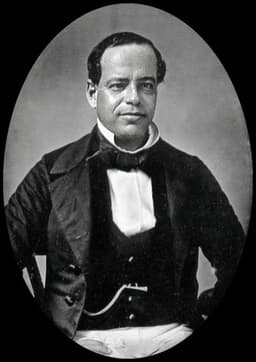
Antonio Lopez de Santa Anna
General · Modern
58.9Total
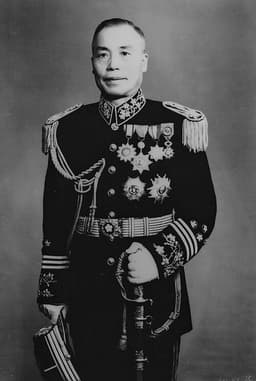
Li Zongren
General · Modern
58.5Total
Basic Information
Born
1794
1890
Died
1876
1969
Era
Modern
Modern
Nationality
Mexico
China
Occupation
General
General
Civilization
Western
Eastern
Score Comparison
Military (10%)
70.0
65.0
Political (20%)
46.6
53.8
Influence (20%)
56.7
58.0
Legacy (20%)
58.0
52.0
Leadership (15%)
68.0
72.0
Strategy (15%)
60.0
56.8
TOTAL
58.9
58.5
Antonio Lopez de Santa Anna — Complete Timeline
1823 AD
Led the Plan of Casa Mata rebellionPolitical Action
Santa Anna, then a general, issued the Plan of Casa Mata on February 1, 1823, calling for the overthrow of Emperor Agust
RebellionOverthrowRepublic
Impact: nationalconstructive
1829 AD
Defended Mexico at the Battle of TampicoWar◆ Major
Santa Anna commanded Mexican forces that defeated a Spanish invasion force at Tampico on September 11, 1829. The victory ended Spain's last attempt to reconquer Mexico and made Santa Anna a national hero. He was hailed as the 'Hero of Tampico' and used this fame to advance politically.
VictorySpanish InvasionNational Hero
Impact: nationalconstructive
1833 AD
Became President of Mexico for the first timePolitical Action◆ Major
Santa Anna was elected President of Mexico in 1833. He quickly delegated power to Vice President Valent
PresidencyPolitical InstabilityPower
Impact: national
1836 AD
Commanded at the Siege of the AlamoWar◆ Major
Santa Anna personally led the Mexican army in the siege of the Alamo mission in San Antonio, Texas. After a 13-day siege, Mexican forces stormed the fort on March 6, 1836, killing all 180-250 Texan defenders. The battle became a symbol of Texan resistance and a rallying cry for independence.
BattleTexas RevolutionAlamo
Impact: regionaldestructive
Defeated and captured at the Battle of San JacintoWar
Santa Anna's army was surprised and routed by Texan forces under Sam Houston at the Battle of San Jacinto on April 21, 1836. Santa Anna was captured the next day. He was forced to sign the Treaties of Velasco, recognizing Texan independence, though Mexico later repudiated them.
DefeatCaptureTexas Independence
Impact: regionaltragic
1847 AD
Lost the Mexican-American WarWar
Santa Anna returned from exile to command Mexican forces during the Mexican-American War. Despite initial efforts, his army was defeated at the Battle of Cerro Gordo and later at the Battle of Chapultepec. US forces captured Mexico City on September 14, 1847, leading to the Treaty of Guadalupe Hidalgo and massive territorial losses.
Mexican-American WarDefeatTerritorial Loss
Impact: globaltragic
1853 AD
Sold La Mesilla to the United StatesPolitical Action◆ Major
During his final presidency, Santa Anna agreed to the Gadsden Purchase, selling 29,670 square miles of territory (La Mesilla) to the United States for $10 million. The sale was widely condemned in Mexico as a betrayal. This act further damaged his reputation and led to his overthrow.
Territorial CessionGadsden PurchaseBetrayal
Impact: nationaldestructive
1855 AD
Overthrown and exiled for the final timePolitical Action◆ Major
The Plan of Ayutla, led by Juan
OverthrowExileEnd of Career
Impact: nationaltragic
Li Zongren — Complete Timeline
1921 AD
Command of the Guangxi ArmyPolitical Action◆ Major
Li Zongren became a commander in the Guangxi Army and helped unify Guangxi province under the New Guangxi Clique. He established a powerful regional base that rivaled other warlords.
Guangxi CliqueMilitary CommandWarlord Era
Impact: regional
1926 AD
Alliance with the Nationalist GovernmentPolitical Action◆ Major
Li Zongren allied the Guangxi Clique with Chiang Kai-shek's Nationalist government during the Northern Expedition. His forces played a key role in defeating warlords and unifying China under KMT rule.
Northern ExpeditionAllianceKMT
Impact: nationalconstructive
1938 AD
Battle of TaierzhuangWar
Li Zongren commanded Chinese forces to a major victory over the Japanese at the Battle of Taierzhuang during the Second Sino-Japanese War. This was the first significant Chinese victory of the war and boosted national morale.
Second Sino-Japanese WarBattleVictory
Impact: nationalconstructive
1949 AD
Acting Presidency of the Republic of ChinaPolitical Action◆ Major
Li Zongren served as Acting President of the Republic of China after Chiang Kai-shek's resignation during the Chinese Civil War. He attempted to negotiate peace with the Communists but failed, leading to the KMT's retreat to Taiwan.
Chinese Civil WarPresidencyKMT
Impact: nationaltragic
Exile to the United StatesPolitical Action
After the Communist victory, Li Zongren fled to the United States, where he lived in exile. He criticized Chiang Kai-shek's leadership and advocated for a reformed KMT, but remained politically marginalized.
ExileChinese Civil WarPolitics
Impact: nationaltragic
Expert Analysis
Antonio Lopez de Santa Anna vs Li Zongren
### The General Who Lost Everything, and the General Who Lost It All Twice
In the spring of 1836, a man who called himself the Napoleon of the West stood on the ramparts of a shattered mission in San Antonio, Texas, surveying the bodies of his enemies. A century later, in the spring of 1938, another general stood on a muddy railway embankment in Shandong Province, watching Japanese tanks burn in a wheat field. Both men were hailed as saviors in their moment; both would die in exile, bitter and forgotten by the nations they had tried to lead. But the paths they took—and the catastrophes they left behind—could not have been more different.
Antonio López de Santa Anna and Li Zongren were both military men who rose to the pinnacle of political power in turbulent times. One was a caudillo who sold his country’s territory; the other was a warlord who tried to save his. Their stories, read side by side, reveal how character, opportunity, and the weight of history can turn a general into either a footnote or a symbol.
### Origins
Santa Anna was born in 1794 in Jalapa, Mexico, into a colonial society that was already cracking. He joined the Spanish army as a cadet at age sixteen, but when Mexico’s War of Independence broke out, he switched sides with the ease of a man who understood that loyalty was a transaction. He was handsome, vain, and possessed a theatrical instinct that made him beloved by soldiers and crowds alike. Mexico in the early nineteenth century was a land of chaos, with no stable institutions, no national identity, and a series of weak governments that invited strongmen.
Li Zongren was born in 1890 in Guilin, in the Guangxi hills of southern China, into a world that was also collapsing. The Qing Dynasty was rotting, and foreign powers were carving up the country like a feast. Li’s family was poor, and he trained as a teacher before joining the army. He was quiet, disciplined, and deeply pragmatic. Where Santa Anna craved applause, Li craved control. The China of his youth was a patchwork of warlord fiefdoms, and Li learned early that power came from the barrel of a gun—but also from alliances, patience, and the careful cultivation of reputation.
### Rise to Power
Santa Anna’s rise was a series of dramatic gambles. In 1823, he issued the Plan of Casa Mata, a rebellion that toppled Emperor Agustín de Iturbide. He was twenty-nine. Six years later, in 1829, he defeated a Spanish invasion at Tampico, becoming the hero of the nation. He entered Mexico City on a white horse, draped in glory, and was elected president in 1833. But he quickly tired of the job, handing power to his vice president and retreating to his hacienda. He would return to power, leave, and return again—eleven times in all. For Santa Anna, the presidency was a prize to be won, not a responsibility to be borne.
Li Zongren’s rise was slower and more methodical. He became a commander in the Guangxi Army in 1921 and spent years consolidating his home province. In 1926, he made a crucial decision: he allied his Guangxi Clique with Chiang Kai-shek’s Nationalist government during the Northern Expedition. This was not a surrender but a merger. Li kept his army and his autonomy while joining a larger cause. He understood that in a fractured China, survival meant choosing the right side—and keeping your options open.
### Leadership & Governance
Santa Anna governed like a man who believed that the state existed to serve him. He centralized power, crushed dissent, and filled his pockets. He sold land to pay for his wars. His military leadership was a strange mix of brilliance and recklessness. At the Alamo in 1836, he showed tactical skill and ruthless determination, ordering no quarter after a thirteen-day siege. But then, weeks later, he allowed his army to be surprised and routed at San Jacinto, where he was captured while taking a nap. He signed away Texas while a prisoner.
Li Zongren was a different kind of commander. At the Battle of Taierzhuang in 1938, he orchestrated the first major Chinese victory of the Second Sino-Japanese War. He used terrain, deception, and the coordination of disparate forces to trap a Japanese division. It was a masterclass in operational art. Politically, Li was more cautious. When he became acting president of the Republic of China in 1949, after Chiang Kai-shek’s resignation, the situation was hopeless. The Communists were advancing, the Nationalist army was collapsing, and the Americans had lost faith. Li tried to negotiate a peace, but he had no real power. He was a general trying to hold a sand castle against the tide.
### Triumph & Tragedy
Santa Anna’s greatest moment was Tampico in 1829. His greatest failure was the Mexican-American War. Recalled from exile in 1847, he commanded an army that was undersupplied, demoralized, and outmatched. He lost battle after battle, and finally, in 1853, he sold the Mesilla Valley to the United States in the Gadsden Purchase—a final act of desperation that cemented his reputation as a traitor.
Li Zongren’s greatest moment was Taierzhuang. His greatest failure was the loss of the Chinese mainland. After the Communist victory in 1949, he fled to the United States, where he lived in a modest house in New Jersey and criticized Chiang Kai-shek from afar. He outlived his rival, but he never returned to power.
### Character & Destiny
Santa Anna was a man of immense charisma and zero self-awareness. He believed he was indispensable, and he behaved accordingly. He switched sides, betrayed allies, and sold territory because he saw the nation as an extension of his own ego. His personality drove him to gamble again and again—and eventually, the dice came up snake eyes.
Li Zongren was a man of immense discipline and limited vision. He was a brilliant tactician but a poor strategist of the larger political game. He allied with Chiang Kai-shek but never trusted him; he tried to save the Republic but never inspired the kind of loyalty that could have built a new order. His caution, which served him well in battle, failed him in politics. He was a man who could win a battle but not a country.
### Legacy
Santa Anna is remembered in Mexico as a villain and a fool. His name is synonymous with betrayal. The territory he lost is now the American Southwest. In Texas, he is a figure of legend—the tyrant who fell at San Jacinto. His legacy is a warning about the dangers of personal ambition.
Li Zongren is remembered more gently. In China, he is a figure of the Republican era, a capable general who fought the Japanese and tried to hold the center. In Taiwan, he is a footnote. In the United States, he is almost unknown. His legacy is a quiet reminder that sometimes, the best men lose.
### Conclusion
Standing at the Alamo, Santa Anna saw a future of endless glory. Standing at Taierzhuang, Li Zongren saw a future of endless struggle. One man bet everything on himself and lost a nation. The other bet everything on a system and lost a continent. In the end, both were exiles, both were forgotten, and both left behind a single, haunting question: What if they had been different? The answer, perhaps, is that history does not ask what if. It only asks what happened—and why.
Rankings
🥇
Antonio Lopez de Santa AnnaLeader
Mil: 70.0Pol: 46.6Inf: 56.7
58.9
🥈
Li Zongren
Mil: 65.0Pol: 53.8Inf: 58.0
58.5
+0.4 behind
How This Comparison Works
Algorithm
Each figure is scored on 6 dimensions (0—100 scale) based on structured historical data: Military (10%), Political (20%), Influence (20%), Legacy (20%), Leadership (15%), Strategy (15%). The weighted total produces the final ranking.
Data Sources
Scores are computed from structured sub-indicators in the database. Scale factors adjust for era (Ancient ×0.85, Modern ×1.0) and civilization size (Eastern ×1.05, Other ×0.80) to account for differences in population and military scale.
Maximum 3 Figures
Comparisons are limited to 2—3 figures to ensure readability and statistical meaningfulness.
Error Margins
±5 points per dimension — Sub-scores are derived from historical records with inherent uncertainty. Two figures within 5 points on a dimension should be considered roughly equivalent in that area.
Total Score Accuracy
±3 points overall — The weighted combination of 6 dimensions produces a total score with approximately ±3 points of uncertainty. Differences of less than 3 points are not statistically significant— the figures are effectively tied.
Known Limitations
- Historical records are incomplete and uneven across civilizations
- Figures from oral-tradition societies may be underrepresented
- Occupation labels can misclassify multi-role figures
- Scores measure capability and impact, not moral character
- Quantitative scoring is a comparison tool, not absolute truth
Capability Radar
Military (10%) — Battles & Warfare
Battles
65
65
Win Rate
40
60
Expansion
50
60
Political (20%) — Governance & Reform
Reform
20
45
Diplomacy
35
60
Economy
15
40
Influence (20%) — Cultural & Global Reach
Cultural
55
40
Global
50
40
Legacy (20%) — Historical Impact
Historical
60
55
Longevity
55
45
Leadership (15%) — Power & Stability
Tenure
75
55
Stability
10
35
Strategy (15%) — Tactics & Innovation
Strategy
45
68
Tactics
60
70
Reform
30
55
Similar Comparisons
Comments & Discussion
TEXAS SCORPION6/16/2026
Santa Anna wasn't just a bad general—he was a strategic disaster with delusions of grandeur. Calling himself "Napoleon of the West" while losing half your country's territory is like calling yourself a master chef while burning down the kitchen. The guy personally surrendered Texas, then sold more land in the Gadsden Purchase. Li Zongren actually won battles against the Japanese and saved Chinese troops from encirclement. Santa Anna's legacy is a cautionary tale about ego exceeding ability.|
数据屠夫6/16/2026
别被什么"抗日名将"的光环骗了。李宗仁在台儿庄确实赢了,但那是1938年,日军还没全面展开。到1944年豫湘桂战役,他的部队一溃千里,丢了大半个广西。对比一下:Santa Anna丢了42%的墨西哥领土,李宗仁丢了广西全省和湖南大部。数据会说谎吗?两个都是战败专业户,只不过一个输给美国,一个输给日本而已。|
FOOTNOTE GENERAL6/16/2026
The critical difference here lies in what they fought for. Santa Anna was a caudillo who changed sides five times, literally selling Mexican territory (the Gadsden Purchase) for personal political gain. Li Zongren, despite being a warlord from the Guangxi clique, never betrayed China's territorial integrity. When Japan offered him a puppet regime in 1939, he refused and fought on. That moral line—between a mercenary and a patriot—separates a footnote from a symbol in history.|
竹杖芒鞋6/16/2026
两个都是乱世枭雄,但一个把自己活成了笑话,一个把自己活成了悲剧。Santa Anna在阿拉莫杀敌183人,最后国破家亡流亡古巴;李宗仁在台儿庄歼敌万余人,最后客死美国。但最大的讽刺在于:Santa Anna至少死在墨西哥重新接纳他的时候,而李宗仁直到1965年才被允许回到大陆,却再也没能踏上桂系的那片山水。所谓英雄,不过是时代的风筝罢了。|
BATTLEFIELD ACCOUNTANT6/16/2026
Let's count the losses: Santa Anna's tenure as Mexico's leader saw the country lose Texas (1836), then the entire Southwest after the Mexican-American War (1848)—about 525,000 square miles. Li Zongren's worst defeat came in 1944 when Japan's Operation Ichigo smashed through his lines, costing China 24 airfields and 60,000 casualties. Different scales of catastrophe, same pattern of overreach. The moral? Never trust a general who calls himself "Napoleon." It never ends well.