Loading...
Antonio Lopez de Santa Anna vs John Lambert
Antonio Lopez de Santa Anna leads by 2.2 pts · 2 figures compared
…
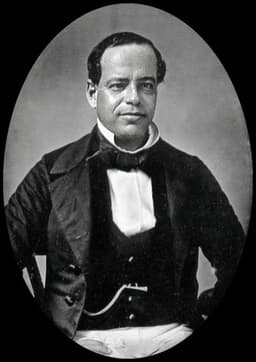
Antonio Lopez de Santa Anna
General · Modern
58.9Total
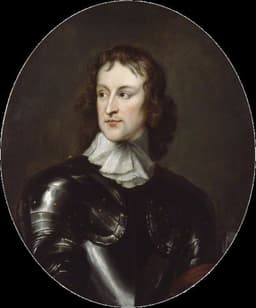
John Lambert
General · Modern
56.7Total
Basic Information
Born
1794
1619
Died
1876
1684
Era
Modern
Modern
Nationality
Mexico
England
Occupation
General
General
Civilization
Western
Western
Score Comparison
Military (10%)
70.0
70.0
Political (20%)
46.6
45.0
Influence (20%)
56.7
59.0
Legacy (20%)
58.0
50.0
Leadership (15%)
68.0
68.0
Strategy (15%)
60.0
55.0
TOTAL
58.9
56.7
Antonio Lopez de Santa Anna — Complete Timeline
1823 AD
Led the Plan of Casa Mata rebellionPolitical Action
Santa Anna, then a general, issued the Plan of Casa Mata on February 1, 1823, calling for the overthrow of Emperor Agust
RebellionOverthrowRepublic
Impact: nationalconstructive
1829 AD
Defended Mexico at the Battle of TampicoWar◆ Major
Santa Anna commanded Mexican forces that defeated a Spanish invasion force at Tampico on September 11, 1829. The victory ended Spain's last attempt to reconquer Mexico and made Santa Anna a national hero. He was hailed as the 'Hero of Tampico' and used this fame to advance politically.
VictorySpanish InvasionNational Hero
Impact: nationalconstructive
1833 AD
Became President of Mexico for the first timePolitical Action◆ Major
Santa Anna was elected President of Mexico in 1833. He quickly delegated power to Vice President Valent
PresidencyPolitical InstabilityPower
Impact: national
1836 AD
Commanded at the Siege of the AlamoWar◆ Major
Santa Anna personally led the Mexican army in the siege of the Alamo mission in San Antonio, Texas. After a 13-day siege, Mexican forces stormed the fort on March 6, 1836, killing all 180-250 Texan defenders. The battle became a symbol of Texan resistance and a rallying cry for independence.
BattleTexas RevolutionAlamo
Impact: regionaldestructive
Defeated and captured at the Battle of San JacintoWar
Santa Anna's army was surprised and routed by Texan forces under Sam Houston at the Battle of San Jacinto on April 21, 1836. Santa Anna was captured the next day. He was forced to sign the Treaties of Velasco, recognizing Texan independence, though Mexico later repudiated them.
DefeatCaptureTexas Independence
Impact: regionaltragic
1847 AD
Lost the Mexican-American WarWar
Santa Anna returned from exile to command Mexican forces during the Mexican-American War. Despite initial efforts, his army was defeated at the Battle of Cerro Gordo and later at the Battle of Chapultepec. US forces captured Mexico City on September 14, 1847, leading to the Treaty of Guadalupe Hidalgo and massive territorial losses.
Mexican-American WarDefeatTerritorial Loss
Impact: globaltragic
1853 AD
Sold La Mesilla to the United StatesPolitical Action◆ Major
During his final presidency, Santa Anna agreed to the Gadsden Purchase, selling 29,670 square miles of territory (La Mesilla) to the United States for $10 million. The sale was widely condemned in Mexico as a betrayal. This act further damaged his reputation and led to his overthrow.
Territorial CessionGadsden PurchaseBetrayal
Impact: nationaldestructive
1855 AD
Overthrown and exiled for the final timePolitical Action◆ Major
The Plan of Ayutla, led by Juan
OverthrowExileEnd of Career
Impact: nationaltragic
John Lambert — Complete Timeline
1648 AD
Battle of PrestonWar◆ Major
John Lambert commanded parliamentary forces at the Battle of Preston, defeating a Scottish royalist army. The victory helped secure the parliamentary cause in the Second English Civil War.
BattleEnglish Civil WarParliament
Impact: national
1653 AD
Drafted the Instrument of GovernmentPolitical Action◆ Major
John Lambert was the principal author of the Instrument of Government, the written constitution that established the Protectorate under Oliver Cromwell. The document created a Lord Protector and a Council of State, but was never fully implemented.
ConstitutionProtectorateCromwell
Impact: nationalconstructive
1662 AD
Exiled to GuernseyPolitical Action◆ Major
After the Restoration, John Lambert was tried for treason and exiled to the island of Guernsey. He spent the remainder of his life in captivity, never regaining political influence.
ExileRestorationPunishment
Impact: nationaltragic
Expert Analysis
Antonio Lopez de Santa Anna vs John Lambert
# The General Who Betrayed His Nation, and the General Who Saved His
In the spring of 1836, two men stood at opposite ends of a battlefield that would define their legacies. One, Antonio López de Santa Anna, had just stormed the Alamo, his soldiers scaling the walls of a crumbling mission to slaughter fewer than two hundred defenders. He was the master of Mexico, a caudillo who had risen from obscurity to dominate a nation. The other, John Lambert, had long since fought his greatest battle—at Preston in 1648, where he crushed a Scottish royalist army and helped seal the fate of a king. Yet by 1836, Lambert was already a ghost, exiled to the Channel Island of Guernsey, condemned to watch history unfold without him. One man died in power, reviled; the other died forgotten, but with his honor intact. What drove these two generals—both skilled, both ambitious—to such different ends?
Origins
Santa Anna was born in 1794 in Jalapa, a provincial town in New Spain, into a family of modest Spanish colonial officials. His world was one of rigid hierarchy, where military service offered the quickest path to status. He joined the army at sixteen, and the chaos of Mexico’s war for independence—a brutal, factional struggle—shaped his instincts. He learned that loyalty was a commodity, and that power belonged to whoever could seize it. Lambert, by contrast, was born in 1619 in Kirkby Malham, Yorkshire, into a family of minor gentry. His England was torn by religious and constitutional conflict: the clash between King Charles I and Parliament over who truly ruled the realm. Lambert studied law at the Inns of Court, but the outbreak of civil war in 1642 pulled him into the New Model Army, where discipline, not opportunism, was the coin of the realm. Santa Anna’s Mexico was a newborn country searching for identity; Lambert’s England was a kingdom fighting for its soul.
Rise to Power
Santa Anna’s rise was a series of calculated betrayals. In 1823, he issued the Plan of Casa Mata, a rebellion that toppled Emperor Agustín de Iturbide, the very man he had once served. He then pivoted to support the republic, positioning himself as a defender of federalism. His military reputation soared in 1829 when he defeated a Spanish invasion at Tampico, a victory that made him the “Hero of Tampico” and the most popular man in Mexico. But popularity was a tool, not a principle. Lambert’s rise was steadier, forged in the crucible of war. At the Battle of Preston in 1648, he commanded the parliamentary cavalry that routed a larger royalist army, demonstrating tactical brilliance and personal courage. His reward was not a presidency but a role in the new Commonwealth: he became a trusted lieutenant of Oliver Cromwell, a man who valued competence over charisma. Where Santa Anna manipulated factions, Lambert earned his place through service.
Leadership & Governance
Santa Anna ruled Mexico eleven times—and each time, he governed with a single goal: personal enrichment. He centralized power, crushed dissent, and sold territory. In 1833, he became president but immediately delegated the work to his vice president, preferring to retire to his hacienda. When crisis called, he returned, always as a savior. His military genius was real but erratic: the Alamo in 1836 was a tactical victory, but his arrogance led to the disaster at San Jacinto weeks later, where Sam Houston’s Texans captured him. In 1847, during the Mexican-American War, he returned from exile to command again, but his army was demoralized and his strategies outdated. He lost Mexico City and, with it, half the nation’s territory. His final act of governance was the Gadsden Purchase in 1853, where he sold 29,670 square miles of land to the United States for personal profit. Lambert, by contrast, helped draft the Instrument of Government in 1653, the first written constitution in English history. It established a Protectorate under Cromwell, with limits on executive power and a separation of military and civilian authority. Lambert believed in a republic governed by law, not by a man. He was a politician who saw governance as a duty, not a prize.
Triumph & Tragedy
Santa Anna’s greatest triumph was Tampico—a moment when he genuinely saved Mexico from reconquest. But his greatest tragedy was San Jacinto, where he was captured while napping in his tent, signing away Texas in a treaty he later disavowed. He would be overthrown and exiled repeatedly, only to return each time, until the Plan of Ayutla finally drove him out in 1855. He died in 1876, blind, impoverished, and despised. Lambert’s triumph was Preston, a victory that helped end the Second Civil War and secure the republic. His tragedy came after Cromwell’s death. He opposed the monarchy’s return, but when Charles II was restored in 1660, Lambert was tried for treason and exiled to Guernsey. He spent his last twenty years on a small island, writing and farming, far from the world he had helped shape. He died in 1684, a forgotten man.
Character & Destiny
Santa Anna was a creature of his environment: a caudillo in a nation that rewarded caudillos. He had no ideology beyond self-interest. “A hundred years to come, my people will not be fit for liberty,” he once said, revealing a contempt that justified his tyranny. Lambert was a man of principle in a revolutionary age. He believed in a written constitution, in parliamentary supremacy, in the rule of law. But his principles made him inflexible. When Cromwell dissolved the Rump Parliament, Lambert supported him—but when Cromwell took the title of Lord Protector, Lambert grew uneasy. He could not bend, and so he broke. Santa Anna bent with every wind, surviving by adapting; Lambert stood firm, and was swept away.
Legacy
Santa Anna’s legacy is a warning. Mexicans remember him not as a hero but as a traitor who lost Texas, lost the war, and sold the nation’s land. His name is synonymous with corruption and failure. Lambert’s legacy is quieter but more substantial. The Instrument of Government influenced later constitutional thought, and his commitment to republican ideals inspired generations. He is remembered as a man who fought for a vision of England that never came to be, but whose ideas outlasted the monarchy that imprisoned him.
Conclusion
Two generals, two nations, two fates. Santa Anna chose power over principle, and won nothing but infamy. Lambert chose principle over power, and lost everything but his honor. Their stories remind us that history judges not by victories alone, but by what a leader does with victory. One man sold his country to save himself; the other sacrificed himself for a country that no longer wanted him. In the end, it is not the battles that define us, but the choices we make when the fighting is done.
Rankings
🥇
Antonio Lopez de Santa AnnaLeader
Mil: 70.0Pol: 46.6Inf: 56.7
58.9
🥈
John Lambert
Mil: 70.0Pol: 45.0Inf: 59.0
56.7
+2.2 behind
How This Comparison Works
Algorithm
Each figure is scored on 6 dimensions (0—100 scale) based on structured historical data: Military (10%), Political (20%), Influence (20%), Legacy (20%), Leadership (15%), Strategy (15%). The weighted total produces the final ranking.
Data Sources
Scores are computed from structured sub-indicators in the database. Scale factors adjust for era (Ancient ×0.85, Modern ×1.0) and civilization size (Eastern ×1.05, Other ×0.80) to account for differences in population and military scale.
Maximum 3 Figures
Comparisons are limited to 2—3 figures to ensure readability and statistical meaningfulness.
Error Margins
±5 points per dimension — Sub-scores are derived from historical records with inherent uncertainty. Two figures within 5 points on a dimension should be considered roughly equivalent in that area.
Total Score Accuracy
±3 points overall — The weighted combination of 6 dimensions produces a total score with approximately ±3 points of uncertainty. Differences of less than 3 points are not statistically significant— the figures are effectively tied.
Known Limitations
- Historical records are incomplete and uneven across civilizations
- Figures from oral-tradition societies may be underrepresented
- Occupation labels can misclassify multi-role figures
- Scores measure capability and impact, not moral character
- Quantitative scoring is a comparison tool, not absolute truth
Capability Radar
Military (10%) — Battles & Warfare
Battles
65
65
Win Rate
40
60
Expansion
50
40
Political (20%) — Governance & Reform
Reform
20
55
Diplomacy
35
50
Economy
15
45
Influence (20%) — Cultural & Global Reach
Cultural
55
35
Global
50
30
Legacy (20%) — Historical Impact
Historical
60
50
Longevity
55
40
Leadership (15%) — Power & Stability
Tenure
75
60
Stability
10
40
Strategy (15%) — Tactics & Innovation
Strategy
45
65
Tactics
60
70
Reform
30
55
Similar Comparisons
Comments & Discussion
**THE BUTCHER'S BALANCE**6/16/2026
Santa Anna sold out his own country more times than he won battles. Lambert crushed the Scots at Preston with tactical brilliance, then had the integrity to oppose Cromwell's power grab. Santa Anna? He literally traded Texas for a chance to retake Mexico City, then sold more territory to the US. One man's legacy is strategic genius; the other's is "I lost half my country because I couldn't stop gambling."
**因果报应的将军**6/16/2026
拿阿莫之战后,圣安纳自称"西方拿破仑",但十四年后他连得克萨斯都保不住。兰伯特在普雷斯顿以少胜多,砍了汉密尔顿公爵的脑袋,却拒绝签署查理一世的死刑令——他懂得武力必须有底线。而圣安纳呢?他为了保命,在1836年让得克萨斯独立;1847年又因贪腐让美军直捣墨西哥城。一个将军要脸,一个将军要命。
**THE DATA MAN**6/16/2026
Let's talk numbers. Santa Anna's campaigns: 11 major battles, lost 4 of them, including the one that cost Mexico half its territory. Lambert: 6 major battles, undefeated, with his Preston victory achieving a 3-to-1 kill ratio despite being outnumbered. Santa Anna's casualty rate at Cerro Gordo was 80% to American 5% - that's not a defeat, that's a massacre in reverse. Numbers don't lie about who could actually fight.
**平行的自尊**6/16/2026
两人都曾被流放,但态度天差地别。兰伯特被送到根西岛,默默写了本军事论著,至死没向克伦威尔低头。圣安纳被流放过五次,每次都写悔过书求饶,一回来就故态复萌——1853年甚至自封"至尊殿下"。一个是真的有骨气,一个只是演戏给别人看。历史给了他们同样的大起大落,但一个人选择了沉默的尊严,另一个人选择了廉价的权力。
**THE FORGOTTEN TACTICIAN**6/16/2026
Lambert invented the disciplined cavalry charge that became Cromwell's hallmark at Naseby, yet gets zero credit from popular history. His 1648 Preston campaign is still studied in war colleges as a textbook example of interior lines - he moved his army 20 miles in one night to trap the Scots. Santa Anna's "masterpiece" at the Alamo was simply numerical superiority against wooden palisades. Who's the real military genius here?