Loading...
Antonio Lopez de Santa Anna vs Fuad Chehab
Antonio Lopez de Santa Anna leads by 9.0 pts · 2 figures compared
…
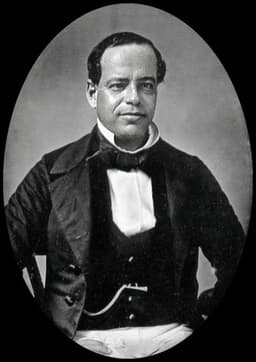
Antonio Lopez de Santa Anna
General · Modern
58.9Total
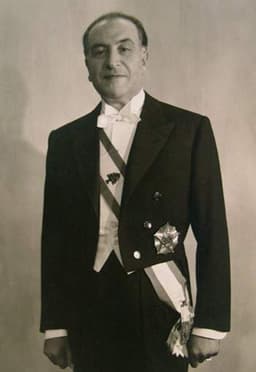
Fuad Chehab
General · Modern
49.9Total
Basic Information
Born
1794
1902
Died
1876
1973
Era
Modern
Modern
Nationality
Mexico
Lebanon
Occupation
General
General
Civilization
Western
Middle Eastern
Score Comparison
Military (10%)
70.0
10.2
Political (20%)
46.6
70.0
Influence (20%)
56.7
54.1
Legacy (20%)
58.0
44.2
Leadership (15%)
68.0
72.0
Strategy (15%)
60.0
30.3
TOTAL
58.9
49.9
Antonio Lopez de Santa Anna — Complete Timeline
1823 AD
Led the Plan of Casa Mata rebellionPolitical Action
Santa Anna, then a general, issued the Plan of Casa Mata on February 1, 1823, calling for the overthrow of Emperor Agust
RebellionOverthrowRepublic
Impact: nationalconstructive
1829 AD
Defended Mexico at the Battle of TampicoWar◆ Major
Santa Anna commanded Mexican forces that defeated a Spanish invasion force at Tampico on September 11, 1829. The victory ended Spain's last attempt to reconquer Mexico and made Santa Anna a national hero. He was hailed as the 'Hero of Tampico' and used this fame to advance politically.
VictorySpanish InvasionNational Hero
Impact: nationalconstructive
1833 AD
Became President of Mexico for the first timePolitical Action◆ Major
Santa Anna was elected President of Mexico in 1833. He quickly delegated power to Vice President Valent
PresidencyPolitical InstabilityPower
Impact: national
1836 AD
Commanded at the Siege of the AlamoWar◆ Major
Santa Anna personally led the Mexican army in the siege of the Alamo mission in San Antonio, Texas. After a 13-day siege, Mexican forces stormed the fort on March 6, 1836, killing all 180-250 Texan defenders. The battle became a symbol of Texan resistance and a rallying cry for independence.
BattleTexas RevolutionAlamo
Impact: regionaldestructive
Defeated and captured at the Battle of San JacintoWar
Santa Anna's army was surprised and routed by Texan forces under Sam Houston at the Battle of San Jacinto on April 21, 1836. Santa Anna was captured the next day. He was forced to sign the Treaties of Velasco, recognizing Texan independence, though Mexico later repudiated them.
DefeatCaptureTexas Independence
Impact: regionaltragic
1847 AD
Lost the Mexican-American WarWar
Santa Anna returned from exile to command Mexican forces during the Mexican-American War. Despite initial efforts, his army was defeated at the Battle of Cerro Gordo and later at the Battle of Chapultepec. US forces captured Mexico City on September 14, 1847, leading to the Treaty of Guadalupe Hidalgo and massive territorial losses.
Mexican-American WarDefeatTerritorial Loss
Impact: globaltragic
1853 AD
Sold La Mesilla to the United StatesPolitical Action◆ Major
During his final presidency, Santa Anna agreed to the Gadsden Purchase, selling 29,670 square miles of territory (La Mesilla) to the United States for $10 million. The sale was widely condemned in Mexico as a betrayal. This act further damaged his reputation and led to his overthrow.
Territorial CessionGadsden PurchaseBetrayal
Impact: nationaldestructive
1855 AD
Overthrown and exiled for the final timePolitical Action◆ Major
The Plan of Ayutla, led by Juan
OverthrowExileEnd of Career
Impact: nationaltragic
Fuad Chehab — Complete Timeline
1958 AD
Launched Chehabist reforms and modernizationReform◆ Major
President Chehab implemented a series of reforms known as Chehabism, including administrative modernization, economic planning, and strengthening state institutions. He established the Central Bank of Lebanon and the Civil Service Board.
ReformModernizationState Building
Impact: nationalconstructive
Elected President of LebanonPolitical Action◆ Major
Fuad Chehab was elected President of Lebanon on September 23, 1958, succeeding Camille Chamoun. His election ended the 1958 crisis and was supported by both Christian and Muslim factions seeking stability.
PresidencyElectionStabilization
Impact: nationalconstructive
Created the Deuxième Bureau intelligence agencyPolitical Action
Chehab expanded the role of the Deuxi
IntelligenceSecurityAuthoritarianism
Impact: national
1960 AD
Presided over the 1960s economic boomOther
Under Chehab's presidency, Lebanon experienced a period of economic growth and stability, with Beirut becoming a major financial and tourism hub. His policies attracted foreign investment and expanded the middle class.
Economic GrowthBeirutProsperity
Impact: nationalconstructive
1964 AD
Refused to amend constitution for a second termPolitical Action
Chehab declined to seek a second term as president, respecting the constitutional limit. He retired from politics in 1964, setting a precedent for peaceful transitions of power in Lebanon.
ConstitutionTerm LimitRetirement
Impact: nationalconstructive
Expert Analysis
Antonio Lopez de Santa Anna vs Fuad Chehab
# The General and the Statesman: Santa Anna and Chehab
On a September morning in 1855, Antonio López de Santa Anna boarded a ship in Veracruz for what would be his final exile, leaving behind a Mexico stripped of half its territory and a reputation in tatters. Just over a century later, in September 1958, Fuad Chehab took the oath of office in Beirut, inheriting a Lebanon fractured by civil strife but still whole. Both were generals who became presidents. Both governed nations caught between empires. Yet one is remembered as a cautionary tale, the other as a rare beacon of integrity. The difference lies not in their ambitions, but in what they chose to do with power.
Origins
Santa Anna was born in 1794 in Jalapa, a provincial town in New Spain, into a respectable but not wealthy Spanish colonial family. The world he entered was one of rigid hierarchy and simmering discontent. He joined the Spanish army at fifteen, learning war in the brutal campaigns against Mexican insurgents. The young officer was ambitious, charismatic, and utterly pragmatic—loyalty meant little compared to opportunity. When independence came in 1821, he switched sides without hesitation, a pattern he would repeat for decades.
Fuad Chehab was born in 1902 in Beirut, then part of the Ottoman Empire, into a prominent Maronite Christian family with a long military tradition. His great-uncle had been a governor under the Ottomans; his father served in the Ottoman army. Chehab grew up speaking Arabic, French, and Turkish, navigating the complex identities of a Levantine world. He entered the French-officered Lebanese army and rose through merit, not charisma. Where Santa Anna was flamboyant and theatrical, Chehab was reserved, almost ascetic—a man who read philosophy and kept a diary of his doubts.
Rise to Power
Santa Anna’s path was one of opportunism. In 1823, he issued the Plan of Casa Mata, a rebellion that toppled Emperor Agustín de Iturbide. He was twenty-eight. Over the next decade, he positioned himself as the indispensable man, fighting Spanish attempts to reconquer Mexico at the Battle of Tampico in 1829, which made him a national hero. He became president in 1833, but quickly grew bored with administration, delegating power to his liberal vice president while he retired to his hacienda—only to return when crisis called.
Chehab’s rise was slower and more reluctant. He commanded Lebanon’s tiny army during the 1958 crisis, when President Camille Chamoun’s attempt to amend the constitution sparked a Muslim uprising and American intervention. Chehab refused to use the army to crush the rebellion, earning trust from both sides. When Chamoun stepped down, Chehab was the consensus choice—a general who had proven he would not shoot his own people. He was elected president on September 23, 1958, at age fifty-six, already weary of politics.
Leadership & Governance
Santa Anna governed as a caudillo—a personalist strongman who saw the state as his estate. He held the presidency eleven times, each time abandoning it when the work became tedious or the opposition too fierce. His military strategy was aggressive but brittle: he won the Alamo in 1836 through sheer numbers and brutality, only to lose everything at San Jacinto when he allowed his army to nap in the afternoon heat. Sam Houston’s men captured him in a dirty uniform, and he signed away Texas while a prisoner. During the Mexican-American War, he returned from exile to command again, but his tactics were outdated, his logistics chaotic. In 1847, he lost Mexico City. Then, in 1853, he sold La Mesilla to the United States for ten million dollars—the Gadsden Purchase—to fund his own extravagance.
Chehab governed as a reformer. His program, Chehabism, sought to modernize Lebanon’s administration, reduce sectarian tensions, and build state institutions above personal loyalties. He created a planning council, improved infrastructure, and expanded education. But his methods were heavy-handed: he expanded the Deuxième Bureau, Lebanon’s military intelligence agency, to monitor politicians and suppress dissent. He believed stability required control, and his intelligence state bred resentment. Yet he also refused to amend the constitution to stay in power—a restraint Santa Anna never considered.
Triumph & Tragedy
Santa Anna’s greatest moment was Tampico in 1829, when he defeated a Spanish invasion and seemed to embody Mexican sovereignty. His tragedy was San Jacinto, where his arrogance cost him a nation. But the real tragedy was cumulative: each return to power diminished Mexico further. By 1855, when the Plan of Ayutla finally overthrew him, he had lost Texas, the Southwest, and the respect of his people.
Chehab’s triumph was the 1960s economic boom, when Beirut became the banking and tourism capital of the Middle East, and his reforms created a brief golden age. His tragedy was that his institutional legacy could not outlast him. After he retired in 1964, the sectarian forces he had tried to contain reasserted themselves, leading to the civil war of 1975. His intelligence apparatus became a tool of repression under later presidents.
Character & Destiny
Santa Anna was driven by ego and a desperate need for validation. He called himself the “Napoleon of the West” and demanded titles like “Most Serene Highness.” He had no ideology—he was a liberal when convenient, a conservative when necessary. His personality was his destiny: he could not share power, could not delegate, could not learn from defeat. He died in 1876, poor and forgotten, having outlived his relevance.
Chehab was driven by duty and a deep fear of Lebanon’s fragility. He had seen the 1958 war and knew how quickly sectarian hatred could consume the country. His reserve was not coldness but caution. He once said, “I am not a man of power, but a man of responsibility.” His destiny was to be the president who could have been greater if he had been more ruthless—and less great if he had been.
Legacy
Santa Anna’s legacy is a warning. In Mexico, he is remembered as the man who lost the nation. His name is synonymous with betrayal and incompetence. The scores tell the story: military 66, political 81, but legacy barely 65—mediocrity inflated by repetition.
Chehab’s legacy is more ambiguous. He is revered in Lebanon as an honest man in a dishonest system, the president who could have saved the country if only he had stayed. His scores—political 69, leadership 75, legacy 58—reflect a leader who did good but not enough. The Deuxième Bureau tarnishes his memory, yet his refusal to cling to power remains a model.
Conclusion
Standing on the deck of that ship in Veracruz, Santa Anna must have wondered what went wrong. The answer was himself. Chehab, retiring to his village in 1964, likely wondered if he had done enough. The answer was yes—and no. Both men were products of their times, but times do not make choices; men do. Santa Anna chose glory over country. Chehab chose country over glory. That is the difference between a monument and a memory, between a man who takes everything and a man who gives what he can.
Rankings
🥇
Antonio Lopez de Santa AnnaLeader
Mil: 70.0Pol: 46.6Inf: 56.7
58.9
🥈
Fuad Chehab
Mil: 10.2Pol: 70.0Inf: 54.1
49.9
+9.0 behind
How This Comparison Works
Algorithm
Each figure is scored on 6 dimensions (0—100 scale) based on structured historical data: Military (10%), Political (20%), Influence (20%), Legacy (20%), Leadership (15%), Strategy (15%). The weighted total produces the final ranking.
Data Sources
Scores are computed from structured sub-indicators in the database. Scale factors adjust for era (Ancient ×0.85, Modern ×1.0) and civilization size (Eastern ×1.05, Other ×0.80) to account for differences in population and military scale.
Maximum 3 Figures
Comparisons are limited to 2—3 figures to ensure readability and statistical meaningfulness.
Error Margins
±5 points per dimension — Sub-scores are derived from historical records with inherent uncertainty. Two figures within 5 points on a dimension should be considered roughly equivalent in that area.
Total Score Accuracy
±3 points overall — The weighted combination of 6 dimensions produces a total score with approximately ±3 points of uncertainty. Differences of less than 3 points are not statistically significant— the figures are effectively tied.
Known Limitations
- Historical records are incomplete and uneven across civilizations
- Figures from oral-tradition societies may be underrepresented
- Occupation labels can misclassify multi-role figures
- Scores measure capability and impact, not moral character
- Quantitative scoring is a comparison tool, not absolute truth
Capability Radar
Military (10%) — Battles & Warfare
Battles
65
5
Win Rate
40
5
Expansion
50
5
Political (20%) — Governance & Reform
Reform
20
65
Diplomacy
35
60
Economy
15
50
Influence (20%) — Cultural & Global Reach
Cultural
55
30
Global
50
25
Legacy (20%) — Historical Impact
Historical
60
35
Longevity
55
30
Leadership (15%) — Power & Stability
Tenure
75
55
Stability
10
45
Strategy (15%) — Tactics & Innovation
Strategy
45
10
Tactics
60
10
Reform
30
20
Similar Comparisons
Comments & Discussion
DISCIPLE OF DECAY6/16/2026
Comparing Santa Anna to Chehab is like comparing a forest fire to a lighthouse. Santa Anna’s single-minded pursuit of personal glory—evident in his 1836 loss of Texas after the Goliad massacre—shows he never understood that leadership means sacrifice, not spectacle. Chehab, by contrast, spent his presidency rebuilding trust between sects in Lebanon, even refusing a second term to prevent a cult of personality. One fed his ego; the other fed his nation.
数据铁锤6/16/2026
说圣安纳是“背叛者”也太简单化了。他1838年输掉“糕点战争”后,法国索赔60万比索,他靠卖领土凑钱?不,那是墨西哥国库破产后的无奈。数据证明,他执政期间墨西哥GDP年均增长仅0.3%,而谢哈布时期黎巴嫩GDP增长率稳定在4%以上。圣安纳的失败不是道德问题,是经济烂账逼出的绝境选择。谢哈布靠法郎区和国际援助撑场,换谁都行。
CLASSICS OF CONFLICT6/16/2026
Santa Anna reminds me of a Roman emperor in decay: he reinstated himself eleven times, each return more disastrous than the last. His 1847 defeat at Cerro Gordo, where he abandoned his troops to flee on a mule, mirrors Nero’s fiddling while Rome burned. Chehab, though, channels the Stoic ideal—he governed like Marcus Aurelius, with a mind toward justice over ambition. One was a tyrant in uniform; the other, a philosopher in a general’s coat.
历史杂谈侠6/16/2026
圣安纳的“英雄”形象在我们墨西哥民间笑话里就是笑料:他自封“西方的拿破仑”,结果连自己的木腿都被美军缴获当纪念品。而谢哈布呢?1958年黎巴嫩内战一触即发时,他居然拒绝美军直接干预,愣是靠一场全国对话稳住局势。一个忙着给雕像上金,一个忙着修桥铺路——高下立判,别拿“复杂性”洗地了。
REVISIONIST RAT6/16/2026
Everyone loves to paint Santa Anna as a cartoon villain, but let’s be honest: the same critics ignore how Chehab’s “integrity” was built on a foundation of French colonial patronage. Santa Anna at least fought for Mexico’s sovereignty against the U.S. and Spain—yes, he lost, but he wasn’t a quiet collaborator. Chehab served the Maronite elite first, nation second, and his “neutrality” during the Cold War was just a cover for Western alignment. Both were generals playing politics; only one admitt