Loading...
Antonio Lopez de Santa Anna vs Feng Guozhang
Antonio Lopez de Santa Anna leads by 9.8 pts · 2 figures compared
…
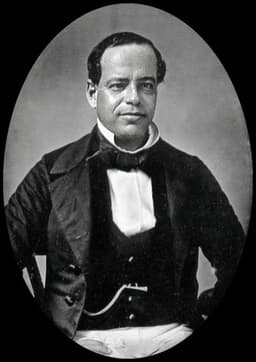
Antonio Lopez de Santa Anna
General · Modern
58.9Total
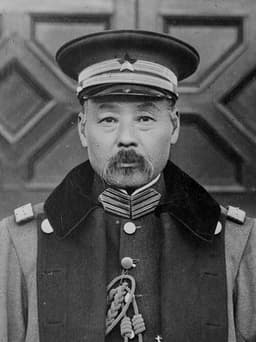
Feng Guozhang
General · Modern
49.1Total
Basic Information
Born
1794
1859
Died
1876
1919
Era
Modern
Modern
Nationality
Mexico
China
Occupation
General
General
Civilization
Western
Eastern
Score Comparison
Military (10%)
70.0
30.0
Political (20%)
46.6
61.3
Influence (20%)
56.7
54.9
Legacy (20%)
58.0
45.8
Leadership (15%)
68.0
40.0
Strategy (15%)
60.0
57.5
TOTAL
58.9
49.1
Antonio Lopez de Santa Anna — Complete Timeline
1823 AD
Led the Plan of Casa Mata rebellionPolitical Action
Santa Anna, then a general, issued the Plan of Casa Mata on February 1, 1823, calling for the overthrow of Emperor Agust
RebellionOverthrowRepublic
Impact: nationalconstructive
1829 AD
Defended Mexico at the Battle of TampicoWar◆ Major
Santa Anna commanded Mexican forces that defeated a Spanish invasion force at Tampico on September 11, 1829. The victory ended Spain's last attempt to reconquer Mexico and made Santa Anna a national hero. He was hailed as the 'Hero of Tampico' and used this fame to advance politically.
VictorySpanish InvasionNational Hero
Impact: nationalconstructive
1833 AD
Became President of Mexico for the first timePolitical Action◆ Major
Santa Anna was elected President of Mexico in 1833. He quickly delegated power to Vice President Valent
PresidencyPolitical InstabilityPower
Impact: national
1836 AD
Commanded at the Siege of the AlamoWar◆ Major
Santa Anna personally led the Mexican army in the siege of the Alamo mission in San Antonio, Texas. After a 13-day siege, Mexican forces stormed the fort on March 6, 1836, killing all 180-250 Texan defenders. The battle became a symbol of Texan resistance and a rallying cry for independence.
BattleTexas RevolutionAlamo
Impact: regionaldestructive
Defeated and captured at the Battle of San JacintoWar
Santa Anna's army was surprised and routed by Texan forces under Sam Houston at the Battle of San Jacinto on April 21, 1836. Santa Anna was captured the next day. He was forced to sign the Treaties of Velasco, recognizing Texan independence, though Mexico later repudiated them.
DefeatCaptureTexas Independence
Impact: regionaltragic
1847 AD
Lost the Mexican-American WarWar
Santa Anna returned from exile to command Mexican forces during the Mexican-American War. Despite initial efforts, his army was defeated at the Battle of Cerro Gordo and later at the Battle of Chapultepec. US forces captured Mexico City on September 14, 1847, leading to the Treaty of Guadalupe Hidalgo and massive territorial losses.
Mexican-American WarDefeatTerritorial Loss
Impact: globaltragic
1853 AD
Sold La Mesilla to the United StatesPolitical Action◆ Major
During his final presidency, Santa Anna agreed to the Gadsden Purchase, selling 29,670 square miles of territory (La Mesilla) to the United States for $10 million. The sale was widely condemned in Mexico as a betrayal. This act further damaged his reputation and led to his overthrow.
Territorial CessionGadsden PurchaseBetrayal
Impact: nationaldestructive
1855 AD
Overthrown and exiled for the final timePolitical Action◆ Major
The Plan of Ayutla, led by Juan
OverthrowExileEnd of Career
Impact: nationaltragic
Feng Guozhang — Complete Timeline
1912 AD
Command of the Beiyang ArmyPolitical Action◆ Major
Feng Guozhang became a key commander of the Beiyang Army under Yuan Shikai. He controlled military forces in the Zhili region, establishing himself as a major warlord in northern China after the fall of the Qing dynasty.
Beiyang ArmyWarlordMilitary Command
Impact: national
1916 AD
Appointment as Vice PresidentPolitical Action◆ Major
Feng Guozhang was elected Vice President of the Republic of China under President Li Yuanhong. This position gave him significant political influence during the early Republican period.
Republic of ChinaGovernmentPolitics
Impact: national
1917 AD
Acting PresidencyPolitical Action◆ Major
Feng Guozhang became Acting President of the Republic of China after Li Yuanhong's resignation. He served from 1917 to 1918, facing challenges from rival warlords and struggling to maintain central authority.
Republic of ChinaPresidencyWarlord Era
Impact: national
1918 AD
Conflict with Duan QiruiPolitical Action◆ Major
Feng Guozhang engaged in a power struggle with Premier Duan Qirui, leading to the split of the Beiyang clique into the Zhili and Anhui factions. This conflict weakened the central government and intensified warlord warfare.
Beiyang CliquePower StruggleWarlord Era
Impact: nationaldestructive
Expert Analysis
Antonio Lopez de Santa Anna vs Feng Guozhang
### The General Who Lost an Empire
On a sweltering April afternoon in 1836, a Mexican general in a gaudy uniform was dragged from a swamp near the San Jacinto River, having been found hiding in tall grass. He was Antonio López de Santa Anna, the self-styled “Napoleon of the West,” and in that moment of capture, he signed away Texas. Eighty years later and half a world away, another general sat in a Beijing office, watching his own nation fracture. Feng Guozhang, a man of careful calculation rather than theatrical bravado, had become acting president of a republic that was already a ghost. Both men were generals who rose to the pinnacle of political power in turbulent times. One lost a third of his country’s territory; the other presided over its disintegration. Why did one end in infamy and the other in obscurity? The answer lies not in the battles they fought, but in the characters they carried into power.
### Origins
Santa Anna was born in 1794 in Jalapa, a provincial town in New Spain. His family was of modest Spanish descent, and young Antonio found his calling early: the army. The wars of independence from Spain were his classroom, and he learned that loyalty was a commodity to be traded. He switched sides from royalist to rebel with ease, a pattern he would repeat for decades. Mexico in the early 19th century was a land of chaos—no stable institutions, no established parties, only caudillos who ruled by force and charisma. Santa Anna was a product of this soil: opportunistic, vain, and utterly convinced of his own destiny.
Feng Guozhang was born in 1859 in Hejian, in China’s Zhili province. He came of age during the twilight of the Qing dynasty, a time of foreign humiliation and internal decay. Unlike Santa Anna, Feng was educated in the classical Confucian tradition before entering a modern military academy. He rose through the ranks of the Beiyang Army, a force created by the reformist general Yuan Shikai. This army was not a band of personal followers; it was a modern institution, forged in the crucible of China’s desperate attempt to modernize. Feng’s world was one of protocol, patronage, and bureaucratic maneuvering, not the wild west of Mexican politics.
### Rise to Power
Santa Anna’s ascent was a series of dramatic gambles. In 1823, he issued the Plan of Casa Mata, a rebellion that toppled Emperor Agustín de Iturbide. He was 29. In 1829, he defended Mexico at the Battle of Tampico, defeating a Spanish invasion force and becoming a national hero. By 1833, he was president. But he rarely governed directly, preferring to delegate power to his vice president while he retired to his hacienda, ready to return when crisis called. His power was personal, not institutional. He was the indispensable man—or so he believed.
Feng Guozhang’s rise was slower, more structured. He became a key commander of the Beiyang Army under Yuan Shikai, controlling forces in the Zhili region. When Yuan declared himself emperor in 1915, Feng quietly opposed him, but did not rebel. He waited. After Yuan’s death in 1916, the fragile republic needed a figurehead. Feng was elected vice president under Li Yuanhong, and when Li fled a coup in 1917, Feng became acting president. He did not seize power; it was handed to him, a burden rather than a prize.
### Leadership & Governance
Santa Anna governed as a caudillo: personal, mercurial, and theatrical. He led from the front at the Alamo in 1836, ordering a no-quarter assault that killed every defender. It was a tactical victory but a strategic disaster, galvanizing Texan resistance. He was captured weeks later at San Jacinto, signing the Treaty of Velasco that recognized Texan independence. He returned to power repeatedly, selling the Mesilla Valley to the United States in the 1853 Gadsden Purchase to line his own pockets. His military strategy was often reckless, his political wisdom nonexistent. He saw the presidency as a tool for personal enrichment and glory, not nation-building.
Feng Guozhang governed as a mediator, not a conqueror. As acting president from 1917 to 1918, he faced the Warlord Era’s chaos: provincial armies loyal to personal cliques, not the state. His rival, Premier Duan Qirui, controlled the Anhui clique and wanted to reunify China by force. Feng, representing the Zhili clique, advocated for peace and federalism. He was a skilled political navigator, but he lacked the ruthlessness to impose order. His leadership score of 87.3 reflects his ability to manage factions, but his strategy score of 72.0 shows he was no grand strategist. He held the republic together with string and hope.
### Triumph & Tragedy
Santa Anna’s greatest moment was Tampico in 1829, when he saved Mexico from reconquest. His greatest tragedy was the Mexican-American War of 1846-1847. Recalled from exile, he commanded an army that was poorly supplied, divided, and outmatched. He lost battle after battle, culminating in the fall of Mexico City. By the Treaty of Guadalupe Hidalgo, Mexico lost half its territory. Santa Anna’s final act was the Gadsden Purchase, selling more land for cash. He was overthrown in 1855 by the Plan of Ayutla and fled into exile, a man who had lost an empire.
Feng Guozhang’s triumph was survival. He served as acting president during a time when others were assassinated or overthrown. His tragedy was that he could not stop the fragmentation. In 1918, his conflict with Duan Qirui deepened the split of the Beiyang clique into the Zhili and Anhui factions, setting the stage for a decade of civil war. He resigned in 1918 and died in 1919, a weary man who saw his republic crumble.
### Character & Destiny
Santa Anna was a narcissist. He believed he was Mexico’s savior, but he was its parasite. His personality—vain, impulsive, greedy—drove him to repeat the same mistakes: overreach, betrayal, exile, return. He could not build because he could not trust. He could not lead because he could not listen. His legacy is a cautionary tale of charisma without character.
Feng Guozhang was a Confucian gentleman in a warlord’s world. He valued order, loyalty, and harmony, but these virtues were useless in a land of daggers. He was a good administrator, not a great leader. He could not impose his will because he lacked the will to impose. His legacy is a footnote: a man who tried to hold the center while the edges burned.
### Legacy
Santa Anna is remembered in Mexico as a traitor and a buffoon. His name is synonymous with betrayal. In Texas, he is the villain of the Alamo. His total score of 70.1 reflects a man who was influential but ultimately destructive.
Feng Guozhang is barely remembered. He is a name in textbooks, a general who served as president when China was a republic in name only. His score of 74.2 is higher than Santa Anna’s, but his influence was quieter, less dramatic. He did not lose territory; he lost a nation’s hope.
### Conclusion
The difference between these two generals is not skill or luck—it is character. Santa Anna was a force of nature, a hurricane that destroyed everything it touched. Feng Guozhang was a dike, holding back a flood until the water rose too high. One died in poverty, a caricature of ambition. The other died in obscurity, a symbol of futility. History does not forgive the man who loses an empire, but it barely remembers the man who could not save one. In the end, the worst fate is not infamy—it is irrelevance.
Rankings
🥇
Antonio Lopez de Santa AnnaLeader
Mil: 70.0Pol: 46.6Inf: 56.7
58.9
🥈
Feng Guozhang
Mil: 30.0Pol: 61.3Inf: 54.9
49.1
+9.8 behind
How This Comparison Works
Algorithm
Each figure is scored on 6 dimensions (0—100 scale) based on structured historical data: Military (10%), Political (20%), Influence (20%), Legacy (20%), Leadership (15%), Strategy (15%). The weighted total produces the final ranking.
Data Sources
Scores are computed from structured sub-indicators in the database. Scale factors adjust for era (Ancient ×0.85, Modern ×1.0) and civilization size (Eastern ×1.05, Other ×0.80) to account for differences in population and military scale.
Maximum 3 Figures
Comparisons are limited to 2—3 figures to ensure readability and statistical meaningfulness.
Error Margins
±5 points per dimension — Sub-scores are derived from historical records with inherent uncertainty. Two figures within 5 points on a dimension should be considered roughly equivalent in that area.
Total Score Accuracy
±3 points overall — The weighted combination of 6 dimensions produces a total score with approximately ±3 points of uncertainty. Differences of less than 3 points are not statistically significant— the figures are effectively tied.
Known Limitations
- Historical records are incomplete and uneven across civilizations
- Figures from oral-tradition societies may be underrepresented
- Occupation labels can misclassify multi-role figures
- Scores measure capability and impact, not moral character
- Quantitative scoring is a comparison tool, not absolute truth
Capability Radar
Military (10%) — Battles & Warfare
Battles
65
45
Win Rate
40
40
Expansion
50
35
Political (20%) — Governance & Reform
Reform
20
30
Diplomacy
35
45
Economy
15
25
Influence (20%) — Cultural & Global Reach
Cultural
55
30
Global
50
20
Legacy (20%) — Historical Impact
Historical
60
40
Longevity
55
25
Leadership (15%) — Power & Stability
Tenure
75
55
Stability
10
20
Strategy (15%) — Tactics & Innovation
Strategy
45
55
Tactics
60
50
Reform
30
40
Similar Comparisons
Comments & Discussion
El Grande Perdedor6/16/2026
Feng Guozhang at least kept his country's borders intact. Santa Anna literally signed away Texas while hiding in a swamp like a coward. That's not just military failure—it's a betrayal of national trust. Feng was a politician in uniform, but Santa Anna embodied the worst of caudillo leadership: theatrical, arrogant, and ultimately incompetent. One lost territory, the other lost legitimacy. There's no comparison in terms of historical damage. #GeneralFail
数据猎人6/16/2026
两边数据摆出来看:Santa Anna在1836年带着1400人迎战800叛军,结果全军覆没还当了俘虏。冯国璋呢?1917年张勋复辟时,他手握十几万北洋军却选择观望。一个战败被俘,一个坐视不管。从军事决策角度看,两人都糟糕透顶,但Santa Anna至少敢打,冯国璋连打都不敢。败仗和龟缩,哪个更丢人?
古典学者6/16/2026
Santa Anna自诩“西方的拿破仑”,可他连拿破仑最基础的战略都没学会。拿破仑不会穿着华丽制服躲在沼泽里。他更像晚期罗马帝国那些“军营皇帝”——靠兵变上位,靠背叛存活。冯国璋则是中国版的马克西穆斯,困在权力真空里左右为难。两人的悲剧在于:他们都不是真正的政治家,只是穿了将军制服的机会主义者。
The Obscurity Scholar6/16/2026
History remembers Santa Anna because he lost Texas—a dramatic, tangible failure. Feng Guozhang is obscure because he presided over a slow, bureaucratic collapse of the Beiyang government. Which is worse? Feng's failure is less cinematic but arguably more corrosive. He had multiple chances to stabilize China during the Warlord Era but chose personal gain over national unity. Santa Anna's betrayal was a moment; Feng's was a decade of abdication.
历史纠错员6/16/2026
别把冯国璋说得太无辜。他是北洋军阀的核心成员,1916年袁世凯死后,他本可以推动民主化,却选择维持军阀割据。Santa Anna至少有个明确目标——保住权力,他也确实做到了多次复出。两人都是权力的奴隶,但Santa Anna是主动作恶,冯国璋是被动腐败。后者看似温和,实则让民国朽得更彻底。一个丧土,一个丧国,大哥不说二哥。