Loading...
Antonio Lopez de Santa Anna vs Denis Sassou-Nguesso
Antonio Lopez de Santa Anna leads by 9.5 pts · 2 figures compared
…
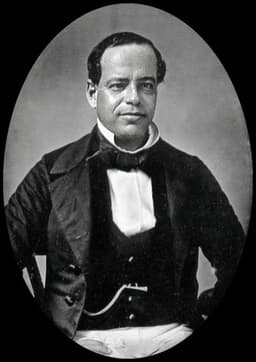
Antonio Lopez de Santa Anna
General · Modern
58.9Total
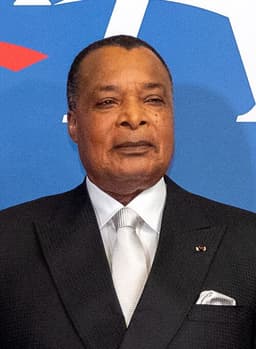
Denis Sassou-Nguesso
General · Modern
49.4Total
Basic Information
Born
1794
1943
Died
1876
—
Era
Modern
Modern
Nationality
Mexico
Congo Republic
Occupation
General
General
Civilization
Western
Other
Score Comparison
Military (10%)
70.0
10.2
Political (20%)
46.6
68.0
Influence (20%)
56.7
51.8
Legacy (20%)
58.0
46.7
Leadership (15%)
68.0
62.0
Strategy (15%)
60.0
42.3
TOTAL
58.9
49.4
Antonio Lopez de Santa Anna — Complete Timeline
1823 AD
Led the Plan of Casa Mata rebellionPolitical Action
Santa Anna, then a general, issued the Plan of Casa Mata on February 1, 1823, calling for the overthrow of Emperor Agust
RebellionOverthrowRepublic
Impact: nationalconstructive
1829 AD
Defended Mexico at the Battle of TampicoWar◆ Major
Santa Anna commanded Mexican forces that defeated a Spanish invasion force at Tampico on September 11, 1829. The victory ended Spain's last attempt to reconquer Mexico and made Santa Anna a national hero. He was hailed as the 'Hero of Tampico' and used this fame to advance politically.
VictorySpanish InvasionNational Hero
Impact: nationalconstructive
1833 AD
Became President of Mexico for the first timePolitical Action◆ Major
Santa Anna was elected President of Mexico in 1833. He quickly delegated power to Vice President Valent
PresidencyPolitical InstabilityPower
Impact: national
1836 AD
Commanded at the Siege of the AlamoWar◆ Major
Santa Anna personally led the Mexican army in the siege of the Alamo mission in San Antonio, Texas. After a 13-day siege, Mexican forces stormed the fort on March 6, 1836, killing all 180-250 Texan defenders. The battle became a symbol of Texan resistance and a rallying cry for independence.
BattleTexas RevolutionAlamo
Impact: regionaldestructive
Defeated and captured at the Battle of San JacintoWar
Santa Anna's army was surprised and routed by Texan forces under Sam Houston at the Battle of San Jacinto on April 21, 1836. Santa Anna was captured the next day. He was forced to sign the Treaties of Velasco, recognizing Texan independence, though Mexico later repudiated them.
DefeatCaptureTexas Independence
Impact: regionaltragic
1847 AD
Lost the Mexican-American WarWar
Santa Anna returned from exile to command Mexican forces during the Mexican-American War. Despite initial efforts, his army was defeated at the Battle of Cerro Gordo and later at the Battle of Chapultepec. US forces captured Mexico City on September 14, 1847, leading to the Treaty of Guadalupe Hidalgo and massive territorial losses.
Mexican-American WarDefeatTerritorial Loss
Impact: globaltragic
1853 AD
Sold La Mesilla to the United StatesPolitical Action◆ Major
During his final presidency, Santa Anna agreed to the Gadsden Purchase, selling 29,670 square miles of territory (La Mesilla) to the United States for $10 million. The sale was widely condemned in Mexico as a betrayal. This act further damaged his reputation and led to his overthrow.
Territorial CessionGadsden PurchaseBetrayal
Impact: nationaldestructive
1855 AD
Overthrown and exiled for the final timePolitical Action◆ Major
The Plan of Ayutla, led by Juan
OverthrowExileEnd of Career
Impact: nationaltragic
Denis Sassou-Nguesso — Complete Timeline
1979 AD
Seized Power in CoupPolitical Action
Denis Sassou-Nguesso, a military officer, became President of the People's Republic of the Congo after a coup that ousted President Joachim Yhombi-Opango. He led the Congolese Party of Labour (PCT).
Coup d'étatCongoMilitary Rule
Impact: national
1990 AD
Transition to Multi-Party PoliticsReform◆ Major
Under pressure, Sassou-Nguesso's government introduced multi-party politics, ending the one-party Marxist-Leninist system. A national conference was held in 1991, leading to a transition to civilian rule.
Political ReformDemocracyCongo
Impact: national
1992 AD
Lost Presidential ElectionPolitical Action◆ Major
Sassou-Nguesso lost the 1992 presidential election to Pascal Lissouba. This was the first multi-party election in the country since independence, and Sassou-Nguesso peacefully handed over power.
ElectionDemocracyCongo
Impact: national
1997 AD
Returned to Power via Civil WarWar
Sassou-Nguesso's militia, backed by Angolan troops, captured Brazzaville, overthrowing President Pascal Lissouba. This ended a four-month civil war and returned Sassou-Nguesso to the presidency.
Civil WarCongoPower Struggle
Impact: nationaldestructive
2002 AD
Won Controversial Re-electionsPolitical Action◆ Major
Sassou-Nguesso won the 2002 presidential election with over 89% of the vote. The election was boycotted by major opposition candidates and criticized as neither free nor fair.
ElectionCongoControversy
Impact: national
2015 AD
Constitutional Referendum to Extend TermPolitical Action◆ Major
Sassou-Nguesso's government held a constitutional referendum that removed the age limit and two-term limit for the presidency. The change allowed him to run for re-election in 2016 and potentially remain in power.
Constitutional ReformCongoPower Consolidation
Impact: national
Expert Analysis
Antonio Lopez de Santa Anna vs Denis Sassou-Nguesso
### The General and the Survivor
On a humid April afternoon in 1836, Antonio López de Santa Anna stood before Sam Houston, a prisoner in his own torn uniform, having just signed away Texas. Nearly a century and a half later, in October 1997, Denis Sassou-Nguesso rolled into Brazzaville in a convoy of Angolan tanks, reclaiming a presidency he had lost five years earlier. One general lost everything in a single, catastrophic defeat; the other lost power only to claw it back through civil war. Both men dominated their nations for decades, yet their paths—and their legacies—could not be more different. What drove one to spectacular collapse and the other to stubborn endurance?
### Origins
Santa Anna was born in 1794 in Jalapa, Mexico, into a middle-class Spanish colonial family. The son of a minor bureaucrat, he joined the Spanish army at fifteen, learning war in the brutal campaigns against Mexican insurgents. His world was one of revolutionary upheaval, where a young officer could switch sides—from royalist to independence fighter—and rise fast. Mexico in the 1820s was a chaotic newborn republic, its institutions fragile, its borders contested. Santa Anna emerged from this crucible with a single, unshakable instinct: power belongs to whoever seizes it.
Denis Sassou-Nguesso was born in 1943 in Edou, a small village in what was then French Equatorial Africa. A member of the Mbochi ethnic group, he joined the French colonial army as a young man, training in Algeria and Senegal. When Congo gained independence in 1960, it was a patchwork of ethnic rivalries and Cold War loyalties. Sassou-Nguesso returned home, joined the army, and watched as one coup followed another. He learned that in post-colonial Africa, survival meant mastering the art of the political bargain—and knowing when to call in outside help.
### Rise to Power
Santa Anna’s rise was theatrical. In 1823, at just twenty-eight, he issued the Plan of Casa Mata, a rebellion that toppled Emperor Agustín de Iturbide. He was not the architect of the revolt, but he sensed the wind and rode it. Over the next decade, he cultivated an image as the “Hero of Tampico,” after defeating a Spanish invasion in 1829. His military fame became his political currency. In 1833, he became president—but he quickly handed the day-to-day grind to his vice president, preferring to retreat to his hacienda and wait for crises to call him back.
Sassou-Nguesso’s ascent was quieter, more deliberate. He rose through the ranks of the Congolese army, joining the Marxist-Leninist Party of Labor. In 1979, after a series of coups and purges, he seized power in a bloodless party coup. He was thirty-five. Unlike Santa Anna, he did not rely on personal charisma or battlefield glory. He built a network of loyalists within the party and the military, and he aligned his country with the Soviet Union—a reliable patron in a dangerous neighborhood.
### Leadership & Governance
Santa Anna governed like a caudillo—a personalist strongman who treated the state as his estate. He cycled through the presidency eleven times, often leaving a puppet in charge while he enjoyed exile or retirement. His military strategy was aggressive but brittle: he won battles (the Alamo in 1836, a brutal 13-day siege) but lost wars (San Jacinto, the Mexican-American War). His political wisdom was shallow. He sold La Mesilla to the United States in 1853 for cash, a move that branded him a traitor. He crushed rebellions but never built institutions. Mexico under Santa Anna was a revolving door of coups, debt, and lost territory.
Sassou-Nguesso was a different breed. He ruled through the party, not just personality. In 1990, facing global shifts and domestic protests, he surprised everyone by introducing multi-party politics—then lost the 1992 election. Most caudillos would have fought. Sassou-Nguesso stepped down, waited, and plotted. In 1997, with Angolan tanks and oil money, he returned. His governance since has been a masterclass in survival: constitutional referendums to remove term limits (2015), rigged elections, and co-opting rivals. He has not won wars; he has won time.
### Triumph & Tragedy
Santa Anna’s greatest moment was Tampico in 1829—a genuine national victory that made him a hero. His greatest tragedy was San Jacinto in 1836. Caught napping, his army destroyed, he was captured and forced to sign the Treaties of Velasco, effectively ceding Texas. The humiliation was total. He later lost the Mexican-American War (1847), watching American troops march into Mexico City. His final exile in 1855, after the Plan of Ayutla, was a quiet end for a man who had once dominated a nation.
Sassou-Nguesso’s triumph was his return in 1997—a comeback almost unheard of in modern Africa. His tragedy is the slow erosion of his own legitimacy. He won the 2002 election with 89% of the vote, but the opposition boycotted. His 2015 referendum was widely seen as a power grab. He has presided over oil wealth that has enriched a few while most Congolese remain poor. His tragedy is not a single battle lost, but a nation that has not yet found its way beyond him.
### Character & Destiny
Santa Anna was impulsive, vain, and spectacularly overconfident. He believed in his own legend, and that belief led him to underestimate enemies—first the Texans, then the Americans. He was a gambler, and gamblers eventually lose. His personality drove him to seize power again and again, but also to squander it. He died in 1876, poor and nearly forgotten, a cautionary tale of ambition without discipline.
Sassou-Nguesso is patient, calculating, and cold. He does not gamble; he hedges. He has outlasted coups, elections, and the Cold War. His personality is that of a survivor, not a conqueror. He does not seek glory; he seeks continuity. That is why he still rules at eighty, while Santa Anna died in exile.
### Legacy
Santa Anna is remembered in Mexico as a traitor and a fool—the man who lost Texas and sold the country’s future. His name is a curse. In Texas, he is the villain of the Alamo. His legacy is a warning about the costs of personalist rule.
Sassou-Nguesso is remembered—for now—as a survivor. In Congo, he is both feared and depended upon. His legacy is unfinished, but it will likely be one of stagnation: a leader who kept the country together but never let it grow. He is the general who never lost a war because he never fought one he could not win.
### Conclusion
Santa Anna and Sassou-Nguesso both rose from colonial armies to dominate their nations. One crashed in flames, the other clings to power. The difference lies not in their ambition, but in their patience. Santa Anna wanted to be a hero; Sassou-Nguesso only wanted to remain president. In the end, the survivor outlasts the hero every time—but history rarely remembers the survivor with affection.
Rankings
🥇
Antonio Lopez de Santa AnnaLeader
Mil: 70.0Pol: 46.6Inf: 56.7
58.9
🥈
Denis Sassou-Nguesso
Mil: 10.2Pol: 68.0Inf: 51.8
49.4
+9.5 behind
How This Comparison Works
Algorithm
Each figure is scored on 6 dimensions (0—100 scale) based on structured historical data: Military (10%), Political (20%), Influence (20%), Legacy (20%), Leadership (15%), Strategy (15%). The weighted total produces the final ranking.
Data Sources
Scores are computed from structured sub-indicators in the database. Scale factors adjust for era (Ancient ×0.85, Modern ×1.0) and civilization size (Eastern ×1.05, Other ×0.80) to account for differences in population and military scale.
Maximum 3 Figures
Comparisons are limited to 2—3 figures to ensure readability and statistical meaningfulness.
Error Margins
±5 points per dimension — Sub-scores are derived from historical records with inherent uncertainty. Two figures within 5 points on a dimension should be considered roughly equivalent in that area.
Total Score Accuracy
±3 points overall — The weighted combination of 6 dimensions produces a total score with approximately ±3 points of uncertainty. Differences of less than 3 points are not statistically significant— the figures are effectively tied.
Known Limitations
- Historical records are incomplete and uneven across civilizations
- Figures from oral-tradition societies may be underrepresented
- Occupation labels can misclassify multi-role figures
- Scores measure capability and impact, not moral character
- Quantitative scoring is a comparison tool, not absolute truth
Capability Radar
Military (10%) — Battles & Warfare
Battles
65
5
Win Rate
40
5
Expansion
50
5
Political (20%) — Governance & Reform
Reform
20
30
Diplomacy
35
50
Economy
15
30
Influence (20%) — Cultural & Global Reach
Cultural
55
20
Global
50
20
Legacy (20%) — Historical Impact
Historical
60
30
Longevity
55
40
Leadership (15%) — Power & Stability
Tenure
75
70
Stability
10
20
Strategy (15%) — Tactics & Innovation
Strategy
45
5
Tactics
60
5
Reform
30
10
Similar Comparisons
Comments & Discussion
No comments yet. Be the first to share your thoughts!