Loading...
Andres de Santa Cruz vs To Lam
Andres de Santa Cruz leads by 9.9 pts · 2 figures compared
…
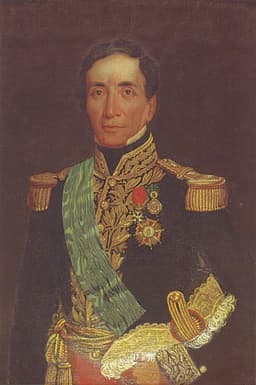
Andres de Santa Cruz
General · Modern
60.5Total
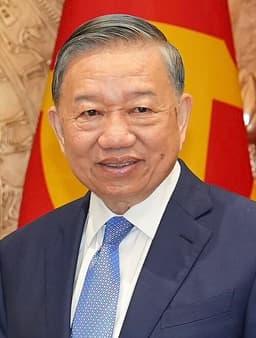
To Lam
General · Modern
50.6Total
Basic Information
Born
1792
1957
Died
1865
—
Era
Modern
Modern
Nationality
Bolivia
Vietnam
Occupation
General
General
Civilization
Western
Eastern
Score Comparison
Military (10%)
67.5
25.9
Political (20%)
59.3
68.0
Influence (20%)
62.0
51.8
Legacy (20%)
50.0
41.7
Leadership (15%)
68.0
72.0
Strategy (15%)
66.3
36.8
TOTAL
60.5
50.6
Andres de Santa Cruz — Complete Timeline
1823 AD
Battle of ZepitaWar
Santa Cruz commanded Peruvian forces in a victory over Spanish royalists at Zepita during the Peruvian War of Independence. This battle enhanced his military reputation and contributed to the eventual liberation of Peru from Spanish rule.
Peruvian War of IndependenceBattleLiberation
Impact: regional
1826 AD
Presidency of PeruPolitical Action
Santa Cruz served as President of the Council of Government of Peru from 1826 to 1827, effectively ruling the country. His administration focused on centralizing power and organizing the state, but he was overthrown by a rebellion led by Agust
PresidencyPeruCentralization
Impact: national
1829 AD
Presidency of BoliviaPolitical Action◆ Major
Santa Cruz became President of Bolivia in 1829, serving until 1839. He implemented administrative reforms, stabilized the economy, and modernized the military, establishing Bolivia as a more coherent state after the chaos following independence.
PresidencyBoliviaReforms
Impact: nationalconstructive
1836 AD
War of the ConfederationWar◆ Major
Chile and Argentina declared war on the Peru-Bolivia Confederation, viewing it as a threat to the balance of power. Santa Cruz led the confederation's forces in a conflict that lasted until 1839, ultimately resulting in the confederation's defeat.
WarChileArgentinaConfederation
Impact: regional
Creation of the Peru-Bolivia ConfederationPolitical Action
Santa Cruz established the Peru-Bolivia Confederation, uniting Bolivia and Peru into a single state with himself as Supreme Protector. This confederation aimed to create a powerful Andean nation and challenged the regional influence of Chile and Argentina.
ConfederationUnificationAndean Power
Impact: regional
1839 AD
Battle of YungayWar
Santa Cruz's confederation forces were decisively defeated by the Chilean army at the Battle of Yungay. This defeat led to the dissolution of the Peru-Bolivia Confederation and forced Santa Cruz into exile, ending his political project.
BattleDefeatEnd of Confederation
Impact: regionaltragic
Exile and DeathPolitical Action
After the defeat at Yungay, Santa Cruz fled to Ecuador and later to France. He spent the rest of his life in exile, making unsuccessful attempts to return to power. He died in France in 1865, never regaining his former influence.
ExileDeathFailure
Impact: nationaltragic
To Lam — Complete Timeline
2016 AD
Appointed Minister of Public SecurityPolitical Action◆ Major
To Lam was appointed Minister of Public Security of Vietnam, overseeing the country's police and internal security forces. He played a key role in maintaining public order and combating crime.
Ministerial AppointmentSecurity Leadership
Impact: national
2024 AD
Elected President of VietnamPolitical Action◆ Major
To Lam was elected President of Vietnam by the National Assembly, succeeding Vo Van Thuong. He transitioned from security chief to head of state, continuing his influence in national politics.
PresidencyGovernment Leadership
Impact: national
Expert Analysis
Andres de Santa Cruz vs To Lam
### The Dreamer and the Guardian: Two Paths to Power
In the high, thin air of the Andes, a man in a gold-braided uniform once stood at the summit of a map, his finger tracing a line that would unite two nations. In the humid, bustling corridors of modern Hanoi, another man in a dark suit sat in a quiet office, his hand not on a map but on the levers of an entire state security apparatus. Andrés de Santa Cruz dreamed of a confederation that would reshape a continent. To Lam built a career on protecting a single, unyielding party. One was undone by a single battle; the other ascended to the highest office through decades of quiet, relentless consolidation. What separates the visionary who fell from the guardian who rose?
### Origins
Andrés de Santa Cruz was born in 1792 in La Paz, the son of a Spanish nobleman and a Quechua *cacique’s* daughter. He was a child of two worlds—the colonial elite and the indigenous majority—and this duality would define his ambition. His education was that of a Spanish gentleman, but his blood carried the memory of a conquered empire. The era of his youth was one of revolutionary chaos, as the Spanish Empire crumbled and new republics were born from the mud and blood of battlefields. He learned early that power was something to be seized and held by force of arms.
To Lam was born in 1957 in Hưng Yên province, in the heart of North Vietnam. His world was that of a nation forged in war, a single-party state where loyalty was the only currency. He came of age during the American War, watching a unified Vietnam emerge from the ashes of conflict. There was no room for duality here; the state was absolute, and the Communist Party was its soul. His path was not one of glorious campaigns but of bureaucratic ascent within the Ministry of Public Security, an institution that had become the party’s iron fist.
### Rise to Power
Santa Cruz rose on the back of a horse and the flash of a sabre. In 1823, at the Battle of Zepita, he commanded Peruvian forces in a victory over Spanish royalists, cementing his reputation as a capable general. By 1826, he was effectively ruling Peru as President of the Council of Government. But his true moment came in 1829, when he assumed the presidency of Bolivia. Here was a nation born bankrupt and chaotic, and Santa Cruz imposed order with a military hand. He stabilized the economy, reformed the administration, and began to dream bigger.
To Lam’s rise was invisible to the public eye. In 2016, he was appointed Minister of Public Security, a position that placed him in charge of Vietnam’s police, intelligence, and internal security. For eight years, he waged a quiet war—not against foreign armies, but against corruption and dissent. He oversaw a vast campaign to purge the party of rivals and consolidate power. His tools were not cannons but dossiers, not cavalry charges but surveillance networks. By 2024, when he was elected President of Vietnam, his ascent was less a triumph than an inevitability.
### Leadership & Governance
Santa Cruz governed with the boldness of a man who believed geography could be conquered by will. In 1836, he created the Peru-Bolivia Confederation, a single state uniting Bolivia and Peru under his rule as Supreme Protector. He envisioned a great Andean power that could stand against Argentina and Chile. He reformed the currency, built roads, and promoted trade. But his governance was a balancing act—he was a caudillo who needed the support of both the army and the regional elites, and his confederation was a fragile patchwork of rivalries.
To Lam governs with the caution of a man who knows that power is a shadow that can vanish. His leadership is institutional, not personal. As President, he is the face of a collective leadership, the latest in a line of men chosen to embody the party’s stability. His reforms are not about creating new nations but about preserving the existing one. He has focused on anti-corruption campaigns, digital surveillance, and the quiet consolidation of authority. His military score of 44.6 reflects that he is no general of armies; his strategy score of 61.6 shows a man who thinks in terms of systems, not battles.
### Triumph & Tragedy
Santa Cruz’s greatest moment was also the seed of his destruction. The creation of the Peru-Bolivia Confederation in 1836 was a masterstroke of ambition. For three years, he stood as the most powerful man in South America. But Chile and Argentina saw his confederation as a mortal threat to the balance of power. In 1836, they declared war. Santa Cruz fought a defensive campaign, but in 1839, at the Battle of Yungay, his forces were decisively crushed. The confederation collapsed overnight. He fled to Ecuador, then to France, where he died in exile in 1865, a man who had held a continent in his hands and lost it all on a single battlefield.
To Lam has known no such dramatic reversal. His triumphs are measured in arrests and purges, in the quiet removal of rivals. His tragedy, if it comes, will not be a battle but a slow erosion of trust—the fate of a security chief who becomes president in a system that fears strongmen. He has not yet faced a Yungay.
### Character & Destiny
Santa Cruz was a dreamer with a soldier’s discipline. His personality was that of a builder who could not see the cracks in his own foundation. He believed in the power of his vision, and that belief blinded him to the reality that his neighbors would never tolerate a rival power. His strategy score of 59.3 hints at a man who was brilliant in conception but flawed in execution.
To Lam is a guardian with a bureaucrat’s patience. His personality is opaque, a product of a system that rewards discretion. He has no grand vision for a new Vietnam; his destiny is to manage the one that exists. His leadership score of 81.0 is the highest among his metrics, suggesting a man who commands respect through control, not charisma.
### Legacy
Santa Cruz is remembered as a visionary who failed. In Bolivia, he is a figure of what might have been, a symbol of Andean unity that was crushed by Chilean steel. His legacy score of 68.9 reflects a man who is studied but not worshipped. His confederation is a footnote, a dream that died at Yungay.
To Lam is too recent for a settled legacy. His score of 58.4 suggests that historians are cautious. He will be remembered as a president who came from security, a man who tightened the party’s grip in an era of global uncertainty. He may be a transition figure, or he may be the architect of a more authoritarian Vietnam.
### Conclusion
Andrés de Santa Cruz and To Lam are separated by two centuries and an ocean, yet they share a common thread: both sought to shape nations through the exercise of power. Santa Cruz tried to redraw the map with a sword; To Lam has tried to reinforce it with a badge. One fell because his vision was too large for his time; the other rose because his vision was perfectly aligned with his system. In the end, the dreamer and the guardian remind us that history is not kind to those who dream too big, nor generous to those who guard too well. The confederation is dust, and the party endures—but which is the greater monument to human ambition?
Rankings
🥇
Andres de Santa CruzLeader
Mil: 67.5Pol: 59.3Inf: 62.0
60.5
🥈
To Lam
Mil: 25.9Pol: 68.0Inf: 51.8
50.6
+9.9 behind
How This Comparison Works
Algorithm
Each figure is scored on 6 dimensions (0—100 scale) based on structured historical data: Military (10%), Political (20%), Influence (20%), Legacy (20%), Leadership (15%), Strategy (15%). The weighted total produces the final ranking.
Data Sources
Scores are computed from structured sub-indicators in the database. Scale factors adjust for era (Ancient ×0.85, Modern ×1.0) and civilization size (Eastern ×1.05, Other ×0.80) to account for differences in population and military scale.
Maximum 3 Figures
Comparisons are limited to 2—3 figures to ensure readability and statistical meaningfulness.
Error Margins
±5 points per dimension — Sub-scores are derived from historical records with inherent uncertainty. Two figures within 5 points on a dimension should be considered roughly equivalent in that area.
Total Score Accuracy
±3 points overall — The weighted combination of 6 dimensions produces a total score with approximately ±3 points of uncertainty. Differences of less than 3 points are not statistically significant— the figures are effectively tied.
Known Limitations
- Historical records are incomplete and uneven across civilizations
- Figures from oral-tradition societies may be underrepresented
- Occupation labels can misclassify multi-role figures
- Scores measure capability and impact, not moral character
- Quantitative scoring is a comparison tool, not absolute truth
Capability Radar
Military (10%) — Battles & Warfare
Battles
60
10
Win Rate
55
10
Expansion
55
10
Political (20%) — Governance & Reform
Reform
65
40
Diplomacy
60
40
Economy
55
30
Influence (20%) — Cultural & Global Reach
Cultural
45
20
Global
35
20
Legacy (20%) — Historical Impact
Historical
50
20
Longevity
40
20
Leadership (15%) — Power & Stability
Tenure
60
50
Stability
40
40
Strategy (15%) — Tactics & Innovation
Strategy
65
10
Tactics
60
10
Reform
50
10
Similar Comparisons
Comments & Discussion
No comments yet. Be the first to share your thoughts!