Loading...
Andres de Santa Cruz vs Yitzhak Rabin
Yitzhak Rabin leads by 5.9 pts · 2 figures compared
…
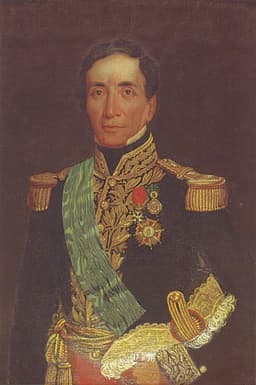
Andres de Santa Cruz
General · Modern
60.5Total
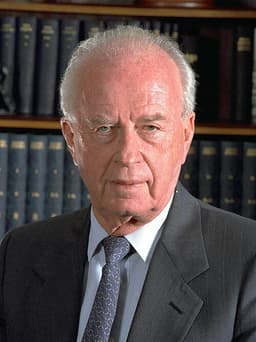
Yitzhak Rabin
General · Modern
66.4Total
Basic Information
Born
1792
1922
Died
1865
—
Era
Modern
Modern
Nationality
Bolivia
Israel
Occupation
General
General
Civilization
Western
Middle Eastern
Score Comparison
Military (10%)
67.5
61.7
Political (20%)
59.3
82.0
Influence (20%)
62.0
68.0
Legacy (20%)
50.0
55.0
Leadership (15%)
68.0
78.0
Strategy (15%)
66.3
55.0
TOTAL
60.5
66.4
Andres de Santa Cruz — Complete Timeline
1823 AD
Battle of ZepitaWar
Santa Cruz commanded Peruvian forces in a victory over Spanish royalists at Zepita during the Peruvian War of Independence. This battle enhanced his military reputation and contributed to the eventual liberation of Peru from Spanish rule.
Peruvian War of IndependenceBattleLiberation
Impact: regional
1826 AD
Presidency of PeruPolitical Action
Santa Cruz served as President of the Council of Government of Peru from 1826 to 1827, effectively ruling the country. His administration focused on centralizing power and organizing the state, but he was overthrown by a rebellion led by Agust
PresidencyPeruCentralization
Impact: national
1829 AD
Presidency of BoliviaPolitical Action◆ Major
Santa Cruz became President of Bolivia in 1829, serving until 1839. He implemented administrative reforms, stabilized the economy, and modernized the military, establishing Bolivia as a more coherent state after the chaos following independence.
PresidencyBoliviaReforms
Impact: nationalconstructive
1836 AD
War of the ConfederationWar◆ Major
Chile and Argentina declared war on the Peru-Bolivia Confederation, viewing it as a threat to the balance of power. Santa Cruz led the confederation's forces in a conflict that lasted until 1839, ultimately resulting in the confederation's defeat.
WarChileArgentinaConfederation
Impact: regional
Creation of the Peru-Bolivia ConfederationPolitical Action
Santa Cruz established the Peru-Bolivia Confederation, uniting Bolivia and Peru into a single state with himself as Supreme Protector. This confederation aimed to create a powerful Andean nation and challenged the regional influence of Chile and Argentina.
ConfederationUnificationAndean Power
Impact: regional
1839 AD
Battle of YungayWar
Santa Cruz's confederation forces were decisively defeated by the Chilean army at the Battle of Yungay. This defeat led to the dissolution of the Peru-Bolivia Confederation and forced Santa Cruz into exile, ending his political project.
BattleDefeatEnd of Confederation
Impact: regionaltragic
Exile and DeathPolitical Action
After the defeat at Yungay, Santa Cruz fled to Ecuador and later to France. He spent the rest of his life in exile, making unsuccessful attempts to return to power. He died in France in 1865, never regaining his former influence.
ExileDeathFailure
Impact: nationaltragic
Yitzhak Rabin — Complete Timeline
1967 AD
Chief of Staff during the Six-Day WarWar
As Chief of Staff of the Israel Defense Forces, Rabin commanded the Israeli military during the Six-Day War against Egypt, Jordan, and Syria. Israel captured the Sinai Peninsula, Gaza Strip, West Bank, East Jerusalem, and Golan Heights, reshaping the region.
Six-Day WarTerritorial ExpansionMilitary Victory
Impact: global
1993 AD
Signing of the Oslo AccordsPolitical Action
As prime minister, Rabin signed the Oslo Accords with PLO Chairman Yasser Arafat on the White House lawn. The agreement established the Palestinian Authority and set a framework for Palestinian self-governance in the West Bank and Gaza Strip.
Peace ProcessPalestiniansOslo
Impact: globalconstructive
1995 AD
Assassination at Peace RallyPolitical Action
Rabin was assassinated by Israeli extremist Yigal Amir after a peace rally in Tel Aviv. The assassination shocked Israel and the world, derailing the Oslo peace process and leading to a period of political instability.
AssassinationPeace ProcessPolitical Violence
Impact: globaltragic
Expert Analysis
Yitzhak Rabin vs Andres de Santa Cruz
# The Peacemaker and the Unifier: Two Visions of Nation-Building
One man stood on the White House lawn, shaking hands with his greatest enemy, while across the world, another man was being driven from his country by the very people he had tried to unite. Yitzhak Rabin and Andrés de Santa Cruz lived a century and a half apart, yet both faced the same impossible question: How do you build a nation when the world refuses to accept it? Their answers, and their fates, could not have been more different.
Origins
Yitzhak Rabin was born in Jerusalem in 1922, the son of Russian Jewish immigrants who had come to Palestine with the dream of a Jewish homeland. His father was a labor activist, his mother a nurse and politician. The air he breathed was thick with the tension of a people fighting for survival. By contrast, Andrés de Santa Cruz was born in 1792 in La Paz, Bolivia, into a Spanish colonial family of aristocratic lineage. His father was a Spanish official, his mother a descendant of Incan royalty. Where Rabin grew up in a world of collective struggle, Santa Cruz inherited a world of imperial order that was crumbling around him.
The difference in their origins shaped everything that followed. Rabin's Israel was a state forged in war and existential threat; Santa Cruz's Bolivia was a nation born from the collapse of Spanish rule, chaotic and undefined. Rabin learned to fight for a country that existed; Santa Cruz had to invent one.
Rise to Power
Rabin entered history through the military, but not as a man who loved war. He joined the Palmach, the elite strike force of the Jewish underground, at age nineteen. By 1967, as Chief of Staff of the Israel Defense Forces, he commanded the military during the Six-Day War. It was a stunning victory—Israel captured the Sinai, Gaza, the West Bank, and the Golan Heights in six days. Rabin became a national hero, but the victory carried a seed of tragedy: it made Israel an occupying power.
Santa Cruz rose through the chaos of the South American independence wars. He fought alongside Simón Bolívar and José de San Martín, commanding Peruvian forces to victory at the Battle of Zepita in 1823. By 1826, he was effectively ruling Peru as President of the Council of Government. Two years later, he became President of Bolivia. He had come to power not through democratic consensus but through military achievement and political maneuvering—a pattern typical of post-colonial Latin America.
Leadership & Governance
Rabin's leadership was defined by a brutal pragmatism. As prime minister, he authorized the suppression of the First Intifada, ordering soldiers to break the bones of Palestinian protesters. But he also saw that military force could not solve the conflict. In 1993, he signed the Oslo Accords with PLO Chairman Yasser Arafat on the White House lawn. The agreement was imperfect, but it was the first time Israel had officially recognized the Palestinian people's right to self-determination.
Santa Cruz governed differently. He was a reformer who stabilized Bolivia's economy, modernized its administration, and reduced corruption. But his vision was larger than Bolivia. In 1836, he created the Peru-Bolivia Confederation, uniting the two countries under his rule as Supreme Protector. It was a bold attempt to restore the unity of the old Inca Empire, but it threatened the balance of power in South America. Chile and Argentina saw the Confederation as a rival that could dominate the continent.
Triumph & Tragedy
Rabin's greatest triumph was also his greatest tragedy. The Oslo Accords earned him the Nobel Peace Prize in 1994, but they also made him a target. Israeli extremists accused him of betraying the nation. On November 4, 1995, after speaking at a peace rally in Tel Aviv, Rabin was shot dead by Yigal Amir, a Jewish law student who believed he was saving Israel from destruction. The assassin's bullets ended not just a life but a peace process that has never fully recovered.
Santa Cruz's fate was different but no less tragic. The War of the Confederation began in 1836, with Chile and Argentina attacking his new state. For three years, Santa Cruz fought to hold his union together. Then, at the Battle of Yungay in 1839, his forces were decisively defeated by the Chilean army. The Confederation collapsed overnight. Santa Cruz fled to Ecuador, then to France, where he died in exile in 1865, a man without a country.
Character & Destiny
Rabin was a reluctant peacemaker. He had the soul of a soldier but the mind of a statesman. His assassination was not just a political act but a symbol of how deeply peace can divide a nation. Santa Cruz was an ambitious builder, but he lacked the political instinct to see that his union threatened too many powerful neighbors. Both men were products of their time: Rabin of a world where peace required compromise, Santa Cruz of a world where unity required conquest.
Legacy
Rabin is remembered as a martyr for peace, his name invoked by every Israeli leader who speaks of reconciliation. The square where he was assassinated is named after him, and his image appears on Israeli currency. Santa Cruz is remembered more ambiguously. In Bolivia, he is honored as a reformer; in Peru, he is seen as an invader; in Chile, he is a cautionary tale. His confederation lasted only three years, but it remains a dream for some who still long for a unified Andean state.
Conclusion
What do these two lives tell us about the nature of leadership? Rabin shows that even the most hardened warrior can change, that peace is possible but fragile. Santa Cruz shows that even the most brilliant vision can fail if it ignores the fears of others. Both men died in exile—Rabin from his own people's hatred, Santa Cruz from his own people's defeat. They remind us that the greatest risk is not failure but success that cannot be sustained.
Rankings
🥇
Yitzhak RabinLeader
Mil: 61.7Pol: 82.0Inf: 68.0
66.4
🥈
Andres de Santa Cruz
Mil: 67.5Pol: 59.3Inf: 62.0
60.5
+5.9 behind
How This Comparison Works
Algorithm
Each figure is scored on 6 dimensions (0—100 scale) based on structured historical data: Military (10%), Political (20%), Influence (20%), Legacy (20%), Leadership (15%), Strategy (15%). The weighted total produces the final ranking.
Data Sources
Scores are computed from structured sub-indicators in the database. Scale factors adjust for era (Ancient ×0.85, Modern ×1.0) and civilization size (Eastern ×1.05, Other ×0.80) to account for differences in population and military scale.
Maximum 3 Figures
Comparisons are limited to 2—3 figures to ensure readability and statistical meaningfulness.
Error Margins
±5 points per dimension — Sub-scores are derived from historical records with inherent uncertainty. Two figures within 5 points on a dimension should be considered roughly equivalent in that area.
Total Score Accuracy
±3 points overall — The weighted combination of 6 dimensions produces a total score with approximately ±3 points of uncertainty. Differences of less than 3 points are not statistically significant— the figures are effectively tied.
Known Limitations
- Historical records are incomplete and uneven across civilizations
- Figures from oral-tradition societies may be underrepresented
- Occupation labels can misclassify multi-role figures
- Scores measure capability and impact, not moral character
- Quantitative scoring is a comparison tool, not absolute truth
Capability Radar
Military (10%) — Battles & Warfare
Battles
60
65
Win Rate
55
70
Expansion
55
50
Political (20%) — Governance & Reform
Reform
65
65
Diplomacy
60
85
Economy
55
60
Influence (20%) — Cultural & Global Reach
Cultural
45
55
Global
35
70
Legacy (20%) — Historical Impact
Historical
50
75
Longevity
40
60
Leadership (15%) — Power & Stability
Tenure
60
70
Stability
40
40
Strategy (15%) — Tactics & Innovation
Strategy
65
75
Tactics
60
60
Reform
50
55
Similar Comparisons
Comments & Discussion
Rabin’s shake on the lawn wasn6/16/2026
Rabin’s White House handshake wasn’t history; it was theater. He gave the PLO legitimacy while they kept the guns. Santa Cruz at least tried to build a real state with the Peru-Bolivia Confederation. Rabin built a photo op.
历史裁判官6/16/2026
拉宾的白宫握手是政治作秀,根本不是和平。他给了巴解组织合法性,却没拆掉一颗导弹。圣克鲁斯至少用秘鲁-玻利维亚联盟建了个真国家,拉宾建的是个镜头前的假象。
Analytical_Anomaly6/16/2026
Comparing their military strategies reveals a brutal truth: Santa Cruz lost the Battle of Ingavi because he overextended supply lines across the Andes. Rabin’s Oslo Accords were a tactical retreat, not a strategy. Santa Cruz fought for unification; Rabin fought for a ceasefire that collapsed in ’96. Both failed, but Santa Cruz’s failure was at least a soldier’s.
数据侦探6/16/2026
数据不会说谎:圣克鲁斯的秘鲁-玻利维亚联盟只维持了3年,却控制了60%的安第斯地区。拉宾的奥斯陆协议覆盖了约旦河西岸18%的土地,但定居点人口反而增长了50%。数字背后是赤裸裸的失败——圣克鲁斯败于地理,拉宾败于自欺。